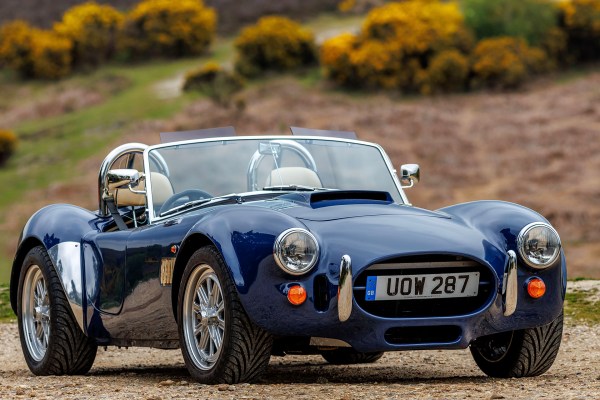
Twelve months ago I swapped over from beloved Canon EOS 5D MkIVs to Canon mirrorless. In that time I have had quite a few different mirrorless bodies: two R6s, an R5, an R3 and my absolute favourites the R6 MkII. It wasn’t all plain sailing but I have ended up in a position where, when I tried to use my one remaining EOS5D MkIV on a job, I struggled. From a position of feeling desperately uncomfortable with EVFs (electronic viewfinders) I appear to have performed a complete 180 degree switch and found the optical viewfinder, mirror and prism set up hard to re-adjust to. That’s pretty remarkable given that I had almost forty-two years of using SLRs and DSLRs (with the odd rangefinder) and only one with mirrorless as my main camera option.
In the next few weeks I expect to part with that final DSLR and a few more of my EF lenses and pretty much complete the switch because going between the two options isn’t going to work for me.
So what have I learned in the last twelve months?
I have written about my issues with shooting flash with mirrorless and I hope that Canon, Nikon and Sony are listening and find a way make using flash a lot less of a performance. Beyond that the weight of my new kit is a revelation and one of the reasons that I call the R6 MkII my favourite is that it is so small and light. Even at my age carrying two of them with lenses around all day is not a problem and having relatively small hands means that the R6 series sits in them far more comfortably than the otherwise superb R3.
I’m getting through batteries faster than I used to but the most recent Canon LP-E6NH variants are very good compared to the two earlier versions that also work fine in the R6, R6 MkII and R5. I find that in a typical day I get through one and a half batteries in each camera with the R6 MkII and that’s fine with me. I always carried spares for my 5D MkIVs anyway and so the weight advantage of the mirrorless options remains. The concept that you can never have too many batteries remains true.
Being able to review images using the viewfinder in broad daylight is a distinct advantage and one that I am making more and more use of. Seeing other photographers doing it makes me chuckle because it often looks as if they are taking pictures of very close objects or even their toes. Operating the scroll wheel and set buttons have become second nature now and even when the rear screen can be viewed easily I often find myself using the viewfinder for review anyway.
I was on a job with a press conference a few weeks ago where every photographer bar one had mirrorless and the atmosphere was very different until his loud shutter did its thing. In years gone by and there were six or seven of you clattering away it probably didn’t matter but having just the one loud mirror flopping up and down at multiple frames a second sounded odd and, somehow, old fashioned. I love the silent shutter. I love that I can be taking photographs without having to worry about television crews getting upset and without the people in front of my camera getting anxious about the number of frames being clocked up. Quiet and silent shutters just feel so much less confrontational and their value during events (the main courts at Wimbledon this years were mirrorless cameras only) has been proven already.
The fact that my latest cameras are current models also means that most of the technology inside them is pretty close to being state of the art. From the auto-focus to the exposure control and from the image transmission to the menus everything is as good as it needs to be.
The choice of lenses isn’t as wide as any of us would like but Canon and Nikon are rapidly catching up with Sony when it comes to what is on offer. Ninety-nine percent of the time I am using the RF24-105 f4 L IS and the RF70-200 f4 L IS as my two main lenses. I’d love an RF24-70 f4 or even an RF 20-50 f4 if anyone from Canon is interested in my kit wish list. The 24-105 is a capable lens but its isn’t quite perfect for my work. Whilst I am at it, an RF 300mm f4L wouldn’t go amiss either.
The last twelve months have subtly but noticeably changed the way that I shoot pictures. I’ve become comfortable with the whole mirrorless concept and I have started to really enjoy the extras that it brings to the party. Thirteen months ago I wasn’t sure. Thirteen months ago I decided to keep all of my EOS DSLRs and EF lenses and I don’t regret my caution but that was the summer of 2022 and we are now in what we British call summer and it’s 2023. I will re-evaluate my attitudes in another twelve months but I’d strongly advise anyone still thinking that mirrorless is a fad to think again and see if they cam borrow one for a few days to do their own evaluation.
For the record and for its time I would still rate the 5D MkIV as my favourite camera of all time but that was then and this is now. There’s little doubt that Canon and the others will bring new cameras to market in the next twelve months and I am sure that something shiny will catch my eye.
 Neil Turner Photographer
Mirrorless is here to stay and I am so glad it is. Being able to actually see what you are going to get before pressing the shutter is extremely useful and has made shooting in difficult environments much easier.
I’ve been primarily a Fuji shooter for over 10 years, and have never regretted selling off my Canon DSLRs and moving to X-series and more recently GFX medium format cameras.
I have a client who insists I shoot with their supplied Canon R series cameras. It’s not a problem at all for me, the cameras are great but I really don’t like how they feel in my hand. Compared to the Fuji cameras they feel cheap and plastic but they perform reliably and have good colour so I can’t complain. I’m not a fan of all the bells and whistle’s, they really are wasted on me, I just don’t need them.
LikeLike
Don’t confuse plastic with cheap. These cameras bounce way better than anything I have ever owned before and they survived extraordinary humidity in a way that very little else could.
LikeLike
Don’t get me wrong Neil, the camera performs well, I just don’t like the ergonomics. Its too small for my hands without the grip and (on my copy at least) I can feel the body flex when I squeeze it, and that doesn’t give me a good feeling when working in the wet.
I work with the military on a daily basis, and the cameras get chucked around, so I know they will bounce but I have had both a C70 and a R6MKII shut down in mild drizzle. Luckily they both dried out fairly quickly but on both occasions it meant I spent time drying out cameras instead of shooting live exercises.
I think my biggest problem with the R-series cameras though is more the lenses I have been given to use with the cameras. They are all f4 lenses and although they are responsive, and the camera works well at higher ISO’s, I just don’t like how they look. Give me an f1.4 any day of the week.
LikeLike
Thanks and very helpful. And lovely shot of the car, the shine and the reflections. It is punchy and rich. Did you use flash?
There are now twelve, I think, models in the Canon mirrorless lineup. If a person couldn’t or didn’t want to stretch to the price of the R6 II, and given that features are trickling into cheaper models – are there any of the cheaper models that appeal to you?
Really interesting that you mention lenses that have a maximum aperture of f4. Looking only at what one can do with a lens (so ignoring extra weight etc.) why are you not looking at wider aperture lenses? / Thanks
LikeLike
I haven’t used any of the lower priced ones but you can get an original R6 for under £1800 now and so that would be a great buy. The R8 looks good and the R7 is impressive for a cropped sensor option. I have the 35mm f1.8, 50mm f1.8 and 85mm f2 RF STM lenses and they are all lovely if a tiny bit noisier than the USMs which are as good as silent when focusing. I like th f4 zooms for the weight and compactness but like to have the fast lenses when I need them.
LikeLike
No flash at all on the car shot
LikeLike
Would you comment on why the R5 hasn’t made your preferred camera list? Thank you.
LikeLike
The R5 is a great camera. I bought my first R6 as a “tie in the water” and fell in love. The R3, R6 and now the R6 MkII are amazing at high ISOs which suits what I do really well. The price of the R5 was a factor as is the fact that it isn’t compatible with the new flashes and triggers. I have no real need for the massive R5 files but when am R5 MkII appears I will probably get one for those truly rare occasions that a client requests the massive images. My choices have been made based on the tiniest of differences and I would strongly recommend the R5 to those whose needs are different from mine.
LikeLike
Thanks for your advice. Just to say that I got an R6 and I love the clean, detailed files and the colours. It took a lot of weighing up and trying different cameras before I got there.
LikeLike