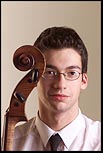
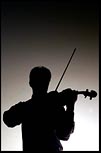
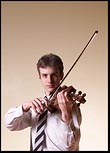
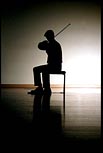
 The way that an image is destined to be used dictates how you shoot it. This example talks about the difference in approach to shooting what is essentially the same subject, but for two different uses. I went to this southwest London school to shoot a “fly on the wall” documentary article about a music project to fill a couple of pages in a tabloid sized magazine.
The journalist commissioned to write about the project arrived well before me because I had been delayed shooting an urgent news job. By the time I arrived the workshops with three professional musicians and the composer of the piece they were working on were well under way. I had a quick word with the writer and got on with shooting the pictures. I hadn’t missed anything that wasn’t going to happen again so I relaxed and worked on shooting images that I knew would fit into the style of those pages.
Some of the photographs were lit with Lumedyne lights, but most were either available light (400 ISO) or used one or more Canon 550ex speedlites triggered with a Canon ST-E2 transmitter. Within the two hours remaining I had completely covered the project, it’s key personnel and I was really confident that I had filled my brief so I went home to edit the pictures. I sent twelve images back to the picture desk by dial up ISDN connection. (more…)
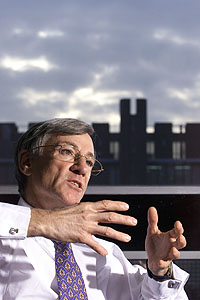 The “Interview Portrait” is one of the most difficult tasks that I am asked to undertake. Of course it’s easy enough to just turn up and shoot a picture, but actually making a proper portrait is a really difficult task. This portrait was frame 64 out of 73, frames 1- 30 were the safe shots and 31 – 73 were far more experimental.
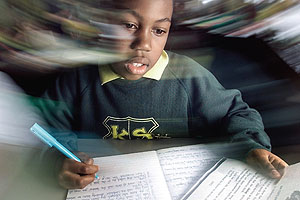 This classroom shot was made for a story about inner city schools performing well academically. It needed to stand out from other school images and the light in the room was poor. There were also a dozen adults in the room – all of whom I needed to keep from my picture.
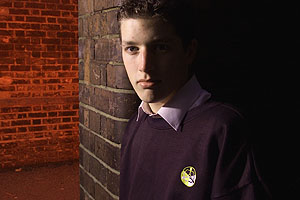 This colourfully lit picture goes with a story about inner city crime and mugging. The boy in question worked on a report about youth as the victims in the area he lives in. I wanted the picture to have athmosphere, and there is nothing like a bit of coloured light for adding some. In lighting the background it is important to place the background light so that the viewer doesn’t notice where the colour is coming from.
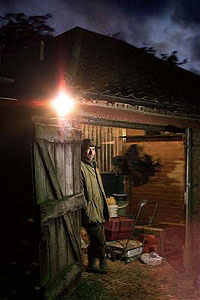 Arriving at the job is usually the best times to start having ideas about locations for a portrait. Buildings often have features that lend themselves to use in a photograph, and the grounds can be just as inspirational.
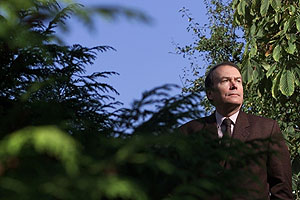 My love of lighting photographs outdoors has made me into an observer of the work of other photographers. If I see a shot that I like I spend time working out how it was done, and if that shot was lit I am even more interested
 When you arrive at a location to shoot a portrait you have to keep up a converstaion with your subject (or someone who works for them) while deciding how and where to shoot the picture.
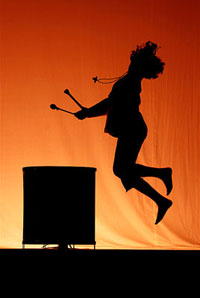 There are many reasons for using a silhouette, and the most common is to preserve the anonymity of the subject. The identity of children is something we are often asked to keep secret – especially if that child has been in trouble with the authorities. This one was done purely for artistic effect…
 Neil Turner Photographer