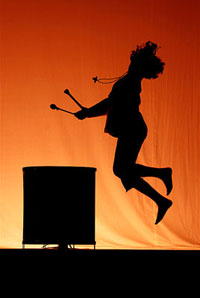
 There are many reasons for using a silhouette, and the most common is to preserve the anonymity of the subject. The identity of children is something we are often asked to keep secret – especially if that child has been in trouble with the authorities. This one was done purely for artistic effect…
After well over an hour of trying to shoot a strong lead picture I decided to set this photograph up with one of the young people on this summer school. The hall had a cream coloured background cloth, so I used an orange gel to give it real impact.
1. I started by positioning the drum near the edge of the stage, trying to get as much distance between the girl and the canvas backdrop as possible. I was shooting at the 200mm end of the zoom, which on a DCS520 is equivalent to 320mm.
2. The next thing to do was place the Lumedyne flash head behind the drum on the floor pointing up at the background, with a high sensitivity slave cell to trigger it. I put a piece of orange gel between the reflector and the diffuser cap and set the pack to 100 joules. The kind of gel used in this case is known as an “effects” gel which gives a visually pleasing colour rather than the kind of colour correction gel used for balancing daylight and tungsten. (more…)
 Top quality glossy magazines have always had portraits shot outdoors with flash. The relatively low cost and excellent portability of modern battery powered flash units means that this kind of technique is available to all of us.
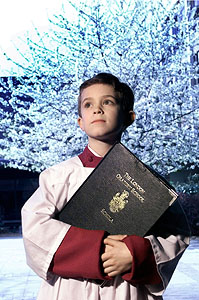 We’ve all seen cross processing and the interesting colours that it gives, but I like to play about with colour temperatures too. Digital allows you to switch from daylight to fluorescent, back to daylight and on to tungsten without having to reload film.
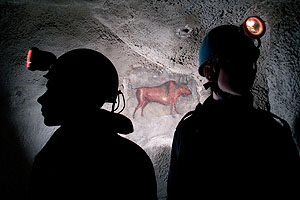 There are many reasons for using a silhouette, and the most common is to preserve the anonymity of the subject. The identity of children is something we are often asked to keep secret – especially if that child has been in trouble with the authorities.
 Neil Turner Photographer