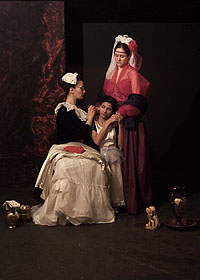
 Every once in a while someone throws down a technical gauntlet and I always find myself picking it up. I like the challenge I suppose, and I’m usually waiting for the challenge to be made. On this occasion it came from left field with no real warning, but a challenge is a challenge….
The students at this acting school had been set a project where they were given a painting and had to reconstruct the scene as precisely as they could at the end of a short drama that they had to write which set the scene. A painting done in Spain by an Englishman a long time ago was the challenge that the students had accepted and they showed off their command of drama and Spanish for my journalist colleague and myself with great professionalism.
Unfortunately their command of lighting was less well developed. The few dim lights that there were mimicked the painting to the human eye but meant an exposure of two seconds at f2.8 (400 ISO) with the camera.
Being the kind of photographer who rarely has an assistant I had come without a tripod, so I was forced to light the scene myself. They had a print of the painting so I had to study it very quickly and make a plan. I have written before about reading other people’s work, but I had never had to do that quite so literally with any other job! The composition was their department so I concentrated on the light making mental notes of it’s direction, colour, contrast and intensity. (more…)
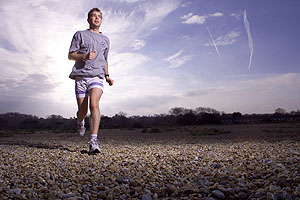 Some images are so obviously set up that there is little point in trying to make them seem otherwise. This job was all about a teacher who was in training for the London Marathon and was timed so that the pictures would be shot ready for the story to appear just two days before the event.
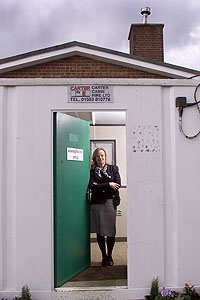 In a very similar vein to last month’s technique page I am going to talk about this portrait of a school head teacher that required a fair bit of messing around to get it right. It seems to me sometimes that the further you get the flash away from the camera, the more interesting the result!
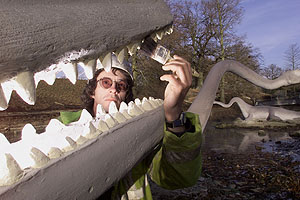 I get a sore throat telling people that flash isn’t just a way of lighting the whole scene. It can, if used properly, pick out a small detail and give it real emphasis. Studio photographers and cinematographers have always known this, so it’s time that us little guys adopt the technique for ourselves. Taking a flash unit off of the camera for the first time is both a frightening and a liberating experience. When that little cartoon lightbulb goes on just above your head you instantly become a better photographer. You might not use the technique, but you know about it and therefore have it as part of your arsenal.
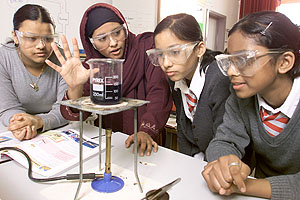 It is regularly the case that the simplest looking image actually requires a lot of thought, mental arithmetic and good old fashioned compromise. This picture has a number of compromises.
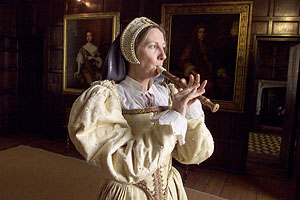 For just over a year I have been writing these “how to do it” columns about the use of flash in my daily news photography. This time the picture I want to talk about was shot with good old fashioned available light. Not only that it was shot using what artists and early photographers loved for their studios – North light.
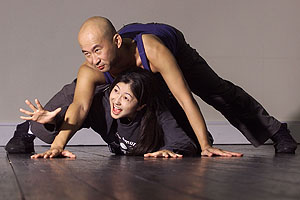 I am often asked to photograph dance and drama. This time it was an early rehearsal for a piece involving Japanese dancers that was taking place in a messy rehearsal room. I decided to watch what they were doing and make notes of the best scenes to re-create with decent lighting. I think that still counts as news photography….
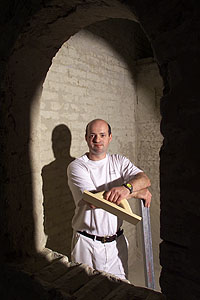 When most people take their first steps with using lights they try to make the photographs shadowless. The ability to do this is very useful, but sometimes it’s far better to place your own shadows exactly where you want them.
 Neil Turner Photographer