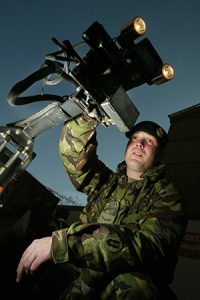
 When you have to walk through one of the most impressive buildings in central London, out of the back door to where they keep the broken furniture and litter bins to shoot your picture… you feel a little hard done by!
Royal Navy, Army, Royal Air Force and Metropolitan Police explosive ordnance disposal teams gathered at the National Army Museum to show off their toys and to announce to the world that there is now a formal educational qualification on offer for bomb disposal. The outside yard set aside for them was not a photographer’s idea of a great location so I instantly started to go through the range of “tricks” that you pick up through a career for getting rid of awful or unhelpful backgrounds.
My first idea was to frame so tightly on a young disposal officer that there would be no real background at all. Secondly I tried using the ground as my backdrop by looking down at another kevlar clad soldier working on a practice mine.
My third stab at it was to use a very long lens (70-200 f2.8 with a 1.4x converter) wide open to throw the background out of focus on a shot of a Royal Naval diver in his dry suit and underwater breathing apparatus. Each of these images worked, but I wanted drama so I settled on shooting an Engineer with his remote controlled robot from below using a winter sky as my backdrop. (more…)
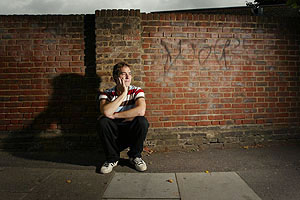 Every time you take a photograph you are saying something about what is in the image. It’s impossible to avoid a frozen frame being anything other than an interpretation of that moment so it becomes a mark of a good photographer to make sure that every element of the image (composition, subject matter and light) helps to paint a consistent story.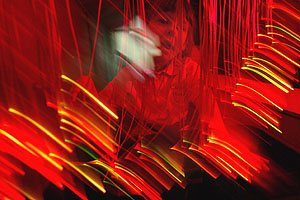
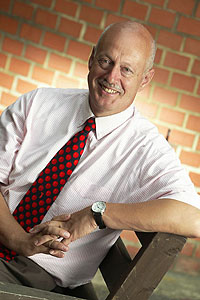 Some photographs have to be simple. There are often very few options for lighting the main subject, but there is nothing to stop you adding some interest by lighting another part of the frame.
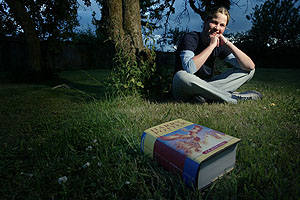 Creating a pool of light is one of the most effective ways of emphasising part of an image. There are many ways to achieve this, but for the traveling photographer who has to carry their own kit a small piece of aluminium foil has to be one of the simplest.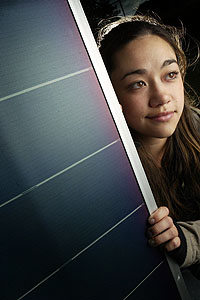
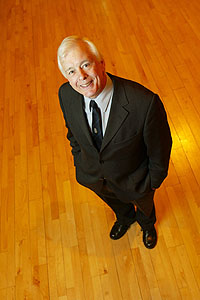 In a remarkably similar composition to the previous technique page this example uses some ambient light with it’s own very strong colour to give an unusual atmosphere whilst adding enough flash light to keep the subject’s skin tones correct.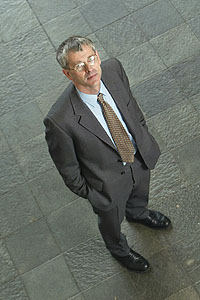
 Neil Turner Photographer