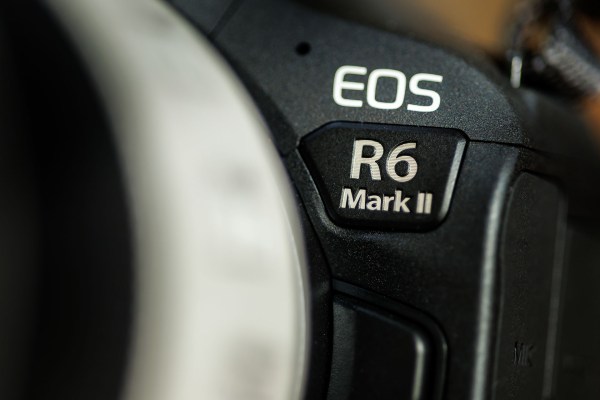
It was only last summer that I made the jump to using Canon EOS R6 bodies for the majority of my work and now I’ve swapped to the R6 MkIIs. I had listened to my own wisdom for a few months and calculated that I couldn’t make the business case for going for an upgrade so soon. Then I got to play with a MkII and I changed my mind.
There wasn’t one thing that made me make the swap – it was a list of little upgrades here and there that made my mind up for me.
The EL1 (left) sits next to one of my trusty 600 EXII RT speedlites to show the size difference.
When Canon announced their top-of-the-range flash unit, the EL1, I read the specification and thought to myself “looks nice but probably not worth the money”. It has taken from that announcement until this week for me to actually use one and, I’m slightly embarrassed to say, change my mind.
Not to put too fine a point on it, this is the first hot shoe style flash unit from Canon that I would be confident of using as a day-to-day piece of kit for editorial portraiture with a whole range of light modifiers and be able to leave my Elinchrom kit at home. It’s powerful, has superb recycle times and in both TTL and manual modes it does everything that I might want it to. There are tons of other bits of kit that are on the market competing in this space but I haven’t used most of them and so I will only stick to what I know.
Like every piece of equipment ever made it isn’t perfect so I’m going to quickly examine some of pluses and minuses.
Cyril Kobina Ben-Smith, Primate of the Church of the Province of West Africa, Justin Welby, Archbishop of Canterbury and Howard Gregory, Primate of the West Indies in one of the cells at Cape Coast Castle in Ghana used to hold enslaved people before they were loaded onto ships to be taken to the Americas. Photo: Neil Turner for ACO
Towards the end of the summer of 2022 I was lucky enough to be commissioned to spend two weeks photographing The Lambeth Conference. 650 Bishops, 450 of their spouses and a few hundred guests and staff in and around the University of Kent, Canterbury Cathedral and Lambeth Palace made for a fascinating experience and some very interesting pictures. That was act one.
The last eleven days have been act two. This time there are fewer Bishops, fewer Archbishops and a very different location. I’m writing this whilst still in Accra – the capital city of Ghana in West Africa – waiting to go to the airport to fly home. The difference between the locations is vast. It’s hot here and the humidity has been tough on me and almost as tough on my cameras. It’s a developing country with all of the colour, noise and atmosphere you’d expect but with so much more.
Last summer I jumped into the world of Canon mirrorless cameras with a blend of caution and enthusiasm. I recognise that many of my colleagues made the DSLR to mirrorless switch way before I did but, being the anorak that I am, I was determined to make the swap work for me. Having used Canon SLRs and DSLRs for over twenty five years it was always going to be an interesting time and it has taken me five months to iron out all of the niggles. The funny thing is that 90% of the change was painless and happened in under a month. It has been the one part of my work that I was always well known for that has taken me an age to completely master.
I don’t actually remember the first time that I heard the phrase “pay it forward” but I know that it accurately summed-up something that was there in my mind from quite a young age. I had two parents who both loved to explain how to do things and both of them took enormous pleasure in “paying it forward”. Both of my older brothers either consciously or subconsciously echoed our parents attitudes as well. In fact, if you look around, it’s happening all of the time and it is to be appreciated and celebrated.
I can remember watching a film actually called Pay It Forward which came out in 2000 and that, despite it’s rather cheesy nature, it definitely helped to put a name to what I had already been doing for many years.
It’s hard to know where to start when talking about the changes that shooting with mirrorless cameras have made. In the absence of anything profound I think that I will start with something that has been said by others but which I need to express very strongly. So much so, I’m going to make it a quote:
“Canon got everything right when they introduced the EF to RF converter”
Why did I feel the need to say that in quite such strong terms? I hate changing systems. Back in the day (1995) when I swapped from Nikon F4S bodies to Canon EOS1Ns, and had to swap all of my lenses as well, it was tough. Nothing was familiar apart from the rolls of film I was slotting into them. Changing everything in one hit meant that I had to get my head around half a dozen different things all at once. This time around, swapping from Canon EF to RF I got to keep my familiar (and much loved) lenses whilst I got used to the new bodies and their wildly unfamiliar viewfinders. Eventually I will swap out all of the lenses too but there really is no hurry. The converters aren’t perfect but, looking back over the last few weeks, they have been such a help in making the transition.
It’s surprising how much of the work that we all do could be done a little easier and with a little less stress if our cameras were silent. I have been shooting inside a Cathedral quite a bit over the last couple of weeks and I have been shooting in a conference much of the rest of the time. The combination of that recent experience and the news that next year’s tennis at Wimbledon will be DSLR and shutter sound free have made me decide that it’s time to give the whole mirrorless experience a proper go.
When was the last time you finished a shoot, went through the edit and genuinely thought that you really couldn’t have done better?
My answer is that I cannot remember ever having that thought. I’ve come close and been really happy with what I have done many, many times but I can say with a reasonable degree of certainty that ‘complete satisfaction’ hasn’t featured in my work.
I have never taken a perfect picture and I have certainly never made one in post-production – but I’m OK with that.
This question was triggered by listening to an artist being interviewed on a radio programme who said that she had gone through something of a crisis of confidence having finished a piece and in that moment thinking that it was perfect. She talked about coming very quickly to hate the idea that she might never achieve that level of mastery of her craft again and that she may well have reached a professional peak at a relatively young age. That was something which her passion for what she did led her to develop a form of depression.