That’s a dramatic headline but, never before having had a lens like this, it’s the most accurate way that I could think of to sum it up. Canon’s RF 100-500mm f4.5-7.1 L IS USM is something of a conundrum. It covers a range of focal lengths that I find extremely useful in a lot of the work that I currently do and, paired with the RF 24-105mm f4 L IS USM, it is a valuable item in my travelling kit bag. I have shot pictures with it that I would simply not have been able to without hauling some incredibly heavy (and expensive) lenses around the world.
Do I love this lens? No. Do I appreciate it? Yes… with bells on.
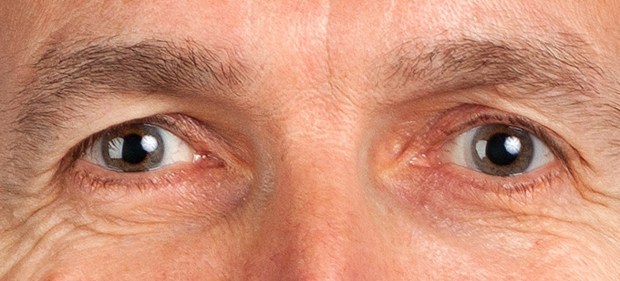
When this was shot this was my favourite type of catchlight. The shoot through translucent umbrella partnered with an oblong light panel to reflect a bit of light back in. I have changed my mind a hundred times since then.
“What is your favourite light modifier?” A question from a photographer who has followed my blogs over the last twenty-plus years got me thinking. Spoiler alert – I probably don’t have a favourite but I do have a few that I use all of the time.
First things first, let’s define “light modifier”. As part of their explanation of modifier Wikipedia describes it as the following:
Tools or accessories employed in photography and videography to shape, control, or direct light emitted from a light source. These modifiers serve to alter the quality, direction, and intensity of light, thereby enabling photographers and videographers to achieve specific effects or moods in their images. Light modifiers come in various categories and types, each with its own unique characteristics and applications.
Seems simple enough but when you start to examine those different categories and types life can get pretty confusing. Thinking about it I realised just how many different soft boxes, umbrellas, reflectors, dishes and domes I own. In fact, the inventory doesn’t even end there because there are so many sub-sets and shapes that it could all get the tiniest bit confusing for me if I hadn’t used each and every one of them so often over the last forty or so years. The fact that I have sold a few here and there and thrown and given so many more just adds to my knowledge of what does and doesn’t work for me and the work that I do – which in itself changes over time.
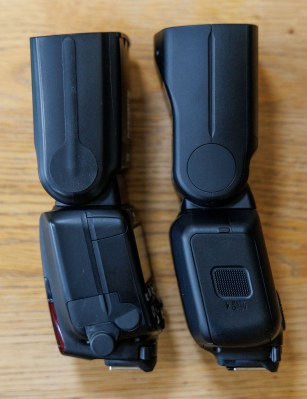
The oldie but goodie 600 EXII RT on the left meets the EL5 on the right.
Many months ago I wrote about my experiences with the top-of-the-range Canon EL1 flash. It was heavy, bulky and expensive but in almost every other way I found it to be very, very good. At the time there was a rumour of a smaller, lighter and cheaper alternative coming from Canon but it took a while to come out and a good deal longer for me to get my hands on not just one but two of them.
EL1 versus 600 EXII RT wasn’t really a great comparison and I found myself matching the big Canon flash against my Elinchrom One which was only ever going to be a contest when using them on stands and with light modifiers because there really isn’t much out there that can be compared to the EL1. The EL5, on the other hand, is a much more direct match for the older 600 EXII. They are much the same size (the EL5 is fatter at the head and I’ll cover that in a bit) and the weight difference isn’t too great with the 600 EXII coming in a 555g with 4 x AA Eneloop batteries loaded and the EL5 tipping our kitchen scales at 601g complete with the same LP-EL battery that was so impressive in the EL1. Both work perfectly with my much-loved ST-E10 speedlite transmitters and that’s where the similarities end.
OK, I admit it – when the mood takes me I follow links on the internet and find myself down some pretty odd/infuriating/entertaining rabbit holes. The other day I was suckered-in by a full-on click-bait link on Facebook with the oh-so-inviting headline “Is this the biggest lie in photography?” It started out saying that photographers who believe that expensive lights give better light than cheap ones aren’t correct. It started out with all the hallmarks of something controversial but quickly fizzled out but not before I had started to compose a bit of a rant of a comment to add to the growing conversation on the Facebook page from a few others who hadn’t bothered to read to the end before getting on their hobby horses either.
Five minutes later, and having read the whole thing, I stopped, copied what I had agonised over writing, and pasted it into a note on my computer with the idea of doing exactly what I’m doing now; turn that rant into a blog post featuring better reasoning and more detail.
For a very long time I have been an advocate of shooting RAW files and processing them through Adobe Camera RAW. Recently I have been shooting a lot of pictures in dark spaces with poor light and have been regularly using ISOs of 6400 and above. What has shocked me is that my normal workflows have been producing results that I find a bit grainy – even with the superb high-ISO capabilities of the latest Canon R series cameras.
Having edited some of the live jpegs transmitted during events it has become apparent to me that I need to get stuck into some of the latest noise reduction options as well as having a better look at what in-camera processing can do.
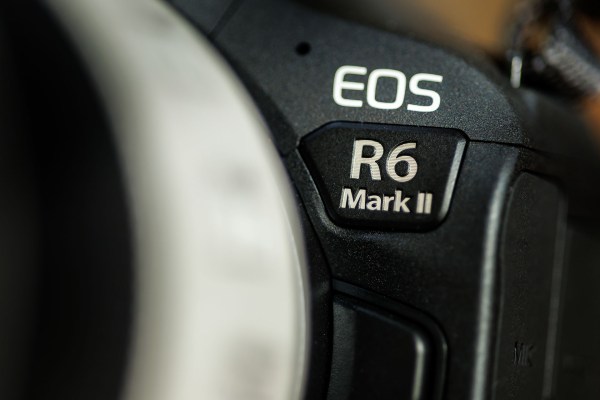
It was only last summer that I made the jump to using Canon EOS R6 bodies for the majority of my work and now I’ve swapped to the R6 MkIIs. I had listened to my own wisdom for a few months and calculated that I couldn’t make the business case for going for an upgrade so soon. Then I got to play with a MkII and I changed my mind.
There wasn’t one thing that made me make the swap – it was a list of little upgrades here and there that made my mind up for me.
The EL1 (left) sits next to one of my trusty 600 EXII RT speedlites to show the size difference.
When Canon announced their top-of-the-range flash unit, the EL1, I read the specification and thought to myself “looks nice but probably not worth the money”. It has taken from that announcement until this week for me to actually use one and, I’m slightly embarrassed to say, change my mind.
Not to put too fine a point on it, this is the first hot shoe style flash unit from Canon that I would be confident of using as a day-to-day piece of kit for editorial portraiture with a whole range of light modifiers and be able to leave my Elinchrom kit at home. It’s powerful, has superb recycle times and in both TTL and manual modes it does everything that I might want it to. There are tons of other bits of kit that are on the market competing in this space but I haven’t used most of them and so I will only stick to what I know.
Like every piece of equipment ever made it isn’t perfect so I’m going to quickly examine some of pluses and minuses.
Last summer I jumped into the world of Canon mirrorless cameras with a blend of caution and enthusiasm. I recognise that many of my colleagues made the DSLR to mirrorless switch way before I did but, being the anorak that I am, I was determined to make the swap work for me. Having used Canon SLRs and DSLRs for over twenty five years it was always going to be an interesting time and it has taken me five months to iron out all of the niggles. The funny thing is that 90% of the change was painless and happened in under a month. It has been the one part of my work that I was always well known for that has taken me an age to completely master.





 Neil Turner Photographer