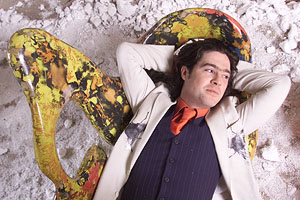
 If you ever get the chance to photograph an artist with their work I hope that they are as much fun and as cooperative as Finn Stone. Shooting somebody who is themselves aware of the subtlety of visual imagery means that you can reason with them, explain what you are doing hopefully carry them with you.
I have written on this website and elsewhere about how important it is to formulate your ideas about a portrait before you arrive and to refine/change those ideas very shortly after getting there. The small industrial unit that doubles as this artists studio was covered with bits of crumbled polystyrene (Styrofoam), shreds of fibre glass and paint. The presence of these creates a difficult environment for sensitive camera equipment so it was important to keep everything as far away from them (especially the highly static polystyrene crumbs) as possible.
This photograph was the second idea that I tried during the three quarters of an hour that I spent photographing him. The first was to use the various bits of furniture and sculpture to look through at him and having successfully bagged a selection of images I moved onto this idea. (more…)
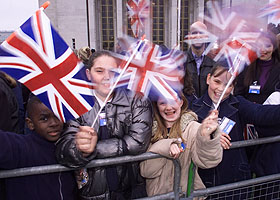 I used to know my way around a press pen at big events, but I haven’t had much practice recently so when this job came up in the diary I was a little less confident about what I was going to get than I normally am.
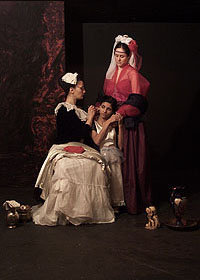 Every once in a while someone throws down a technical gauntlet and I always find myself picking it up. I like the challenge I suppose, and I’m usually waiting for the challenge to be made. On this occasion it came from left field with no real warning, but a challenge is a challenge….
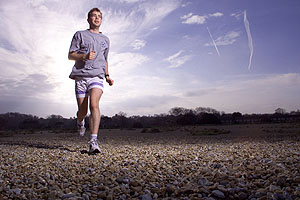 Some images are so obviously set up that there is little point in trying to make them seem otherwise. This job was all about a teacher who was in training for the London Marathon and was timed so that the pictures would be shot ready for the story to appear just two days before the event.
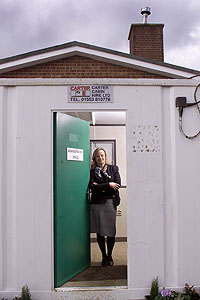 In a very similar vein to last month’s technique page I am going to talk about this portrait of a school head teacher that required a fair bit of messing around to get it right. It seems to me sometimes that the further you get the flash away from the camera, the more interesting the result!
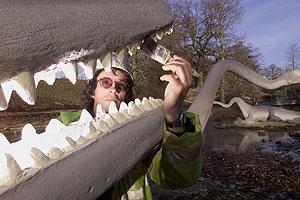 I get a sore throat telling people that flash isn’t just a way of lighting the whole scene. It can, if used properly, pick out a small detail and give it real emphasis. Studio photographers and cinematographers have always known this, so it’s time that us little guys adopt the technique for ourselves. Taking a flash unit off of the camera for the first time is both a frightening and a liberating experience. When that little cartoon lightbulb goes on just above your head you instantly become a better photographer. You might not use the technique, but you know about it and therefore have it as part of your arsenal.
 It is regularly the case that the simplest looking image actually requires a lot of thought, mental arithmetic and good old fashioned compromise. This picture has a number of compromises.
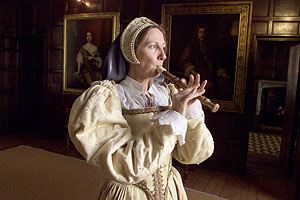 For just over a year I have been writing these “how to do it” columns about the use of flash in my daily news photography. This time the picture I want to talk about was shot with good old fashioned available light. Not only that it was shot using what artists and early photographers loved for their studios – North light.

