For a very long time I have been an advocate of shooting RAW files and processing them through Adobe Camera RAW. Recently I have been shooting a lot of pictures in dark spaces with poor light and have been regularly using ISOs of 6400 and above. What has shocked me is that my normal workflows have been producing results that I find a bit grainy – even with the superb high-ISO capabilities of the latest Canon R series cameras.
Having edited some of the live jpegs transmitted during events it has become apparent to me that I need to get stuck into some of the latest noise reduction options as well as having a better look at what in-camera processing can do.
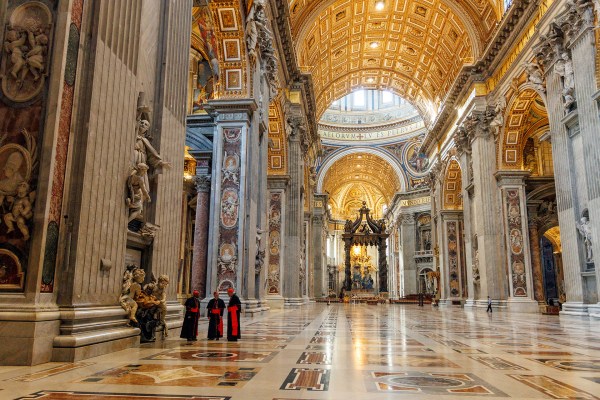
St Peter’s Basilica with three Cardinals and no crowds ahead of an Ecumenical Prayer Vigil in St Peter’s Square. Photo: Neil Turner for Lambeth Palace. 30 September 2023
A couple of days ago I returned from a bit of whirlwind tour to Rome, Azerbaijan, Georgia and Armenia accompanying The Archbishop of Canterbury and his team on a trip where they met politicians, faith leaders, members of the Anglican Communion, internally displaced persons and refugees across those four different countries in a mere eight days. Lots of flights (six in total), lots of being driven around and a few opportunities to shoot meaningful images.
Inevitably a large percentage of my pictures were just recording who met who in which grand surroundings they happened to be in. We met His Holiness Pope Francis at The Vatican and then witnessed two very grand occasions in St Peter’s Square. We travelled to Baku in Azerbaijan where several meetings took place including one at the British Ambassador’s residence with a range of faith leaders. From there to Tbilisi in Georgia and a packed couple of days. The first was meetings with Orthodox, Catholic and Anglican leaders as well as visiting the Peace Cathedral with its adjoining Church, Synagogue and Mosque before going to Gori and the administrative boundary line between South Ossetia and the rest of Georgia.
Almost exactly three years ago I published this picture on my Instagram feed when I was using my time during Covid 19 to go through my archives and get them into better order than they ever had been. Shortly after it went live I had a really nice message from her daughter who wanted to purchase a copy. That one simple act made me go through Instagram and add lots of simple positive comments about pictures that I liked and ever since then I have tried to say nice things about the work of others.
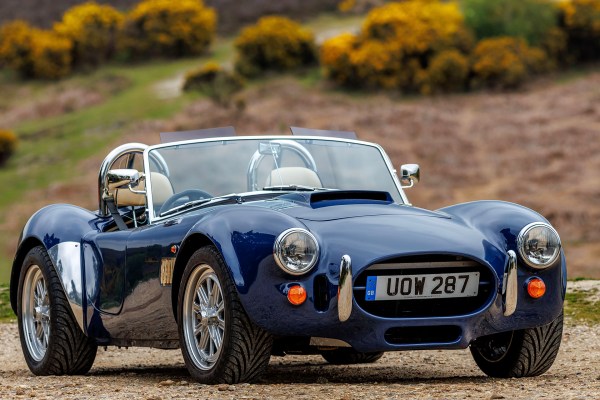
My brother’s car photographed in the New Forest National Park. 04 May 2023. Photo: Neil Turner
Twelve months ago I swapped over from beloved Canon EOS 5D MkIVs to Canon mirrorless. In that time I have had quite a few different mirrorless bodies: two R6s, an R5, an R3 and my absolute favourites the R6 MkII. It wasn’t all plain sailing but I have ended up in a position where, when I tried to use my one remaining EOS5D MkIV on a job, I struggled. From a position of feeling desperately uncomfortable with EVFs (electronic viewfinders) I appear to have performed a complete 180 degree switch and found the optical viewfinder, mirror and prism set up hard to re-adjust to. That’s pretty remarkable given that I had almost forty-two years of using SLRs and DSLRs (with the odd rangefinder) and only one with mirrorless as my main camera option.
In the next few weeks I expect to part with that final DSLR and a few more of my EF lenses and pretty much complete the switch because going between the two options isn’t going to work for me.
Glenda Jackson, Labour Party Prospective Parliamentary Candidate. 25 September 1991. Photo: Neil Turner
On the day that an image library licensed one of my historic pictures for just a little under $6 to a well known publisher for use in print and on-line in perpetuity I have been thinking about the value of photography.
We all take pictures on our phones on a daily basis. It’s easy, it’s somewhere between cheap and free and because of that very few of us truly value many pictures. We all have sentimental and meaningful photographs that we have taken and those that have been shot of and with us but do they even have a monetary value? Rarely.
The ability of pictures to influence and even directly alter our mood or play with our aesthetic sensibilities and emotional states is inarguable. It should be those things that make the images that we produce, view and consume on an industrial scale that that give them their true value. I’ve made a living, a pretty decent living, for almost thirty-seven years from photography and I have been lucky enough to find clients (and an employer) who largely understand what the right pictures are actually worth. I’ve been commissioned to shoot many interesting, funny, sad, dramatic, terrifying and downright mundane things and I hope that it is my ability to produce the most eye-catching, informative and memorable images from them that has a real value.
Before I ask you to imagine a scene, I’d like to point out that (for the avoidance of any doubt) this has never actually happened. There’s a big group of clients and potential clients staging a demo with placards and a megaphone with the chant
“What do we want?”
“Great pictures!”
“When do we want them?”
“As fast as the technology will allow!”
News and sports photographers are all very well versed in supplying pictures really quickly. These days that mostly means transmitting directly from the camera or, as a fall back, moving images via their smartphone or tablet or even sticking cards into a laptop every few minutes during the event to upload from there. I’ve talked a lot about FTP from the camera and have even made a couple of tutorial videos about exactly how to do it with the various Canon cameras that I’ve used. Obviously the concept is exactly the same with Sony and Nikon as well as some of the latest Fujifilm bodies.
It was only last summer that I made the jump to using Canon EOS R6 bodies for the majority of my work and now I’ve swapped to the R6 MkIIs. I had listened to my own wisdom for a few months and calculated that I couldn’t make the business case for going for an upgrade so soon. Then I got to play with a MkII and I changed my mind.
There wasn’t one thing that made me make the swap – it was a list of little upgrades here and there that made my mind up for me.
The EL1 (left) sits next to one of my trusty 600 EXII RT speedlites to show the size difference.
When Canon announced their top-of-the-range flash unit, the EL1, I read the specification and thought to myself “looks nice but probably not worth the money”. It has taken from that announcement until this week for me to actually use one and, I’m slightly embarrassed to say, change my mind.
Not to put too fine a point on it, this is the first hot shoe style flash unit from Canon that I would be confident of using as a day-to-day piece of kit for editorial portraiture with a whole range of light modifiers and be able to leave my Elinchrom kit at home. It’s powerful, has superb recycle times and in both TTL and manual modes it does everything that I might want it to. There are tons of other bits of kit that are on the market competing in this space but I haven’t used most of them and so I will only stick to what I know.
Like every piece of equipment ever made it isn’t perfect so I’m going to quickly examine some of pluses and minuses.