Author: dg28

I've been a full-time editorial & corporate photographer since 1986 and I'm still as passionate about the work now as I was then. These days I also write about photography, teach photography and act as a consultant on all things photographic - so, basically, photography is my professional life.

Some 11 year old thoughts on lens selection…

Choosing the right lens for the job – written in 2000 for http://www.DPReview.com and it still pretty much stands up today – which cannot be said for everything that I thought that I knew when I’d only been in the profession for 14 years!

There are two ways that you can choose which of your lenses to stick on the camera:

  • You can say “there’s my subject and here I am, let’s see which focal length on my zoom works best”.  Sometimes at sports matches and political events you have your position and that is that, or…
  • You could say “I want the effect that my experience tells me a 28mm lens will give me so I’ll select that focal length and move to the right position to make that happen”.

Either of these could be a valid option and, in many cases, the first is decided for you by circumstance. Most news photographers use zoom lenses because it makes sense to have fewer lenses when you are never quite sure what kind of work you will be doing on any given day.

Personally, I use a combination of both approaches. If a position forces me to choose a certain lens then I’m with option 1. Given complete freedom to shoot what I want I’d go with 2. More often than not I’ll go with, say a 24-70mm lens intending to shoot at the 24mm end and get in a position to shoot that way. I will shoot several frames and then start to move around, zoom in and out and shoot a variety of similar images, each with subtle differences. I try to make a point of shooting with just about every focal length available to me on every job. Sometimes I am right about lenses first time but often I’m not. What had seemed like an obvious task for the 28mm ends up being a spectacular 200mm shot and vice-versa but the result is that you often end up with images that are just that bit better.

I nearly always shoot on location so I cannot preplan every detail. Going equipped with a range of lenses is vital. Your choice of lens will depend on so many questions running through your mind. How is this image going to be used? Big, small, upright, horizontal, front page? Double page, back page, website, magazine or newspaper? Is it going to have copy running over it? Will it have more than one usage?

If I cannot answer any or all of those questions, then I’ll shoot every variation I can. Shall I start with a long lens, if it’s a portrait then being further away may relax the subject and I’ll get in with the wide when they are more comfortable. Background, what’s behind them? Can I use a change of lens get rid of a poor background?

Answering self-set questions and making compromises is the key to news photography. Choosing the right lenses helps to reduce the number of technical compromises that you are forced to take, giving you more time to make the creative compromises that you want to make.

Folio photo #04: BMX rider, May 2011

©Neil Turner

©Neil Turner, May 2011

BMX rider Keegan Walker practicing his skills at the Ringwood skate park in the evening after work. This was shot as part of a technique ‘how to do it’ article for Photography Monthly magazine. I’ve had a really interesting relationship with the magazine for the past couple of years in which they have given me free reign to go and shoot pictures that I want to, write about how I did them and simultaneously earn some money AND get some pretty decent portfolio pictures too.

While shooting this particular assignment I found myself having to ask Keegan to be a little more conservative with the height he was getting off of the ramp. Too much space in between him and the ramp just looked silly – believe me, this guy is really good and was very capable of getting more ‘air’ than you see in my pictures. This shot was right at the end of the session when the sun had just gone down and the light was fading fast – my absolute favourite time of day to shoot pictures.

Table top still life and the news photographer

Most press photographers will have lost count of the number of times they have been called into the office of the newspaper they are working for to ‘do a quick still life’. These vary from the simplest product shot to some interesting concept ideas. I thought that I’d share a few with you here:

This slideshow requires JavaScript.

As you can see, I sometimes go to town with them and the stories you see illustrated here are about:

  • The risks of cloning and everyone looking and doing the same (rubber ducks)
  • Managing your credit (cutting up credit card)
  • Handling your savings (fist full of bank notes)
  • The aftermath of a school fire (melted clock)
  • A debate about healthy eating versus too many sweets (cauliflower and mars bar)
  • Reading the fine print in a new employment contract (magnifying glass)
  • Taking a chance with the school your child is going to (rolling the dice)
  • The high cost of housing in certain parts of the country (Monopoly houses on the map)

The main idea is to us decent light, keep the idea simple and not be tempted to try to do too large a picture in the cramped and messy confines of the office. I deliberately added the rolling dice idea because we had some giant dice available, I had an intern to help throw them and there was a nice piece of open ground nearby on a lovely sunny day.

Studio based still life photography is a tough discipline and we still get asked to do creative stuff that should be done “properly”. It has been said that press photographers make great all-rounders because we have to think on our feet and adapt all of the time: I won’t be arguing against that one!

Folio photo #03: Primed for disaster

©Neil Turner, March 2009

Visiting business “guru” lecturer Richard Roberts from GE Capital explains the subprime mortgage crisis to sixth form business and economics students at a Camden secondary school. This was shot as part of a story about a school doing everything it could to give their sixth form students as many extra opportunities as possible. The set included portraits of the head teacher, vox-pops of other students and audience shots of the sixth formers.

Define the word ‘portrait’?

The word portrait is used by photographers all over the world, but it’s meaning is a little blurred. Many use the term to describe photographs of people’s head and shoulders and others use it to refer to any old picture of a person so I want to tie down what I mean by potraiture and then talk a little bit about the subject.

©Neil Turner/TSL, June 2006

In my book a portrait is a photograph deliberately used to say something about the person in the picture. A simple ‘mug shot’ can be a portrait, but only if it says something about the subject and isn’t just an identity card style image. Even a characteristic expression is enough to turn the bland ID card photograph into a portrait. You then have a wide range of images that can legitimately be called a portrait until you get to the other extreme where a photograph of someone becomes more about an activity or a mood than about that person. Although there doesn’t have to be any interaction between the photographer and the subject for the picture to be a portrait, it really helps. I have read all sorts of nonsense about the kind of lens you have to use to make a portrait, or the kind of light that you must use. None of these things matters, a good portrait can be made using any lens and using a huge variety of lighting situations.

There are many traps in making good portraits, and I fall regularly into at least one of them, but the bottom line is that the photographer needs to free themself of as many constraints as possible in order to achieve creative results. With this in mind here are a list of do’s and don’ts that might help you to shoot good portraits – starting with my most regular failing:

  • Resist the temptation to always use the same style and fit each subject into it giving you the same picture over and over with different faces in.
  • Each face is different, so allow the light to help to show that. Not everyone benefits from soft lighting and good portraits are made better with thoughtful lighting.
  • Don’t crowd the sitter. If you get right in someone’s face, you will put them on edge and spoil the photograph – of course if you purposefully want to make someone uncomfortable, then go ahead. A relaxed sitter makes the shot easier to get.
  • Think about relating the sitter to their surroundings. One of the easiest ways of saying something about your subject is to shoot them in their own environment.
  • Think about using props. Well selected items can really add to the message of the portrait- it could be an author with a copy of their book or a child with their favourite toy, be imaginative.
  • Resist the tempation to always use the same focal length lens. Nothing annoys me more than to read conversations about “the ideal lens for portraiture”, it does not exist.
  • Try a wide variety of compositions, portraits can be stunning if the subject occupies only a tiny percentage of the image, and can be equally strong if just their eyes fill the frame.
  • There is no rule that says that ‘you must flatter your subject’ but harsh lighting and cruel angles should be kept for those situations where they are suitable.

To be effective a portrait must say more about the sitter than it does about the photographer and it must say more about the sitter than it does about what they are doing. Most great portraits have interesting but not overpowering light. If the first thing that you notice is the lighting then the photograph is not a complete success, if the first thing that you notice is the ‘nice blotchy backcloth’ then the portrait has truly failed.

Folio photo #02: Girls’ education project, Rajasthan

©Neil Turner/TSL, May 2005

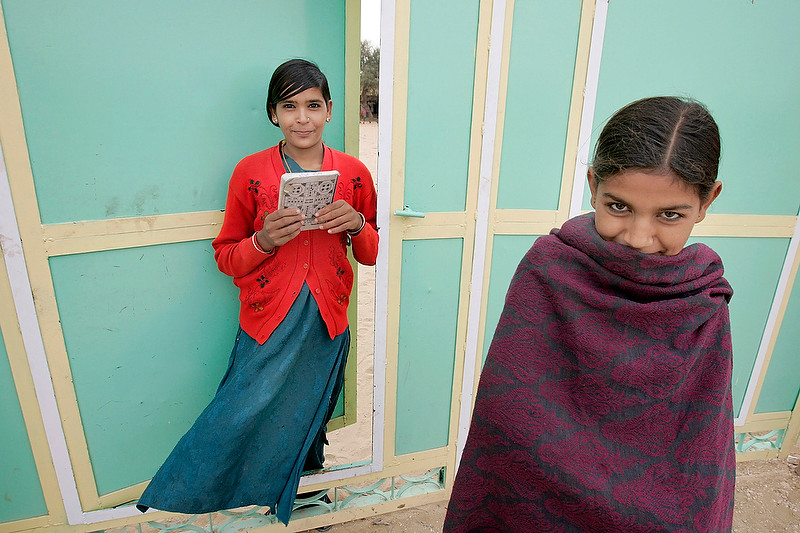
The UK based charity SAVE THE CHILDREN funds a scheme in northern Rajasthan to allow girls between 12 and 15 years old who do not get access to education to come to a boarding centre for a few months in which time they cover the syllabus normally expected to take five years. The students take it in turns to do chores such as fetching water and washing clothes but still take books to read as they work. This picture was taken at dawn when some of the girls were already reading whilst others were fetching water, fuel and cooking breakfast.

Folio photo #01: PTSD sufferer, Eastbourne 2008

©Neil Turner, November 2008

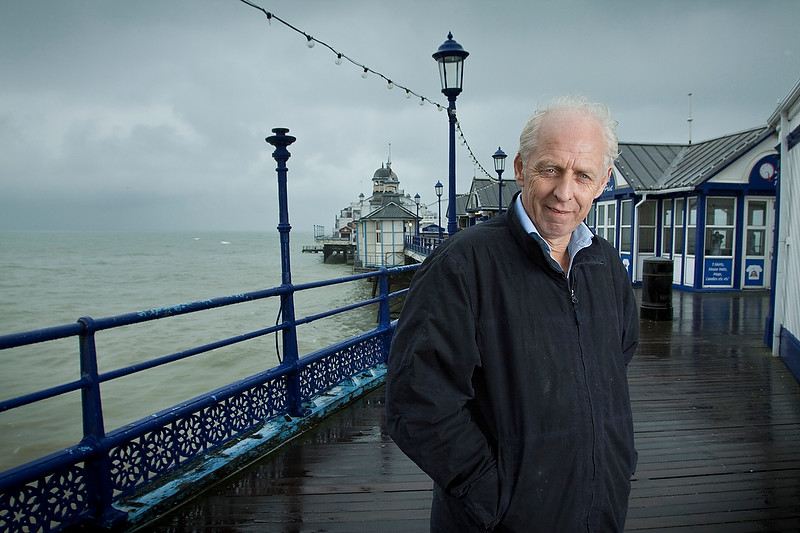
Mr Wilkinson was a Lance Corporal in an army infantry regiment between 1969 and 1984. He served several tours of duty in Northern Ireland through the worst of the “troubles”. He now suffers from a form of post-traumatic stress disorder and has ben helped by the charity Combat Stress to start to overcome the problem. Photographed in high winds and driving rain on Eastbourne Pier for a UK magazine. This picture features some very subtle fill flash from a light bounced off of a very large white painted wall just out of the right hand side of the frame. During the shoot a friend and fellow former soldier was right there providing support for him. This is one of those pictures that felt good to take.

An open letter to the college accounts department

This is a first for me – writing an open letter to a bunch of people that I don’t really know and who, personally, have done me no harm. The accounts people in question all work for educational establishments in the UK and the rules that they are inventing/enforcing/misusing are costing me a small amount of money but far more importantly they are preventing students from hearing from a lot of wonderful professionals who have stopped doing one or two days here and there as visiting lecturers.

To whom it may concern

Thank you for the paperwork that you recently sent to me that I would have to complete before coming to your establishment to work with student photographers for one day. I have looked at the forms and decided that it would take me at least an hour to fill them in. I have also realised that a full-time permanent employee of the college would have exactly the same forms to fill in. This seems a little ridiculous, given that my time with your students will be restricted to five hours this week and no more than fifteen in any one year.

I was also disappointed to read that you wish to have all of my National Insurance and tax references and that you would be deducting tax and National Insurance at source from me even though I am a self-employed professional who is registered for VAT. I know that you will quote ‘advice from the HMRC’ as the reason and I would love to read this advice. Unfortunately a long telephone call to the tax authorities and a diligent search of their website have failed to turn up this ‘advice’.

Presumably, having taken tax from me at source, you would be obliged to issue me with a P60 tax certificate at the end of the financial year. This was a piece of information that HMRC’s advice line was able to give me. I am sure that all of this form-filling and certificate issuing covers your back quite nicely. I am equally sure that if you have to repeat the same process for every visiting lecturer it has the added benefit of creating or at least securing the job or jobs of members of staff within your department.

My problem is this: I used to do visits to a lot of colleges and I have refused to get involved in this PAYE farce because for every different college that has to send me a P60 I have to fill in another page on my tax return because each is treated as a separate employment. In one year I have been known to visit eight different colleges – eight extra pages on my tax return, and I have to get that each of them checked by my accountant. Time is money – especially at Chartered Accountant rates. This is on top of the extra hours I have to spend filling in your own forms (which arrive as badly laid out Microsoft Word documents with a good deal of redundant information asked for by the way) and, more often than not, having to chase for payments because you award yourselves 60 days credit as well.

How hard would it be to accept that I want to simply send the college an invoice for my time and my expenses instead of going through this dense bureaucracy? How hard would it be to realise that I am a legitimately self-employed professional who has no intention of ripping the system off and avoiding my obligations to the treasury? I am sure that HMRC never intended whatever rule you are citing to actually get in the way of the students getting contact with professionals. I know that it isn’t just me. I know a lot of other self-employed people who are at the top of their game who want nothing to do with very occasional visits to educational establishments for the very same reason.

So, no thank you. I will leave it to you to explain to the head of the course who wanted me to come and share my 25+ years experience with their students for a fee that was already a lot lower than I would charge for taking pictures why I won’t be coming this year. I’ll let them know that you will be the one explaining and I will apologise for the fact that your establishment has been added to the lengthening list of places that I won’t be supporting until you change your college’s rules.