anecdote

When Time Out did real news…

Right back in the early days of Insight Photographers, the small agency that we ran from an office in the rather un-trendy (how times change) Hoxton area of London, we used to shoot a lot of stories for Time Out magazine. Some weeks they would have five or six pages of real news and they used to commission some nice work too. One of my favourites from that era was this picture of a man who was part of a group of residents and squatters trying to stop the Department of Transport from bulldozing their houses to build a new piece of road in the Archway/Highgate area intended to speed up the journey up the A1 from Holloway (bear with me if the geography of north London bores you). When I arrived on a hot day from the a brisk walk up from the underground station the bailiffs had gone.

Archway Jack. ©Neil Turner/Insight, May 1989

I found this chap looking rather pleased with himself and asked what had gone on. He just smiled and said “we’ve seen them off”. I asked him if it was OK if I shot his portrait and he agreed. After that, I got my notebook out and asked him his name. He thought about it for a few seconds and then said “call me Jack… Archway Jack”. Of course I asked if that was his real name but he smiled and walked off trying to whistle a tune.

The News Editor somehow tracked him down, got some good quotes from him and the story probably got more space than a simple eviction piece would have. A definite case of “just because the story you were expecting didn’t work out, it doesn’t mean you haven’t got a good story anyway”. All of the Time Out news reporters and editors that I recall went on to do great things. I guess that it was a mix of choosing the right people and being a great place to hone those journalism skills. Quite a few of the freelance photographers that they used did OK too.

This was shot on Kodak Tri-X film using a Nikon FM2 camera and a 24mm f2 Nikkor lens

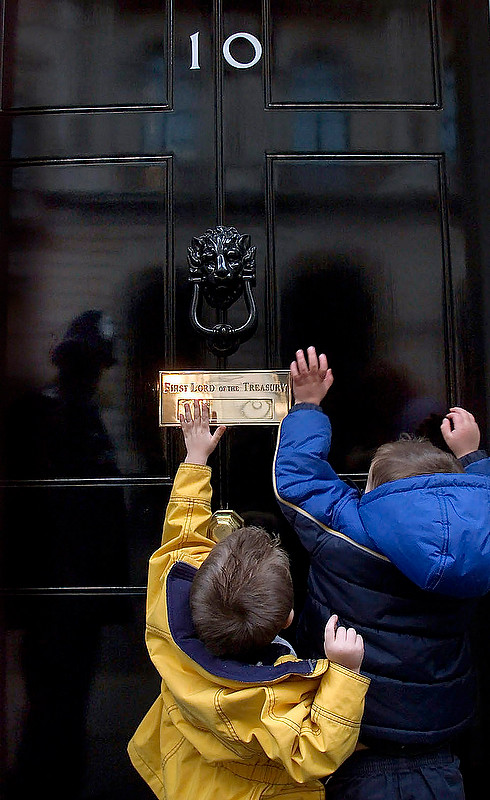
Folio photo #06: 10 Downing Street, November 2001.

©Neil Turner/TSL November 2001

Children from a Leicestershire nursery school try to hand in their petition against closure to No.10 Downing Street.

This was a very ordinary story about yet another petition being handed in at No.10 which became extraordinary when the Police Officer on duty allowed the two children to try to knock on the door and then stood back and laughed as they kept trying.

It was a very cute moment on a day where the world’s media were not watching and the reflection of the officer in the shiny black door makes this a favourite picture of mine. They never reached the door knocker and so the officer eventually helped them out by knocking it for them.

Christmas at f1.4

Main Street, Hawkshead Village. ©Neil Turner

Whilst enjoying a few days away with the whole family in the Lake District over the holidays I shot a few pictures for my own pleasure and for the family album. For no other reason than “I wanted to” most of them were taken at the maximum aperture that the lens could manage – which, given that I mostly used a 50mm f1.4, was f1.4!!! It was great to be away from the big city for a while and take in the countryside and wander through some small towns and villages.

This was taken in Hawkshead Village – a large part of which was refreshingly closed…

Why dg28?

Originally posted on my pre-blog in 2009 but I still get so many people asking why that I thought I’d post it again…

Why would a photographer whose initials are NT call his website dg28? It’s a question that I get asked with amazing regularity and, for the eight years I have had the site, I have always enjoyed the mystique. I did a seminar last week for some London Strobists and the first question that I was asked was “why dg28?” Every time I tell the story it gets less exciting – unlike most anecdotes which seem to get longer, more interesting, more adventurous and even more heroic. I have finally decided to tell all. Right here, right now..

It all started back in 2000. I had a site hosted by AOL which had a domain name longer than anything you could properly remember and content which was attracting quite a bit of attention. I had written a couple of short pieces for Phil Askey at DPReview and sitting in a London bar he advised me to get some proper hosting and a snappy domain name. Good advice from someone who knows a thing or two about photography websites I thought.

A couple of days later I was doing one of my visiting lecturer appearances with some highly motivated post-graduate photojournalists telling them all about the digital process – something that I was already used to but few of them could get their heads around. It was a successful lecture and we ended up in another bar for a couple of drinks. We talked about photography, photographers and photojournalism for quite a while before the topic turned to the old chestnut of “what was the first record that you ever bought?”

I always like this one because I have a very good answer. One member of my family who has otherwise excellent taste started his collection with “Ernie and the fastest milk cart in the west” by Benny Hill – something which still embarrasses him. Being proud of my record I spoke first and told the students that I had bought Metal Guru by Marc Bolan and T-Rex at which point one of them (a young Canadian guy) said “that’s great. You bought Metal Guru and now you are our Digital Guru…” Cue light bulb moment… digitalguru would be a brilliant domain name.

The next day I got onto a registration website only to find that it was gone. As were several variations. Then I remembered Phil Askey saying that short is good so I tried variations on DG and finally settled on dg28.com because the dg bit is for digital guru and the 28 is for the day each month (the 28th) when I used to post updates.

You see what I mean, it’s not actually that interesting but it makes for a decent story – one which I hope to be telling less often in future.

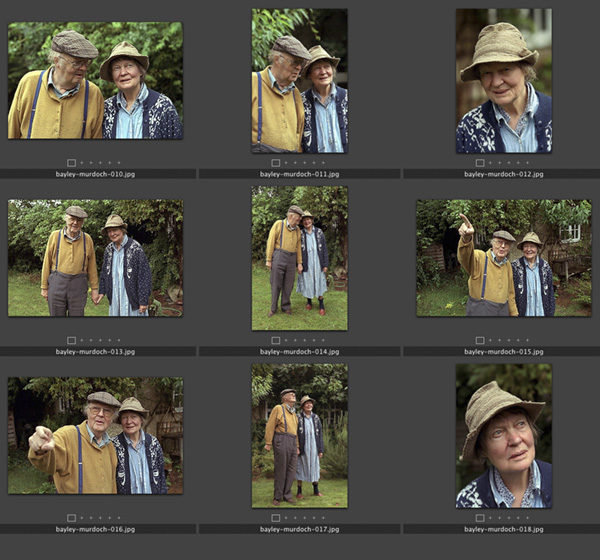
Contact sheet: Dame Iris Murdoch and John Bayley, Oxford, September 1998

When this set of photographs, one of the last of her, was taken Dame Iris was in the latter stages of Alzheimer’s and her husband described her as being like “a very nice 3-year-old,”. She died in Oxford on February 8, 1999. In his memoir “Elegy for Iris” John Bayley portrays his brilliant wife lovingly but unsentimentally. He was in turn very much in love with her and very caring about her when I spent a brief time shooting this set of pictures. She was unaware of who I was or what I was doing but his hand was always in hers and she seemed to accept that everything was OK because of that.

The original caption simply read: Professor John Bayley and Dame Iris Murdoch photographed in the back garden of their home in Oxford. 09.09.1998 photo: Neil Turner/Times Higher Education Supplement. ©News International

The Times Higher Education Supplement was running a review of Professor Bayley’s book about his wife and the Picture Editor had asked me to drive to Oxford to shoot his portrait. While I was driving between London and Oxford I was told that at least two other photographers would be shooting before me and that it was “unlikely” that Dame Iris would be in the pictures. I don’t mind doing portraits of authors on those days when you form an orderly queue with reporters and television crews for your chance to do the same five minute job but this one seemed a little less “organised”.

I arrived in that part of Oxford where it seems every second home is owned by a Nobel Prize winner or a celebrity academic to find their house looking a little sorry for itself. The front garden, the fences and the paintwork all needed some TLC and I quite like to shoot portraits around those areas. I had twenty minutes to wait and started to think about the light, the colours and watch for other photographers and journalists to come out. Nobody appeared so I grabbed my gear and knocked on the door. When Professor Bayley answered, he looked like the gardener but spoke exactly how you might imagine an Oxford Professor would.

In the film “Iris” which stars Dame Judi Dench as the older Iris Murdoch the house is untidy. Actually having been there I can tell you that untidy doesn’t even come close. There were books and newspapers everywhere. Televisions were on the BBC in almost every room and there was Dame Iris herself sitting quietly at the kitchen table. I was nervous about asking if she would be available for the pictures but Professor Bayley seemed to know what I wanted to ask and told me that he wanted her to be in the pictures with him but that she found flash disturbing. I was shooting 35mm colour negative film at the time and so we decided that the house was too dark and too untidy to be a good location for a portrait. Ironically these days I would have probably done some pictures on my 5D MkIIs using the small amount of available light indoors at 3200 ISO but there was no way that 800 ISO colour negative would cope.

The beauty of these pictures is that nobody from the publishers had been round to tidy up, dress them up or even attempt to sanitise the images. Because of that we were able to make some lovely portraits. We chatted about garden birds, foliage and the English weather. It was a surreal time.

In the end I shot 72 frames (two rolls of 200 ISO Fuji Colour Negative film) which I drove back to London where the film was processed by the newspaper darkroom and all scanned onto a Kodak Photo CD at a resolution unthinkable for a digital camera at the time – the equivalent of a 6 megapixel camera when the Kodak DCS520 was just becoming available with it’s 1.9 megapixel chip. The cameras used here were a Canon EOS1V and an EOS1N with 28-70 f2.8L and 70-200 f2.8L lenses.

Five people that I will never forget

Originally posted in July 2009, this was a very personal reflection on some very important people in my career.

I suspect that most professional photographers keep a pool of pictures that they use for promotional, exhibition and portfolio purposes. I have always had a folder full of my favourites and now that I am freelance one of my regular tasks is to update it. The death of Mr Henry Allingham who was, at the age of 113, the oldest surviving veteran of the First World War made me go through and think about some of the people that I have had the honour of meeting and photographing.

My folio folder had no fewer than five images of people who have died since being photographed by me. As a percentage, that’s not out of the ordinary and three of them were very elderly indeed. Each of the five people had a big effect on me for various reasons and I’d like to share some memories of them with you.

©Neil Turner/TSL

Dame Iris Murdoch was a brilliant novelist whose life story was made into a film “Iris” starring Dame Judy Dench. I photographed Iris Murdoch and her husband John Bayley in the garden of the home that they shared in Oxford where he was a professor of English. She was, by the time that this picture was taken in 1998, suffering from the latter stages of Alzheimers’ – which is a terrible disease that robs the intellect and then the personality of the sufferer and places a great strain on those who love and care for them.

Dr Bayley described her as being like “a very nice 3-year-old”. This picture was on the back cover of the book that he wrote about their life together.

The house had not been properly cleaned for a long time and there was a television in every room playing the same programme.

When I went to see the movie made of her life two women in the row behind me made comments about the house that they lived in and that she could not believe it could have been as bad as the film made out. The temptation to turn around and tell them that the film did not tell even half of the story was strong, but I resisted. She died in Oxford on February 8, 1999.
©Neil Turner/TSL

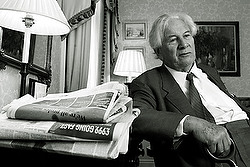
Sir Peter Ustinov was an actor, writer, director and raconteur. This picture was taken in his London hotel shortly before he died in 2004 aged 82. I’m not going to attempt to precis his life, but I’d like to tell my story about my time with him. I was searching for something to chat to him about and I used one of my “fallback” topics of what I had heard on the radio on my way to meet him.

Every morning BBC radio 4 has a news show called “The Today Programme” which that morning had a feature about the USA and communism. I mentioned Senator McCarthy and Sir Peter then delivered a wonderful and vitriolic soliloquy on the topic of McCarthyism – job done. I’m pretty sure that you would have had to pay a lot of money for a forty minute private performance from Sir Peter. I feel so privileged to have had it for free.

©Neil Turner/TSL

When I met and photographed Mr Henry Allingham he was already 112 years old. Despite his amazing age he was very coherent, had a very British sense of humour and was interested in everyone and everything around him.

I found meeting him very humbling and, when he died, I found myself counting the ways in which our world has changed during his lifetime. Cars, planes, computers, atomic bombs, heart-transplants have all become commonplace.

Queen Victoria was still on the throne of Great Britain when he was born and women did not get the vote until he was in his late twenties.

©Neil Turner/TSL

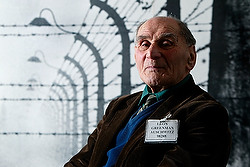
Leon Greenman OBE was the gentlest of men. Meeting him and being given a personal tour of the Holocaust Museum in London where there is a display featuring a large number of his personal possessions from before and during his time in the concentration camps had a profound and lasting effect on me.

His striped uniform with it’s Star of David, photographs of his wife and children who died in the camps, pictures of his life before the Nazis came and took the Jews away were there and he was there to talk about them in a factual but moving way.

I will never forget the day I met him and I hope that the amazing work he did to educate subsequent generations about the evils he witnessed goes on.

©Neil Turner/TSL

The death of people who have lived long and valuable lives is sad. The death of a child is far sadder. I met Fleur at a children’s hospice near Luton a few weeks before her untimely death. She was a sweet child who wanted to know all about everything.

Keech Cottage Children’s Hospice in Bedfordshire provides respite and terminal care for children with life limiting conditions. It is not a sad place. The children there are pretty much like any other children.

The families that I met had come to terms with the fact that they would lose the child that they loved and were making the most of their time together. I was welcomed, I was royally entertained and I would go back tomorrow if they’d have me.

The photographer’s “uniform”…

I was told the other day that I was wearing my uniform with pride. What uniform you may ask? It seems that the uniform in question was that of a freelance news photographer. I have known for many years that many of us tend to dress in similar ways: we all spend a lot of our time kneeling down or lying down to get the best angle. In the winter we all get cold when we are working outdoors and so it comes as no surprise that we all choose similar clothing. So what was I wearing?

The first thing that I did was to look down and make a mental note of my attire. Heavy duty winter coat, fleece scarf, heavy weight denim jeans and my much loved Timberland boots. They are ancient, they are warm and the tread is still pretty good. These boots have waded into the sea, they have stomped through Scandinavian snow and they have marched across many miles of the New Forest with the family. Most importantly of all, they have seen me through a lot of miles on the streets of London.

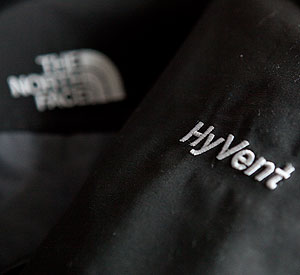
You’d be right to think of this as a uniform – how many of my colleagues have a black or grey North Face jacket on their backs? It wouldn’t be an exaggeration to say “most”! I have no idea if mine is the latest technology (its Hyvent, whatever that is) or the coolest (black and grey?) but it works amazingly well. This too has kept me warm in the northern areas of Finland in the depths of winter. In fact, I even have a warmer one that I find it hard to wear. That McMurdo parka was a big investment for me and I’ve worn it twice.

I have just remembered that I was also wearing some amazing grey fleece gloves that my brother bought me a while back. They are made by Rohan and they are perfect for a photographer. They allow you to use the camera well enough (even the tiny buttons on the back of a Canon EOS 5D MkII) and manage to keep the worst of the chill off of your hands. The trouble is that they don’t have a name on them and the Rohan website doesn’t show any gloves so I guess that the recommendation isn’t all that helpful.

I’ve written before (although I really cannot remember were) about the photographer as chameleon. The idea is that we need to adapt to our surroundings and sort of blend in. In the city, surrounded by other members of the media it is pretty simple – once you’ve seen one black winter jacket with cameras hanging from it then you’ve pretty much seen them all. It gets trickier when you are the only one there. I’ve done jobs that required a dinner suit and others which asked for high visibility vests and construction helmets (more of the latter recently) but the majority of the jobs don’t come with a written dress code. The trick is to go for the right kind of smart casual wherever possible and to cover it all up with an expensive looking coat.

What you wear says plenty about you. Looking like a photographer tends to help you be accepted as a professional and helps you shortcut the whole credibility issue. I want my Doctor to wear a white coat and my postman to have the right clothing too. If you look like an archetype, if you play along with people’s prejudices it tends to relax them. If I turn up to shoot someone’s photograph dressed like a postman or a doctor I’m going to have to work that little bit harder to convince them that I know what I’m doing and that I am a professional photographer.

So that’s my winter uniform sorted. What shall I wear this summer?