beach

Space makes you think

In general I am a fan of tighter compositions, but there are some subject matters that are just crying out for space. A large area of foreground or background can lend an enormous amount of emphasis to an image. Placing a small subject in a large space helps you to tell a story. If you place a person in one of the bottom corners you might suggest loneliness or vulnerability, whereas placing them at the top may well imply the opposite.

©Neil Turner | Bournemouth | January 2005

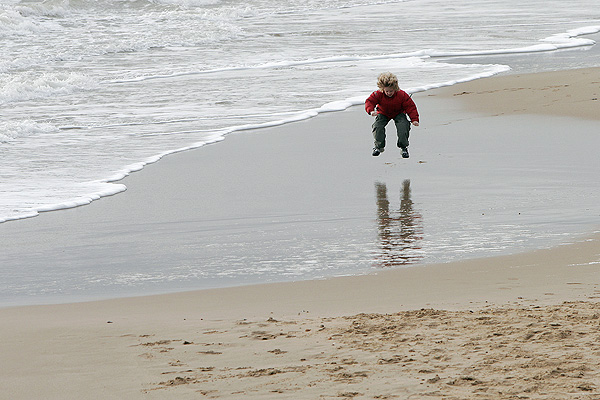
This photograph of a child playing on the beach in the winter suggests that he is really enjoying his freedom. The photograph was taken from quite a height (maybe 25 feet) to isolate the sand from the confusing background and the fact that he is nearer the right of the frame suggests that he has a lot more room to head into. The oldest rule about composition – the rule of thirds – is being observed.

If the space around the child in the photograph was full of details then the impact of the composition would be lost. You would inevitably give the image more than one subject and spoil the simplicity which is the real secret of the picture. Of course if the child’s mother was in another area of the otherwise empty frame then that would give another message altogether, the space would still be making you think – but differently.

Cluttered photographs are much harder to pull off, simple images are often more effective and this image proves that simple doesn’t necessarily mean tight.

…and we’re off

20120101-200818.jpg

©Neil Turner, March 2010

The sub heading of this blog is “me writing about photography because I want to” and that’s the truth. Post number 47 and it’s the start of month two.

2012 is underway and I’m planning to do quite a lot of blogging as the year goes by. I’m going to talk about education, press photography, photojournalism, light, technology, workflow, software, cameras and just about anything else that I come across in the day job.

If you read the blog and come up with any questions for me please let me have them. In the mean time, let’s hope that 2012 serves us all well.

Shooting in less than favourable weather.

Another re-posting; this time posted in April 2009 but from a job that I shot in 2006…

One of the best things about being a photographer is that you get to do some pretty odd things. Sometimes you climb to the top of a tall building and have a look at the view. At other times you get to meet interesting and amazing people and take their pictures. At other times you have to get up early on a bleak winter’s day, go to the beach, wade into the water just after dawn to get the tide and the picture. It all adds to the fun of the job.
©Neil Turner/TSL

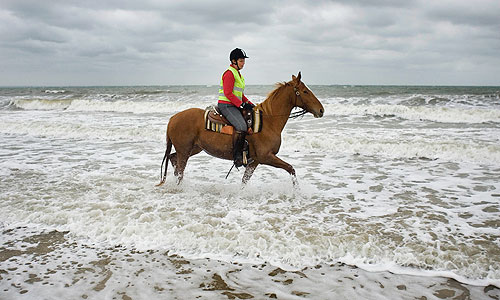
I shot this commission a while ago and I have been meaning to write it up since then. The story was about a school head teacher who owns a horse that she keeps in stables near the sea. She refers to her horse as her “work life balance” – something that we all need, but few of us have quite such a visible symbol of it!

Being a teacher, she is at school most days. During the holidays she gets away to the coast and rides whenever she can and if the tide is right she can ride on the beach. It was an October morning and we met at dawn in the car park near the stables. My brief was to get a double page spread for a magazine which showed her enjoying herself.

Of course photographers rarely get to choose the weather and it was raining with a reasonably strong wind. The tide was just right (we checked the tables in advance) and so we started to shoot some pictures of her riding on the sand. It’s a stretch of coast that I know well and I knew that there was a high chance of poor weather. There’s nothing that you can do when the deadline is tight except to shoot the best pictures that you can.

The picture above was taken towards the end of the session and by this time it was getting lighter. The exposure was up to 1/500th of a second at f3.5 on a 24-70 f2.8L lens. We had started at 1/125th at f2.8 and the light was doubling every twenty minutes or so. Unusually for me I shot this job without lights, without flash – just good old ambient. Had there been any sunshine, there would have been the complicating factor of having to shoot almost directly into the sun if I wanted to stay on the beach.

Most of the pictures were taken on a 70-200 f2.8L lens and I made use of a monopod whilst the light was low. I shoot on beaches quite a lot and I always take a large piece of plastic to sit my camera bag and anything else that I put down onto. If the plastic sheet is big enough, you can also use it to wrap everything but sand still gets in and salt still seems to coat everything.
©Neil Turner/TSL

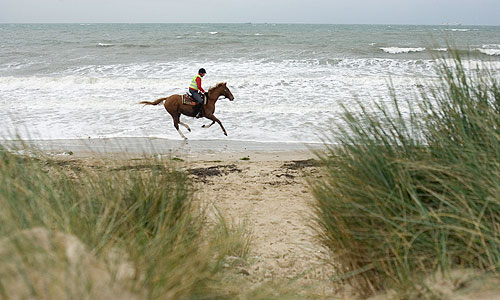
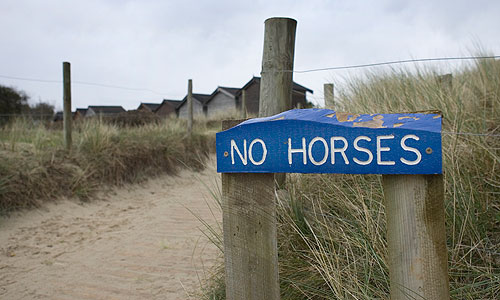
I always try to give picture editors a lot of choice and to give them small “drop-in” pictures to use if they need a second or third image for an article. The wider the variety of magazines and papers that I work for, the more I find that the drop-in picture gets used in unusual and creative ways. Magazine clients appreciate choice.
©Neil Turner/TSL

The reason that I wanted to mention this job was the combination of the early start, the poor light, the wind, the rain and getting absolutely soaking wet wading knee deep into the sea. Maybe it was because of all of these factors that I enjoyed it – who knows.

I wrote a while ago about my addiction to Timberland boots and I was very grateful for them on this job. My jeans were wet but my feet stayed dry.
Pier divers in Bournemouth

Several (actually all) of my recent blog postings have been about old pictures that I have found lying around or in searches for something else and why they are important to me. The latest one shows some young guys diving of of Bournemouth Pier in the early 1990s and it was part of a set that I did for a trades union magazine. The commission was as simple as it was vague – to produce images of the seafront at Bournemouth that could be used in a preview of the union’s annual conference that was being held in the town.

Bournemouth Pier divers. ©Neil Turner, June 1992

Commissions in those days always attracted expenses and that invariably included the cost of film and processing. The job was only a half-day but what a beautiful half day it was. The sun shone, the beaches were packed and nobody seemed to mind me wandering over and shooting their picture. The people diving from the pier made some great pictures but the dangerous nature of what they were doing meant that the client didn’t even want to consider them.

Shooting slide film in those days carried certain risks, not the least of which was that there was only one original. If that got lost or if the client decided to hold on to it there was nothing that could be done about it. Affordable scanners didn’t really exist and getting duplicate transparencies made was very expensive. These days we can just keep as many copies as we have hard drives and in the days of black and white it was always easy enough to knock out an extra print but there was that scary and even precarious time where you had to get the exposure spot on, hope that the film was processed correctly and that the couriers wouldn’t lose the package containing your work. It is quite amusing to think that “fast turnaround” was measured in hours and the three days or so that it would have taken me to get these images from the camera to the client would have seemed eminently reasonable.

How times have changed!

I’ve always liked this picture. It was shot on a Nikon F4S camera with a 24mm f2 Nikkor using Fuji RDP100 transparency film

Dusk… my favourite time of day for shooting pictures

Bournemouth beach. ©Neil Turner, July 2009

Anyone who knows me or who has ever looked at my folio will know just how much I like being by the sea and that the beach is my single favourite location. I’m a lucky guy and I live on the south coast of England – in the same town in which I was born, Unimaginative, I know – but it’s a great place to live and take pictures. Shooting portraits against the background of a mean and moody sky at dusk is one of my favourite things to do and shooting those skies without people is almost as much of a joy.

Going on the beach as the sun goes away is also a great time to capture very saturated colours. The picture to the left of the breakwater (we call them groynes here in Dorset by the way) with the low angle sunshine is a great example of the clarity and beauty of the evening light when the sun actually shines in the UK. I have no other reason to post this picture than to show that every once in a while you get light so pure, so perfect that no amount of lighting can improve upon it.

Bournemouth beach. ©Neil Turner, July 2009

This picture of the sun going down over the cliff tops is another story. I was walking on my own and took an EOS50D along for the fun of it. I didn’t have anyone to photograph and my lights were back in the car anyway so I had to shoot the sky whilst wishing I had someone interesting in front of the camera!

This kind of sky seems to be most common at the end of the summer and into early autumn. I’m looking forward to a few more and, with luck, I’ll get to shoot some portraits with them too.