Author: dg28

I've been a full-time editorial & corporate photographer since 1986 and I'm still as passionate about the work now as I was then. These days I also write about photography, teach photography and act as a consultant on all things photographic - so, basically, photography is my professional life.

Words of wisdom

Back in 2004 I was pretty prolific. I was writing technique and opinion pieces on my website at least once a month, if not more. Times have changed, I’ve become less prolific and I have a lot less spare time on my hands too. Going back through some of the gems (and some of the cringe-making stuff) I am re-posting (and re-re-posting others) because they still represent what I think. As I say, from 2004…

It has happened again. I have had a letter from a student of photography asking me a really simple question, and I have spent so much time over-complicating the reply that it has ended up here on my web site.

“…so” said the innocuous e-mailed question “what is the best piece of advice anyone has ever given you about either being a professional or about photography in general”.

Innocent question? No! I have spent ages formulating my reply, and I’m still not sure that I’ve cracked it…but, for what it’s worth, here is my reply. The answer is in the last sentence.

 There is a stage in your career where you learn so fast that your head spins at 6,400 rpm at the end of every day. Slowly your learning rate goes down, but the quality of the newly found knowledge probably goes up. Similarly, when you are a real “newbie” there seems to be a queue forming right around the block to deposit sage truths right into your knowledge bank. (I am mixing my metaphors here, but I think it make sense anyway). Once you have been around a while it takes more courage on the part of the “old hand” to dish out the advice until one day you find yourself imparting more gems of truth than you will ever receive again. Sadly I’ve been at that latter stage for so long now that I really should get myself a Gandalf beard, but I do remember a time when I did qualify for the advice soup kitchen.

In chronological order here a few of the more choice bits of advice that I received before my career got going and I hope that you are either informed or amused by them.

  • There’s no money in photography – school careers counselor 1980
  • Never shoot wider than f8 – manager of the camera shop where I was working 1983
  • There’ll always be a market for pictures of nude women – sleazy shop customer 1983
  • My career will be over long before newspapers shoot colour – local newspaper photographer 1983 (still working)
  • Nobody will offer you a place at college with a folio like this – admissions tutor 1984

Early advice and comment fell way wide of the mark. There was plenty more to be had, but it was all as bad. Once I had been accepted onto a college photography course, the quality of the advice picked up and the staff lecturers were full of wisdom, the best example of which I still remember…”Don’t listen to anything I say, but hang on every word of the visiting professionals we bring in to talk to you”. My peers and I did listen to the wise words that came our way, and we quickly worked out which were worth obeying, which needed to be stored for later and which could be safely forgotten. Some of our visiting tutors gave great practical tips…

  • Keep every receipt. Claim everything against tax and make sure you get paid.
  • The business is full of sharks. You have been warned.
  • Get a great portfolio, keep it up to date and never let it gather dust.
  • It’s good to know how to make beautiful prints, but only so you can tell your printer where he’s going wrong.
  • A distinctive style is good, just as long as it doesn’t go out of fashion.
  • Spend as much time looking at other people’s work as you do fretting about your own.
  • Only buy enough equipment to do the bread and butter jobs. Renting makes sense.

I’ve lost count of the photographers who told me which developer to process my Tri-x in, or which pro lab did the best job on transparency film. Valuable though these things can be, they aren’t going to get you noticed. The people whose advice did the most were those who took the time to look through my folio and be constructive, those who would show you their work and talk candidly about it and those who would have a drink with you and tell anecdotes. Stories give context to advice, real life situations add relevance. Photographers who can tell you which picture editor likes what and who can advise you who to talk to are saints, but some of the best advice came from my peers. People at roughly the same stage in their careers as me were always worth listening to and my respect for the whole concept of “peer learning” is huge.

These days it seems that we are constantly forging new paths and breaking new ground. The whole digital experience has taught me that there is somebody somewhere who has just worked through the problem that you are currently experiencing. Sure, you need to work out who is a reliable source and who is full of BS but the information is out there.

Now for the one piece of advice, well the best three. In reverse order they are.

  • Whilst it might seem a privilege to make your living in such a wonderful job, you still have to pay the bills.
  • Its not good enough to take good photographs most of the time, you have to take great ones all of the time to survive
  • Never take advice on photography from someone who tells you that there is only one way to do something!!!
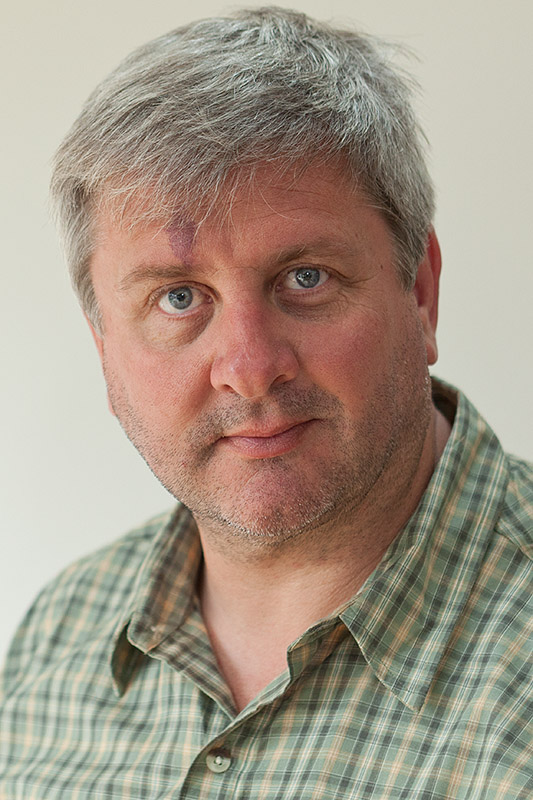
Why dg28?

Originally posted on my pre-blog in 2009 but I still get so many people asking why that I thought I’d post it again…

Why would a photographer whose initials are NT call his website dg28? It’s a question that I get asked with amazing regularity and, for the eight years I have had the site, I have always enjoyed the mystique. I did a seminar last week for some London Strobists and the first question that I was asked was “why dg28?” Every time I tell the story it gets less exciting – unlike most anecdotes which seem to get longer, more interesting, more adventurous and even more heroic. I have finally decided to tell all. Right here, right now..

It all started back in 2000. I had a site hosted by AOL which had a domain name longer than anything you could properly remember and content which was attracting quite a bit of attention. I had written a couple of short pieces for Phil Askey at DPReview and sitting in a London bar he advised me to get some proper hosting and a snappy domain name. Good advice from someone who knows a thing or two about photography websites I thought.

A couple of days later I was doing one of my visiting lecturer appearances with some highly motivated post-graduate photojournalists telling them all about the digital process – something that I was already used to but few of them could get their heads around. It was a successful lecture and we ended up in another bar for a couple of drinks. We talked about photography, photographers and photojournalism for quite a while before the topic turned to the old chestnut of “what was the first record that you ever bought?”

I always like this one because I have a very good answer. One member of my family who has otherwise excellent taste started his collection with “Ernie and the fastest milk cart in the west” by Benny Hill – something which still embarrasses him. Being proud of my record I spoke first and told the students that I had bought Metal Guru by Marc Bolan and T-Rex at which point one of them (a young Canadian guy) said “that’s great. You bought Metal Guru and now you are our Digital Guru…” Cue light bulb moment… digitalguru would be a brilliant domain name.

The next day I got onto a registration website only to find that it was gone. As were several variations. Then I remembered Phil Askey saying that short is good so I tried variations on DG and finally settled on dg28.com because the dg bit is for digital guru and the 28 is for the day each month (the 28th) when I used to post updates.

You see what I mean, it’s not actually that interesting but it makes for a decent story – one which I hope to be telling less often in future.

Photographic policy

Just in case you haven’t noticed, I’m a photographer. I also teach a bit of photography and write about the subject too. The latest addition to my ‘portfolio career’ is what I can only describe as photographic consultancy. I have done a few corporate training sessions aimed at people who aren’t necessarily shooting pictures but who are handling them on behalf of their employer. It started off with some PR managers from a range of Universities a few years ago and has been a very small part of what I do ever since then.

This week, I did a bespoke session for an NGO talking about copyright, licensing, permissions, model release, photographing children and how to get PR pictures used in the media. All of that in less than one day meant that we didn’t get right down into the finer details. For some organisations the knowledge that they need to do more will be enough to get them going. A company wide photographic policy has to be a ‘must-have’ with the amount of images, websites, pamphlets, brochures, publications and social media in circulation (officially and otherwise).

We are in the Christmas party season and a good, well publicised policy telling staff what is and is not acceptable would be very useful. Twitter, Facebook, Flickr and the rest are public platforms and un-wisely placed images or video are bad news. It isn’t only about stopping bad stuff happening though; good pictures need to be licensed, captioned and stored properly. The quantity of pictures held on company systems seems to have expanded exponentially and it makes sense to have policies that make use of the good stuff whilst making that the bad, the off-message and the out of date images are never seen.

As a professional photographer it is really hard to see photographs sourced from keen amateurs, micro stock sites and crowd-sourcing as anything other than lost income but that is the way the world has gone and we need to learn to work with it. People like me, with a lot of experience in the industry, can help to form policies for small, medium and even large businesses based on our knowledge of the law, ethics and technical matters. It isn’t going to cost a fortune and any company who ignores the concept of a photography policy could end up regretting it.

Welcome to the new Blog…

I have finally done it. The pre-blog was intended to last about six months and it made it past three years. I have finally found the time to migrate a lot of the newer posts to this shiny new WordPress version with all of the bells and whistles that you’d expect from a templated site.

When I get time, I will migrate even more of the old content over to here so that it can be better indexed, more easily searched for and release some space on my main dg28 site. To those of you who have followed the blog patiently checking back from time to time I’d like to say ‘thank you for your patience’ and to let you know that the RSS feed is up and running.

The BPPA & the Leveson Inquiry

When the celebrities queued up to give evidence at the Leveson Inquiry in the culture, practices and ethics of the press we had no idea that they would, one by one, single out photographers for criticism. They seemed almost entirely unable to tell the difference between professional press photographers and the people with cameras who chase celebrities to get the pictures that certain types of magazine love to buy.

The BPPA’s first response was to apply to the inquiry to become a “Core Participant” and then to publish the open letter we sent to Lord Justice Leveson. You can read it here:

That was followed by countless posts from photographers and commentators largely agreeing that

  1. Photographers are not one homogenous mass
  2. The Leveson inquiry was in desperate need of some balance on the matter
  3. Some of the celebrities giving evidence were having issues with their memories

If the future of press photography, the avoidance of OTT privacy laws or even the freedom of the press matter to you, can I suggest that you pop over to The BPPA Blog and then to The BPPA Facebook page and follow both. Things are happening fast so maybe you should have a look at the Twitter feed too!

How often do you service your gear?

How often do you get your cameras, lenses or lights cleaned and serviced professionally? Every six months? Annually? Every other year? When things go wrong? Sadly, for most professional photographers it is the last one – when the kit goes wrong and needs to be fixed. Almost all of them get their cars service every ten thousand miles or when the service warning light comes on. Over half will get their central heating boilers checked and cleaned every once in a while but their cameras, the equipment on which their livelihood depends seems to get overlooked.

“My lenses are soft, I’m switching to the other brand” is a cry we have heard regularly over the last coupe of years but is it that one major manufacturer has suddenly started to make bad lenses or is it that the daily wear and tear on even the toughest kit starts to have an effect on image quality?

If the fall off is gradual enough we don’t notice. A lens might go from “wow” through “acceptable” to “oh dear” in twenty stages over thirty months and still we only seek the help of a technician when it gets to “oops”.

Modern camera chips are capable of resolving every bit if detail that our lenses can deliver. A camera such as a Canon EOS5D MkII will show up every glitch and flaw in a lens’ performance in ways that film or smaller chipped cameras never could. It will also show up tiny errors in focusing that would have gone unnoticed in times gone by.

One of my cameras celebrates it’s third birthday next week and it will go away for it’s third service a week or two later. It isn’t particularly cheap but it is a bargain when you think how much I rely on that camera to perform on a daily basis. I have a nine-year old lens that has been to either Fixation orCanon CPS six times to get this or that checked and another seven-year old lens that has made five service trips.

I have always loved the line from “Only Fools and Horses” where Trigger the road sweeper says proudly that he has had the same broom for years but that it has had 17 new heads and 14 new handles. I don’t think that camera maintenance is quite that easy but the concept should apply.

Professional kit is closer to high performance cars and needs to be treated with a bit of TLC every once in a while.

It’s not really that funny…

I’ve just had yet another conversation with a keen photographer who wants to become a photojournalist. For the sake of anonymity, let’s call him Charlie. I have quite a few of these chats and they regularly leave me feeling in need of a joke or two to help overcome the worries I have for some of these (mostly) young people looking for the right career. Last year I uploaded a load of photographer based jokes to a web forum where a lot of news, sports and press photographers hang out. You know the kind of thing:

Q. How many photojournalists does it take to change a lightbulb?
A. None – they aren’t allowed to change anything…

The silly thing is that I spent several minutes agonizing over whether to answer the question as ‘we’ or ‘they’. Am I a photojournalist or aren’t I? In the end, I chickened out and went with they telling myself that just because I used ‘they’ it didn’t mean that I couldn’t count myself in. Typical cop-out!

There were plenty more jokes in a similar vein:

Q. How many art directors does it take to change a lightbulb?
A. Does it have to be a lightbulb?

Q. How many newspaper photographers does it take to change a lightbulb?
A. No time for that, just stick the ISO up to 6400 and shoot it with available light.

I think that the list (and my colleagues’ patience) eventually stretched to ten lightbulb jokes and I’m pretty sure that I could have managed a few more.

Anyway, let’s get back to the point of this blog post. I was talking to Charlie (our potential student) a few weeks ago and I was telling him how tough the market is right now and how competitive it is to even get a foot on the ladder. I pointed out that news photography and photojournalism were careers in which you were most unlikely to ever make a lot of money and I even told him the other photographer joke that I know: “What is the best way to make a small fortune in photojournalism? Start with a large fortune!”

Charlie was still keen and was still interested in studying the subject but there was something about him and his manner that made me think that he still didn’t really understand what the job was really about and how tough it would be – even if the economy made a rapid recovery and even if advertising revenues came back to newspapers and magazines in sufficient quantities to help remove some of the financial pressures that we battle with every day. We shook hands, I gave him my card and offered to talk again if needs be.

He rang me this morning saying that he had been to a university for an interview where they were offering him a place on a three-year degree course at huge expense and that my opinion of the current market was not shared by the teachers he had met there. They had sold him the dream and he was considering buying into it. Don’t get me wrong, being a photographer and working for the media is often exciting, regularly rewarding and always unpredictable but I am worried by educators selling courses that are largely not fit for purpose. These days a three year degree is a huge investment to make and I have written before about the pros and cons of formal study versus the kind of shorter course (that I now teach on) versus learning as you go.

My main advice to Charlie was to consider what the worst thing that could happen if he did the course and in three years time he had £30,000 worth of debts and no clear idea how he was going to start to earn enough to repay the money. That was a question his parents had asked and he said he had ignored. Now that someone from within the business was asking it he seemed to take it more seriously. It was a telephone conversation but I could sense that his passion for photography had become more real since we had first met. It seemed to me that he had been bitten by the bug.

We talked a little more and I suddenly remembered two more photographer lines that always make me smile:

(Tongue in cheek)

You know when you are a photographer when…

Somebody asks you what your favourite colour is and you consider answering “18% grey”.
Somebody asks what your lucky number is and you find yourself wanting to say “1.4”.

There you go – I’m smiling again. Good luck Charlie… (even if that’s not your real name)

Photography Monthly portrait

Stamp update

©Neil Turner, November 2011

The new editor of Photography Monthly set me a very interesting challenge a few weeks ago – he wanted me to take a classic portrait by Terence Donovan from the 1960s and recreate it using modern equipment. That was fun and quite a challenge but then he asked me to shoot a similar picture using 2011 techniques that I would be happy to submit to a magazine today. That’s the picture above but if you want the whole story you will have to get the next (January 2012) edition of the magazine.