styles

Waiting for the light, June 2011

There’s good light, there’s bad light and there is the right light. Sometimes the right light isn’t the good light and so on and so on…

Beautiful pool of light in the Jubilee Place shopping mall

Beautiful pool of light in the Jubilee Place shopping mall at Canary Wharf. © Neil Turner

One day earlier this year I was waiting for the right light to shoot a picture of crowded shopping mall when the ‘good light’ turned up. I took a picture that the client had no use for but it amused me and kept me interested. Pools of ambient light in just the right place happen on the right day, in the right place at the right time – if the weather is right. The rest of the time, if your patience isn’t good enough or the parking meter is running out you have to shoot with whatever is there or provide your own light.

I have enough patience to get the shot that the client asked for and I had enough spare time to wait for someone to walk through this shot. I have twenty variations on it with sixteen different people walking through but I like the way that this man looks.

Mad sky, madder lighting…

Even though it was well over 12 years ago I can still remember standing on a pavement outside a rather dull new building on the University of Southampton campus which wasn’t actually open or even finished and thinking “how am I going to pull this one off?” Normally with architecture news jobs you can rely on having somebody walking past or an interesting view from inside out but on this one… nothing.

©Neil Turner/TSL, October 1999

I messed about for half an hour trying to get an angle on the structure that didn’t show cranes, builders doing the finishing touches or plastic barriers. Miserable failure. There was one redeeming feature though – the sky was a beautiful deep and even blue. I’m no great fan of polarising filters but this was calling out for that kind of treatment so I grabbed my flash gear from the car and decided to underexpose the sky and get as much light into the foreground as I could. That meant giving full power up into the street lamp that helped the composition which also meant that I could underexpose the sky nicely.

©Neil Turner/TSL, October 1999

After that my mind started racing and I decided to go for something so over the top that even I would have bet the Picture Editor would have laughed as she put it into the dustbin.

The red in the street lamp was achieved by using a red narrow cut colour effects lighting gel over the flash, which was on full power and raised as high as I could get it so that the red would balance against the saturated and underexposed sky.

This was the first time that I had tried anything like this and the great thing is that I was wrong. They used the mad picture…

Table top still life and the news photographer

Most press photographers will have lost count of the number of times they have been called into the office of the newspaper they are working for to ‘do a quick still life’. These vary from the simplest product shot to some interesting concept ideas. I thought that I’d share a few with you here:

This slideshow requires JavaScript.

As you can see, I sometimes go to town with them and the stories you see illustrated here are about:

  • The risks of cloning and everyone looking and doing the same (rubber ducks)
  • Managing your credit (cutting up credit card)
  • Handling your savings (fist full of bank notes)
  • The aftermath of a school fire (melted clock)
  • A debate about healthy eating versus too many sweets (cauliflower and mars bar)
  • Reading the fine print in a new employment contract (magnifying glass)
  • Taking a chance with the school your child is going to (rolling the dice)
  • The high cost of housing in certain parts of the country (Monopoly houses on the map)

The main idea is to us decent light, keep the idea simple and not be tempted to try to do too large a picture in the cramped and messy confines of the office. I deliberately added the rolling dice idea because we had some giant dice available, I had an intern to help throw them and there was a nice piece of open ground nearby on a lovely sunny day.

Studio based still life photography is a tough discipline and we still get asked to do creative stuff that should be done “properly”. It has been said that press photographers make great all-rounders because we have to think on our feet and adapt all of the time: I won’t be arguing against that one!

Define the word ‘portrait’?

The word portrait is used by photographers all over the world, but it’s meaning is a little blurred. Many use the term to describe photographs of people’s head and shoulders and others use it to refer to any old picture of a person so I want to tie down what I mean by potraiture and then talk a little bit about the subject.

©Neil Turner/TSL, June 2006

In my book a portrait is a photograph deliberately used to say something about the person in the picture. A simple ‘mug shot’ can be a portrait, but only if it says something about the subject and isn’t just an identity card style image. Even a characteristic expression is enough to turn the bland ID card photograph into a portrait. You then have a wide range of images that can legitimately be called a portrait until you get to the other extreme where a photograph of someone becomes more about an activity or a mood than about that person. Although there doesn’t have to be any interaction between the photographer and the subject for the picture to be a portrait, it really helps. I have read all sorts of nonsense about the kind of lens you have to use to make a portrait, or the kind of light that you must use. None of these things matters, a good portrait can be made using any lens and using a huge variety of lighting situations.

There are many traps in making good portraits, and I fall regularly into at least one of them, but the bottom line is that the photographer needs to free themself of as many constraints as possible in order to achieve creative results. With this in mind here are a list of do’s and don’ts that might help you to shoot good portraits – starting with my most regular failing:

  • Resist the temptation to always use the same style and fit each subject into it giving you the same picture over and over with different faces in.
  • Each face is different, so allow the light to help to show that. Not everyone benefits from soft lighting and good portraits are made better with thoughtful lighting.
  • Don’t crowd the sitter. If you get right in someone’s face, you will put them on edge and spoil the photograph – of course if you purposefully want to make someone uncomfortable, then go ahead. A relaxed sitter makes the shot easier to get.
  • Think about relating the sitter to their surroundings. One of the easiest ways of saying something about your subject is to shoot them in their own environment.
  • Think about using props. Well selected items can really add to the message of the portrait- it could be an author with a copy of their book or a child with their favourite toy, be imaginative.
  • Resist the tempation to always use the same focal length lens. Nothing annoys me more than to read conversations about “the ideal lens for portraiture”, it does not exist.
  • Try a wide variety of compositions, portraits can be stunning if the subject occupies only a tiny percentage of the image, and can be equally strong if just their eyes fill the frame.
  • There is no rule that says that ‘you must flatter your subject’ but harsh lighting and cruel angles should be kept for those situations where they are suitable.

To be effective a portrait must say more about the sitter than it does about the photographer and it must say more about the sitter than it does about what they are doing. Most great portraits have interesting but not overpowering light. If the first thing that you notice is the lighting then the photograph is not a complete success, if the first thing that you notice is the ‘nice blotchy backcloth’ then the portrait has truly failed.

Portraits, ID pictures and PR

I spend about forty percent of my working life shooting portraits for newspapers and magazines. It is my main passion as well as my career….

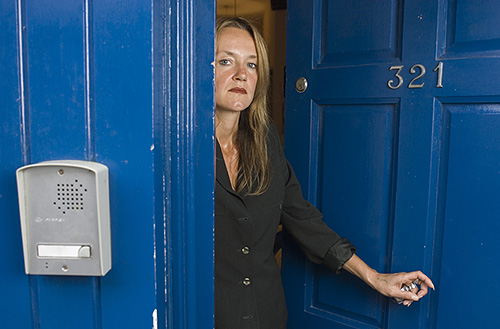
You will probably not be surprised to hear that I have some strong opinions about the art / science / craft (delete where applicable in your work) of photography. As an editorial photographer I am really lucky because there are three parties involved when I am shooting someone. There’s me, there’s the subject and there’s the paper – and that is really important to me and to the freedom I have to shoot the picture.

Social photographers usually have only two parties involved in the process – themself and the subject who often doubles as the customer. They are suddenly having to please the person who is sitting there in front of the camera. I really hate having to shoot portraits of family and friends because that’s even worse – imagine having the hassle of shooting a picture of someone who you love and care about and portraying them in a way that they may not have chosen. The freedom of being able to be objective and detached is a wonderful thing!

I have been involved in many arguments, both in person and on the web, about exactly when a photograph of a person becomes a portrait. It is really difficult to give a list of criteria about what constitutes a portrait, but somehow you can just look at a picture and say “yes” or “no” pretty much straight away.

I think that there are three categories of pictures of people. There are photographs that are merely record of what someone looks like that are perfect for ID badges or criminal records that say little or nothing about the subject. There are photographs where what is happening in the picture is more important than who is in it, such as a picture of someone playing sport or a musical instrument. Thirdly there are portraits, where there is enough in the image besides the subject to give a few clues about the subject, but not so much that the viewer is left thinking about what, rather than who. As a location only portraitist I have the added luxury of having the subject’s surroundings to help the image work. Studio photographers have to work really hard with fake props and painted backcloths to do what I can do very easily. Mass produced accessories, even student gowns, add little or nothing to the information that the photographer can give about their subject and can detract from the individuality of an image. You may have noticed that I haven’t mentioned any particular focal length of lens or lighting rig, and that’s deliberate. You can shoot a great portrait with any lens, and in any place – it’s all about your relationship with the subject.

Portraiture is something that you either find easy or you don’t. There are things that you can learn to make the whole process less painful and there are ways of shooting that eliminate risk (and creativity) if you really find that saying something about your subject isn’t what you were cut out to do with your camera. My advice is to talk to your subject, look around the room or the garden for something that they relate to and shoot a lot of frames. You can add a lot of athmosphere with lighting, but if you get the pose, props and position right you have the battle half won. Get your “bedside manner” right and you can call yourself a portrait photographer.

The relationship between the photographer, their subject and their client is vitally important. Editorial photography usually has three parties and it’s a great way to create good images. A while ago I shot a PR portrait of two businessmen. It had to be done in fifteen minutes and the deadline for the pictures to be with the designer was very tight. PR is a strange hybrid of social and editorial photography. There are usually more than two parties involved and they want editorial style shots but they have to be flattering to the subject. It doesn’t matter if the client is a PR company or if you are being paid directly by the company that you are there to promote – the images have to be positive and show no flaws. Is that a two party or a three party relationship? I would call it two and a half.

“Nothing unusual about this job?” I hear you ask. The answer is OH YES! The number of parties involved was as many as six and the decision making process was made harder by the two people in the pictures having the final decision about which image was chosen. Let me explain…

The end client was a European division of a multinational company who needed a picture shot in London. They had asked their London office to arrange a photographer to supply the pictures to the designer who was in another country (that’s three parties so far). The two men in the picture both had a say in the shoot (parties four and five) and then, of course, there was me (party number six). I had to set up the shot without the two businessmen but with the London PR people present. The two men arrived and I shot for ten minutes with two differing backgrounds and then offloaded my RAW files into my laptop. There then followed a quick Photo Mechanic slide show for the two subjects and the London PR where they selected two possible images in which they felt they looked good. We finally settled on the very last frame that I had shot – taken, ironically, about a minute after the two subjects started to make noises about leaving to catch a flight!

It was then a simple case of converting the RAW file on site and sending it as a high resolution email attachment to the designer, copying everyone else who hadn’t seen the choice in at the same time. That, ladies and gentlemen, was a complicated relationship. Editing the images later to send a choice of twenty to the client I decided that there was a better file but by then it was too late.

The difficulty for me with this job was that one of the two subjects vetoed several of the images because he didn’t think he looked right in them and the other subject vetoed one or two as well. The old adage about asking a committee to design a horse and ending up with a camel comes to mind. If too many people have a right to say no, you inevitably end up with the least offensive and least interesting picture!

Drop-in pictures.

This one was first published in April 2009…

We are in the middle of a recession – a pretty big one at that. Sensible professional photographers all over the world are looking at their business models, talking to their clients and trying to give themselves an edge. A few are trying to compete on price which might work in some markets but will almost certainly destroy others. The rest of us are just looking at what we do and how we do it in the hope that we can raise our collective game.

One thing that I have always done is to give picture editors what they have asked for and then give them something that they might well be able to use but hadn’t asked for. Current fashions in mainstream magazine design seem to call for a range of what we call “drop-in” pictures. Small supporting details that help to break up the copy and also tell the story.

©Neil Turner

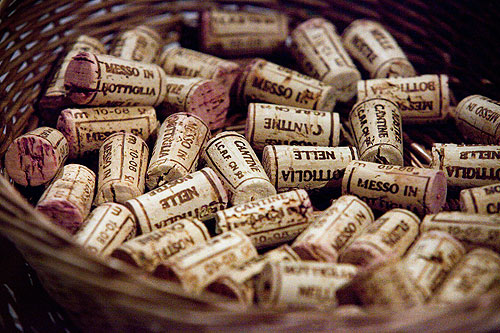
This example of a basket of wine corks came from a commission to shoot a conference which featured a full scale banquet in the very splendid surroundings of one of the Oxford Colleges. It’s not an exciting picture but it really helps to tell the story. It can be used large or small or not at all. It took a minute to shoot, another minute to edit and forty five seconds to transmit. It helped to break up a set of images of middle aged men in black suits eating by candlelight and stands out in the clients image browsing software as “different”.

©Neil Turner

Same client, very different project. This was a story about an ecologically managed office complex where they were still making improvements. A simple shot of the builder’s muddy boots helps the story along. They didn’t use this frame but it was submitted in much the same way that the image of the corks was and almost certainly had the same effect on screen.

©Neil Turner

This final example, shot for an education magazine, had an entirely different effect. Shot as a supporting image – the designer saw it and decided to base the entire layout around it. The story was about using Makaton, a relatively simple sign language, to help teach primary school pupils a broad range of things. They ran headlines and copy over the pale background in a very imaginative way – a use for a very simple picture that I had never envisaged.

To sum up: when you shoot the kind of editorial work that I do it takes no time at all to add these simple images to an edit. They will be useful in years to come as stock images and they give designers and picture editors options that they hadn’t asked for. Some people might say that I’m giving “my edge” away here but I hope that I offer clients a package deal with at least four edges. I always tell students to whom I give talks about the job that I do that they need to think beyond simply what they have been asked for. It is a given that you give the client what they asked for but I have never heard one complain that you have given them something more.

Six feet up is bad?

©Neil Turner, October 2000. Oxford.

©Neil Turner, October 2000. Oxford.

This was first published in the Autumn of 2000 on the DP Review website as a follow-up to a review I did of the original Canon G1 Powershot

It is very easy to hold the camera to your eye and take a picture. Good photography requires us all to think about where we are taking the picture from as well as what we are taking. The best photographs are made when the photographer chooses a vantage point to suit the subject, and it is surprising how few subjects are suited by the height of a human standing at their full five to six feet. This is compounded by the fact that when someone views the image they will see pretty much what they themselves would have taken because they haven’t been told about bending your knees or climbing a ladder to shoot better pictures.

It is no accident that many of the world’s best photographers wear denims most of the time, and I take pride in the fact that I spend so much of my time kneeling that I have “housemaids knee”. Sooner or later I will end up flat on my face or up on a chair to give something extra to a composition – namely a point of view that the person looking at the image would not have seen themself.

This image was shot in the beautiful University City of Oxford on a Canon G1 using the swivel LCD to get the camera at ground level without having to lie in the dirt myself. The lens was less that two inches from the cobble stones and this ultra low angle gives the image a dynamic quality that would have been missing had I been standing at my full five foot ten inches. The photograph is different from most pictures taken of this tourist magnet and I’m sure that my antics were the reason for the puzzled look on the passer by’s face.

My point is that when you get your camera out think about the height of the lens. If you end up shooting from a standing position, well that’s OK – but I will lay good money that 90% of pictures are better when taken from below four feet or over seven.

From journalism to design and all spaces in between

No matter what you talk about in life there seems to be a scale: left to right, top to bottom, right to wrong. I can now add a new one….journalism to design. These are the two ends of the scale that I exist in as a photographer. At one extreme my work is pure journalism and at the other it’s little more than eye candy.

©Neil Turner. London, June 2009

The pressures that I feel when I’m out working come from both directions, and both sets of pressures come from the newspaper. My instincts are clearly those of a news photographer, but more and more I find that my work is required, judged and edited by designers. This makes me nervous because they wouldn’t ever consider meddling with the written journalism and I sometimes find my pictures being selected on the basis of how well they add to the graphical feel of the page.

I’m not saying that there isn’t a place for this attitude to pictures in lifestyle magazines, but the success of those magazines has meant that attitude spilling over into newspapers. Daily and weekly papers have always been dominated by the written word and photographs have always had to struggle for their place as an integral part of the journalism. I am fairly convinced that no significant newspaper has ever had a photographer as it’s editor, so it isn’t surprising that words dominate.

The constant changes in “who does what” inside newspapers has lead to the appointment of more and more designers who seem to have become very influential, not only in a design sense but in a more general editorial way too. Photographers are being sidelined by yet another group of workers.

Going back to my left to right argument, there are pages within a newspaper that are predominantly news and there are pages that are rightly about lifestyle. I have no problem with this except where the emphasis becomes blurred and decisions about photographs are made because they make the page look good on pages where the journalistic content should be king. Editorial photography is a far wider field than news photography and I want to be able to shoot in a wide range of styles to suit the whole spectrum, but more and more of my colleagues here in London are feeling the pressure to shoot in a softer, more feature based style all of the time. Don’t get me wrong, I think that great photography is great photography no matter why the pictures were taken and no matter where they are intended to go…but…the hijacking of news pages by people with anything other than journalism in their thoughts has to be resisted.

I strongly believe in giving designers and layout artists greater flexibility so I hope that everyone will realise that I want to meet “the enemy” halfway and not just sit sniping on the sidelines. I just get very depressed when I hear designers and layout people talking about photographs, good photographs as so much “window dressing”. The answer? Appoint more picture literate people to senior positions on newspapers, treat news photography with due respect and never allow photography to become just another element of design