Author: dg28

I've been a full-time editorial & corporate photographer since 1986 and I'm still as passionate about the work now as I was then. These days I also write about photography, teach photography and act as a consultant on all things photographic - so, basically, photography is my professional life.

One light, big space

It’s very useful to be able to kill two birds with one stone – especially when you have a limited amount of time. I have been very busy this month and blogging time has ben limited. I had intended to carry on my review of the ERQ and maybe post a new technique piece as well. I was sent on a job the other day that allows me to do both.

The quality that you can get at 3200 ISO with the latest generation digital cameras is amazing but sometimes you really would rather light something. I was asked to shoot some pictures of “An Evening with Alan Bennett” – an event staged to raise awareness and funds for the Christie NHS Hospital Foundation Trust. The Christie is a world renowned hospital in Manchester and they decided to hold an event in London to raise their profile. The venue was the Royal College of Physicians in London’s Regents Park. The library is a spectacular blend of 20th century modern architecture and the fixtures, fittings and books from earlier centuries. The light is kept deliberately low and that presented me with a few issues. At 3200 ISO I was only getting 1/60th at f2.8 and so I used my Elinchrom Ranger Quadra kit to give the room a lot more light.

Allan Bennett talks to Jenni Murray. ©Neil Turner

My idea was simple. I set up the light as far away from the interview as I could get it and bounced the light off of a wall. This gave me a light source of about eight feet (2.4 metres) by four feet (1.2 metres) at almost 90 degrees to the subject and at a distance of over thirty feet (9 + metres). Quite a decent soft light, but very directional and it looks utterly unlit.

This is an effect that I have written about before but the power of the ERQ kit, given that it is only rated at 400 w/s, made this very easy. I was able to be quite a distance away using a 70-200 f2.IS L lens on an EOS5D MkII and frame my shots with relative ease. I was shooting between rows of chairs and invited guests and had been asked by the organisers to severely limit my use of flash so I only got half a dozen goes at the shot. This was my favourite frame and it shows the interviewer – Radio 4’s Jenni Murray – asking Alan Bennett a question right at the start of the session.

This was shot at 1/60th of a second at f5.6 at 800 ISO. The available light was non-existent and the effect is very interesting. I had been worried about the range of the Elinchrom Skyport triggers but they worked very well at a range of at least thirty feet, probably nearer to forty feet and my only gripe with them is their lack of a locking mechanism to keep them in the hot shoe. The ERQ system passe another important test here and I’m still very very happy with the kit.

Brutal architecture and portraits

I have an admission to make… I love shooting portraits on cloudy days around concrete buildings with urban skylines. There, I’ve said it. As a photographer I find brutal architecture and grey winter days both challenging and creatively stimulating. Combine the two and you have a blank canvas for interesting images – as long as you have a cooperative subject.

©Neil Turner, February 2009

This portrait is of an academic working at a central London research and teaching institute. The building is a classic modern brutal concrete one and I have shot pictures there dozens of times over the years. I have never managed to get access to the roof before and I have always imagined that it would be a great place to shoot, with decent views of the surrounding skyline.

It was a windy and dark February day and so I wanted to find a spot out of the wind. The roof features a couple of large concrete towers which contain lift machinery and other services and the southerly one has a short walkway running through it. On a sunny day this would be perfect shade in which to place your subject. On this day it was equally perfect shelter from the wind and probable rain. There are also railings which are perfect for attaching lighting stands to so that they don’t blow away.

The picture above wasn’t the first that I shot. I had tried quite a few angles to get the London skyline in but the wind forced a retreat into the covered walkway. I decided that being out of the wind gave me the chance to shoot with a 24″ x 36″ (60cm x 90cm) Chimera soft box on my Lumedyne flash head. The softbox is old and has both the inner and outer diffusers permanently sewn in and I wanted to make use of it’s softness so I placed it as close to the subject as possible. In this frame it is about three feet (90cm) from his face off at about a 45 degree angle to the left of the camera with the bottom of the softbox about level with his chin.

I always try to start with an available light reading for the sky which came out at about 1/250th of a second at f5.6 on 200 ISO. I wanted the sky to be darker and so I decided to shoot at f8 instead. This meant that I had to adjust the power output on the flash to give me the aperture that I wanted and that meant 1/4 power (50 watt/seconds). The first test shot told me that I needed some separation between his hair and the dirty grey concrete and so I set a second flash (Vivitar 285 HV) on a stand directly behind him on 1/16th power to give him a fairly aggressive hair/rim light. This isn’t a technique that I use very often but in this case it made the difference between a muddy image and one with some real edge. The combination of the big soft light and the hard hair light gives the portrait a particular mood which compliments the sky and the architecture.

Like many of the techniques that I use, this one needs to be used sparingly so that it has maximum effect when it does get used.

Owning up to some bad habits

“It’s all about light”. That’s a message that I hope everyone who visited the technique pages on my web site will take away. When you are the one who controls that light, you have a large number of options open to you. This month I have been trying a new toy and I thought that I’d use that as an excuse to write about how and why I choose the quality of the light.

©Neil Turner/TSL | London | December 2004

The first thing I have to do is own up to some fairly bad habits:

The first is that I go through personal fashions in the way I light and in the kit that I carry with me. One month I’ll use softboxes and then the next month I’ll use umbrellas. One week I will keep the flash as only one element of the scene and the next the flash will overwhelm the ambient light.

My second bad habit is that I will light women in a different way to men. 99% of the time I will use a much softer set up for female subjects than I would for males.

Thirdly, I’m aware that I tend to use a harder light on older skin (especially men). Older people seem to have a lot less moisture in their skin and so their faces have a lot less shine.

I’m much more likely to direct a spectacles wearer about the angle of their head, simply to avoid getting bad reflections in their glasses. I also try to find out if people wear contact lenses and get them to look more squarely at me to avoid getting any strange shapes in their eyes.

So far I’m painting myself as a bit of a lazy photographer. I like to think that it’s not laziness – more a realistic attitude towards getting the shot right. When you are shooting people, you often end up shooting a very different picture than the one that you first envisaged so my bad habits are there to simply give me an easy starting point. Getting on with the shoot is part of my style. I rarely spend very much time wandering around formulating ideas, largely because I am regularly expected to set up, shoot and break down in a matter of minutes. Having the “safe shot” in the bag is something of a religion to me and I find that giving in to my “bad habits” makes my practice a lot easier.

Many photographers use the same technique day in and day out. I cannot claim to do everything differently every day, and sometimes I feel like a chef who has a limited range of ingredients that I can select, mix and adapt to create new and interesting combinations. Every once in a while a new ingredient becomes available, a new toy to play with. Does that make me gadget boy? Or does it simply help to keep my work fresh?

Income breakdown

If you have been reading this blog you’ll know that I went freelance in September 2008 after fourteen and a half years with a staff job on a specialist newspaper. Like most self-employed people I’m now working on my end of year accounts and I thought that it would be interesting to compare the figures for the last seven months with the equivalent period fifteen years ago. I wanted to know if I was a) Turning over the same kind of figures b) How my turnover breaks down compared to 1993 and c) Am I earning the same sort of money? Amazingly I have kept my hand written ledgers and so, in no particularly logical order, here is what I have discovered:

Comparing turnover for 1992-1993 and 2008-2009

Comparing turnover for 1992-1993 and 2008-2009

For anyone who is interested in actual numbers – I apologise, I’m going to talk about percentages and relative figures rather than pounds, shillings and pennys. Being English, I’m shy about disclosing my actual earnings.

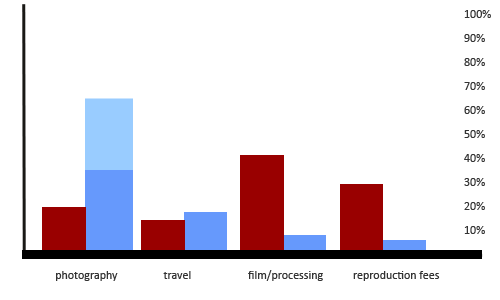
The easiest figure to compare is my gross turnover. This, for the non-accountants like me out there, is the total figure for which I have invoiced for. My gross turnover for 2008-2009 was only 74.4% of the figure for 1992-1993. Given that the average cost of living has gone up by nearly 60% over the same period, that doesn’t look like a healthy figure. I haven’t calculated my own cost of living increase but I would expect it to be a little less than the average figure. This graph shows the percentage of my total turnover broken down into categories as I have invoiced them. The red is for 1992-1993 and the blue is for 2008-2009.

The breakdown of turnover is far more revealing. In 1993 28% of my gross figure came from reproduction fees for pictures being used from my own library, re-use of images held on file by newspapers and magazines or sales by my agency on my behalf. In 2008-2009 that figure is down to under 5%. That is partly because I haven’t built up much stock but I believe it’s also due to the fact that so many publications are either paying nominal amounts for re-use or not paying reproduction fees at all.

More interestingly, my turnover consisted of far larger amounts of expenses charged to clients. Film, processing, printing and delivery (postage and couriers) accounted for about 38% of my gross figure, whilst travel expenses made up another 13%. That’s grand total of 79% of my 1993 turnover that wasn’t fees for photography. Turn that around and only 21% of my invoicing was for actually going out and taking pictures. So how does that compare to this year? This is a tricky one because several of my clients pay “all-in” fees which are not broken down into creative fees and expenses and so I have had to separate these myself. The best “guesstimate” that I can come up with is that my travel expenses are up to about 18%, film and processing no longer exist in the way that they did and printing has been replaced by burning CDs. A few clients pay extra for processing files, but most don’t.

The time spent digitally processing files has to be accounted for but it doesn’t really show up on my turnover figures. Another “guesstimate” would put the time spent in front of the computer at just under half of my creative time – shown on the graph above in the lighter blue.

So what about my actual expenditure? My costs these days are very different. Gone is the need to have a darkroom in central London. Gone is the need to send prints and transparencies around by courier. Gone is the huge expense of buying film and processing it. Gone is the cost of storing negatives and transparencies. The missing costs have been balanced by the expense of owning computers, mass digital storage, digital cameras and having to constantly update and upgrade the technology. Going through my expenditure, I calculate that it’s actually cheaper for me to be a photographer now – that’s quite a shocking conclusion but the cost of renting premises and using so many couriers was huge. I used to charge clients for the film and processing and make a few percent on doing so. Now, few of them pay extra for the processing of digital files. My average photography fee is between 70% and 100% higher but that is swallowed up by the time spent in front of the computer and the increase in the cost of living.

My conclusion? Swings and roundabouts come to mind here. Costs have changed, turnover is down and we are in the middle of a recession. Am I better off? No. Am I worse off? Probably not. There isn’t a definitive answer but I would say that, despite everything, nothing has changed – well, I’m fifteen years older and (I hope) a better photographer. I’m going to re-visit this topic in a few months and see if I can make more sense of it.

The power of pictures

Photography is a powerful medium. As a reader of a newspaper, a viewer of websites or someone looking at images on a gallery wall there can be no mistaking the ability of good pictures to make you think, make you want to know more and create empathy with the scene before you. If you were there and actually took the picture it can be even more true. I have been going back through some very old images of mine and I have been transported all over the world by transparencies and negatives. I remember details of stories that I had otherwise forgotten and its the small stories rather than the big news events that have caught my imagination.

©Neil Turner/TSL

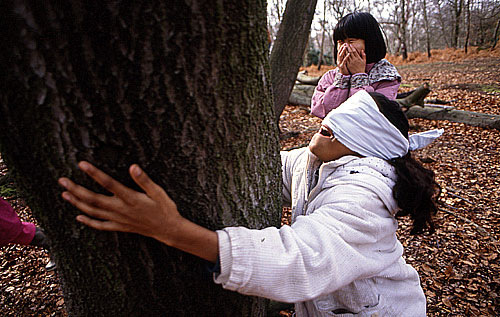
This particular story brings back very strong memories. We have made fun of “tree huggers” over the years – despite the fact that getting close to nature does all of us some good. The children in this story were on a day out from their inner-city school visiting Epping Forest. For those who have never been, it’s a public open space in the London area, covering almost 6,000 acres with lots of small woods and copses.

The interesting thing about this visit is that very few of the thirty children had ever been amongst trees before. Many of them had never been off of the estate where they lived and regarded the woods as where the baddies in children’s literature always lived. They were somewhere between apprehensive and scared as they entered the first small coppice but after two hours they were in a bigger wood and letting their imaginations run wild, playing a range of games and getting around to hugging a few trees for good measure.

I can still remember the delight that they all felt. I can still remember the noises that they made – the laughter, the squeals and the childish innocence of it all. Of course your reaction to this picture will be different. Not knowing the story behind it probably marks it out as a rather odd image – possibly even a disturbing one and that’s my real point…

I’ve written before about the many uses of a picture. They can tell the whole story, they can make you want to know what the story is and read the accompanying words or they can simply be something to break up the page. A picture without accompanying words needs to be self explanatory. A picture like this one is worth so much more with a good caption than without.

These days I do quite a bit of teaching. Some of it is with working photographers but most of it is with photography students hoping to make a living in the business. My heart sinks when I start talking about IPTC captions and IPTC data and the students look blank faced. Professionals shouldn’t send out their images without proper captions or without proper copyright information but neither should keen amateurs or students. All images have value and giving them captions will always add to that value – even if it is just to confirm when and where they were taken.

Good captions and back stories are a good idea!

There are, apparently, two types of news photographers…

News photography isn’t a huge industry. It employs a few thousand people here in the UK and it’s amazing how many of those know each other, or at least know of each other. That having been said, it’s also amazing that so few people can be divided into so many small pockets. Sports photographers, news photographers, local newspaper photographers and features photographers all come to mind as sub-divisions of the business. Whilst talking to a couple of colleagues the other day I was made aware of another division. A division that you seem to fall on one side or the other of according to the way you see and shoot pictures.

John Redwood MP – back in the day. ©Neil Turner, January 1994

Apparently I’m a “light and shader” whilst my two colleagues referred to themselves as “tight and brights”. They told me that the division here in the UK was broadly along the lines of tabloid versus broadsheet, mass market versus serious. This explanation was both amusing and, in a lot of ways, pleasing. I like to think of myself as a more serious photographer – one whose use of light and shade is central to their style but I was a bit worried that they seemed to be writing off what they do at the same time.

Make no mistake, these are two top class photographers, each with a staff job on one of the two biggest selling newspapers in the country. They provide their picture editors with the right images day in and day out that satisfy the constraints of the designs and the tastes of the readers. Both are also intelligent and articulate journalists and so I did start to wonder whether they were just taking the mickey out of me – implying that I take myself and my work too serioiusly.

The chances are that it is a little of everything. I suspect that they and the other tight and brighters like to differentiate themselves from the mainstream and I also suspect that they envy the small amount of extra creative freedom that the light and shaders seem to get. It also makes you realise how hard the job of wire service and agency photographers must be – satisfying two very distinct markets at the same time and having to have an eye for different types of images on the same job.

No doubt there are other divisions between photographers. I can think of a few other ways of dividing us up: I once heard one of my photographic heroes talking about the “that will do gang” – referring to an attitude amongst some professionals whereby they will do enough to satisfy their brief without going the extra yards let alone the extra mile in order to produce the best work possible that he contended was what made doing the job so satisfying and what made hime rush to get out of bed almost every working day.

I know what he means. I found myself getting excited about shooting an interesting portrait a week or so ago – excited enough that it would be slightly uncool to admit it. I love taking pictures and I love to make use of light and shade. I’ve got to shoot some tight and bright images later this week and I will think of my two tabloid colleagues when I do.

The photographer’s “uniform”…

I was told the other day that I was wearing my uniform with pride. What uniform you may ask? It seems that the uniform in question was that of a freelance news photographer. I have known for many years that many of us tend to dress in similar ways: we all spend a lot of our time kneeling down or lying down to get the best angle. In the winter we all get cold when we are working outdoors and so it comes as no surprise that we all choose similar clothing. So what was I wearing?

The first thing that I did was to look down and make a mental note of my attire. Heavy duty winter coat, fleece scarf, heavy weight denim jeans and my much loved Timberland boots. They are ancient, they are warm and the tread is still pretty good. These boots have waded into the sea, they have stomped through Scandinavian snow and they have marched across many miles of the New Forest with the family. Most importantly of all, they have seen me through a lot of miles on the streets of London.

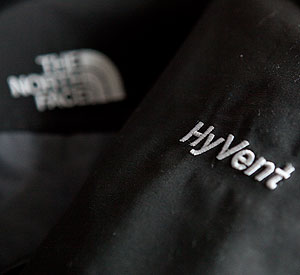
You’d be right to think of this as a uniform – how many of my colleagues have a black or grey North Face jacket on their backs? It wouldn’t be an exaggeration to say “most”! I have no idea if mine is the latest technology (its Hyvent, whatever that is) or the coolest (black and grey?) but it works amazingly well. This too has kept me warm in the northern areas of Finland in the depths of winter. In fact, I even have a warmer one that I find it hard to wear. That McMurdo parka was a big investment for me and I’ve worn it twice.

I have just remembered that I was also wearing some amazing grey fleece gloves that my brother bought me a while back. They are made by Rohan and they are perfect for a photographer. They allow you to use the camera well enough (even the tiny buttons on the back of a Canon EOS 5D MkII) and manage to keep the worst of the chill off of your hands. The trouble is that they don’t have a name on them and the Rohan website doesn’t show any gloves so I guess that the recommendation isn’t all that helpful.

I’ve written before (although I really cannot remember were) about the photographer as chameleon. The idea is that we need to adapt to our surroundings and sort of blend in. In the city, surrounded by other members of the media it is pretty simple – once you’ve seen one black winter jacket with cameras hanging from it then you’ve pretty much seen them all. It gets trickier when you are the only one there. I’ve done jobs that required a dinner suit and others which asked for high visibility vests and construction helmets (more of the latter recently) but the majority of the jobs don’t come with a written dress code. The trick is to go for the right kind of smart casual wherever possible and to cover it all up with an expensive looking coat.

What you wear says plenty about you. Looking like a photographer tends to help you be accepted as a professional and helps you shortcut the whole credibility issue. I want my Doctor to wear a white coat and my postman to have the right clothing too. If you look like an archetype, if you play along with people’s prejudices it tends to relax them. If I turn up to shoot someone’s photograph dressed like a postman or a doctor I’m going to have to work that little bit harder to convince them that I know what I’m doing and that I am a professional photographer.

So that’s my winter uniform sorted. What shall I wear this summer?

The last refuge of the desperate photographer

Originally posted in January 2009, this piece is one of the ‘new’ technique pieces that I published around that time.

The use of the silhouette as a deliberate ploy in photography was once branded as “the last refuge of the desperate photographer” – a label that I have always contested. I have used the technique many times when I have not been allowed to identify the subject of the picture (usually children or vulnerable adults whose identity needs to be concealed) but I also use it when there is a need for an image with real impact. Creating a silhouette with flash isn’t difficult, using the technique sparingly can be.

Once you have made the decision to try a silhouette using flash, there are a few basics that you need to consider:

  • The subject must have little or no available light on them
  • You must have a background that can be lit easily
  • If the background has important detail you need enough depth of field to keep both subject and background sharp
  • The subject to be silhouetted should be in sharp focus and have a distinct outline

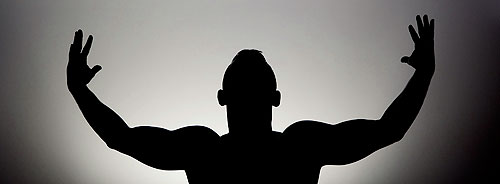
Once the basics are in place, then there are creative decisions to be made such as composition, placement of flash. This first example is of a member of my family who spends time at the gym so that he can show the world his physique. We were chatting one day and he said that he wanted something striking for the top of his Facebook page. I showed him a couple of ideas using silhouettes and we shot this…

©Neil Turner, October 2008

I was shooting with a Canon EOS1D MkII and a Canon 24-70 f2.8L lens. I wasn’t able to move myself around too much without shifting furniture and would have preferred to be shooting nearer the telephoto end of the range to deliberately remove any clutter. As it was, the lens was at 34mm (add the 1.3x factor and you get a 44.2 full frame equivalent field of view) and I cropped the image to the “letterbox” shape.

In this case I used the subject himself to mask the flash which was a Canon 550ex speedlight triggered in manual mode by a Canon ST-E2 transmitter. The first few frames had the background (a wall in my dining room) pretty evenly lit, which was a bit boring. The background is unimportant in this image and so the depth of field doesn’t matter too much. The exposure was 1/90th of a second at f13 on 200 ISO. I don’t recall why the exposure was 1/90th instead of 1/250th to utterly eliminate any available light but in a normal situation I would have gone for 1/250th.

I have some grid attachments for my Lumedyne flash heads and so I taped one of those over the flash to give me more of a circular pool of light. I aimed the flash slightly upwards so that I achieved the effect that you see above. It’s a very simple image that works for the intended purpose very well.

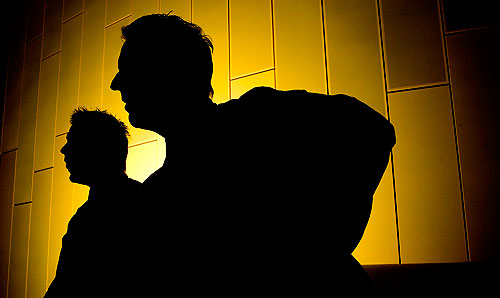
The second example is from a story I shot for a magazine about two brothers who work together at a school in London. I had shot hundreds of images of the buildings and a lot of portraits of the elder brother who is the boss. I had a lot of more conventional portraits of the two of them together as well so I decided to try this two person silhouette which shows the special cladding used throughout the central core of the building.

©Neil Turner, September 2008

The cladding itself has a yellow colour and so I decided to place a Lumedyne flash unit directly behind the seat that they were sitting on. It was very close to the wall, which give far steeper fall off of the light and a more dramatic outline. I find that the best place to focus for a silhouette is on the edge of the subject rather than the normal eye or face. I was shooting with a 16-35 f2.8L lens on a Canon EOS1D MkII at the wide end of the scale and the exposure here was 1/250th at f9.5. The flash was dialed down to 1/8th power and at that aperture I had easily enough depth of field to get the brothers both sharp and to have easily enough detail in the background.

Magazines seem to like this kind of image if they have a spread to fill or they want something a bit different for the contents page. You don’t always have to use flash to create silhouettes but the conditions required in nature to get a good one aren’t easy to arrange! Low level winter sunshine here in the UK is good and of course dusk and dawn without cloud cover anywhere in the world are great. I have also used illuminated signs and billboards when they are bright enough but for the sheer degree of simplicity and control, these flash-lit examples are hard to beat.