UK

Down the YouTube photography rabbit hole

Over the last seven years I have posted a grand total of four YouTube photography tutorials – all on the rather niche topic of transmitting images live from Canon cameras. I think that they were helpful and I know that they are accurate. One day I might post some more and in planning that the other day I spent some time looking at what other people are posting. I disappeared down the YouTube photography rabbit hole for far too long!

There’s some great stuff there. I learned a couple of useful things and left comments to let the folks that had posted know that. There’s also a huge quantity of utter guff! For those who speak English but who haven’t come across the term guff it means a combination of rubbish, nonsense and just plain wrong.

(more…)

Thirteen quick portraits using unfamiliar gear

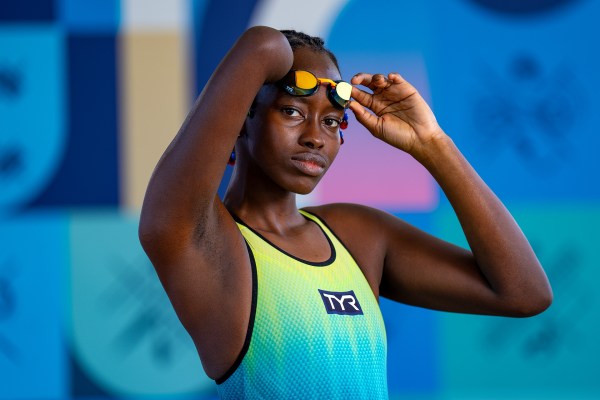
Husnah Kukundakwe – Ugandan Para Swimming athlete, photographed at the Athletes Village ahead of the Paris 2024 Paralympic Games. Monday 26 August 2024. Photo: OIS/Neil Turner

I hope that most people reading this are aware that my photography career has lots of elements to it. I have shot pictures for some 38 years now but for the last ten years I have also worked as an editor on large sports projects with Bob Martin and his team. One of the best parts of that work is going to Olympic and Paralympic events with the Olympic Information Service and this year we went to Paris to provide some coverage of the Paralympics and to work as mentors for eight young photographers. Bob Martin, Joel Marklund and Adrian Dennis did a great job as their photographic mentors and Sammie Thompson, Joe Toth and I guided them through our live workflow giving them a chance to get to grips with working as live editors for a couple of days each as well as sorting out their images. You can see what the team produced here.

(more…)

The ultimate compromise lens?


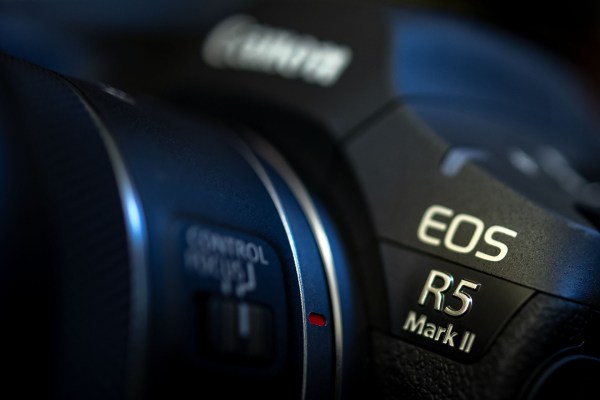
That’s a dramatic headline but, never before having had a lens like this, it’s the most accurate way that I could think of to sum it up. Canon’s RF 100-500mm f4.5-7.1 L IS USM is something of a conundrum. It covers a range of focal lengths that I find extremely useful in a lot of the work that I currently do and, paired with the RF 24-105mm f4 L IS USM, it is a valuable item in my travelling kit bag. I have shot pictures with it that I would simply not have been able to without hauling some incredibly heavy (and expensive) lenses around the world.

Do I love this lens? No. Do I appreciate it? Yes… with bells on.

(more…)

It’s that time of year again

Beautiful trees in the grounds at The All England Lawn Tennis Club. Wednesday, 26 June 2024. ©Neil Turner

Every year since 2014, apart from 2020 when we were locked down and the Championships didn’t take place, I have spent a few weeks in the summer working as a photo editor at Wimbledon. It’s that time of year again and I am almost a week into this year’s contract that takes me through until the middle of July.

As a photographer, editing the work of other photographers is a great way to refine your skills. Getting captions right quickly, working to a tightly defined and well-honed workflow with six other editors is something that I think a lot of my peers could learn a great deal from.

I still pop out with a camera on a regular basis and editing my own images when the working day is over is something that I enjoy doing but from 8am until 5pm (and maybe a bit longer on busy days) I will be working as a small cog in a big machine to deliver an amazing set of pictures.

Sign makers create a new sign showing visiting photographers how to get to the workroom that I am spending so much time in. Wednesday, 26 June 2024. ©Neil Turner

Less is more… until it isn’t

Every photographer and every artist you will ever meet has opinions about composition. A mere thirty-eight years into my career and some forty-six years after picking up a decent camera for the first time I have some too. 

The other day I was involved in a very interesting conversation that was partly triggered by the recent portrait of King Charles III by Jonathan Yeo. The man that I had photographed and with whom I was chatting had a wonderful knowledge of painted and photographic portraits going back hundreds of years and we discussed what used to be included in portraits for symbolic reasons and what we now exclude from them for aesthetic ones. I’m sure that it has been around for years and has been claimed by many others but I came up with a phrase that sums up my approach to composing my work… 

Less is more… until it isn’t.

In almost all creative pursuits end results that appear to be simple have an elegance and a beauty that appeals to most people without them necessarily knowing (or caring) why. To create something complex that has impact takes a very different and very real skill.

(more…)

That brief…

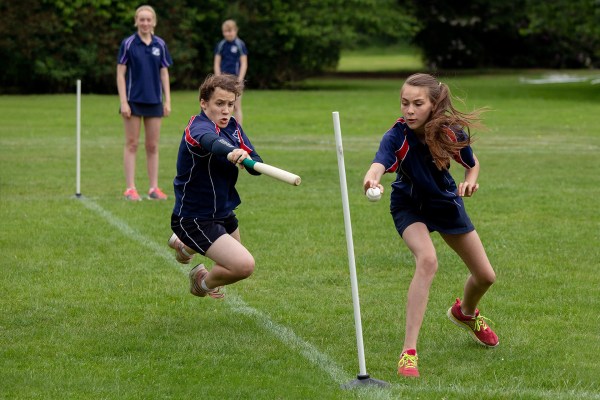
PE lesson photograph from a school prospectus shoot in Hampshire. ©Neil Turner

I’ve called this post “that brief” because I will never forget an email that came to me from a regular client who simply gave me a name, address, date and time and the words “go do your thing”. That was pretty flattering – they trusted me and were comfortable with how I had worked for them before. I’ll never forget that brief but most of the time I think that I’d prefer a bit more to go on.

Every photograph that I have ever taken was dictated by things that can be controlled and things that can’t. The client’s brief is something that should be able to be negotiated and should always be realistic. In the “contact” section on my main website I say the following:

Commissioning a professional photographer can be a daunting business. My philosophy has always been to make it as painless and as uncomplicated as possible. I believe that this is best achieved by a proper dialogue between photographer and client. We both want the same thing – a set of pictures that achieve and even exceed their purpose. In my experience, the better defined that purpose is, the easier it is to get the photographs that the client needs.

(more…)

Light modifiers

When this was shot this was my favourite type of catchlight. The shoot through translucent umbrella partnered with an oblong light panel to reflect a bit of light back in. I have changed my mind a hundred times since then.

“What is your favourite light modifier?” A question from a photographer who has followed my blogs over the last twenty-plus years got me thinking. Spoiler alert – I probably don’t have a favourite but I do have a few that I use all of the time.

First things first, let’s define “light modifier”. As part of their explanation of modifier Wikipedia describes it as the following:

Tools or accessories employed in photography and videography to shape, control, or direct light emitted from a light source. These modifiers serve to alter the quality, direction, and intensity of light, thereby enabling photographers and videographers to achieve specific effects or moods in their images. Light modifiers come in various categories and types, each with its own unique characteristics and applications.

Seems simple enough but when you start to examine those different categories and types life can get pretty confusing. Thinking about it I realised just how many different soft boxes, umbrellas, reflectors, dishes and domes I own. In fact, the inventory doesn’t even end there because there are so many sub-sets and shapes that it could all get the tiniest bit confusing for me if I hadn’t used each and every one of them so often over the last forty or so years. The fact that I have sold a few here and there and thrown and given so many more just adds to my knowledge of what does and doesn’t work for me and the work that I do – which in itself changes over time.

(more…)

Juxtapose and exaggerate

Not the original note to self but I have added it to a lens wrap for old time’s sake

A few days ago I was at an event in Manchester run by Canon UK. While I was chatting with one of the many talented young photographers that they had invited I remembered something about my early career that I am pretty sure helped me more than I could have known at the time.

In the later 1980s and early 1990s I had a light grey Domke F1X camera bag. I loved that bag and I loved working from it. I also loved that every time I lifted the top flap there were two words written there with a marker pen:

  • Juxtapose
  • Exaggerate

They were written there because the legendary photographer Terence Donovan gave a talk at my college in either 1985 or 1986. When asked by one of my classmates about taking better pictures, he explained that by juxtaposing our subjects with backgrounds, secondary subjects and other compositional elements we could give our pictures a depth that told stories more effectively. By exaggerating things such as light, angles, perspective or even the contents of our images we could, again, tell those stories in different and possibly better ways. I scribbled down those two words in my almost brand new Filofax, underlining both multiple times.

(more…)