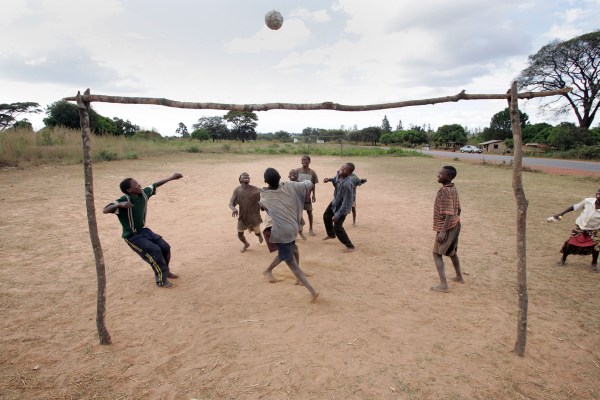
Children play football with an improvised ball in the Copperbelt of Zambia. ©Neil Turner/TSL.
Like most members of the photographic profession, the bottom has dropped out of my business and any and all photography bookings between the first week of March and the end of July have been postponed or cancelled. Not my fault, not my client’s faults either so I’m being pretty calm about it and getting used to being in lockdown. Lots of my news photographer friends are out there day after day coming up with fabulous picture to illustrate the only story that anyone is interested in – the Coronavirus Pandemic – and I applaud them warmly. That applause goes for the health workers, retailers who are at work, the emergency services, delivery drivers, refuse workers and every other key worker who is there doing their jobs to keep society ticking over and, more importantly, safe.
Again, like most members of the photographic profession, I am looking back through old images of mine to remind myself what it is about the job and making the pictures that I love so much. I’ve also been looking through some of the hundreds of photographic books that line the shelves in my home and it has taken almost no time at all to re-affirm what I already knew: (more…)


 Equipment and my equipment choices tend to evolve pretty slowly. Way back in the 1980s I was using a lot of off-camera flash on location and that meant either owning and running a lot of extension cables with my Elinchrom mains powered units, buying (or renting) a Norman system or using some basic flashguns (the term speed light hadn’t really entered common usage by then, other than as part of a Nikon model name) to do the job. I came across the Lumedyne range (old school) in the mid 1990s, although they had been around for a while by then. Before that I spent many happy years with my cobbled-together battery powered flash kit which was based around the already long-in-the-tooth Vivitar 285 system. I call it a system because there was a ton of accessories that you could get for it and it had some common connections that meant you could pair it up with almost anything you wanted to.

 Neil Turner Photographer