opinion

The story behind a picture #1

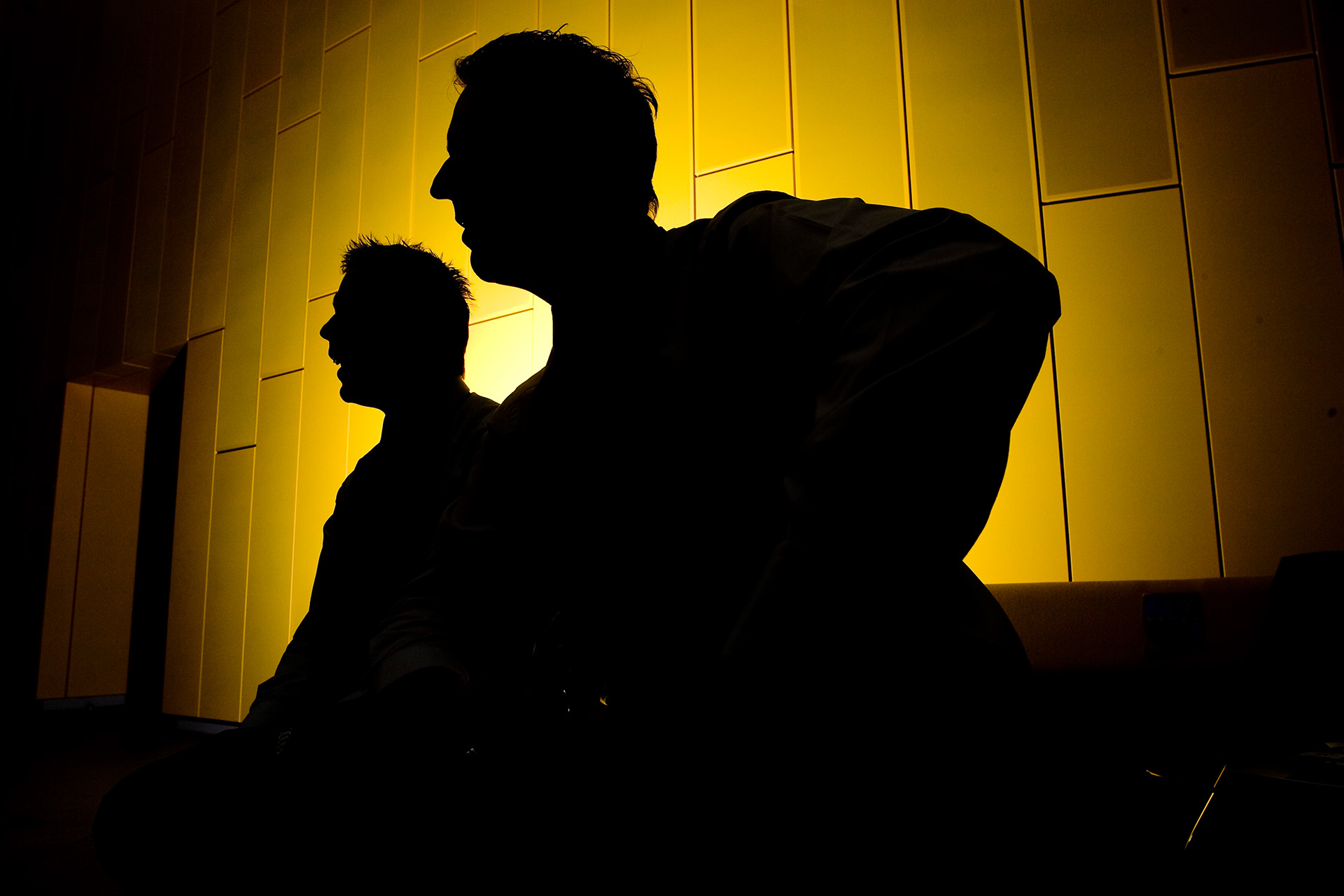
Young England cross-country runners posing for a photograph in Winchester. © Neil Turner/TSL

Young England cross-country runners posing for a photograph in Winchester. © Neil Turner/TSL

Even after nearly thirty years shooting photographs I can almost always remember something about ‘being there’ on the job when I look back at the pictures. There’s also a story to be told about why a particular picture was shot, lit or composed in a certain way.

A while ago I was posting a “photography word of the day” on Twitter and one of the first was compromise. This photograph of two rising stars of cross country running is a classic example of compromising to get a decent shot.

When I arrived at the college where they were both studying neither of them had their kit with them to do an action shot. Luckily their England team tracksuits had arrived and so I had to manufacture an action portrait of them that left one important part out of the frame – their feet. Neither of them had suitable footwear to be photographed in action and so I had to find a way to shoot them without drawing attention to their lack of running shoes.

In front of the college was a large banked area of grass and playing fields. I realised quite quickly that I could get the best of the light (dusk was fast approaching), lose most of the buildings and hide their feet by getting down low and using one of the banked grass areas to fill the foreground as they ran towards the low angled sun whilst shooting on a long (ish) lens.

So that’s what I did. The two runners were amused by the lengths to which I was determined to go to get a decent shot. They had been photographed two days before but just wearing their street clothes and standing by the college sign and they had assumed that I’d do the same. They did about ten lots of the ten yard run that had them in the right place and I shot some of them horizontally and the others vertically to cover the possible shapes that the newspaper might use. I also shot it using a range of aperture and shutter speed combinations to get the depth of field right.

I did some static upper-body photographs as well as having them pose with their trophies (feet hidden) on the grass.

Technical stuff: Canon EOS1D MkII with a 70-200 f2.8L IS lens. ISO 320, 1/1000th of a second at f6.7

Another anniversary

© Neil Turner 11/09/2008 The Petchey Academy in Hackney, London, E8 opened to pupils in September 2007.

© Neil Turner 11/09/2008. The Petchey Academy in Hackney, London.

The eleventh of September will always be remembered for the tragic events in New York in 2001 but it also has another, altogether more positive, place in my calendar. Today is the seventh anniversary of my first commissioned job as a freelance photographer having spent fourteen and a half years in a staff job. In those fourteen and a half years I had shot assignments in thousands of schools and it was somewhat ironic that my first freelance outing came from a Picture Editor with whom I had previously worked and was back in a London school. So much was exactly the same – only the end user of the pictures was different. It wasn’t even an educational publication, it was a specialist magazine for facilities managers.

It should have felt like the kind of job that I’d been doing for so many years. I was using the same cameras that I had been using for four years and the same lights that I’d had for at least eight years. I even arrived in the same car that I’d been driving for the previous couple of years but I was nervous in a way that I hadn’t been for a very long time. It didn’t help that I had been on ‘gardening leave’ for a month by then and so I had actually just gone through the longest period without shooting a job since I had left college twenty-two years previously.

The brief was to get pictures of the school, it’s facilities manager and his team. I like to think that I always go beyond the brief where I can and on this job that involved lugging my lighting kit onto the school roof to shoot a portrait as well as waiting for ages for people to walk through my carefully set up building shots.

© Neil Turner 11/09/2008 The Petchey Academy Facilities Manager Alan Gilbert MBIFM.

© Neil Turner 11/09/2008. The Petchey Academy Facilities Manager Alan Gilbert MBIFM.

Everything went well and I shot some nice pictures. The magazine used them very well as a cover and across five pages inside and, best of all, the publisher started to give me a sizeable amount of work over the next couple of years. Most importantly – I was off and running.

I find it remarkable that all of that was seven years ago. A lot of water has passed under a lot of bridges in the meantime and I have experienced those same nerves on more than a few occasions as I try new things, work for new people and take very different sorts of pictures.

Thank you to those friends and colleagues who helped kick-start my second freelance career. I’m still here and I’m still loving taking pictures.

© Neil Turner 11/09/2008. Facilities Manager Alan Gilbert MBIFM whose deputy is his brother Les Gilbert.

© Neil Turner 11/09/2008. Facilities Manager Alan Gilbert MBIFM whose deputy is his brother Les Gilbert.

Technical stuff: Canon EOS1D MkII cameras with Canon EF 16-35 f2.8L, 24-70 f2.8L and 70-200 f2.8L lenses. Lighting Lumedyne Signature Series 200 w/s pack and head.

Testing a Think Tank laptop shade

The Think Tank Pixel Sunscreen V2. Hillcrest Road

© Neil Turner, August 2015. The Think Tank Pixel Sunscreen V2 folded up.

I seem to be spending more and more time editing photographs in strange places. Last weekend it was in a tent on The Mall – right by Buckingham Palace. The weather forecast predicted  bright sunshine so I decided that I needed to replace my very old plastic laptop sun shade with something a bit more ‘state-of-the-art’. Looking around it quickly became clear that the Think Tank Pixel Sunscreen V2 was the most likely to fulfil my needs so I went down to Fixation to buy one. Before I parted with my money I made sure that I could fold the thing away and the handy instructions printed on it made it very easy to do. Basically, if you can fold a Lastolite or a small tent, this is a doddle. (more…)

F4 and be there…

06 August 2015. Bournemouth, Dorset. Close up of part of a Canon 70-200 F4L IS lens. Hillcrest Road

06 August 2015. Bournemouth, Dorset. Close up of part of a Canon 70-200 F4L IS lens.

I’ve discussed zooms versus primes far too many times in far too many blog posts to rehearse the old arguments again and at the end of my recent post about zooming with your feet I mentioned investing in some new gear with a promise to follow it up with a blog post – so here it is.

The great New York press photographer Weegee is supposed to have said “F8 and be there” when asked how he got such great pictures. I’m not remotely interested in the debate about whether or not he actually said it but I am interested in the idea of apertures and, more importantly, maximum apertures.

For as many years as I’ve been shooting with zooms I’ve owned and used lenses pretty much exclusively with f2.8 maximum apertures. (more…)

Three weeks in a bunker

Court 14 - above the Photographers Workroom. ©Neil Turner, June 2015

Court 14 – above the Photographers Workroom. ©Neil Turner, June 2015

There aren’t too many offices with a cooler roof than the one I’ve spent the last three and a bit weeks working in. The brilliant new Photographers’ Workroom at the All England Lawn Tennis Club is directly under courts 14 and 15 and having world class tennis being played on the office roof isn’t an every day boast!

For the second year running I have had a contract to work as a Picture Editor for the AELTC and I can honestly say that it is an exciting, exhausting, fulfilling, frustrating, full-time and full-on twenty three days.

I get to work early in the morning just as the Ground Staff are starting to get the courts ready for action and I leave as they are putting most of them back to bed for the night. In that time thousands of top class photographs cross my screen and I have hundreds of conversations with our photographers and the dozens of other professionals with whom we work.

What I don’t get to do much of is take pictures. A few snatched frames on my Fujifilm X100S on my way in and my way home and some candid shots of the team in the office are my only chances to use a camera. (more…)

Zooming with your…

©Neil Turner/Bupa 10,000. May 2015. A Police rider accompanies a detachments of Guards as they march back their barracks.

©Neil Turner/Bupa 10,000. May 2015.
A Police rider accompanies a detachments of Guards as they march back their barracks.

I was on a job the other day, standing next to a very young photographer in a ‘press pen’. He glanced over at the gear I was using and mentioned how much he would love to own the 135mm f2L lens that I had on one of my cameras. He said that he had never really got the hang of “zooming with his feet” in the way that so many of the photographers he admired had advised. He had also had it drummed into him by one of his tutors at college and it had left him wondering if he was doing something wrong.

Zooming with your feet is a great concept and it is one of the catchphrases in contemporary photography that appears to be beyond question. But is it? Is it actually as much a cliche as a universal truth?

There we were on a job where we couldn’t have zoomed with our feet even if either of us had the skills to do so. We couldn’t go forward – there was a metal barrier in the way. We couldn’t go backwards because there were other photographers and a couple of TV crews behind us – and behind them was another barrier. We had a tiny amount of sideways movement if we could change places with each other but, apart from that, we were in a very fixed position. (more…)

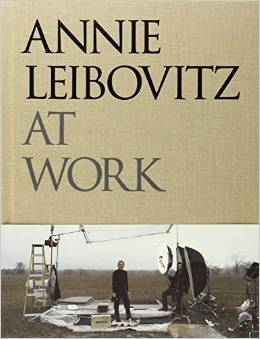
Having read “Annie Leibovitz At Work”

liebovitz_coverI doubt that you’ll be surprised to hear that the vast majority of the books sitting on my shelves at home are collections of photographs. I have books by most of the greatest photographers who ever lived and I find them to be a constant source of inspiration as well as a great help in keeping my feet on the ground. Every time that I need ideas I see what they did and every time I think I’ve done something great I realise that many other people did it before me and often better than me.

One of the biggest sections is the one devoted to Annie Leibovitz. I admire her and I admire her work. I don’t necessarily want to be the kind of photographer that she has become and I definitely don’t want to do the kind of work that she is most famous for but there is a great deal of inspiration there.

For my birthday a few months ago I was given a 2011 copy of her 2008 book “Annie Leibovitz At Work”. It is partly a biography, partly a summary of her professional life and an interesting insight into how she feels about the job that she has done since leaving college. There are also copies of many of her greatest pictures in it – although it’s the words that I want to talk about here.

When I read it a month or so ago I did so immediately after reading Roger Allen’s excellent “The Darkroom Boy 40 Years on Fleet Street” which is a funny and honest look at the life and career of one of the greatest exponents of the newspaper photographer’s craft. (more…)

Choosing between full frame Canons…

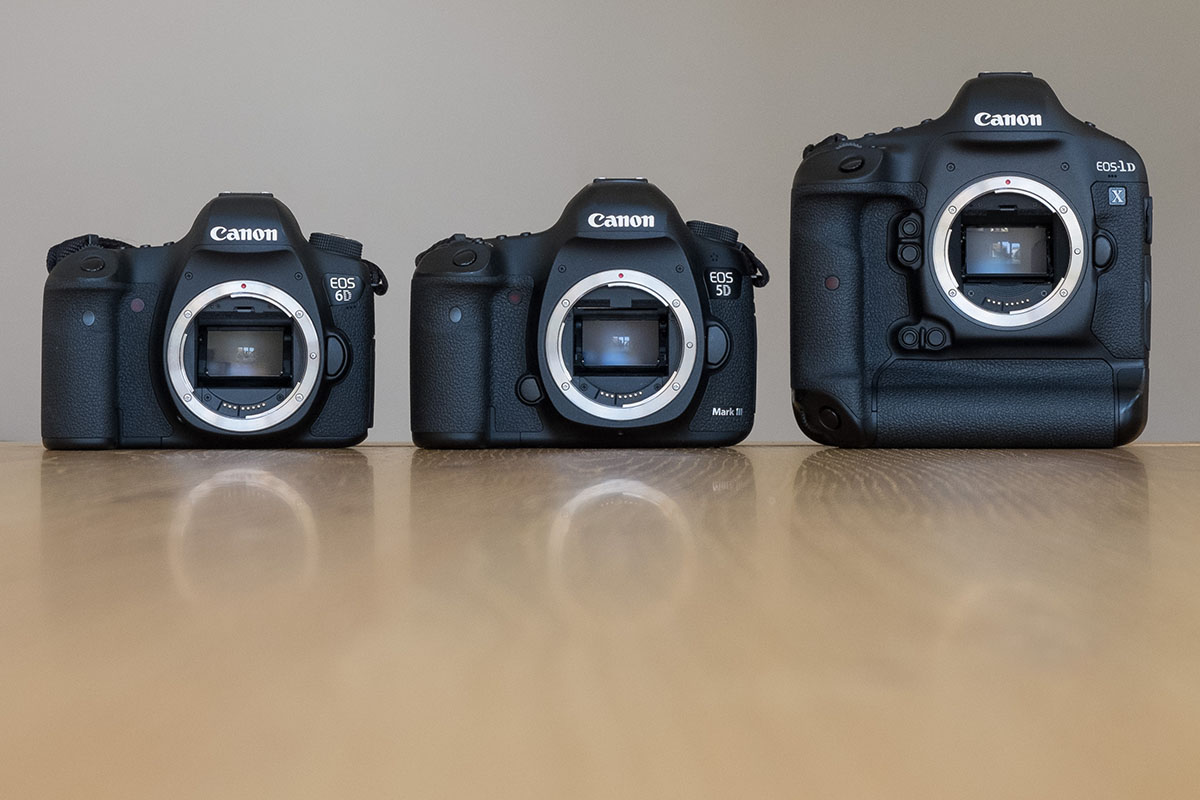
The Canon EOS6D, EOS5D MkIII and the EOS1DX

The Canon EOS6D, EOS5D MkIII and the EOS1DX

A couple of years ago I wrote about how, as a working photographer, I make purchasing decisions. The formula is simple: assess the actual need against the purchase price and proceed accordingly. On that basis I own Canon full-frame digital SLRs (the cost of switching to another brand would be too high – even if I wanted to) and about ten Canon lenses. My last crop-frame DSLR was the EOS7D which was lovely to use but utterly useless to me above about 640 ISO and I shoot at 1000 to 2000 quite a bit these days. I’m always interested in new kit but rarely do I buy something just because I want it.

The chances are that all three of the cameras in the picture are nearing the end of their model lives. The rumours of an EOS5D MkIV and even an EOS1DX MkII (or whatever they choose to call it) are already swirling around the web and it cannot be long before the EOS6D gets an update either. That doesn’t make them bad cameras – far from it, they are all exceptional bits of kit.

I was asked the other day by a talented amateur photographer that I happened to be shooting a portrait of whether it was worth his while “going full-frame”. There’s never a right or wrong answer to questions like that: (more…)