photographer

Drop-in pictures.

This one was first published in April 2009…

We are in the middle of a recession – a pretty big one at that. Sensible professional photographers all over the world are looking at their business models, talking to their clients and trying to give themselves an edge. A few are trying to compete on price which might work in some markets but will almost certainly destroy others. The rest of us are just looking at what we do and how we do it in the hope that we can raise our collective game.

One thing that I have always done is to give picture editors what they have asked for and then give them something that they might well be able to use but hadn’t asked for. Current fashions in mainstream magazine design seem to call for a range of what we call “drop-in” pictures. Small supporting details that help to break up the copy and also tell the story.

©Neil Turner

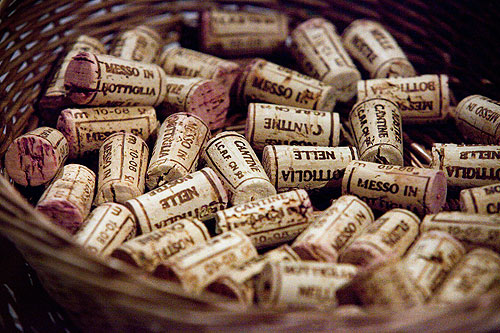
This example of a basket of wine corks came from a commission to shoot a conference which featured a full scale banquet in the very splendid surroundings of one of the Oxford Colleges. It’s not an exciting picture but it really helps to tell the story. It can be used large or small or not at all. It took a minute to shoot, another minute to edit and forty five seconds to transmit. It helped to break up a set of images of middle aged men in black suits eating by candlelight and stands out in the clients image browsing software as “different”.

©Neil Turner

Same client, very different project. This was a story about an ecologically managed office complex where they were still making improvements. A simple shot of the builder’s muddy boots helps the story along. They didn’t use this frame but it was submitted in much the same way that the image of the corks was and almost certainly had the same effect on screen.

©Neil Turner

This final example, shot for an education magazine, had an entirely different effect. Shot as a supporting image – the designer saw it and decided to base the entire layout around it. The story was about using Makaton, a relatively simple sign language, to help teach primary school pupils a broad range of things. They ran headlines and copy over the pale background in a very imaginative way – a use for a very simple picture that I had never envisaged.

To sum up: when you shoot the kind of editorial work that I do it takes no time at all to add these simple images to an edit. They will be useful in years to come as stock images and they give designers and picture editors options that they hadn’t asked for. Some people might say that I’m giving “my edge” away here but I hope that I offer clients a package deal with at least four edges. I always tell students to whom I give talks about the job that I do that they need to think beyond simply what they have been asked for. It is a given that you give the client what they asked for but I have never heard one complain that you have given them something more.

Photographic policy

Just in case you haven’t noticed, I’m a photographer. I also teach a bit of photography and write about the subject too. The latest addition to my ‘portfolio career’ is what I can only describe as photographic consultancy. I have done a few corporate training sessions aimed at people who aren’t necessarily shooting pictures but who are handling them on behalf of their employer. It started off with some PR managers from a range of Universities a few years ago and has been a very small part of what I do ever since then.

This week, I did a bespoke session for an NGO talking about copyright, licensing, permissions, model release, photographing children and how to get PR pictures used in the media. All of that in less than one day meant that we didn’t get right down into the finer details. For some organisations the knowledge that they need to do more will be enough to get them going. A company wide photographic policy has to be a ‘must-have’ with the amount of images, websites, pamphlets, brochures, publications and social media in circulation (officially and otherwise).

We are in the Christmas party season and a good, well publicised policy telling staff what is and is not acceptable would be very useful. Twitter, Facebook, Flickr and the rest are public platforms and un-wisely placed images or video are bad news. It isn’t only about stopping bad stuff happening though; good pictures need to be licensed, captioned and stored properly. The quantity of pictures held on company systems seems to have expanded exponentially and it makes sense to have policies that make use of the good stuff whilst making that the bad, the off-message and the out of date images are never seen.

As a professional photographer it is really hard to see photographs sourced from keen amateurs, micro stock sites and crowd-sourcing as anything other than lost income but that is the way the world has gone and we need to learn to work with it. People like me, with a lot of experience in the industry, can help to form policies for small, medium and even large businesses based on our knowledge of the law, ethics and technical matters. It isn’t going to cost a fortune and any company who ignores the concept of a photography policy could end up regretting it.

Welcome to the new Blog…

I have finally done it. The pre-blog was intended to last about six months and it made it past three years. I have finally found the time to migrate a lot of the newer posts to this shiny new WordPress version with all of the bells and whistles that you’d expect from a templated site.

When I get time, I will migrate even more of the old content over to here so that it can be better indexed, more easily searched for and release some space on my main dg28 site. To those of you who have followed the blog patiently checking back from time to time I’d like to say ‘thank you for your patience’ and to let you know that the RSS feed is up and running.

How often do you service your gear?

How often do you get your cameras, lenses or lights cleaned and serviced professionally? Every six months? Annually? Every other year? When things go wrong? Sadly, for most professional photographers it is the last one – when the kit goes wrong and needs to be fixed. Almost all of them get their cars service every ten thousand miles or when the service warning light comes on. Over half will get their central heating boilers checked and cleaned every once in a while but their cameras, the equipment on which their livelihood depends seems to get overlooked.

“My lenses are soft, I’m switching to the other brand” is a cry we have heard regularly over the last coupe of years but is it that one major manufacturer has suddenly started to make bad lenses or is it that the daily wear and tear on even the toughest kit starts to have an effect on image quality?

If the fall off is gradual enough we don’t notice. A lens might go from “wow” through “acceptable” to “oh dear” in twenty stages over thirty months and still we only seek the help of a technician when it gets to “oops”.

Modern camera chips are capable of resolving every bit if detail that our lenses can deliver. A camera such as a Canon EOS5D MkII will show up every glitch and flaw in a lens’ performance in ways that film or smaller chipped cameras never could. It will also show up tiny errors in focusing that would have gone unnoticed in times gone by.

One of my cameras celebrates it’s third birthday next week and it will go away for it’s third service a week or two later. It isn’t particularly cheap but it is a bargain when you think how much I rely on that camera to perform on a daily basis. I have a nine-year old lens that has been to either Fixation orCanon CPS six times to get this or that checked and another seven-year old lens that has made five service trips.

I have always loved the line from “Only Fools and Horses” where Trigger the road sweeper says proudly that he has had the same broom for years but that it has had 17 new heads and 14 new handles. I don’t think that camera maintenance is quite that easy but the concept should apply.

Professional kit is closer to high performance cars and needs to be treated with a bit of TLC every once in a while.

It’s not really that funny…

I’ve just had yet another conversation with a keen photographer who wants to become a photojournalist. For the sake of anonymity, let’s call him Charlie. I have quite a few of these chats and they regularly leave me feeling in need of a joke or two to help overcome the worries I have for some of these (mostly) young people looking for the right career. Last year I uploaded a load of photographer based jokes to a web forum where a lot of news, sports and press photographers hang out. You know the kind of thing:

Q. How many photojournalists does it take to change a lightbulb?
A. None – they aren’t allowed to change anything…

The silly thing is that I spent several minutes agonizing over whether to answer the question as ‘we’ or ‘they’. Am I a photojournalist or aren’t I? In the end, I chickened out and went with they telling myself that just because I used ‘they’ it didn’t mean that I couldn’t count myself in. Typical cop-out!

There were plenty more jokes in a similar vein:

Q. How many art directors does it take to change a lightbulb?
A. Does it have to be a lightbulb?

Q. How many newspaper photographers does it take to change a lightbulb?
A. No time for that, just stick the ISO up to 6400 and shoot it with available light.

I think that the list (and my colleagues’ patience) eventually stretched to ten lightbulb jokes and I’m pretty sure that I could have managed a few more.

Anyway, let’s get back to the point of this blog post. I was talking to Charlie (our potential student) a few weeks ago and I was telling him how tough the market is right now and how competitive it is to even get a foot on the ladder. I pointed out that news photography and photojournalism were careers in which you were most unlikely to ever make a lot of money and I even told him the other photographer joke that I know: “What is the best way to make a small fortune in photojournalism? Start with a large fortune!”

Charlie was still keen and was still interested in studying the subject but there was something about him and his manner that made me think that he still didn’t really understand what the job was really about and how tough it would be – even if the economy made a rapid recovery and even if advertising revenues came back to newspapers and magazines in sufficient quantities to help remove some of the financial pressures that we battle with every day. We shook hands, I gave him my card and offered to talk again if needs be.

He rang me this morning saying that he had been to a university for an interview where they were offering him a place on a three-year degree course at huge expense and that my opinion of the current market was not shared by the teachers he had met there. They had sold him the dream and he was considering buying into it. Don’t get me wrong, being a photographer and working for the media is often exciting, regularly rewarding and always unpredictable but I am worried by educators selling courses that are largely not fit for purpose. These days a three year degree is a huge investment to make and I have written before about the pros and cons of formal study versus the kind of shorter course (that I now teach on) versus learning as you go.

My main advice to Charlie was to consider what the worst thing that could happen if he did the course and in three years time he had £30,000 worth of debts and no clear idea how he was going to start to earn enough to repay the money. That was a question his parents had asked and he said he had ignored. Now that someone from within the business was asking it he seemed to take it more seriously. It was a telephone conversation but I could sense that his passion for photography had become more real since we had first met. It seemed to me that he had been bitten by the bug.

We talked a little more and I suddenly remembered two more photographer lines that always make me smile:

(Tongue in cheek)

You know when you are a photographer when…

Somebody asks you what your favourite colour is and you consider answering “18% grey”.
Somebody asks what your lucky number is and you find yourself wanting to say “1.4”.

There you go – I’m smiling again. Good luck Charlie… (even if that’s not your real name)

The 11″ Apple MacBook Air

A couple of weeks ago I took the plunge and bought a new laptop. I have been looking at small lightweight notebooks for quite a while and I have been trying to work out out whether the iPad or any of the other tablets would be OK for the work that I do. You see, I am getting a little bit older and I want to carry less weight – partly because I seem to be getting on and off of planes a lot more and partly because I would like to use trains instead of automatically driving everywhere.

Until very recently nobody made the right piece of kit. Apple have been promising to come close with the first and second generation MacBook Air models as well as the 13″ MacBook Pro but, somehow, none of their kit has quite got it right. I have looked at Windows notebook and sub-notebook models from a range of manufacturers and both HP and Sony have come close.

Then along came the third generation Apple MacBook Air and I am delighted by the 11″ model that I now own. I bought an i5 powered model with 4Gb of RAM and a 128Gb SSD drive and I am blown away by the performance – even compared to my 2010 15” MacBook Pro with an i5 processor and 8Gb of RAM.

When I got the new Air I posted on a Facebook group that I would report back about it. Two weeks later and having done a few jobs with it I thought that it was time to post my opening thoughts about it. It came with OSX Lion loaded which threatened to present a few compatibility issues with older versions of applications. Indeed, my main workhorse application Photo Mechanic was being reported as having one or two issues with slide shows. Two days after getting the Air Camera Bits released a Beta version of the software designed for OSX Lion and I have been using it ever since. In fact the second Beta is now loaded and it all seems to be going swimmingly. Issue number one sorted.

Issue number two concerned the software that controlled the two 3G USDPA mobile broadband dongles that I rely on when I am on the road. The 3 network posted an update for their drivers within a day or two and so I was left waiting for Vodafone to follow suit. It wasn’t a deal-breaker though because I have a Mifi unit for the Vodafone network and the new Air seems to work flawlessly with that. A few days ago a fellow Apple enthusiast and Vodafone customer Edmond Terakopian noticed that Vodafone had quietly put an update on their website and that meant that issue number two was sorted as well.

Issue number three was to do with loading Apple’s own Final Cut Express. It just would not load onto the MacBook Air and work. The first attempt to load it ended with having software in the Apps folder that wouldn’t open without getting a compatibility error message and the second attempt left me without even that. I searched some forums looking for the answer and the Apple community finally pointed me in the direction of an upgrade to Apple’s plug-in manager which let issue number three finally sorted.

What happened next is still a mystery. It seems as if getting Final Cut Express working stopped Aperture from functioning. Every time I try to launch Aperture I get an error message telling me to check with the developer to see if the version of Aperture is compatible with the latest OSX. Well, as far as I know I have the latest version having downloaded it from the App Store. Issue number four is most definitely NOT sorted!

That’s enough of problems – what about the good stuff? Well, the Air is small and light and pretty quick considering the specification. It runs my basic applications (Photo Mechanic, Photoshop CS5 for Adobe Camera RAW and Transmit) very well and the gloss screen is far less of an issue than I feared it might be. The lack of a Firewire 800 port means that my workflow has had to change a little – I am not ingesting everything as a matter of course on this laptop. Instead I am using the UDMA enabled Lexar USB card reader to do a rapid initial edit and only import the pictures that have a chance of making it into the edit – cutting a stage out of my usual workflow.

Someone, somewhere wrote that the best camera is the one that you have with you and with the MacBook Air that same description will be applied to laptops. So many times in the past I have left my laptops in the car or at home because they are heavy enough to notice. Even with the small power supply I would be happy to carry the Air almost all of the time.

The big bonus, apart from the size and weight of the MacBook Air is its solid state hard drive – which is a revelation. To say that it is fast to boot would be an understatement. To say that it is quick to perform it’s tasks would be to equally shortchange it’s efficiency. I hope that I will always get SSDs from now on, they make all sorts of sense and they are tougher, quieter and see to produce a lot less heat. Finally, a laptop you can use on your lap without getting second degree burns! This new MacBook Air is as quick as my seemingly far better specified MacBook Pro. It weighs very little, has excellent battery life and stays cool.

Given the choice between buying either a MacBook Pro OR a MacBook Air I would probably say that a Pro with a SSD would be the best option if it is your only computer. I am lucky, the Air isn’t my only computer and it isn’t crammed full of Apps that I use twice a month so it is running sweetly and I love it.

Social networking. Is it working?

I’ve been to seminars and I’ve read the opinions of experts. I’ve been to workshops and I have wasted time listening to gossip – and I still don’t really have a grasp of how I should be doing social media. I’m on Twitter and I am on Facebook but the one that I have put the most effort into is LinkedIn. Of course I could have been fooled by the ‘professional’ and ‘business’ tags that get applied to that particular on line network but, hallelujah, it has actually paid off and brought some work in. Great news, but then so has Twitter.

I’ve had a website – this website – for almost twelve years now and so I guess that you could say that I completely ‘get’ the need to be on line. On top of ‘getting it’ I also enjoy it and the ease with which we can all share information and network is amazing but I am finding it hard to break out of my comfort zone – talking with photographers about photography.

Where I need to concentrate my effort is in marketing myself to existing and potential customers but that’s the part of the business that I don’t enjoy. Spending a morning ringing Art Directors, Picture Editors and other buyers trying to get to see them with a portfolio used to be something that I endured because I always loved the bit that (hopefully) came next – meeting people, talking to them and showing them my work. These days the return on time invested in making calls is very poor. Eight calls this morning and nothing. Nobody wants to see my work.

There was a time when I thought that emailing people would work – based on the fact that just after I turned freelance again in 2008 I sent out twenty emails to potential customers and got six replies, three portfolio viewings and a good number of commissions. That day must have been a fluke because it has never worked again since.

Recently I have tried local business networking groups and one industry specific networking group. I met a lot of people, handed out a lot of business cards and it looks as if there will be some work coming from it.

So, back to the social media thing: I still have high hopes for it. I have started getting and giving recommendations on LinkedIn and I have started to join non-photographer discussion groups. My tweets are getting better and I seem to be getting more followers. I am a professional and I always advocate that people use a professional so that’s my next step. I’m going to get a pro’ in to sort out my on line profile so watch this space – and the many other spaces that I virtually hang-out in

Loving f1.8…

If you are a reader of this blog and have followed any of my technique articles over the last few years you will, no doubt, have an impression of me as a photographer who lights most of his work – especially portraits. That would, I guess, be a fair impression based on my body of work but the last couple of years have seen a shift in my style and I thought that it would be cool to share a couple of more recent pictures with you.

©Neil Turner, July 2011

This gentleman is an author and a ceramic artist whose portrait I shot recently for a Dutch newspaper in London. The bulk of the pictures were taken during the interview and the light in his loft studio was very lovely. The deep joy of modern full-frame cameras is that you can shoot beautiful quality at 1600 ISO and beyond and whether or not to light something has gone from being a technical necessity to a creative decision. Ten years ago, anything over 400 ISO was awful and five years ago the ceiling was probably not much over 800 ISO. These days we have so much freedom that even a committed lighting nut like me often goes with the ambient option.

My ‘nut’ credentials were further emphasised on this job however: I chose to shoot a lot of the pictures at 100 ISO like we used to do in the days of shooting transparencies just to see if I could.

So while the excellent reporter was asking the questions and getting some interesting and thoughtful responses I was moving around with my two Canon EOS5D MkII cameras with prime lenses on making interesting portraits. Most of the pictures were made with a Canon 85mm f1.8USM lens (is there a better bargain lens on the market?) but I also shot with a 50mm f1.4USM and a 28mm f1.8USM (both cut-price gems too) whilst using my position to alter the crop and not simply relying on a zoom ring. I’d never say that this is a better or worse way of working – it is just different. I was loving the freedom of shooting at, or near, the widest aperture and the shot above was taken at 1/80th of a second at f1.8 at 100 ISO.

Much has been written about the failings of the focusing on the EOS5D MkII but I have to say that for my work I rarely stray off of the centre focusing point, which seems to be pretty accurate and easily quick enough for me – especially when using a fast lens. I concentrated very hard on the subject’s eyes and an overwhelming percentage of the pictures were bang in focus where it mattered. Shallow depth of field on people pictures has always excited me and I made full use of it on this job.

©Neil Turner, May 2011

This simple headshot was part of a project that I did for Photography Monthly magazine’s August 2011 edition. The idea was to shoot some very simple headshots without any lighting. The edition of the magazine is still current as I write this but the idea was very simple: get the subject into reasonably open shade and shoot with the same camera and 85mm lens combination as the previous picture. The trick here is to have interestingly out of focus backgrounds – in this case it is grass with dappled light and an absolutely crisp area of focus.

This portrait was shot at 1/640th of a second on 400 ISO at f1.8. I had set out with this young actor to shoot some new headshots and then write about it for the magazine. If they put the piece on line, I will link to it.