Bobby George is a showman. He drives a flash car, he wears more rings than I could lift and he has made a nice life for himself playing professional darts. He went to Langley Park School for Boys in Beckenham , Kent in June 2008 to talk to GCSE maths students about how much he has gained from good mental arithmetic. He kept an audience of teenaged boys, most of whom weren’t even born when his career was at its height, engaged and even managed to get most of them to realise that maths, probability and mental agility were actually ‘quite cool’.
photography
Archive photo: Private investigator. December1990
Back at the end of 1990 I was sent to accompany a reporter to do an interview with a private investigator. He was an ex-Metropolitan Policeman who had a very good reputation and track record in finding runaway children. He was possibly the severest looking person I had ever met and his penchant for big fat cigars did wonders for his image. The truth is that he was actually a very caring man and both the reporter and I liked him a lot.
When I did a quick “Google” for the man I found that he had given another interview to the newspaper ten years later and that he was still as forthright as he had been. I would imagine that he has since retired but I still look very fondly at this picture and remember it’s place in one of my old portfolios.
This was shot using ambient light at his office in Southwark. I was probably using a Nikon FM2 with a 180mm f2.8 Nikkor which I had at the time and the film is Kodak Tri-X. This was scanned from a fibre-based print which was printed full frame with the rebate showing.
The early days of digital
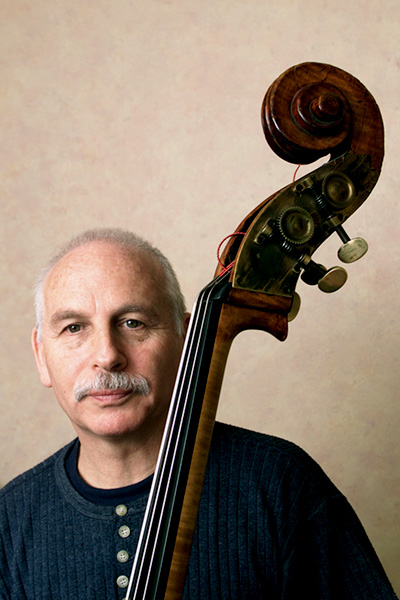
I took delivery of my first Kodak DCS520 digital camera in late November 1998. It was a revelation. I had used a previous model (DCS3) which was pretty poor and I wasn’t really that convinced about the whole process. After three days, I was a convert – the kind of convert who then sees it as their role to evangelise about their new-found wisdom/insight/faith. Based on the Canon EOS1n camera, the Kodak conversion replaced the whole of the back of the camera and quite a big chunk of the electronics too. It was expensive, relatively slow and it only had 1.9 megapixels. It had a tiny low resolution LCD screen on the back and it used enormous and expensive batteries that rarely lasted a whole day but I absolutely loved it from that first week!
This was one of the first proper portraits that I shot with my first DCS520 (known as the Canon D2000 in some countries) and it was of a double bassist and jazz teacher in his own home. My conversion was so dramatic and so complete that I even remember sulking a little when I had to shoot on film for the glossy sections of the newspaper. We worked with these early cameras for nearly four years until the Canon EOS1D came out. Nikon had introduced the D1 in that period and the see-saw battle for supremacy between the two big manufacturers with input from Kodak and Sony began in ernest.
I quite often get asked what the big trigger was for digital in the newspaper industry. There are a few factors;
- The arrival of cameras capable of shooting quality images
- The money saved by newspapers getting rid of darkroom staff
- The arrival of new health and safety laws that meant waste chemicals became very expensive to dispose of
- The speed of turnaround of digital pictures
- The ease of archiving digital images
Talking with others who used the Kodak DCS series camera from that era we all agree about one thing – how good Kodak’s software was. What a shame that they threw away their lead in professional digital photography. If they had even kept their software development going, they could possibly have avoided needing to file for bankruptcy protection in the US courts last week. I look back at the early days of digital with a real fondness – they really were the most exciting of times. There’s something very cool and very rewarding about being in the second row of pioneers!
Folio photo #14: Children on a bug hunt, south London, May 1999
This picture from a story about children from a local primary school going on a “bug hunt” in Nunhead Cemetery was shot for a special supplement to the TES about the environment. The outdoor lesson was led by Richard ‘Bugman’ Jones, a professional entomologist who undertook a residency at the school. Like a lot of my favourite pictures it doesn’t tell the whole story but it is a ‘moment’ that hopefully makes you want to know more.
I had switched to shooting most of my work digitally the previous year but the Picture Editor working on this section was still keen that we shoot pictures for these glossy extra sections on transparency film. I think that this was the last commission that I ever shot using a Leica M6. The wider shots were definitely on the Leica but I also shot some longer lens pictures using a Canon EOS5 and a fixed 85mm f.18 lens
Geek moment: Leica M6 with 35mm f2 Summicron and Fuji RDP100 transparency film.
Case studies on my website
When I went freelance again I decided to add a few case studies on my website so that prospective clients could see the kind of work that I do in greeter detail than they could on my folio pages. It’s going to be time to post some new ones soon and the first to be retired will be the oldest one: a case study about a mews feature shot for the TES in Finland.
The Brief:
Go go to Helsinki for two days with a reporter and try to establish why the Finnish education system consistently comes top of the European leagues for pupil achievement by interviewing various politicians, educators and educationalists and by visiting as many schools and institutions as we could.
Delivery:
This assignment was shot whilst I was a staff photographer working for the TES and my brief was to shoot some pictures to accompany this major feature but also to gather as much stock imagery for future stories relating to Finland and Scandinavia as possible. The final edit was over 200 images and was delivered in stages during and immediately after the trip.
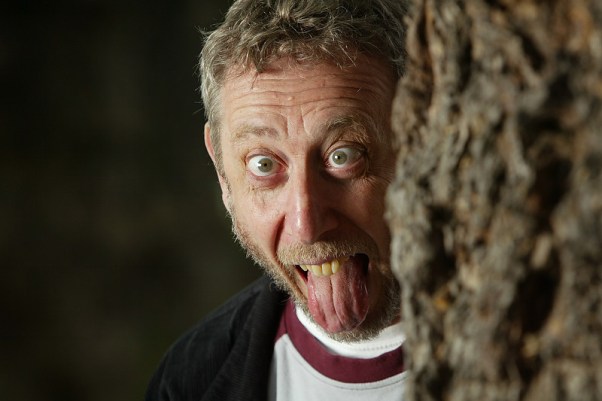
Folio photo #13: Michael Rosen, London, 2004
Michael Rosen is a poet, author, broadcaster and all round brilliant bloke. I spent a good hour shooting a whole range of pictures of him at a park near his home in East London. I have photographed him about five times in total and it is always a joy to spend time with him. I have also been interviewed by him for his BBC Radio 4 programme about words and etymology. We did a special about photographer slang. This set of pictures is ripe for a future “contact sheet” too.
Geek moment: Canon EOS1D with Canon 70-200 f2.8L IS lens.
Vocabulary of photography
Language is an ever-evolving thing and a quick search for a famous quote on the nature of language brought up two very interesting thoughts. The first is accredited to Karl Albrecht – a German latter day renaissance thinker (I wish it were the co-founder of Aldi who had the same name)
“Change your language and you change your thoughts.”
This is an important idea when, as press photographers, we are trying to get the world, the rest of the media and the Leveson Inquiry to think about photographers differently. Words like paparazzi have been liberally used during the inquiry and by commentators about the inquiry. Fellow journalists and even some of our peers regularly use the words snap, snapper and snapped to talk about our work. As long as this kind of unhelpful vocabulary carries on being used we are almost bound to carry on having a problem. We are photographers, we take photographs and what we do is photography. Get a thesaurus out and there are plenty of other words that can be used (with increasing degrees of pompousness). It seems likely that it is up to us to start the ball rolling. It is one thing to use slang terms within the tight confines of our profession but an entirely different thing to propagate them elsewhere.
As professionals we owe it to ourselves and our colleagues to change our own vocabulary and to correct everyone else who falls into the lazy trap of using short snappy terms that are just not accurate. Take last Saturday’s Times for example. On the front page of one of their sections they had a line about “What really happened when Beaton snapped the Queen”. Did Sir Cecil Beaton really “snap” anything? The Victoria and Albert Museum, a cultural institution that would claim to respect photography has on their shop website a line about the same photographer saying that after her 1953 Coronation
“(he) snapped the Queen in all her coronation finery.”
As long as what we do is trivialised in this way we are going to have an uphill struggle. A couple of other searches on the web brought up equally depressing quotes – this one comes from a careers website www.allaboutcareers.com and their description of the job “Press Photographer”:
“Press photographers are employed by newspapers, magazines and other print and web publications. These snap-happy professionals are tasked with recording images of current events to support news stories or taking interesting photos to emphasise the point of featured articles.”
We could go on but that would only serve to labour the point. It is hard to think of another profession whose work is so universally undervalued, whose work is widely misunderstood and about whom the vocabulary used is to pejorative.
One final note: whilst looking for quotes about language I found this one attributed to Federico Fellini – the man credited so widely with the origins of the term “paparazzi”;
“A different language is a different vision of life.”
Our language is a very visual one but occasionally even we need to resort to words to make our point. If we aren’t careful, the rapid evolution of the English language will leave us behind and the regular and repeated use of poor and inaccurate phrases will become “correct”.
Nikon Vs Canon (no, really, honest…)
A Wise man said to me recently that the best way of getting a shed load of traffic to your blog was to make the title something like “Canon versus Nikon” of something along those lines. Well, as it happens, I actually do want to write about Canon versus Nikon – or at least to make the point that with the imminent arrival of both the Nikon D4 and the Canon EOS1DX (at least on specification and raison d’être) the two camera giants will have a broadly competitive and similar offering for the first time since the Nikon F3 and the Canon F1n did battle back in the early to mid 1980s. Both of those cameras were built like tanks, had optional and fast motor drives and were principally designed for heavy duty professional use.
The new offerings have remarkably similar specifications – knock for knock, these are the most similar cameras on the pro market for thirty years. There are a few differences of course: Nikon have stuck their necks out and gone for a dual memory card slot with one of them being for a new and largely untried format. Both cameras have the odd quirk here and there but it will all be about personal preference when purchasing decisions need to be made.
Of course one manufacturer might have exactly the lens range you want or the other might just feel better in your hands but, the bottom line is that for the first time in the digital era and maybe even for the first time since the original EOS1 film camera hit the shelves we don’t have a clear leader. Can’t wait to try them out…