photography

Space makes you think

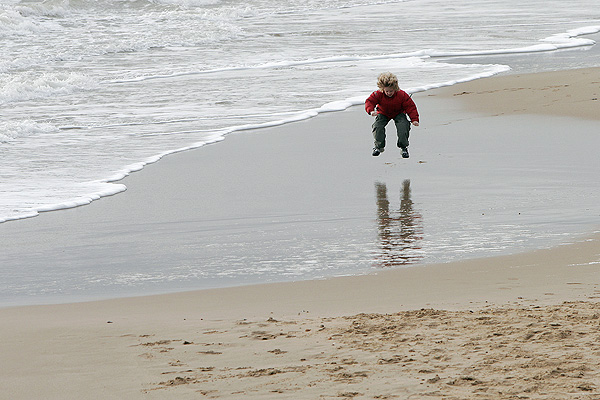
In general I am a fan of tighter compositions, but there are some subject matters that are just crying out for space. A large area of foreground or background can lend an enormous amount of emphasis to an image. Placing a small subject in a large space helps you to tell a story. If you place a person in one of the bottom corners you might suggest loneliness or vulnerability, whereas placing them at the top may well imply the opposite.

©Neil Turner | Bournemouth | January 2005

This photograph of a child playing on the beach in the winter suggests that he is really enjoying his freedom. The photograph was taken from quite a height (maybe 25 feet) to isolate the sand from the confusing background and the fact that he is nearer the right of the frame suggests that he has a lot more room to head into. The oldest rule about composition – the rule of thirds – is being observed.

If the space around the child in the photograph was full of details then the impact of the composition would be lost. You would inevitably give the image more than one subject and spoil the simplicity which is the real secret of the picture. Of course if the child’s mother was in another area of the otherwise empty frame then that would give another message altogether, the space would still be making you think – but differently.

Cluttered photographs are much harder to pull off, simple images are often more effective and this image proves that simple doesn’t necessarily mean tight.

Objects of desire

One of the great joys of being a photographer is the wonderful array of gear, technology and toys we get to use on a daily basis. It is also one of the curses of being in business. If I went out and bought every new camera, every new lens, every new application and every new computer that I fancied I would have no home, no car and no life.

That doesn’t stop me looking. The CES show in the USA has thrown up lots of new “I want one of those” moments and a quick calculation says that I would make a £20,000 hole in my finances if I went and bought it all. The serious point here is that for many photography is a hobby and buying new gear is a matter of “I want it, I’m going to have it”. For professional photographers there is a simpler test which asks “will that piece of kit pay for itself, pay my bills and work how it’s supposed to work?”

I’ve said many times that a lot of my clearest thinking comes from teaching and I’m currently updating my notes for teaching some business studies to my NCTJ Photojournalism group at Up To Speed Media in Bournemouth. In many ways the formula is simple: A. you need to take the cost of purchasing the item, insuring and servicing it and divide that by B. the number of days you work in an average year. Dividing A by B gives you C. To get the final figure D. You decide how many years the item might remain useful (longer for lenses, less time for camera bodies, computers and software).  Finally, you divide C by D and that figure is the cost of that piece of kit per working day.

An example: Telephoto zoom lens

  • A. price paid is £1,400 and it adds £20 a year to your insurance and a further £30 a year to service. That’s a total of £1,450
  • B . working 3 days a week on average over a 52 week year. That’s a total of 156 days
  • C. that’s 1,450 ÷ 156 = £9.29
  • D. lenses last on average 3 years

The final figure for owning that particular lens is £3.09 per working day IF you shoot for 468 days over three years. The cost goes down if you work more and it goes up if you work less. Of course one lens isn’t much use without the rest of the kit and so you can go through your whole stash of gear and do the same calculation for each. I tend to go for 2 years for camera bodies and computers, 3 years for heavy use lenses, 5 years for light use lenses and only 1 year for software including upgrades.

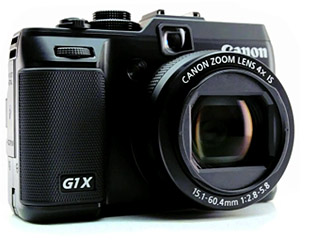
How depressing was that? Let’s end on a lighter note: objects of desire… well… the Canon G1X looks very, very cool, as does the limited edition all black Fujifilm X100. Of course the Canon EOS1DX has to go on the list and I’d love to give the Nikon D4 (and a kit of lenses) a spin. The list is actually a lot longer but nobody reads this far down… do they?

The BPPA and The Leveson Inquiry

I have been involved in writing, amending and publishing a second submission on behalf of The British Press Photographers’ Association to the Leveson Inquiry into  the culture, practice & ethics of the press in the United Kingdom. It has been a huge task and the work of propagating it using social media has now begun.

Lord Justice Leveson’s inquiry was founded to look into the phone hacking scandal that brought about the closure of The News of The World and other unsavoury practices in play within the UK news media. In the first week of evidence it turned into a “photographer bashing” event and The BPPA had to respond on behalf of the thousands of perfectly well behaved and law abiding news photographers out there. Lots of countries have a problem with rogue paparazzi or “stalkerazzi” as they have been memorably named by one UK academic.

If you are a lover of great news photography, please follow @TheBPPA on Twitter like The BPPA on Facebook and read The BPPA blog here on WordPress. The industry is at a crossroads and we need our friends and colleagues to help us get where we need to go.

Folio photo #09: Bournemouth grave digger, October 2008

©Neil Turner. October 2008

Dave Miller has been working for the cemetries service in Bournemouth since leaving school. These days he even lives in a house inside one of the local graveyards. Photographed at dusk in Bournemouth’s North Cemetry for The Guardian. They were running a whole series of pictures of people who do slightly unusual jobs and they times this particular feature to run at halloween.

This frame features four separate flash units – one of which is down inside the grave (which was otherwise empty). Dusk is my favourite time of year for shooting pictures and this particular sunset was very colourful. If you’d like to know even more about this picture, go to this technique page

Original dg28.com technique pages

Between January 2000 and June 2008 I posted a large number of technique examples taken from my daily work to show how I used light in an era where digital cameras were pretty poor at ISOs over 800 or even 400 in the case of the venerable Kodak DCS520. These days flash is a creative choice rather than a technical necessity but the techniques still stand up.

One of the technique pages was entitled simply “Why we use lights” and it is an extreme example of just how much difference some judiciously used flash can make. Early Autumn on a Friday evening in the UK isn’t often a time when the best opportunities to shoot great pictures present themselves. This one, was a real exception.

©Neil Turner/TSL

The subject of the portrait runs an educational organisation that serves a coastal area near where I was born. I should know the area like the back of my hand but I don’t and when my subject suggested that we went up on top of the Isle of Portland (not an island at all, just a peninsula!) I thought that it would make a decent enough backdrop but that the view might be obscured by mist. The two pictures below were taken with different lenses but they were taken within a few seconds of each other and show just how much of a difference a bit of flash can make.

Back in 2008 when I “retired” these pages I wrote the following as a background to my philosophy regarding portable location lighting:

A lot of news photographers don’t think that they are allowed enough time to light pictures, so they rely on their hot shoe mounted flash or on moving their subject into the daylight. If your kit is lightweight and well planned, if it’s reliable and quick to assemble then you can light as much of your work as you want to. I tend to specialize in editorial portraiture, so that is the area of work that I’m going to talk about.

When I was writing these pages my basic kit was one Lumedyne 200 joule pack, one Signature head, two regular batteries, one stand, an umbrella, a Chimera softbox and a Pocket Wizard kit – all in one sling bag. Since May 2009 that all changed and the Lumedyne kit was replaced by an Elinchrom Ranger Quadra system. I still like the Lumedynes but the Elinchrom is a few percentage points better! In October 2003 I added an Umbrella Box to my kit in the hope of replacing two light modifiers with one, which has worked in some ways but I have to confess that I go through phases of using each of the light modifiers for a while and then switching.

In the years when I was a staff photographer and posting regular monthly galleries as well as technique and opinion pages my website was getting up to 20,000 unique visitors a month. Numbers have clearly dropped off now that new content hasn’t been added for three and a half years but I’m still amazed by the the fact that in one day last month the technique home page still got 996 unique visitors.

Some day, I am going to write a book – yeah, I know – we all say that… The backbone of that book will be an up-to-date explanation of the theory behind some the 60+ technique samples posted on the original dg28.com. In the meantime, be my guest – follow the link below to the old technique pages and have look around. Be warned: one very well known blogger claims to have lost an entire night’s sleep doing just that.

ORIGINAL DG28 TECHNIQUE PAGES

Education… over on EPUK…

I write a lot for other websites and towards the end of last year the Editor of the Editorial Photographers UK site asked me to write something about photography education. It started like this:

What price your dream?

In Britain a staggering 1600 photography courses will be touting for students in 2012. Neil Turner, professional photographer and tutor on a new photojournalism course that starts in Bournemouth this month, asks whether enough of these courses actually prepare students for the harsh realities of professional photography today.

If you get a dozen professional photographers together and ask them about the state, standard and suitability of photographic education in this country you’ll get two dozen anecdotes about graduates who don’t know their arse from their f-stop, and a consensus that higher education is failing the students and the industry. Is this true? Are we missing something, or is the system getting it wrong big-time?

If you’d like to read the rest, you can go to THE EPUK WEBSITE

Good, bad and ugly purchasing decisions

If you talk to any photographer they will almost certainly tell you about the catalogue of bags, cases and pouches that they have bought thinking and hoping in equal part that their lives would be made better by owning and using the perfect holdall. We all know it’s a myth but we all keep buying in the hope that one day that elusive bag will be made and that it will (somehow) save our poor battered spines. Well that’s one kind of bad purchase that we will all own up to but I was put on the spot the other day by a young photographer and asked about my best and worst purchases of recent years. Hmmm…

My reply was that I had been pretty fortunate where cameras and lenses were concerned. I had made pretty good choices on the ‘big ticket’ items – my camera bag is full of the same kit that it was two years ago and (apart from getting newer versions of the same) I’m still happy with my gear. It’s the small things and the software where the good and bad choices seem to come – maybe because they are the nearest thing to impulse purchases that I make.

The Good, the bad and the ugly…

Software tops my list good purchases that I’ve made recently and at the very top is the invoicing software that I’ve been using since I went freelance again in 2008. I found BILLINGS as a ‘staff pick’ at the Apple Store on line and right from day one I have genuinely enjoyed using it and the development that has since taken place from version 2 to version 3 and the addition of an iPhone app has made a good package very good and there is nothing like getting your invoicing right to make you a happier photographer. My other good/great purchase was the iPhone itself. I had tried a Blackberry and I had used a Nokia smart phone but from day one the iPhone has proved itself. It seems as if I get a new ‘life enhancing’ app every week: from cinema bookings to a brilliant parking control app the iPhone becomes more and more important and having the back-up of Mobile Me really helps too.

Back to software – I have used Photo Mechanic for many, many years and I still love it. It is fast, intuitive and does exactly what I need it to do. One colleague refers to it as ‘old school’ and I’ve heard people say that it’s functions are available within newer programmes but I’m far from convinced. Workflow is completely central to the work that we do and so I’m a sucker for anything that is presented as a ‘better, faster, easier’ in the workflow area.

My first ‘bad’ purchase was Adobe Lightroom 3. There is nothing wrong with it. The RAW conversion is exactly the same in Photoshop CS5 but the rest of the file handling and workflow part of it’s capabilities require huge computing power and the patience of a saint. Out of the box it is set up to be thorough but that makes it really slow for the kind of work that I do. By working out the preferences you can decrease it’s thoroughness and speed it up quite a bit but it is still never going to replace Photo Mechanic in my life. That’s an expensive mistake to make but that’s life.

My next ‘bad’ purchase was Apple’s Aperture. Once it came down to just £45.00 in the App Store I was tempted and I gave in. Aperture was an attempt by Apple to take professional workflow, give it the Cupertino treatment and give us a workflow designed from scratch. From version 1 it was flawed and my first experiment with it left me feeling “if only” – in fact a whole list of “if onlys”. Version two came along and they had ticked a couple of boxes but left far too many questions to make it worth pursuing. I bought version 3.1 safe in the knowledge that several of my peers are using it, loving it and even teaching it. I wanted to love it. I tried for well over a month to get on with it but two weeks ago I finally admitted that it was never going to be. Aperture needs power – my Mac has plenty, a Core i5 processor and 8Gb of RAM, but it still never seemed enough. I think that the realisation that Aperture is only at it’s best when you have some expensive plug-ins was a turning point but I soldiered on.

You also need plenty of screen real estate to make the interface appear anything other than cluttered and I do half of my work on a 15″ laptop. I disliked the keyboard shortcuts to start with but got used to those but the reality check was that using Photo Mechanic plus Adobe Camera Raw just makes sense for me.

And here is the truth – what makes a ‘bad’ purchase for one photographer doesn’t mean that it was a bad product. I have owned an Canon 85mm f1.2L lens and sold it again because it didn’t suit me – it’s a hell of a lens, just not for me – I prefer the bargain 85mm f1.8.

So what about an ‘ugly’ purchase? I’m struggling to think of one in the software field. Had I actually bought version 1 of Aperture instead of doing the free trial, that would qualify but I didn’t. I cannot be bothered to list all of my ‘ugly’ camera bag mistakes and so I come to the countless times that I have bought cheap options and regretted them. If I’m shooting with Canon or Vivitar flash units on stands I use the bomb-proof Manfrotto Light-Tite adapters. I tried to use a couple of cheaper ones but they were rubbish and broke under heavy use.

Tripod heads are another way to spend money unwisely. When I left college in 1986 I bought a Manfrotto 155 tripod with a basic head. That got stolen and so I bought another one just the same. When I joined the staff on the newspaper they bought me a new tripod – exactly the same again but with a three-way pan and tilt head complete with a quick-release system and spirit levels. It was a good buy, it worked well and I still have it but I have always wanted an even easier to use tripod head and have bought and sold about half a dozen ball and socket, joystick, friction controlled and fluid heads. I did spend time watching eBay for a geared head at a good price – safe in the knowledge that it would be exactly what I didn’t need and I’ve abandoned the search.

My ugliest purchase ever was a Maxtor USB2 portable hard drive. It failed within days, having never really worked that well anyway. I took it back, they swapped it and the new one failed too. I didn’t lose any data and my only expense was two round trips to the shop to get drives replaced. After the second failure I got a LaCie Rugged drive which is still absolutely fine nearly four years on. I know that it will fail one day and I have duplicates and triplicates of the data stored on it but it has done it’s job.

Making purchasing decisions as a photographer is a tough job but when photography is your livelihood as well as your passion choosing when and what to buy becomes a really tough call. I have a basic kit and I have back-ups for most of it. I have rental accounts with four different companies and I have insurance that should cover my kit against loss, theft and breakages. But what about new, different or specialist gear? The more commercial work that I do, the more that I find myself needing to rent or borrow specialist kit. I have spent hundreds of pounds hiring Canon tilt and shift lenses over the last year or so. I need to seriously consider investing in one or two TSEs because the cost of renting might well be greater than buying, using and then selling on. If a lens costs £2000.00 to buy and it costs £50.00 a day to hire, how many days in a year should you hire before it becomes a better idea to buy? It isn’t 400 days because the lens can be sold. The depreciation on a £2000.00 lens would be somewhere between 1/3 and 1/4 over six months or between £500.00 and £700.00 which is only ten to fourteen days rental (if the days are not continuous) and maybe twenty to thirty days given that you would hire by the week from time to time.

To buy or not to buy, to rent or not to rent – a couple of big questions. One thing is for sure, had I ever been able to rent a Crumpler rucksack camera bag for a few days before lashing out £130.00 I would never, ever, have bought it!
Photographs of children

The beautiful bold headline above Jemima Lewis’s article on the Daily Telegraph’s website reads “There is no law against photographing children”. Whilst that is sort of true, I wish that it was that easy. I have photographed over 3,500 schools in 13 different countries during my career and I wish that I had a one pound sterling for every time that someone has quoted a law about photographing kids that doesn’t exist. I can tell you now that the amount of money that I could have raised would mean that I wasn’t driving a four year old car with almost 100k miles on the clock.

So what is the law here in the UK? One of my jobs at the Times Educational Supplement was to draft a set of guidelines for the picture desk team (when we had one) and the editorial teams to follow when commissioning, researching and using images of children. We also had a budget to get a Barrister to go over the relevant facts so that the guidelines (finished in 2007) could be adopted with confidence.

There is a subtle distinction between taking and publishing pictures and of course that takes us down the whole what constitutes “publication” debate but for the purposes of what I want to talk about here let us assume that anything you take might get published.

There are essentially two laws on the UK books that mention photographing children. First of all there is the The Child Protection Act 1978 which bans indecent photographs of children – that’s as it should be – indecent images of children should never be taken and should therefore be impossible to publish but what constitutes indecent? Where does innocent become exploitative? Is swimwear on the beach or in a swimming pool somehow indecent? These are all questions that have to be assessed on a case-by-case basis because you could not draft a set of rules about these kinds of pictures. I’m pretty sure that I know when something becomes indecent and I’m also pretty sure that 99% of the population would agree.

The trickier act to take into account is the Children & Young Persons Act 1933 which, in Section 39 says that you can never publish photographs that identify children as Wards of Court or subject to mandatory orders and goes on in Section 49 to place an automatic ban on the identification of any child, their school or location involved in youth court proceedings. Photographs used in print or online that in any way go against a court order could be classified as contempt of court.

And that’s it for legislation that specifically mentions photography but it doesn’t end there because several other laws have an effect on when and where you can take pictures of kids – even your own. The owner of land or premises or the promoter of an event can, quite legally, make it a condition of entry or access that you don’t take pictures. This would be a civil matter and so you can’t be arrested for it unless you have been asked to stop doing it and leave and then refuse to do so.

More worryingly, there is a small but growing amount of case law that concerns privacy. The best advice is that photographers need to be sensitive and apply their own tests of “public interest” before shooting the pictures. Under both domestic and international law, a child’s right to be protected from harm and to have their basic physical and social needs provided for is uncontroversial. In recent years, children have also come to be viewed as holders of a wider range of rights associated with expressing their views and participate in the making of decisions that affect them directly. For example, if a child states that they do not want their picture taken, even if parental and school permission has been granted, that decision should be taken into account.

Everyone has guidelines and rules. Everyone is scared of a US style litigation based culture becoming part of our system and because of this, the knee-jerk reaction of small bodies who know no better and of some large ones that really should know better is to stop people taking pictures of their own children “just in case” they get someone else’s kid in the same picture. This will strip a whole generation of having mementos of some of the most important and formative events in their lives. The words “disproportionate” and “ludicrous” come immediately to mind.

The whole “no pictures” culture has also turned photographers into subjects of suspicion who might somehow take an innocent picture of a kid and do bad things with it. Please, that is not happening. The truth is that abusers do their thing behind closed doors. The truth is that photography is a big part of the nation’s culture and denying the ability to take pictures is devaluing our culture. So, thank you to Jemima Lewis for keeping the issue on the pages of Telegraph’s website and thank you to everyone else who thinks that she is right.