The year is rapidly drawing to a close and everyone is looking back at 2025 with the familiar mix of joy, regret and thankfulness. We all have high hopes for 2026 and that goes for both our personal and professional lives.
So how has 2025 been for me and my work? Well – a mixture of joy, regret and thankfulness sums it up surprisingly accurately. It has been quieter than the previous three or four years with a little less travel and fewer peaks of excitement but my clients both new and old have presented me with moments that I will treasure and memories that will stay with me for a long time.
The joy of being out there, cameras in hand and doing what I love to do is just as real and just as strong as it ever was. Combine that with the joy of seeing my work used well and widely it’s been a good year.
I’ve had laptops since the mid 1990s and I have used each of them until they were no longer capable of doing their job quickly and efficiently. Most of that work has involved editing photographs and the vast majority of the time those edits have been completed away from the office. The title of this post is “The laptop cycle” and I called it that because my needs from a laptop vary over time. Things are changing again and it appears that I am just rotating into a period where I am doing a lot of editing on the road.
For the last couple of years I have either been uploading direct from my cameras and then doing a considered edit when I am back at my desk or doing some very simple and quick edits on my 2021 M1 MacBook Air. I bought it as a back up for a fully loaded 2017 MacBook Pro and to have as a lightweight travel companion. In 2022 I invested in an M1 Mac Studio for the office and the older MacBook Pro (which still works fine) was relegated to being a back up itself. The 2017 machine which felt relatively lightweight when I bought it now feels pretty cumbersome and so I haven’t carried it on a job since early in 2021.
Writing a blog for over a quarter of a century means occasionally repeating yourself and/or celebrating anniversaries of things. Back in 2011 a regular follower of my posts used my “Ask Me a Question” link to enquire about what was in my day-to-day camera bag. I duly wrote a post called “In My Camera Bag” in which I listed everything that was in my go-to bag of choice at the time. A couple of Canon EOS5D MkII bodies, two 580ex II flash units and 16-35, 24-70 and 70-200 f2.8 L lenses lived in a LowePro Stealth Reporter 650AW bag along with a Mac laptop and quite a few accessories. That was a heavy bag.
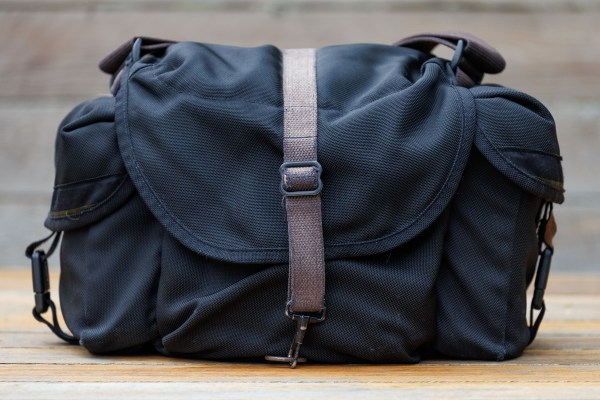
Fast forward seven years to 2018 and my much loved and rather ancient Domke J3 camera bag (pictured above) was filled with two EOS5D MkIV bodies, 16-35, 24-70 and 70-200 f4L lenses with two 600EX RT II flashes. By this time my laptops were carried in a tiny little rucksack because I’d been through some bad experiences with a spinal issue and didn’t necessarily need to carry it all of the time. I’m not sure when I bought the bag but it was well over twenty years ago and when I wrote the 2018 remix version of what I carried in my camera bag of it was already my well-worn favourite.
So, a further seven years on, here are some short updates on a few bits of kit that still spend a considerable amount of time in the same old bag.
Canon EOS R6 MkII camera bodies
Canon EOS R5 MkII camera bodies
Canon RF 14-35 f4L lens
Canon RF 24-105 f4L lens
Canon RF 70-200 f4L lens
Canon RF 100-500 f4.5 – 7.1 L lens
Canon EL5 Speedlites
Canon ST-E10 Speedlite transmitters
Out of the two R6 MkII and two R5 MkII bodies there will be a total of two in the bag at any given time. I leave it packed with one of each just in case I get a short notice job and need to run out of the door but I rarely work that way and so I will pack the right bodies for the job before I leave and keep the others in the rolling bag with the rest of the spare kit because not all of it can be accommodated at the same time, and even if it could that would be a seriously heavy bag. Laptops live in small rucksacks or a Think Tank rolling bag depending on what I’m doing. I’m not going to mention the other gear sitting in a cupboard in my office but there are a few camera bodies, a dozen or so lenses and more flash units than any sane person should own. So, if you like the shortened version of the kit review – it goes like this:
I have been toying with all sorts of social media for quite a while and my presence on any of them would best be categorised as “modest”. For the first time in my career I have been asked to actively engage with Instagram on behalf of a client and we have been discussing what sorts of hashtags should accompany any pictures that I post. I have been very keen to use something that makes it clear that mine are real pictures. Not adulterated, filtered, AI generated or in any other way the product of anything that would make a responsible photojournalist unhappy or even uncomfortable.
I did quite a bit of web-surfing before going onto a closed Facebook group made up of my peers and professionals whose opinions I respect and asking the question “what do other people do about marking their work out as AI FREE on social media posts?” There was a short but interesting discussion and one or two of my colleagues advised against my initial thought of #AIFREE on the grounds that it could be interpreted as being AI generated and/or free to use. The general consensus was to avoid the letters A and I altogether.
I doubt that I am being remotely controversial when I say that no photographer wants to do more paperwork than is absolutely necessary. Time spent filling out forms, dotting the i’s and crossing the t’s feels wrong – especially when your work and your passion is all about the creative process.
The regularity with which I have to complete RAMS (Risk Assessment and Method Statement) forms and declarations has grown. Conversations with colleagues appear to confirm that this is happening right across the photography industry.
During my first spell as freelance photographer (1986-1994) most of my work was editorial and when I did one of the few advertising and corporate jobs that I was offered, the subject of RAMS was never mentioned. Back then nobody asked about public liabilities insurance either.
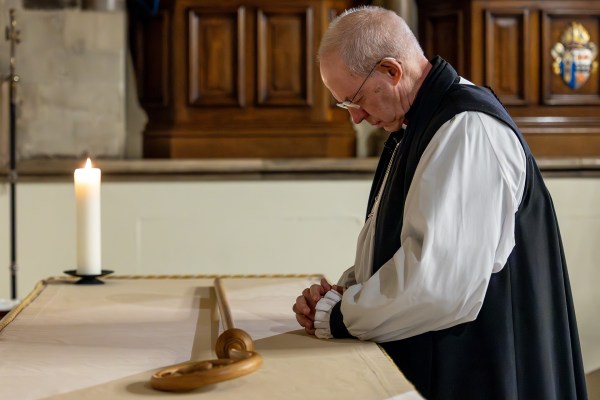
For well over two years I have been carrying out assignments for various institutions within the worldwide Anglican Communion. I have blogged before about a couple of the eventsand trips but mostly I have been carrying out the work quietly and very much enjoying it. I’ve lost count of the plane journeys taken, countries visited and extraordinary people that I have worked with and met but it was a simple service earlier this month that might just be the one that remains in my memory for the longest.
He’s checking it twice… and so on. Yes, Santa Claus is coming to town very soon.
There’s a serious point here, though. As a self-employed freelance photographer working with and for your clients you really cannot afford to forget anything. We’ve all done it and I have been a little more than fortunate because it has never ruined an assignment. When I was younger I used to be amused by the number of lists that my wife would produce both for work and in our home life. I learned my lesson and now lists form a big part of my existence too. If anything is part of an assignment then it has to appear in at least one list.
From the obvious shot lists that clients give me outlining what they need through packing lists for clothing and toiletries to the duplicate lists of equipment and serial numbers or the even more bureaucratic (and expensive) carnets that customs in so many different countries require (thanks Brexit) I have come to rely on lists to make my jobs go smoothly.
Every time I get a new compact camera (and there have been quite a few) I come onto my blog and talk about it. Just under a year ago I got the Canon Powershot G5X MkII to replace my G7X MkII and took it on a family holiday to Venice. Earlier this month we were back in the same city with the same camera but this time the vacation was all about art. The Venice Biennale and all of the fringe shows that happen across the city are great places to see a lot of good, bad and occasionally indifferent art and, for a photographer, it’s a great place to see people interacting with it.