photojournalism

Re-working old files

With all of the time that I have spent recently trying to get used to the beta versions of Photoshop CS6 and Adobe Camera RAW 7 I have been having quite a few conversations on forums and over email with others going through the same process. One conversation led me to think about even older versions of the software and how I used them and in turn that got thinking about finding an old CR2 two file that I was never truly happy with and having another go with the up-to-date version of ACR. Without looking at the original “finished” JPEG I grabbed a CR2 file from 2008 that I remember being unhappy with and gave it “the treatment”.
©Neil Turner/TSL. May 2008 - RAW file straight out of the camera

©Neil Turner/TSL. May 2008. RAW file Converted with using .xmp settings from 2008 in Photoshop CS5

©Neil Turner/TSL. May 2008. RAW converted today using ACR 7 in Photoshop CS6 Beta

Whilst I was doing the conversion it became obvious to me that I wasn’t really comparing versions of the software – it was that my taste in the way images look has changed. I have no doubt that knowing far more about converting RAW files than I did four years ago helps enormously. You can also factor in the improvements in the adjustment tools available as well but the sum total of all of that means that the newer version is far more subtle and (in my eyes) far better. I made use of the fill-light and the graduated filters. I used a much warmer white balance and my approach to both noise reduction and sharpening has moved on too – although you’d never notice that from these 620 pixel samples.

So there we go. If it wasn’t blindingly obvious before, it is now. RAW conversions depend on a mixture of software and taste and this little experiment has proved to me that my tastes have changed and so, therefore, must the tastes of other people. The final conclusion has to be that every time you create a new folio, make changes to your website or supply a picture you have to make a choice between re-working the files to bring everything up to they way you like things now or leave well alone and allow your images to be “of their time”. Fat chance of the latter happening here…

A nice request for a picture

A few weeks ago I received a lovely email from the widow of a philosopher that I had photographed back in 1996. She had been looking through some of his papers and found a cutting from the Times Higher Education Supplement that had an interview with him along with my portrait of him. She saw the tiny 8 point byline and knowing that search engines are wonderful things she tracked me down. Emails went back and forth and today I got a photocopy of the cutting in the post.

I don’t have much of the work that I did between 1994 and 1998 but her luck was in and I had a Kodak Photo CD with some half decent scans from the job in my loft. It was an easy enough task to find the CD, grab the relevant image from it and get it ready to send to her. The old Kodak Photo CDs used an unusual and proprietary format that Photoshop doesn’t recognise so if anyone else comes across this issue I can confirm that the old Graphics Converter application will happily handle the format and convert your files into useful formats such as PSD, TIF or JPG.

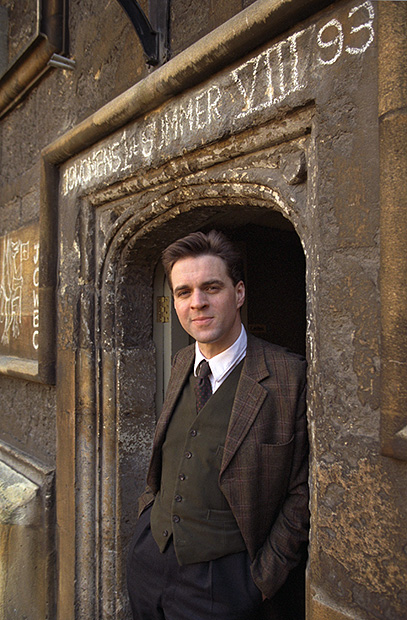
Like most photographers I get regular requests for ‘free’ pictures and I am always wary but somehow a hand-written note from the widow of a very nice man where the words “please” and “thank you” chased away my cynicism rather easily. The portrait is of philosopher and Oxford Professor Bernard Williams (he became Sir Bernard a while after I shot the picture) and here it is…

©Neil Turner/TSL. Oxford, October 1996

Geek footnote: I was using a pair of Canon EOS1n bodies with Canon 28-70 f2.8L and 70-200 f2.8L lenses at the time and this was almost certainly shot on the 70-200. The film was Fuji 200 ISO colour negative scanned on a Kodak RFS scanner.

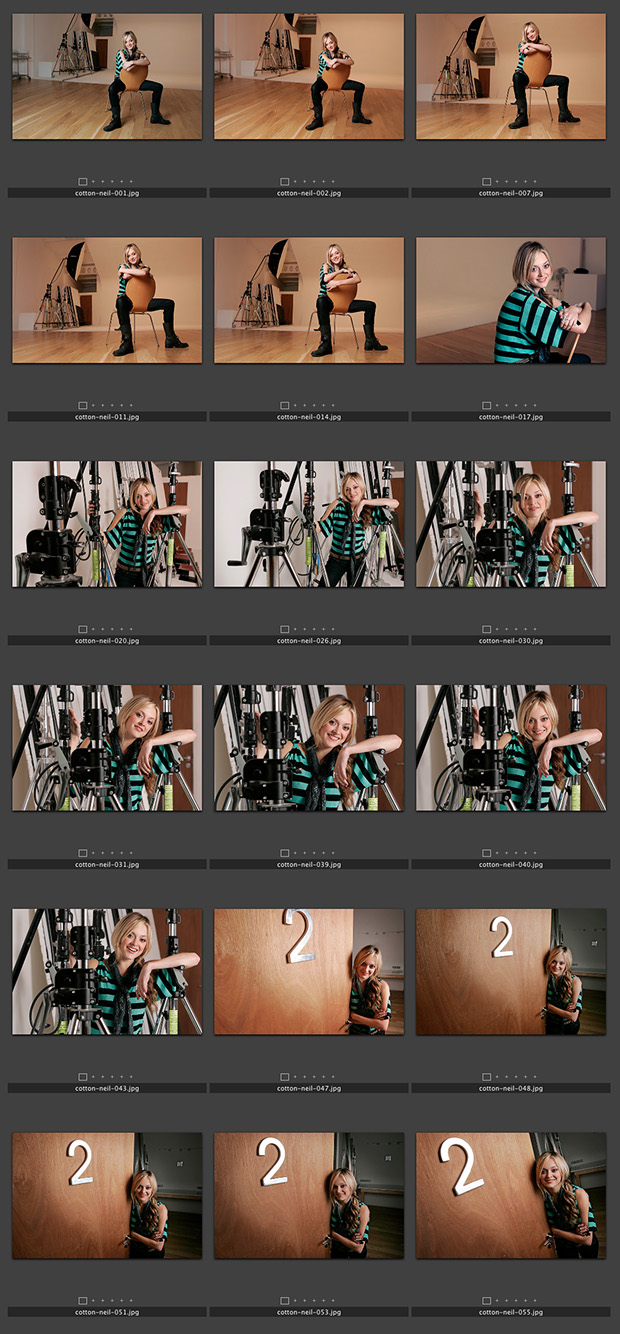
Fearne Cotton – The contact sheet, October 2004.

Back in 2004 Fearne Cotton was enjoying a very rapid rise in her profile and her career was really taking off. The TES Magazine had done an interview with her for their “My Best Teacher” feature and I was sent to a studio in west London to shoot a portrait to go with it.

©Neil Turner/TSL. October 2004, London.

It turned out that it was a hire studio where she had been shot for a BBC magazine earlier in the day and they were (rightly) less than happy about another photographer coming in and piggy-backing onto another shoot. In the end we reached a deal where I shot using all of my own lights in the main studio and in the dressing room as long as I was in and out in twenty-five minutes. I think that the shoot in the studio was over in less than ten minutes and the whole job was completed in fifteen. Fearne had had a long day and the weather outside was dreadful. Neither of us wanted to prolong the job and, even at an early age, she was such a good professional that it was a very successful shoot.

These portraits were shot using a Canon EOS1D camera with 16-35 f2.8L, 24-70 f2.8L and 70-200 f2.8L lenses and lit using a single Lumedyne Signature series flash kit with a 24×32 inch Chimera soft box. The job was shot in the days when I was happy to shoot JPEGs straight out of the camera.

Niall Ferguson, 1997 portrait.

When an email from Channel 4 television landed in my in box with an advertisement for an upcoming and very interesting looking) new programme “China: Triumph and Turmoil” presented by a gentleman called Niall Ferguson. I knew that I’d photographed him before. A quick trawl through my catalogue confirmed that I had indeed shot a portrait of him in 1997 when he was an up and coming star of academia – a professor of History at Oxford University at the age of 32. He was actually born in the same year as me and I was amused at the time by the way he was dressed in the academic uniform of tweeds.

©Neil Turner/TSL. Oxford, January 1997.

I can very clearly remember shooting this portrait. I had driven to Oxford to do another story and the picture desk had rung me and asked me to drop what I was doing, dash across Oxford to do the portrait and then go back to the feature shoot in a primary school. That was the one and only time that they ever asked me to do this and I remember thinking that this must be one important guy if I was being asked to do that.

Since then, he has written yet more books, starred in yet more TV programmes and been seen as a talking head on dozens of television shows. He is clearly still a star of the academic world and obviously a clever chap. His website came up on a quick Google search saying “Niall Ferguson endorses Mitt Romney for President”. Hmmm?

Geek stuff: Portraits shot using two Canon EOS1Dn cameras with 28-70 f2.8L and 70-200 f2.8L lenses on Fuji 200 ISO colour negative film scanned using a Kodak scanner onto a Kodak Photo CD. The software for extracting the PCD format images doesn’t seem to be available any more but Graphics Converter does a wonderful job of extracting a TIFF or a JPEG from the old files.

Note: I need to start wearing my glasses more. The web page for the Channel 4 programme says ” … apparatus” referring to the Chinese state but I read it as “… vast asparagus” – I am getting old!

Neil Innes in his pond…

From the days when he provided musical accompaniment to the Monty Python team and had his own hysterically funny television show I had always been a Neil Innes fan. Being called Neil myself I guess that I have always paid special attention to other Neils anyway but Mr Innes didn’t need any of that.

©Neil Turner/TSL. August 1999, Suffolk.

When I got the call to go and shoot his portrait I was delighted – even if the person on the picture desk had no idea of who and what he was. His home, at the time, was in Suffolk and when I arrived he greeted me as if it was him who was getting to meet a long standing hero. We had coffee, talked about all sorts of stuff and when we finally got around to shooting portraits he simply asked me “do you want funny or not funny?” I answered that a bit of each would be cool and we started with some simple head shots.

Within ten minutes “not funny” had become boring and so he grabbed his wellingtons and stepped into a lovely ornamental Japanese style pond in the garden (I believe that his wife was a garden designer and the whole place looked great) where he proceeded to fish with a small net.

It was amusing enough to watch him but if this were a video you’d now be listening to silly squelching noises and a completely bizarre and impromptu song that made sure that I was actually unable to take pictures because of the tears of laughter streaming down my face.

Photographers often write about what a privilege it is to meet some of the people we meet and to go to some of the places we go and I absolutely agree. Every once-in-a-while you also get a little private performance from a truly talented artist that money couldn’t buy and this was one of those priceless days.

Geek stuff: Shot on a Kodak DCS520 digital camera with a Canon 28-70 f2.8L lens, available light, 1/60th of a second at f6.7 on 200ISO. Converted to black and white prior to publication in August 1999.

The new Canon EOS5D MkIII – to buy or not to buy?

The heart says “YES” but the wallet asks “WILL IT PAY FOR ITSELF?”

One of the worst kept secrets in the photography world over the last few weeks seems to have been the exact specifications list of the new Canon ESO5D MkIII. When an email arrived in my inbox this morning it was headed “We’ve been listening, so now you can too!” An intriguing headline if ever I heard one… but what is it referring to? Could it be the addition of a headphone socket for video shooters? Could it be the vastly improved sound of the shutter over the slightly apologetic click and whirr of the mark 2? Maybe it is the rather good ‘silent’ shutter option? Who knows.

And to some extent, who cares? The decision that working professional photographers now need to make is whether or not buying one or two new camera bodies alone will be justified on purely financial grounds. I have written before about the calculations that you need to make before deciding to invest in new gear. The sums here are pretty easy to do:

  1. List price including VAT £2999.00
  2. Life expectancy of a pro body 36 months
  3. 3 years servicing costs £300

Take 1. and add 3. then divide by 2. = £91.64 which is the cost per month including VAT of owning the camera. Buy two and you double that. You could argue that the kit will have a residual value when you have finished with it and sell it on. I’ve just phoned a couple of dealers to see what my old Mark II bodies will be worth in part exchange. I was honest about their age and condition and was told that I’d be lucky to get £900 each. Factor that into the equation and the cost per month of the new camera would come down to £63.86 a month inc VAT each, which equates to £56.71 excluding VAT.

That’s the health warning over. What does this camera offer me? To start with I keep a Canon EOS7D as a back-up camera as well as for use when I need better auto focus that the 5D MkII can offer. I guess that the improved AF on the 5D MkIII will remove 50% of the need to have that 7D. The new camera also boasts improved low-light performance – which would be more than useful for me too. In fact, every improvement they have made is a definite bonus but exactly how I monetize those bonuses is a tough call. I know that I’d like to replace my three year old cameras with nice shiny new ones, now  all I have to do is to justify the costs. I look forward to the three hundred Canon EOS5D MkII Vs Nikon D800 comparisons. For most professionals swapping systems represents a massive cost and so it would take an awful lot for me to swap to the D800 – even if I thought that I could afford the extra storage space that using a 38 megapixel camera would mean. For me, the more important comparison will between the MkIII and the wonderful, if flawed, MkII.

I haven’t used the camera yet and so I will reserve judgement until I have. I’m not going to bother to cut and paste the whole press release either so if you want the opinion of someone who has handled the camera you can read what Getty Photojournalist Brent Stirton thought about using it on assignment in France or go to wedding photographer Jeff Ascough’s blog about it or if you want an anorak style description of what it does you can go to DP Review. I hope to get to play with it soon as well as the very interesting (if very expensive) new flash system that has also been announced today and when I do, I will be straight onto WordPress to blog about it.

To wrap it up, I just saw a great tweet originating from a user called @PolvoPolvo which said

5D3 could well go down as a gamechanger in the sense that’s its the first major release in memory not being described as a game changer

BMX Rider: Contact Sheet

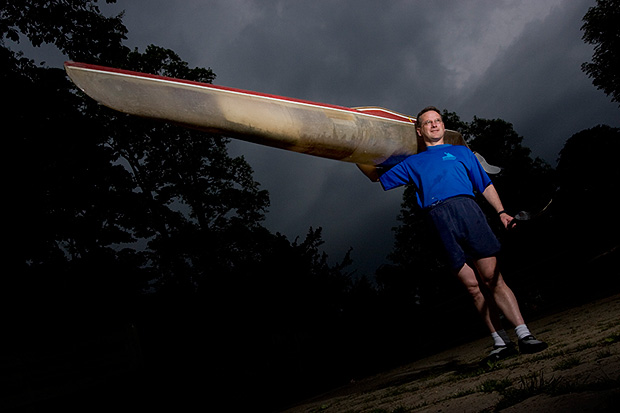
©Neil Turner. Ringwood, Hampshire. 2011

©Neil Turner. Ringwood, Hampshire. 2011

This was a set of pictures shot on location as part of a “how to do it” technique piece for Photography Monthly magazine. The idea was simple – use flash to make something very cool from some sort of active sport. I was put in contact with the tier, Keegan Walker, through a young photographer that assists me from time to time on commercial shoots and we arranged to shoot at the skatepark near where they both live which is about ten miles from my own home.

I used a couple of Canon EOS5D MkII cameras with 16-35 f2.8L, 24-70 f2.8L and 70-200 f2.8L IS lenses as well as the excellent Elinchrom Ranger Quadra flash system supplemented by a couple of Canon 580exII Speedlights with Elinchrom Skyport receivers triggering them. There were plenty of clamps, gels and light modifiers in use too – including my rather lovely modified beauty dish and the equally great Chimera 24″ x 32″ soft box.

The sky at dusk is my favourite backdrop for all kinds of shoots and the May evening sky provided us with something special to work with. Keegan is pretty good at what he does and I had to ask him several times to actually get less height from the ramps so that my pictures looked better! Two hours on a nice evening messing around and shooting pictures is a pretty good way to make a living. The unfortunate part of this particular commission was that I had to write the words that described exactly what I had done and how I had done it. One day I will get around to reproducing the whole piece for you.

Every picture teaches a lesson

©Neil Turner. Poole, Dorset. September 2008

We all know that “every picture tells a story” but how many people think that, as photographers, every picture teaches us a lesson. Grab a picture – any picture – and really look at it. What’s good about it? What could you improve if you went back and re-shot it? If it’s perfect, why is it perfect?

I spent a lot of time yesterday shooting on mixed light with no real option of lighting the scene (a busy retail mall with dozens of shops and lots of people). Looking back at the best of the shoot this morning I could see that every frame had one major feature: one thing that was the single most important part of the composition and it was obvious that I should always get the white balance right there and let the rest of the scene do what it will. I already knew this but it doesn’t hurt to look and re-affirm what you already know.

Every time you shoot pictures and every time you look at other people’s work you can learn lessons. If you don’t know how something was shot – see if the photographer will tell you.

Look for the big four factors: subject matter, composition, light and technical quality. Work out how those factors come together to create the whole. Work out if the picture still works if one or more of those factors is deficient. It’s amazing how often the most eye-catching images are not perfect in every way and it is equally interesting that some pictures that score full marks in all categories just seem boring and “too good to be true”.

Analysing your own work on a regular basis is a great way to get better. Getting together with others and discussing each others work is great too but, for my money, going over your own work on your own is a fabulous way to find your style and motivate yourself to do better and better.