technique

Calm, confident and in control

Dame Janet Baker operatic mezzo soprano. January 2008. ©Neil Turner/TSL

In my career (39½ years and counting) I have shot a lot of portraits and probably as many headshots. I’m not going to go back over my definitions of either or the subtle differences between them right here but when I point my cameras at the subjects there’s one question that I get asked. A lot.

“How should I look?”

For the first bit of my career I didn’t have a stock answer so I would often turn the question back on them: “How do you want to be seen?” It worked sometimes, occasionally failed miserably but mostly solved nothing. “Just relax and pretend that there isn’t a big bloke with a big camera and a few lights pointing at you” was never going to become the simple and snappy response that I required. It didn’t even worked on the few occasions that I tried to inject some humour with it.

I started to make mental notes about who asked the question, what kind of person they were and one thing started to become really obvious – those who had been photographed professionally a few times before rarely asked whilst those who hadn’t often did. Not entirely surprising, but interesting nevertheless.


(more…)

Recent portrait work: The Bishop of Salisbury


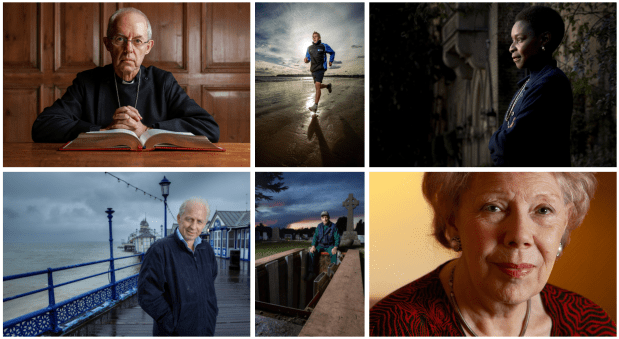
A couple of weeks ago I shot some portraits of The Bishop of Salisbury, Rt Revd Stephen Lake, in the grounds of Salisbury Cathedral. The first few frames were for part of a release to the press along with an extended caption explaining a conference he had hosted that was exploring the relationship between the Church of England and Gypsy, Roma and Traveller communities. I also shot some of the outdoor activities that went along with the event.

The rest of the images of The Bishop were for stock and I really enjoyed shooting them. He and I had met before, we are almost exactly the same age and grew up just a couple of miles from one another and so it is no surprise that we got on pretty well. As we chatted I shot pictures. What you see above is fifteen of the edited frames including a much needed headshot but as I carried on shooting I got closer and closer to what I really wanted to achieve – which is the frame below.
(more…)

Another look at editing on iOS mobile devices

Back in February 2018 I concluded that I had failed to develop a decent workflow for the iPad or iPhone and that if I had the time I’d come back and continue with the quest. Since then I’ve occasionally used versions of my previous workflow and have dabbled with new options as they have come to my attention. Some six and a half years later I bring good news if you shoot with Canon and don’t mind paying for useful applications on subscription.

With the help of Canon and Adobe I think that I have now got a usable and developing workflow for importing, editing, captioning and transmitting images from my iPhone. All of this is currently only possible on my phone because my iPad is a bit out of date and cannot load one of the key applications. Apple announced a new version of the iPad Mini this week which prompted me to post this update.

Let’s talk about what has changed to make me so positive about what’s now possible:

(more…)

Thirteen quick portraits using unfamiliar gear

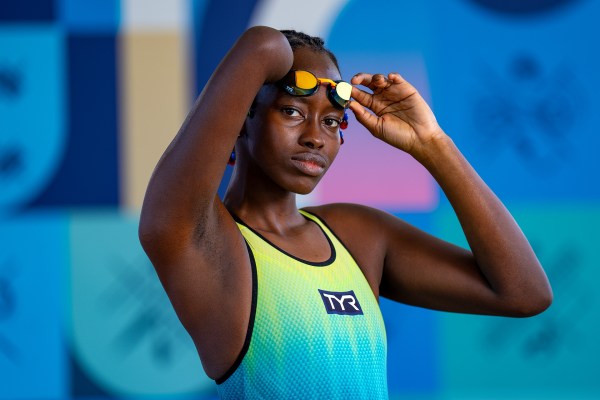
Husnah Kukundakwe – Ugandan Para Swimming athlete, photographed at the Athletes Village ahead of the Paris 2024 Paralympic Games. Monday 26 August 2024. Photo: OIS/Neil Turner

I hope that most people reading this are aware that my photography career has lots of elements to it. I have shot pictures for some 38 years now but for the last ten years I have also worked as an editor on large sports projects with Bob Martin and his team. One of the best parts of that work is going to Olympic and Paralympic events with the Olympic Information Service and this year we went to Paris to provide some coverage of the Paralympics and to work as mentors for eight young photographers. Bob Martin, Joel Marklund and Adrian Dennis did a great job as their photographic mentors and Sammie Thompson, Joe Toth and I guided them through our live workflow giving them a chance to get to grips with working as live editors for a couple of days each as well as sorting out their images. You can see what the team produced here.

(more…)

Less is more… until it isn’t

Every photographer and every artist you will ever meet has opinions about composition. A mere thirty-eight years into my career and some forty-six years after picking up a decent camera for the first time I have some too. 

The other day I was involved in a very interesting conversation that was partly triggered by the recent portrait of King Charles III by Jonathan Yeo. The man that I had photographed and with whom I was chatting had a wonderful knowledge of painted and photographic portraits going back hundreds of years and we discussed what used to be included in portraits for symbolic reasons and what we now exclude from them for aesthetic ones. I’m sure that it has been around for years and has been claimed by many others but I came up with a phrase that sums up my approach to composing my work… 

Less is more… until it isn’t.

In almost all creative pursuits end results that appear to be simple have an elegance and a beauty that appeals to most people without them necessarily knowing (or caring) why. To create something complex that has impact takes a very different and very real skill.

(more…)

Light modifiers

When this was shot this was my favourite type of catchlight. The shoot through translucent umbrella partnered with an oblong light panel to reflect a bit of light back in. I have changed my mind a hundred times since then.

“What is your favourite light modifier?” A question from a photographer who has followed my blogs over the last twenty-plus years got me thinking. Spoiler alert – I probably don’t have a favourite but I do have a few that I use all of the time.

First things first, let’s define “light modifier”. As part of their explanation of modifier Wikipedia describes it as the following:

Tools or accessories employed in photography and videography to shape, control, or direct light emitted from a light source. These modifiers serve to alter the quality, direction, and intensity of light, thereby enabling photographers and videographers to achieve specific effects or moods in their images. Light modifiers come in various categories and types, each with its own unique characteristics and applications.

Seems simple enough but when you start to examine those different categories and types life can get pretty confusing. Thinking about it I realised just how many different soft boxes, umbrellas, reflectors, dishes and domes I own. In fact, the inventory doesn’t even end there because there are so many sub-sets and shapes that it could all get the tiniest bit confusing for me if I hadn’t used each and every one of them so often over the last forty or so years. The fact that I have sold a few here and there and thrown and given so many more just adds to my knowledge of what does and doesn’t work for me and the work that I do – which in itself changes over time.

(more…)

Working with mirrorless – a problem solved…

Last summer I jumped into the world of Canon mirrorless cameras with a blend of caution and enthusiasm. I recognise that many of my colleagues made the DSLR to mirrorless switch way before I did but, being the anorak that I am, I was determined to make the swap work for me. Having used Canon SLRs and DSLRs for over twenty five years it was always going to be an interesting time and it has taken me five months to iron out all of the niggles. The funny thing is that 90% of the change was painless and happened in under a month. It has been the one part of my work that I was always well known for that has taken me an age to completely master.

Flash.

(more…)

Some advice on composition

Shaftesbury Avenue long after dark.© Neil Turner November 2014

I often refer to my photographs as “telling a story”. That’s how I look at what I do. Portraits help to tell that person’s story and the rest of my work is all about creating images that either tell the whole story of work with other elements to achieve that goal. Stories don’t necessarily have to have an ending. Many of the best stories ask a question of the reader/viewer and leave them thinking about what they have seen, read or experienced. That, in my opinion, is what photography is about; telling the right stories and asking the right questions and how you choose to compose your pictures is one of the vital elements of visual storytelling.

(more…)