technique

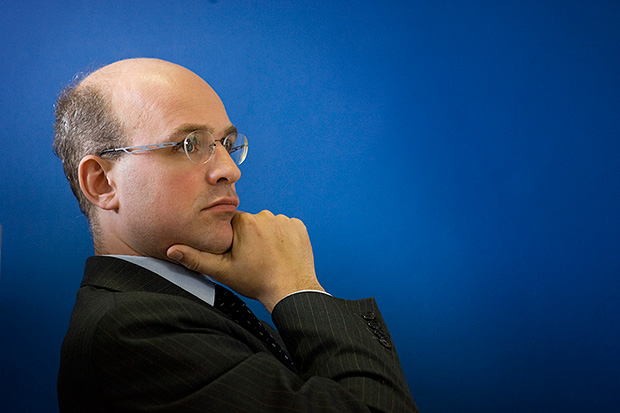
Folio photo #15: Thoughtful businessman, London, April 2008

©Neil Turner/TSL. London, April 2008

This portrait of Swedish businessman Anders Hultin was taken during an interview for The Times Educational Supplement. He worked for a Swedish company Kunskapsskolan who were working in the UK and are hoping to take control of two Academies in the London Borough of Richmond-Upon-Thames.

The interview took place in a small office in west London and, although his English was first class, he took time to consider the answer to each question allowing me to get a great range of thoughtful expressions from just about every angle. I chose this profile frame because I liked the blue background and its simplicity. All of the other angles had complex and intrusive backdrops which I used a range of lighting styles to hide. The available light was very good for a short period and so this is one of a dozen pictures taken without flash.

When I chose this picture for my portfolio it was one of three business style portraits that all had strong blue backgrounds. I like to pace the pictures in my folio and by having a small group of images with a theme it seems to give them more strength and help with the pacing of the selection.

Geek stuff: The whole shoot was done with two Canon EOS1D MkII cameras and my trusty set of three L series Canon zooms: 16-35 f2.8, 24-70 f2.8 and 70-200 f2.8.

The anguish of editing your own pictures

©Neil Turner. London, January 2011

I’ve written about this kind of thing many times but it seems to come to the forefront of my photographic consciousness over and over again so I hope that you will forgive me if none of this is new.

There are a lot of great reasons why photographers have to edit their own work. They are the only ones who truly know what was shot, why it was shot that way and how well the pictures reflect the situation. For news photographers the idea of someone else doing their edits is, largely, a far-fetched and even unwelcome notion. It is happening more and more though.

Some of the big wire agencies and more progressive newspapers are using direct wireless transmission from cameras to editors on big sports and news jobs where the time between shooting the pictures and getting them to market is absolutely critical.

If, however, time is not quite so much of an issue photographers like to sit down and go through their own pictures, make their own selections, add their own captions and prepare the files for delivery. That’s how I’ve worked for the last fifteen years or so and even before then I was often in charge of my own edits because that was how things were done.

Every once in a while (mostly on commercial shoots) someone else edits my pictures. I find it both liberating and scary in equal measure. The liberation is that I get to concentrate on shooting pictures and the scary bit is that someone else gets to see everything – the good, the bad and the downright indifferent. What if they miss the subtlety of that amazingly constructed picture on the second memory card? What if they don’t appreciate the ultra-shallow depth of field that I grafted so long and hard to realise?

There’s a good counter-argument to that of course: If a professional editor doesn’t get what I was trying to do, neither will the client, neither will the designer and neither will the viewer. There are some pictures that you take on almost every shoot that are there for you and for you alone. That is true but every once-in-a-while those pictures do get used. Every once-in-a-while somebody else gets your vision and loves the ‘weird one’ as much as you hoped that they would.

Editing your own work is a tough thing to do. Try editing a full set of someone else’s pictures and you will realise just how easy it is to be dispassionate and just how readily you are able to discard pictures that don’t work. Editing your own work can be a minefield. Every step can bring a very tricky decision. What about the pictures that you have a personal emotional connection with? What about the pictures that you have overcome huge technical challenges to secure? What about the pictures that don’t actually add to the edit or make sense as part of a set?

Taking a shoot and making sense of the pictures from that shoot is a skill that very few photographers ever truly get right. Those that do are blessed and really lucky because they avoid the regular pain and anguish of having to ignore their own ‘babies’.

I have four things that come into my mind every time I am struggling to decide about a single frame: light, composition, subject matter and technical quality. If all four are right the picture goes in. If three out of four are right it will probably make it too. Less than three and that’s where the anguish begins…
Portrait: Marsha Hunt, London, 2005

©Neil Turner/TSL, October 2005. London

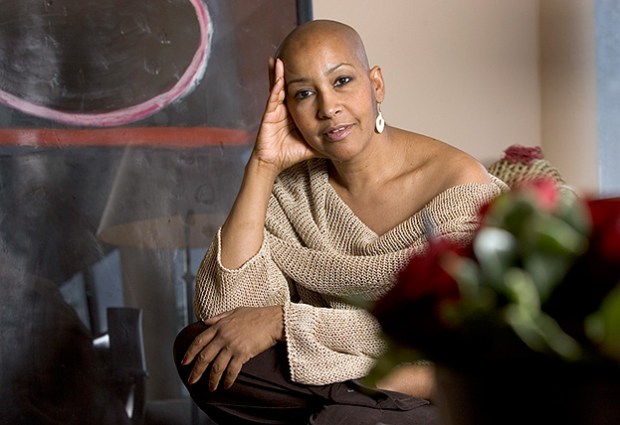
Marsha Hunt is an actress, writer and model who shot to fame in 1969 when she was appearing in the musical “Hair”. She has a child with Mick Jagger and was famously photographed naked by Lord Lichfield. In the early part of the new century she had breast cancer and had a mastectomy. Her treatment became a documentary and she was photographed once more by Lord Lichfield. This set of pictures were taken for a feature in the TES Friday Magazine about her life and her memories of her own education at the London home of a close friend of hers.

This portrait was a lesson in letting the subject run the show. Marsha was lovely, as was our host. They were very old friends and chatted most of the way through the session. The wonderful thing was that she knew exactly when and how to look at me and at the camera. Models are good at this and actors, for my money, are better. It would seem that when someone has been successful as both an actor and a model they are better still. Some people are ultimately very comfortable in front of the camera and Marsha Hunt is in the top few percent of them. The shoot lasted a lot longer than it needed to – we chatted about all sorts of things and drank some rather good coffee too. It was a good day.

Geek stuff: In common with just about every other picture shot by me at the time, I was using a pair of Canon EOS1D MkII cameras with 16-35 f2.8L, 24-70 f2.8L and 70-200 f2.8L IS lenses. The lighting was Lumedyne Signature series packs and heads mixed with a fair amount of ambient light.

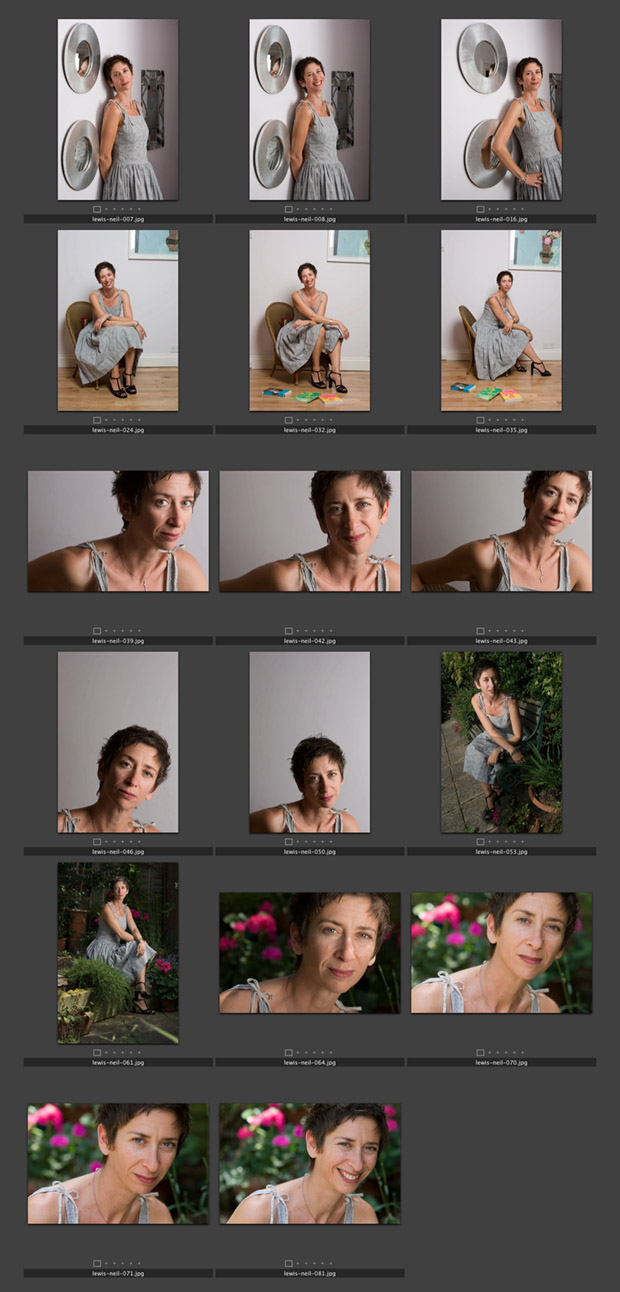
Reina Lewis – The contact sheet, June 2006

One of my favourite sets of portraits that I ever made was of a lady by the name of Reina Lewis who had just been appointed to a new post at The London College of Fashion to become Professor of Cultural Studies. The pictures were shot at her home and I could see when I got there that she was definitely aware of how important some good pictures in the right newspaper could be. We shot a range of images from some tight head and shoulders against a plain wall to some full-length sitting ones in one of the elegant chairs that she had.

©Neil Turner/TSL. London, June 2006.

All of the pictures that you see here are entirely uncropped. They were shot on a pair of Canon EOS1D MkII cameras with 24-70 f2.8L and 70-200 f2.8L lenses and lit using a single Lumedyne Signature series flash kit with a 24×32 inch Chimera soft box. The Canon CR2 RAW files were converted using Adobe Camera RAW in Adobe Photoshop CS3.

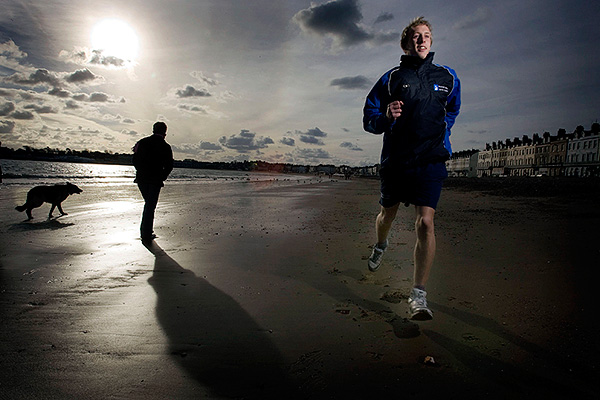
Training on Weymouth beach – an unusual portrait

Sometimes pictures come together without much effort and sometimes you almost kill yourself trying to get something just that little bit special. This portrait of a young athlete who was competing in the sport of Biathle for Great Britain at a junior level whilst studying at a college in Weymouth, Dorset definitely came along after a not insignificant struggle. Nothing to do with the subject – he was cooperative, willing and full of energy – I just tried to get pictures that didn’t seem to want to come off.

©Neil Turner/TSL. Weymouth Dorset, December 2007.

This frame was shot on a 16-35 f2.8L lens at its widest focal length on a Canon EOS1D MkII at 1/250th of a second at f22 and 200 ISO. I was using every joule of power from a Lumedyne Signature Series flash kit with no umbrella or soft box and I just had the power to get this. I have always liked the photo and I was always sad that the paper didn’t use this frame.

I guess that this picture is further proof that I love shooting beaches – especially Dorset beaches!

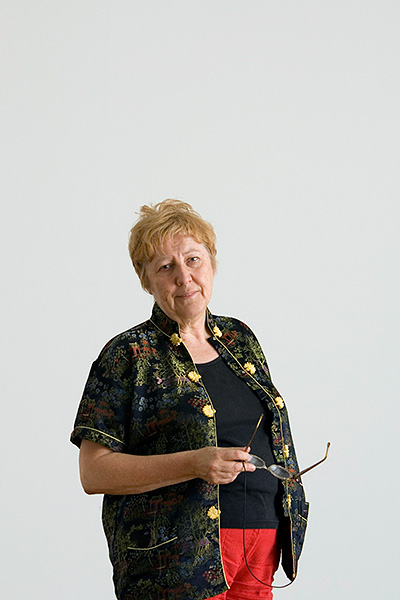
College Principal, July 2006, London

©Neil Turner/TSL. July 2006, London.

Jane Rapley was about to take over as the new head of Central St Martins College in London when I shot her portrait in July 2006. After 17 years at the famous arts college in a variety of posts she became the Principal in August 2007. I photographed her in her office and then in one of the galleries that they use for student shows at Central St Martins on Southampton Row in central London.

This particular frame was shot in case the designer wanted to use the portrait full page and run a headline and some text over the image itself. The rest of the shoot was more varied and included some very wide portraits, which seem to have been what I was interested in at that time. It is fascinating that when you look back at your own work on a chronological basis you can definitely see trends and fashions in the way you compose, light and post-produce pictures. This was one of my softer lighting periods!

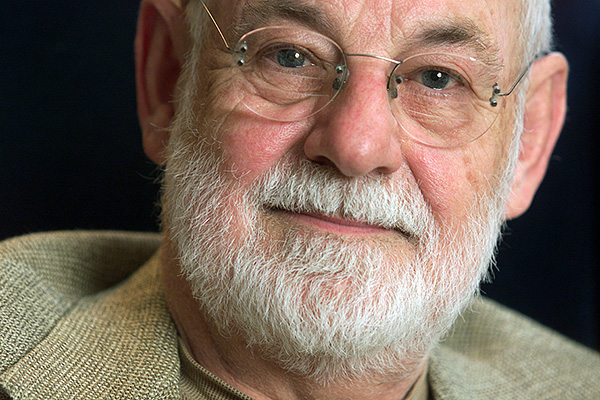
The man who wrote “The Very Hungry Caterpillar”

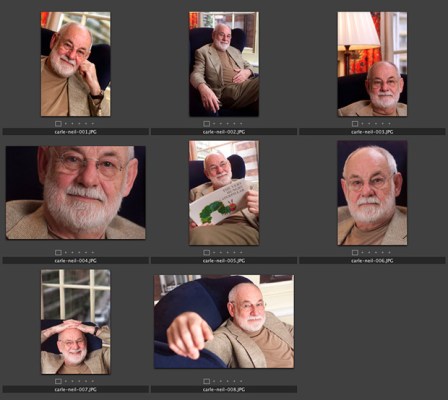
Everyone who has ever read books to very young children should have seen “The Very Hungry Caterpillar”. It’s an absolute classic and, back in 1999 I had five minutes to shoot a portrait of Eric Carle, the American writer and illustrator who created it at a London Hotel. I should have had longer but I was badly late because I’d been given the wrong address but he was charming, patient and his PR people were relaxed as well. At the time, he was 70 years old and the book was coming out as a 30th anniversary edition.

©Neil Turner/TSL. May 1999, London.

As soon as I got there, I set up my Lumedyne battery powered light with a simple shoot-through umbrella and started to work.  The author was sat in a high backed chair and I decided to work around where he was already sitting – he looked relaxed and I was still in “full apology mode”.

Although this was nearly 13 years ago I can still remember a random throughout that came into my head “if I were casting someone to be Santa Claus, it would be this guy”. From then onwards all I could see was a really nice bloke with a twinkle in his eye that children would adore. The fact that he must have illuminated millions of childhoods was certainly in my mind and we shot some very nice pictures very quickly.

©Neil Turner/TSL. May 1999, London.

This set of eight pictures is all that remains from the shoot. Back in 1999 storage was still expensive and the company policy was to use Zip discs (remember them?). My laptop had a zip drive and I put the wider edit onto the “official” zip disc and kept the tight edit on another disc for my own records. The official disc with the Kodak RAW files was lost somewhere in the mists of time and we didn’t discover that it was gone until we started to upload the entire back catalogue into a managed and backed-up library a couple of years later. You learn from your mistakes.

I like the simple and innocent tight composition of frame 004 and I love the expression of frame 007. I have read his books to young members of the family ever since and I try really hard to do so with the same twinkle in my eye that the author had.

This was still the early days of digital and I was using a Kodak DCS520 (Canon D2000) with Canon 17-35, 28-70 and 70-200 f2.8 lenses. At 200 ISO, with good light and if you didn’t need to use the pictures too large the quality of the files was actually very good indeed.