canon

Nikon Vs Canon (no, really, honest…)

A Wise man said to me recently that the best way of getting a shed load of traffic to your blog was to make the title something like “Canon versus Nikon” of something along those lines. Well, as it happens, I actually do want to write about Canon versus Nikon – or at least to make the point that with the imminent arrival of both the Nikon D4 and the Canon EOS1DX (at least on specification and raison d’être) the two camera giants will have a broadly competitive and similar offering for the first time since the Nikon F3 and the Canon F1n did battle back in the early to mid 1980s. Both of those cameras were built like tanks, had optional and fast motor drives and were principally designed for heavy duty professional use.

The new offerings have remarkably similar specifications – knock for knock, these are the most similar cameras on the pro market for thirty years. There are a few differences of course: Nikon have stuck their necks out and gone for a dual memory card slot with one of them being for a new and largely untried format. Both cameras have the odd quirk here and there but it will all be about personal preference when purchasing decisions need to be made.

Of course one manufacturer might have exactly the lens range you want or the other might just feel better in your hands but, the bottom line is that for the first time in the digital era and maybe even for the first time since the original EOS1 film camera hit the shelves we don’t have a clear leader. Can’t wait to try them out…

Objects of desire

One of the great joys of being a photographer is the wonderful array of gear, technology and toys we get to use on a daily basis. It is also one of the curses of being in business. If I went out and bought every new camera, every new lens, every new application and every new computer that I fancied I would have no home, no car and no life.

That doesn’t stop me looking. The CES show in the USA has thrown up lots of new “I want one of those” moments and a quick calculation says that I would make a £20,000 hole in my finances if I went and bought it all. The serious point here is that for many photography is a hobby and buying new gear is a matter of “I want it, I’m going to have it”. For professional photographers there is a simpler test which asks “will that piece of kit pay for itself, pay my bills and work how it’s supposed to work?”

I’ve said many times that a lot of my clearest thinking comes from teaching and I’m currently updating my notes for teaching some business studies to my NCTJ Photojournalism group at Up To Speed Media in Bournemouth. In many ways the formula is simple: A. you need to take the cost of purchasing the item, insuring and servicing it and divide that by B. the number of days you work in an average year. Dividing A by B gives you C. To get the final figure D. You decide how many years the item might remain useful (longer for lenses, less time for camera bodies, computers and software).  Finally, you divide C by D and that figure is the cost of that piece of kit per working day.

An example: Telephoto zoom lens

  • A. price paid is £1,400 and it adds £20 a year to your insurance and a further £30 a year to service. That’s a total of £1,450
  • B . working 3 days a week on average over a 52 week year. That’s a total of 156 days
  • C. that’s 1,450 ÷ 156 = £9.29
  • D. lenses last on average 3 years

The final figure for owning that particular lens is £3.09 per working day IF you shoot for 468 days over three years. The cost goes down if you work more and it goes up if you work less. Of course one lens isn’t much use without the rest of the kit and so you can go through your whole stash of gear and do the same calculation for each. I tend to go for 2 years for camera bodies and computers, 3 years for heavy use lenses, 5 years for light use lenses and only 1 year for software including upgrades.

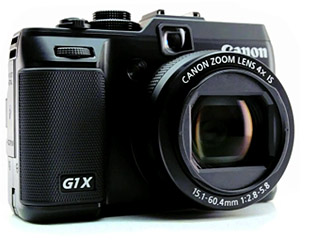
How depressing was that? Let’s end on a lighter note: objects of desire… well… the Canon G1X looks very, very cool, as does the limited edition all black Fujifilm X100. Of course the Canon EOS1DX has to go on the list and I’d love to give the Nikon D4 (and a kit of lenses) a spin. The list is actually a lot longer but nobody reads this far down… do they?

Folio photo #10: Eton College Choir, March 2004

©Neil Turner/TSL, March 2004

©Neil Turner/TSL, March 2004

Choristers leaving the College Chapel after early morning prayers at Eton College, Berkshire. The famous public school is offering junior music scholarships in an attempt to attract bright and musically gifted boys to the school. The blur was used in this case to anonymise the pupils. The camera was sat on the ground, propped up with a the lens hood because I didn’t have a tripod and wanted the motion blur. The lens was a Canon 16-35 f2.8L and the camera was an EOS1D.

The day after a bad day at the pool

When we first went digital back in 1998 there were a lot of lessons that we had to learn for ourselves. There hadn’t been much work done by others and there were a lot of mistakes that we made and learned from. One of the worst things to happen to me wasn’t until June of 2006 – long after we all arrogantly thought that we had learned what there was to learn.

I went to shoot some pictures at a swimming event and the atmosphere was loaded with what smelled like chlorine. My cameras had got steamed up quickly and took a while to de-mist and I thought nothing of it, shot the event on a pair of Canon EOS1D MkII cameras and edited my pictures as normal. Nothing wrong… so far. The next day I went to shoot portraits of a young student who had been shortlisted for a writing award – totally run-of-the-mill. The job went well, the pictures looked great on the back of the cameras but when I imported the files from the first camera into the computer I went as white as a sheet.

Dirt on the chip was a common problem, the odd bit of dust that showed up when you stopped the lens down but nothing had prepared me for the amount of spots that were on these pictures.

A small part of the frame before spotting. ©Neil Turner/TSL, June 2006

Thousands of small, circular bright spots in the same place on every single frame. I was swearing, sweating and worrying in equal measure as I put the memory card from the second camera into the card reader. If they were as bad, this job was going to take weeks to edit and retouch. Massive relief… the second camera hadn’t suffered from the same fate. The tighter pictures shot on the longer lens all had the spots whilst the wider pictures shot with a wider lens had none of them. The bonus was that some frames on the spot-free camera were also shot on a longer lens so I had a few spot-free tight portraits too. The panic was almost over but it was clear that at least two or three of the heavily spotted pictures should be in the edit so I spent most of that evening and night painstakingly getting rid of the spots. One-by-one.

The same image after a lot of work getting rid of the spots. ©Neil Turner/TSL, June 2006

After a thorough clean by FIXATION UK the camera was as good as new. The spots were crystallised chlorine and quite why they were only on one of my two cameras used on the bad day at the pool I will never know. People have theorised about having taken the lens off of one and not the other, damaged weather seals, some sort of coating on the chip of one camera that either attracted or repelled the crystals – who knows?

The morals of this story are these:

  • Shooting with two cameras is always a good idea
  • Using a professional to clean problem dirt off of the chip is a great idea
  • Shooting with some wide and some long lens images on both cameras is a good idea too
  • Be careful when taking lenses on and off in unclean environments
  • Retouching spots is a right royal P.I.T.A

That camera went on to give great service for two more years and was sold on having been cleaned and serviced. These days I use a pair of 5D MkII bodies which don’t have the same environmental seals as the 1D series. If I were a rich man, I’d want to own the new 1DX when it comes out!

Christmas at f1.4

Main Street, Hawkshead Village. ©Neil Turner

Whilst enjoying a few days away with the whole family in the Lake District over the holidays I shot a few pictures for my own pleasure and for the family album. For no other reason than “I wanted to” most of them were taken at the maximum aperture that the lens could manage – which, given that I mostly used a 50mm f1.4, was f1.4!!! It was great to be away from the big city for a while and take in the countryside and wander through some small towns and villages.

This was taken in Hawkshead Village – a large part of which was refreshingly closed…

Folio photo #05: CEO portrait with tungsten light, August 2006

©Neil Turner/TSL, August 2006

In 2006 Ian Smith was the Chief Executive Officer (CEO) of Oracle the software company based in the City of London. This business portrait was actually taken for the Times higher Education Supplement who were running a piece about Oracle’s connections with the education industry. The portrait itself was shot in under two minutes but I had set up with a ‘stand-in’ who posed for some test pictures for fifteen minutes before Mr Smith was available.

The really interesting thing about this portrait is that it was shot with deliberately mixed lighting: tungsten gelled flash on the subject and daylight behind with the camera on a custom white balance which was only concerned with the flash. I use this set of pictures a lot when I am teaching my location lighting seminars.

In my camera bag

Nothing much has changed with my kit for everyday jobs, so here is a refresher of what I use…

It seems to me that every web site about a photographer or photography has to feature a shot of the packed bag with an accompanying view of all of the kit laid out. I’m going halfway with the obligatory bag shot but you are going to have to settle for a bulleted list of the contents. We all know what an EOS 5d MkII looks like and I’m pretty sure that you can guess at what a pile of 8 Gb compact flash cards look like too. My old site has quite a bit of this stuff if you really need a fix!

©Neil Turner

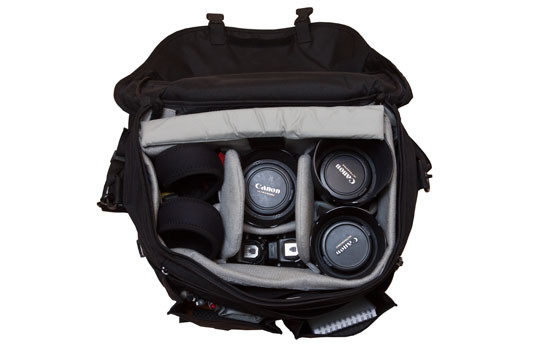
So, what’s in your bag mister? (sorry Mr Lehman, I know that’s your line). The bag that I’m using most of the time is a Lowe Pro Stealth Reporter 650AW, and from the left the main items are:

  • Two Canon EOS 5D MkII bodies
  • Two Canon 580exII flash units
  • Canon 16-35 f2.8L sitting above a Canon 1.4x extender
  • Canon 70-200 f2.8L IS
  • Canon 24-70 f2.8L sitting on an ST-E2 flash transmitter

The back section is able to hold an Apple Macbook Pro 15.4 and the various cables will go into one of the front pockets if I need to pack a whole kit into the bag for travelling. There are plenty of bits and pieces in the bag:

  • Think Tank pixel pocket rocket CF card holder with 8 x Sandisk 8Gb CF cards
  • Notebook, pens, business cards
  • 16 x 2700 MaH AA rechargeable batteries
  • 2 x Spare Canon LP-E6 batteries
  • 2 x Honl Photo Speed Straps
  • 1 x Honl Photo Speed Gobo
  • 1 x Honl Photo Speed Snoot
  • Canon RS-80N3 Remote Switch
  • Various bits of coloured gel (red, green, blue, Full and 1/2 CTO orange, 1/2 CTO blue, purple)

Added together, this is one heavy bag. If it has the laptop and all of the computer accesories as well it is barely portable. If I’m travelling on the London Underground or having to do a lot of walking for a job I will try to cut things down and even spread the load in two bags. I’ve written before about the search for the perfect bag and all I can say is that the search continues.

Sometimes I use a nice small Domke J3 bag with two EOS5D MkIIs and some prime lenses – 28mm f1.8, 50mm f1.4 and 85mm f1.8 but most of the time I rely on zoom lenses.

How often do you service your gear?

How often do you get your cameras, lenses or lights cleaned and serviced professionally? Every six months? Annually? Every other year? When things go wrong? Sadly, for most professional photographers it is the last one – when the kit goes wrong and needs to be fixed. Almost all of them get their cars service every ten thousand miles or when the service warning light comes on. Over half will get their central heating boilers checked and cleaned every once in a while but their cameras, the equipment on which their livelihood depends seems to get overlooked.

“My lenses are soft, I’m switching to the other brand” is a cry we have heard regularly over the last coupe of years but is it that one major manufacturer has suddenly started to make bad lenses or is it that the daily wear and tear on even the toughest kit starts to have an effect on image quality?

If the fall off is gradual enough we don’t notice. A lens might go from “wow” through “acceptable” to “oh dear” in twenty stages over thirty months and still we only seek the help of a technician when it gets to “oops”.

Modern camera chips are capable of resolving every bit if detail that our lenses can deliver. A camera such as a Canon EOS5D MkII will show up every glitch and flaw in a lens’ performance in ways that film or smaller chipped cameras never could. It will also show up tiny errors in focusing that would have gone unnoticed in times gone by.

One of my cameras celebrates it’s third birthday next week and it will go away for it’s third service a week or two later. It isn’t particularly cheap but it is a bargain when you think how much I rely on that camera to perform on a daily basis. I have a nine-year old lens that has been to either Fixation orCanon CPS six times to get this or that checked and another seven-year old lens that has made five service trips.

I have always loved the line from “Only Fools and Horses” where Trigger the road sweeper says proudly that he has had the same broom for years but that it has had 17 new heads and 14 new handles. I don’t think that camera maintenance is quite that easy but the concept should apply.

Professional kit is closer to high performance cars and needs to be treated with a bit of TLC every once in a while.