opinion

Bad weather and batteries

OK, so I forgot to post and say “happy new year”. I’m trying to make my blog posts count and my new year’s blog resolution is to be “relevant, regular and interesting”. The first thing that I want to do is to heap praise on the batteries used in the Elinchrom Ranger Quadra system. The weather in the UK over Christmas was pretty cold and in Perthshire, where we spent Christmas, it was very cold indeed. I had my Ranger Quadra kit in the car boot for well over a week of sub-zero temperatures and the batteries still worked perfectly.

The same cannot be said for the Quantum turbo that was also there. I know that this might seem a small point to most of you but the ability of batteries to keep their charge in cold weather is a big selling point for professional gear. Obviously this wasn’t a scientifically controlled experiment but I am really pleased to know that the gear seems to have this very welcome durability.

Being self-critical

One of the best things about studying photography at college was having so many of your peers around to help critique your work on a daily basis. It often hurt at the time and more than once I decided to ignore the advice of my friends and forge ahead with my own style. After college there was always the darkroom or the lab where you would talk to other photographers and get some feedback on what you were doing. Then there were a few years when we were hand processing film wherever we happened to be and scanning it, quickly followed by the early digital era. That brief period between the darkroom and the almost universal uptake of the internet and adoption of digital was a tough time for those of us who liked to talk about our work with other photographers.

Now we have choices. We can submit our work to picture sharing networks or publish them on our own sites and hope that others take the time to have a look. Excitingly, we have a growing number of photography discussion groups such as Photo Forum in London where like-minded folks can get together and see the work of others, talk about it, help each other and get inspiration.

There is, however, another option. Self-critcism. The concept is simple – you look at your own work very very closely and try to see how you could have done it better, more imaginatively or maybe just differently. As a freelancer, based a hundred miles from London, this is something that I am going to spend more and more time doing. It was easy to look at a friend’s work and pass a comment or two but it is a lot tougher de-constructing your own images. So much so that I have been giving some thought to having a structure for looking at my own pictures. My first thought was to have some headings under which to work: image quality, composition, light, first impression, suitability for the job were all there in my first list. It’s a decent way to analyse images but I can’t help thinking that there is a better and more enjoyable way to critique my own work.

I tried opening a small number of random images from the past months work and really studying them hard, trying to imagine that they weren’t mine. I found myself coming up against headings and categories again and so I marked six images with a numerical score out of ten under five separate headings and ended up with scores ranging from 20/50 to 44/50. An interesting exercise, but boring and outrageously bureaucratic! What would I have said if these pictures had been by someone else? The first thought that came into my head was that I wouldn’t have wanted to hear about how hard the job was or why certain compromises had been made – the very things that I know about my own work.

Taking a look at the pictures without giving myself a proverbial “pat on the back” for overcoming technical and physical difficulties brought me closer to the answer. Answering questions like “does it have instant appeal?”, “is it a good picture?” and “does it fulfil the brief?” without the excuses that I had been giving myself started to work. The next step was to try to put myself in the shoes of the client and factor in what they might have thought about them. It was getting complicated but I found myself looking at my own work in a far more detached way than I ever had done before.

Applying this process to an edit that I had done a week or so previously allowed me to go back and make that edit so much tighter. I have a very bad habit of editing far too loosely and giving myself a few rules to work with definitely helped me.

At the end of the process I made three decisions:

  • To be far tougher on myself when editing
  • To seek out help from other photographers to review what I’m doing
  • To have another look at my portfolio and see if I can re-shape it

It’s amazing where a few idle thoughts lead you

Five people that I will never forget

Originally posted in July 2009, this was a very personal reflection on some very important people in my career.

I suspect that most professional photographers keep a pool of pictures that they use for promotional, exhibition and portfolio purposes. I have always had a folder full of my favourites and now that I am freelance one of my regular tasks is to update it. The death of Mr Henry Allingham who was, at the age of 113, the oldest surviving veteran of the First World War made me go through and think about some of the people that I have had the honour of meeting and photographing.

My folio folder had no fewer than five images of people who have died since being photographed by me. As a percentage, that’s not out of the ordinary and three of them were very elderly indeed. Each of the five people had a big effect on me for various reasons and I’d like to share some memories of them with you.

©Neil Turner/TSL

Dame Iris Murdoch was a brilliant novelist whose life story was made into a film “Iris” starring Dame Judy Dench. I photographed Iris Murdoch and her husband John Bayley in the garden of the home that they shared in Oxford where he was a professor of English. She was, by the time that this picture was taken in 1998, suffering from the latter stages of Alzheimers’ – which is a terrible disease that robs the intellect and then the personality of the sufferer and places a great strain on those who love and care for them.

Dr Bayley described her as being like “a very nice 3-year-old”. This picture was on the back cover of the book that he wrote about their life together.

The house had not been properly cleaned for a long time and there was a television in every room playing the same programme.

When I went to see the movie made of her life two women in the row behind me made comments about the house that they lived in and that she could not believe it could have been as bad as the film made out. The temptation to turn around and tell them that the film did not tell even half of the story was strong, but I resisted. She died in Oxford on February 8, 1999.
©Neil Turner/TSL

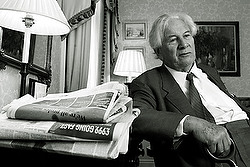
Sir Peter Ustinov was an actor, writer, director and raconteur. This picture was taken in his London hotel shortly before he died in 2004 aged 82. I’m not going to attempt to precis his life, but I’d like to tell my story about my time with him. I was searching for something to chat to him about and I used one of my “fallback” topics of what I had heard on the radio on my way to meet him.

Every morning BBC radio 4 has a news show called “The Today Programme” which that morning had a feature about the USA and communism. I mentioned Senator McCarthy and Sir Peter then delivered a wonderful and vitriolic soliloquy on the topic of McCarthyism – job done. I’m pretty sure that you would have had to pay a lot of money for a forty minute private performance from Sir Peter. I feel so privileged to have had it for free.

©Neil Turner/TSL

When I met and photographed Mr Henry Allingham he was already 112 years old. Despite his amazing age he was very coherent, had a very British sense of humour and was interested in everyone and everything around him.

I found meeting him very humbling and, when he died, I found myself counting the ways in which our world has changed during his lifetime. Cars, planes, computers, atomic bombs, heart-transplants have all become commonplace.

Queen Victoria was still on the throne of Great Britain when he was born and women did not get the vote until he was in his late twenties.

©Neil Turner/TSL

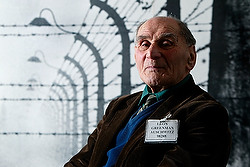
Leon Greenman OBE was the gentlest of men. Meeting him and being given a personal tour of the Holocaust Museum in London where there is a display featuring a large number of his personal possessions from before and during his time in the concentration camps had a profound and lasting effect on me.

His striped uniform with it’s Star of David, photographs of his wife and children who died in the camps, pictures of his life before the Nazis came and took the Jews away were there and he was there to talk about them in a factual but moving way.

I will never forget the day I met him and I hope that the amazing work he did to educate subsequent generations about the evils he witnessed goes on.
©Neil Turner/TSL

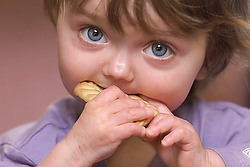
The death of people who have lived long and valuable lives is sad. The death of a child is far sadder. I met Fleur at a children’s hospice near Luton a few weeks before her untimely death. She was a sweet child who wanted to know all about everything.

Keech Cottage Children’s Hospice in Bedfordshire provides respite and terminal care for children with life limiting conditions. It is not a sad place. The children there are pretty much like any other children.

The families that I met had come to terms with the fact that they would lose the child that they loved and were making the most of their time together. I was welcomed, I was royally entertained and I would go back tomorrow if they’d have me.

From journalism to design and all spaces in between

No matter what you talk about in life there seems to be a scale: left to right, top to bottom, right to wrong. I can now add a new one….journalism to design. These are the two ends of the scale that I exist in as a photographer. At one extreme my work is pure journalism and at the other it’s little more than eye candy.

©Neil Turner. London, June 2009

The pressures that I feel when I’m out working come from both directions, and both sets of pressures come from the newspaper. My instincts are clearly those of a news photographer, but more and more I find that my work is required, judged and edited by designers. This makes me nervous because they wouldn’t ever consider meddling with the written journalism and I sometimes find my pictures being selected on the basis of how well they add to the graphical feel of the page.

I’m not saying that there isn’t a place for this attitude to pictures in lifestyle magazines, but the success of those magazines has meant that attitude spilling over into newspapers. Daily and weekly papers have always been dominated by the written word and photographs have always had to struggle for their place as an integral part of the journalism. I am fairly convinced that no significant newspaper has ever had a photographer as it’s editor, so it isn’t surprising that words dominate.

The constant changes in “who does what” inside newspapers has lead to the appointment of more and more designers who seem to have become very influential, not only in a design sense but in a more general editorial way too. Photographers are being sidelined by yet another group of workers.

Going back to my left to right argument, there are pages within a newspaper that are predominantly news and there are pages that are rightly about lifestyle. I have no problem with this except where the emphasis becomes blurred and decisions about photographs are made because they make the page look good on pages where the journalistic content should be king. Editorial photography is a far wider field than news photography and I want to be able to shoot in a wide range of styles to suit the whole spectrum, but more and more of my colleagues here in London are feeling the pressure to shoot in a softer, more feature based style all of the time. Don’t get me wrong, I think that great photography is great photography no matter why the pictures were taken and no matter where they are intended to go…but…the hijacking of news pages by people with anything other than journalism in their thoughts has to be resisted.

I strongly believe in giving designers and layout artists greater flexibility so I hope that everyone will realise that I want to meet “the enemy” halfway and not just sit sniping on the sidelines. I just get very depressed when I hear designers and layout people talking about photographs, good photographs as so much “window dressing”. The answer? Appoint more picture literate people to senior positions on newspapers, treat news photography with due respect and never allow photography to become just another element of design

Owning up to some bad habits

“It’s all about light”. That’s a message that I hope everyone who visited the technique pages on my web site will take away. When you are the one who controls that light, you have a large number of options open to you. This month I have been trying a new toy and I thought that I’d use that as an excuse to write about how and why I choose the quality of the light.

©Neil Turner/TSL | London | December 2004

The first thing I have to do is own up to some fairly bad habits:

The first is that I go through personal fashions in the way I light and in the kit that I carry with me. One month I’ll use softboxes and then the next month I’ll use umbrellas. One week I will keep the flash as only one element of the scene and the next the flash will overwhelm the ambient light.

My second bad habit is that I will light women in a different way to men. 99% of the time I will use a much softer set up for female subjects than I would for males.

Thirdly, I’m aware that I tend to use a harder light on older skin (especially men). Older people seem to have a lot less moisture in their skin and so their faces have a lot less shine.

I’m much more likely to direct a spectacles wearer about the angle of their head, simply to avoid getting bad reflections in their glasses. I also try to find out if people wear contact lenses and get them to look more squarely at me to avoid getting any strange shapes in their eyes.

So far I’m painting myself as a bit of a lazy photographer. I like to think that it’s not laziness – more a realistic attitude towards getting the shot right. When you are shooting people, you often end up shooting a very different picture than the one that you first envisaged so my bad habits are there to simply give me an easy starting point. Getting on with the shoot is part of my style. I rarely spend very much time wandering around formulating ideas, largely because I am regularly expected to set up, shoot and break down in a matter of minutes. Having the “safe shot” in the bag is something of a religion to me and I find that giving in to my “bad habits” makes my practice a lot easier.

Many photographers use the same technique day in and day out. I cannot claim to do everything differently every day, and sometimes I feel like a chef who has a limited range of ingredients that I can select, mix and adapt to create new and interesting combinations. Every once in a while a new ingredient becomes available, a new toy to play with. Does that make me gadget boy? Or does it simply help to keep my work fresh?

Photocalls… aaaargghhh!

On the day when several US wire services took the principled decision not to distribute images from the White House that they had not themselves taken I thought that the timing was right to resurrect one of my own opinion pieces which expresses how I, and many of my colleagues, feel about the pre-arranged photocall. At their very best they can provide useable photographs, but the rest of the time they merely offer up banal images. The question is…does it have to be this way?

Organising photocalls should be a separate profession, but it isn’t. Public relations firms seem to have the knack of setting up ridiculous tableaux with pointless props and “C” list celebrities whilst many companies have their own in-house marketing teams who try to shoehorn as many executives in grey suits into a photograph as possible.

No matter how many of the assembled highly skilled and hugely experienced professional photographers tell the PRs that their idea of a photograph will never make it into their newspapers, the PR people still seem to make it a matter of pride to stop us getting good pictures.

Just when you think it couldn’t become more farcical they hand out the press releases. Many of these documents weigh more than a decent SLR (lens included) and a large photocall may well account for a couple of trees (branches included). How many times do we have to tell the PR people that a single sheet of paper with the relevant names and a one paragraph summary of the event would be a lot more desirable? (and environmentally friendly!). These days the release could even be on a USB memory stick or even passed around by bluetooth, which goes even further to reduce the carbon footprint of the event.

In these days of digital photography and laptops you would think that they would at least organize a bit of space so that some of us could use it to acquire and send our pictures – maybe even lay on some wi-fi. Apparently what is actually needed is some fatty canapes, white tablecloths and wine at 11am. We would really appreciate some thought about parking (not plentiful in London) and rapidly approaching deadlines, but the PR would rather fuss about name badges and being seen to be working hard trying to accommodate some obscure request from someone with little or no need to be there. PRs – get your priorities right!

So, if you are organizing a photocall soon here are some tips:

  • Make sure that the photocall notice is issued in good time and doesn’t make inflated claims about what is on offer.
  • Organize parking or make it clear where the nearest public parking can be found.
  • Keep any signs and logos to a minimum – if it doesn’t need to be there, get rid of it.
  • Welcome photographers and give them a run through of what might be likely to happen.
  • Listen to the constructive criticisms of experienced photographers who will suggest changes and improvements to your plans.
  • Make sure that the photographers are given enough time and space to do their jobs. Keep bystanders at bay and, if you have employed your own photographer, make sure that they allow the invited photographers priority.
  • Provide an accurate and concise press release – it could be on a USB flash stick to save paper and help photographers cut and paste correct spellings
  • Arrange space, power points and even wi-fi connections to enable photographers to file their images

Photocalls are the jobs that none of us want to be sent on. It need not be like that, but a small army of PRs out there seem determined to promote mediocrity and banality.

Getting the viewer’s attention without them knowing how?

From time to time I deliver seminars to fellow photographers and I give lectures to students, PR people and just about anyone who will listen. If I get long enough, there is a central theme to what I try to say. It really amounts to defining the difference between a photographer and somebody with a camera. It’s about how we see the world and how we show others that world.

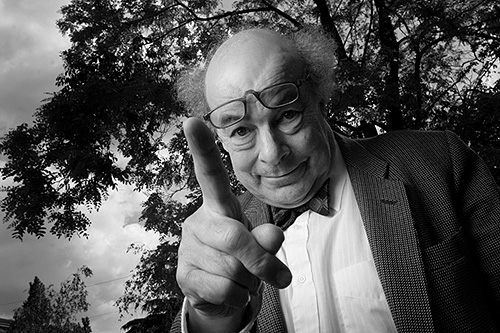
Professor Heinz Wolff. ©Neil Turner/TSL, May 2005

Photographers do more than push that button. We bring creativity, experience and thought to the process to give our images something that “just push the button” photographs would rarely ever have. At this point in a live lecture there are usually a few worried faces, a few that are toying with calling out b***s*** and a majority that are just puzzled. Let me explain.

What a successful photograph has is a view of the world or of people that the viewer instantly recognises but will give them an interpretation that they would not see with either the naked eye or their own pictures. Successful pictures contain the information that the photographer wanted to include but exclude all sorts of stuff that doesn’t need to be there. Good photographers use a whole bunch of techniques to deliver a view that is familiar but sufficiently different to make the viewer look again. By now the audience members who will benefit from the lecture are trying to work out what I mean by techniques. A two dimensional image of three dimensional reality frozen in time is what still photography will always give – that’s “just” physics. We can do so much more.

In days gone by photographs were always an interpretation of the world because they contained no colour. The vast majority of the population see in colour and so delivering them a picture in tones of black, white and grey has always been the simplest way to make the real unreal but recognisable. Make the black and white print properly and you are really starting to produce the kind of pictures that I am talking about.

Converting an image to monochrome is the oldest and simplest technique but we have so many others. Shooting from different angles lets the photographer show their vision. I wrote an essay many years ago called “six feet up is bad” which basically said that photographs taken from a normal adult standing height had a much harder time of making the viewer see something in a scene that they wouldn’t have seen themselves. Take the picture from below two feet or above eight feet and your perspective shifts and the photograph stands a better chance of catching the viewer’s subconscious eye. Similarly, using longer or wider lenses than the human eye would relate to gives the photographer a way to pass on their vision. Using shallow depths of field or interesting light, having saturated colours or leaving colour casts normally corrected by the human eye all give us extra tools and techniques for making our images far more interesting.

Of course you can go too far – but that’s all part of what makes photography so interesting. Use too many tricks in the same image and you just end up with a statement about how you took a picture rather than having a great picture.

On almost every assignment I shoot wide and I shoot tight. I shoot from low angles and from height. I light a lot more of my work than most photographers but I try to give my clients choice between obviously and subtly lit images. If I do shoot a picture at f5.6 in average light on a 50mm lens from five feet ten inches of of the ground with the subject ten feet away it’s quite a shock to me!

The most successful images are those that get the viewer’s attention without them knowing why.