press

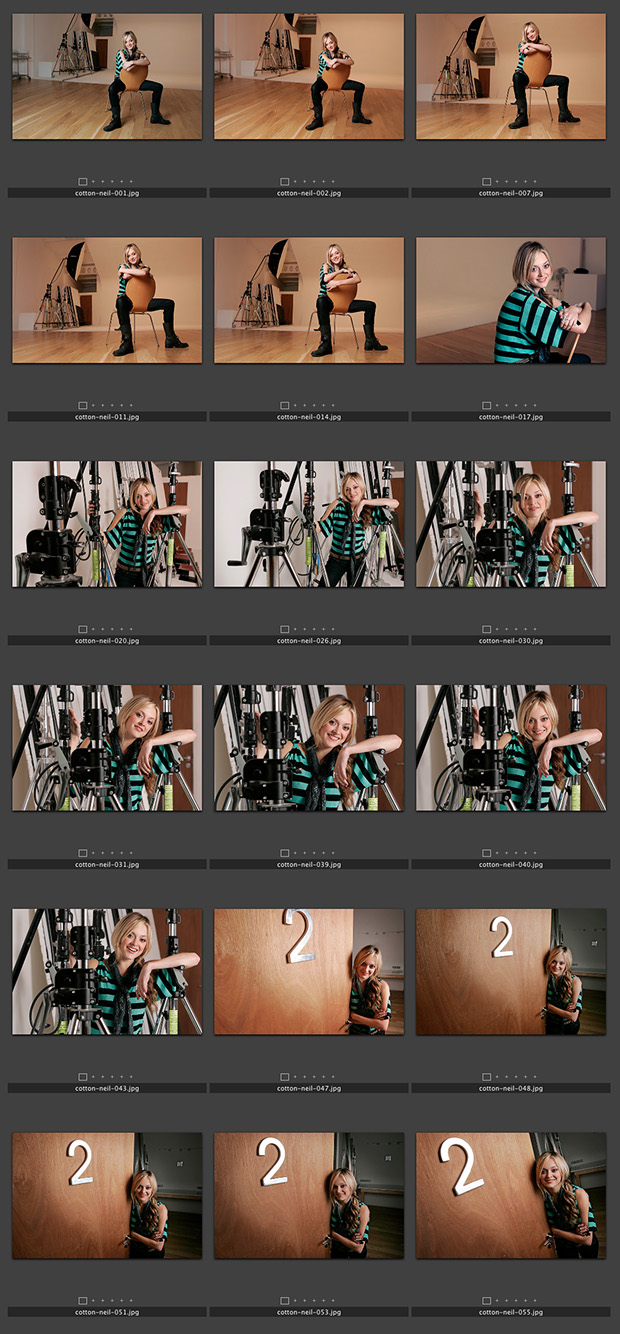
Fearne Cotton – The contact sheet, October 2004.

Back in 2004 Fearne Cotton was enjoying a very rapid rise in her profile and her career was really taking off. The TES Magazine had done an interview with her for their “My Best Teacher” feature and I was sent to a studio in west London to shoot a portrait to go with it.

©Neil Turner/TSL. October 2004, London.

It turned out that it was a hire studio where she had been shot for a BBC magazine earlier in the day and they were (rightly) less than happy about another photographer coming in and piggy-backing onto another shoot. In the end we reached a deal where I shot using all of my own lights in the main studio and in the dressing room as long as I was in and out in twenty-five minutes. I think that the shoot in the studio was over in less than ten minutes and the whole job was completed in fifteen. Fearne had had a long day and the weather outside was dreadful. Neither of us wanted to prolong the job and, even at an early age, she was such a good professional that it was a very successful shoot.

These portraits were shot using a Canon EOS1D camera with 16-35 f2.8L, 24-70 f2.8L and 70-200 f2.8L lenses and lit using a single Lumedyne Signature series flash kit with a 24×32 inch Chimera soft box. The job was shot in the days when I was happy to shoot JPEGs straight out of the camera.

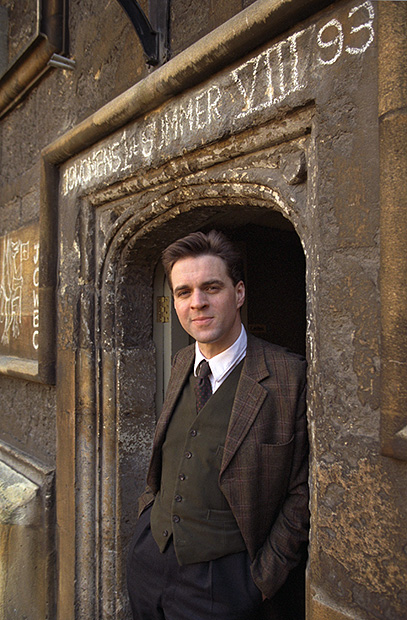
Niall Ferguson, 1997 portrait.

When an email from Channel 4 television landed in my in box with an advertisement for an upcoming and very interesting looking) new programme “China: Triumph and Turmoil” presented by a gentleman called Niall Ferguson. I knew that I’d photographed him before. A quick trawl through my catalogue confirmed that I had indeed shot a portrait of him in 1997 when he was an up and coming star of academia – a professor of History at Oxford University at the age of 32. He was actually born in the same year as me and I was amused at the time by the way he was dressed in the academic uniform of tweeds.

©Neil Turner/TSL. Oxford, January 1997.

I can very clearly remember shooting this portrait. I had driven to Oxford to do another story and the picture desk had rung me and asked me to drop what I was doing, dash across Oxford to do the portrait and then go back to the feature shoot in a primary school. That was the one and only time that they ever asked me to do this and I remember thinking that this must be one important guy if I was being asked to do that.

Since then, he has written yet more books, starred in yet more TV programmes and been seen as a talking head on dozens of television shows. He is clearly still a star of the academic world and obviously a clever chap. His website came up on a quick Google search saying “Niall Ferguson endorses Mitt Romney for President”. Hmmm?

Geek stuff: Portraits shot using two Canon EOS1Dn cameras with 28-70 f2.8L and 70-200 f2.8L lenses on Fuji 200 ISO colour negative film scanned using a Kodak scanner onto a Kodak Photo CD. The software for extracting the PCD format images doesn’t seem to be available any more but Graphics Converter does a wonderful job of extracting a TIFF or a JPEG from the old files.

Note: I need to start wearing my glasses more. The web page for the Channel 4 programme says ” … apparatus” referring to the Chinese state but I read it as “… vast asparagus” – I am getting old!

Neil Innes in his pond…

From the days when he provided musical accompaniment to the Monty Python team and had his own hysterically funny television show I had always been a Neil Innes fan. Being called Neil myself I guess that I have always paid special attention to other Neils anyway but Mr Innes didn’t need any of that.

©Neil Turner/TSL. August 1999, Suffolk.

When I got the call to go and shoot his portrait I was delighted – even if the person on the picture desk had no idea of who and what he was. His home, at the time, was in Suffolk and when I arrived he greeted me as if it was him who was getting to meet a long standing hero. We had coffee, talked about all sorts of stuff and when we finally got around to shooting portraits he simply asked me “do you want funny or not funny?” I answered that a bit of each would be cool and we started with some simple head shots.

Within ten minutes “not funny” had become boring and so he grabbed his wellingtons and stepped into a lovely ornamental Japanese style pond in the garden (I believe that his wife was a garden designer and the whole place looked great) where he proceeded to fish with a small net.

It was amusing enough to watch him but if this were a video you’d now be listening to silly squelching noises and a completely bizarre and impromptu song that made sure that I was actually unable to take pictures because of the tears of laughter streaming down my face.

Photographers often write about what a privilege it is to meet some of the people we meet and to go to some of the places we go and I absolutely agree. Every once-in-a-while you also get a little private performance from a truly talented artist that money couldn’t buy and this was one of those priceless days.

Geek stuff: Shot on a Kodak DCS520 digital camera with a Canon 28-70 f2.8L lens, available light, 1/60th of a second at f6.7 on 200ISO. Converted to black and white prior to publication in August 1999.

Observational, interactional and ‘dictational’ photojournalism

If you believe the old saying, “there is more than one way to skin a cat” and if you want to carry that thought over into photographic journalism there is definitely more than one way to shoot a story. If you listen to some debates about photojournalism you would find that hard to believe but regular readers of my opinion pieces about photography will know that I am a big fan of the ‘black to white, left to right theory of just about everything’.

©Neil Turner. Bournemouth, Dorset. 11 minutes past 11 on the 11th of the 11th 2011

The idea goes like this: imagine a line from one side of a page to the other and that one extreme of something is placed at the left hand end of that line. Now imagine that the opposite extreme is placed at the right hand end of that line. For illustrative purposes, let’s make those two extremes black on the left and whit on the right. What have you got in between? Every tone of grey that you could imagine. You can have one smooth gradient or you can have it in steps – it really doesn’t matter but what you will have is a smooth transition from one extreme to the other. Salt to sweet. Short to tall. Narrow to wide. It really doesn’t matter.

So how does this translate to different ways of shooting photographs? We are talking about photojournalism here and so I’d like to place “observational” at the left hand end of our imaginary line and “interactional” in the middle with dictational at the other end. That’s the easy bit. What exactly are these three approaches and what else sits along our line?

Observational photography can be defined as a ‘fly-on-the-wall’ approach where the photographer is an almost ghost like figure who tries to have little or no impact on the situation and their subject matter. Some types of street photography where the photographer tries their best to remain unseen and unnoticed are classic examples of observational photography. Some would argue that a lot of sports photography fits these criteria too – after all, the cameras are there but nobody is changing their behaviour for them for 90% of the event. By definition observational photojournalists don’t seek any meaningful contact with their subjects whilst they are shooting and most would eschew contact once they have finished taking the pictures either.

Good photojournalism is nearly always accompanied by good and accurate captioning – which is easy if you are photographing a Manchester United game or the Olympic 100 metres final because the participants have names and/or numbers on their kit and they are all famous athletes. If you are taking pictures of people running from an approaching storm then you would like to know who they are and where they are heading but the only way to find that out is to ask. I can remember a number of occasions where I’ve shot lovely street photos whose value as works of curiosity is pretty high but whose value as a piece of photojournalism is a lot lower because I didn’t have the details of the people in the pictures. When I was young and keen I regularly followed people and plucked up the courage to get their name. These days I tend not to shoot the picture if having no details for the caption devalues the image.

So that’s observational photojournalism dealt with. What about it’s interactional cousin? This is where I’m happiest. Shooting pictures with the full knowledge and either permission or acquiesence of my subjects in ways that allow me to interact with them whilst maintaining the integrity of the pictures is, for me, the gold standard. You can tell stories, relay passions and miseries and generally get under the skin of people. Interesting people. By interacting with your subject the nature of your pictures changes and they will have a lot more of you and a lot more of your subjects soul in them.

Back to that pesky scale… you have observation at one end and interaction in the middle and dozens of shades of whatever you would call it in between. Then there’s the final form of getting the pictures: dictational – where you tell your subjects what you want them to do and then shoot it but I’d find it hard to label that as photojournalism at all. I’ve put it there on our scale miles away from observation and a fair distance from interaction too.

Let’s say that observation is the black on our scale and ‘dictatorial’ is white. What colour is interaction? 18% grey of course! (photographer joke – if you don’t get it, I apologise)
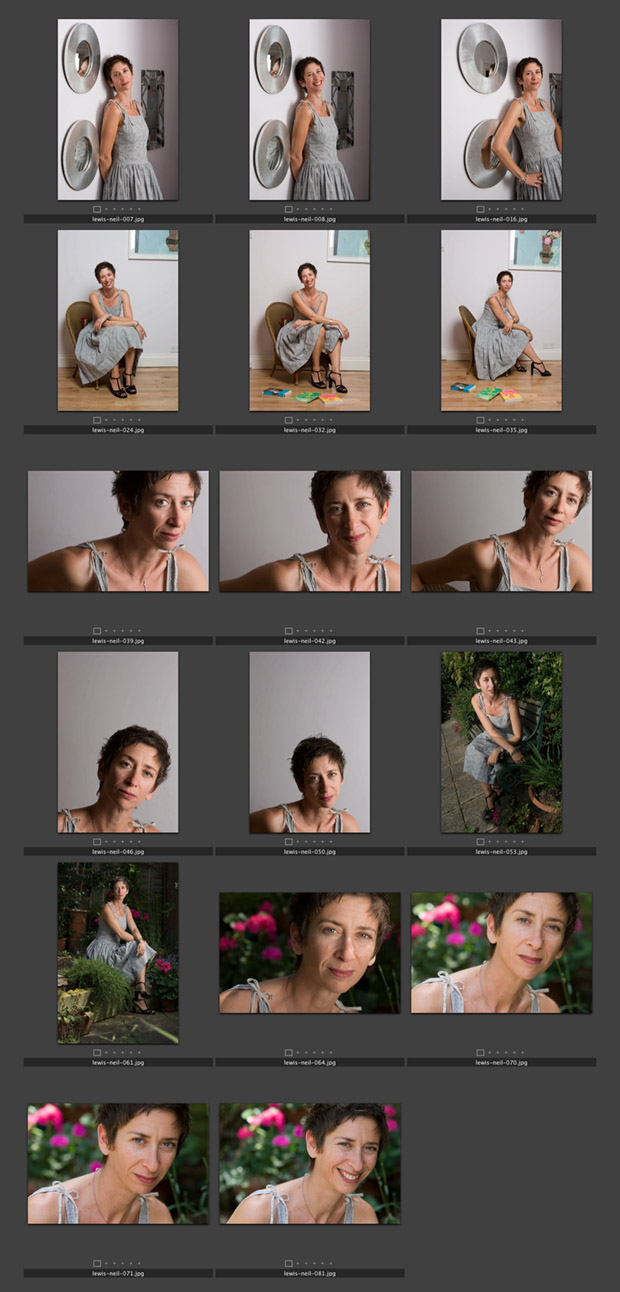
Reina Lewis – The contact sheet, June 2006

One of my favourite sets of portraits that I ever made was of a lady by the name of Reina Lewis who had just been appointed to a new post at The London College of Fashion to become Professor of Cultural Studies. The pictures were shot at her home and I could see when I got there that she was definitely aware of how important some good pictures in the right newspaper could be. We shot a range of images from some tight head and shoulders against a plain wall to some full-length sitting ones in one of the elegant chairs that she had.

©Neil Turner/TSL. London, June 2006.

All of the pictures that you see here are entirely uncropped. They were shot on a pair of Canon EOS1D MkII cameras with 24-70 f2.8L and 70-200 f2.8L lenses and lit using a single Lumedyne Signature series flash kit with a 24×32 inch Chimera soft box. The Canon CR2 RAW files were converted using Adobe Camera RAW in Adobe Photoshop CS3.

Think Tank Hydrophobia

Ever since I managed to soak one of my Canon EOS5D MkII cameras at an outdoor event last summer where it rained hard and non-stop I have been meaning to get my hands on a Think Tank Hydrophobia rain cover. I finally managed to get around to it just as one of the longest dry spells (work and weather) hit but I have finally given it a run out. The job actually meant using a tripod quite a lot and, whilst the Hydrophobia wasn’t actually designed for this, it all worked out well.

As predicted, I got a proper soaking (cold, wet rain) and I got very cold but my camera stayed dry and kept on working. The version that I have is designed to be used with a 70-200 f2.8 sized lens and it has small sleeves for your hands to fit inside the cover. There’s an option to have a flash unit attached too on the version that I have and so this is a very well designed piece of kit.

A word of caution

Even the best designed kit has a few features that you need to be aware of. The Hydrophobia does a great job and it worked flawlessly but I’d love to see a big sign included in the package telling you to have a few practice goes at fitting the cover before trying to use it on a job in front of clients and/or other photographers. Fitting it for the first time was a fairly frustrating process. Happily I had the sense (too many bad days with soft boxes and tents) to try it first in the warm and dry confines of my kitchen. The second time was in the car and it was actually my third go at fitting the cover when I had to do it in the dark and the rain in front of others. I was still a little ham-fisted but fitting it for the fourth time today so that I had a few pictures to accompany this piece was a (relative) breeze. Practice does indeed make perfect.

What else you can actually say about a piece of kit that is essentially designed to keep your gear dry than “it kept my gear dry” is beyond me. If it came in a tin, it would do exactly what it said on that tin!

So… marks out of ten? For doing its job it gets 10 but for ease of use I’d give it a 5 out of the packaging rising to 7 after four uses and an even higher mark with lots of practice.

College Principal – the “contact sheet”

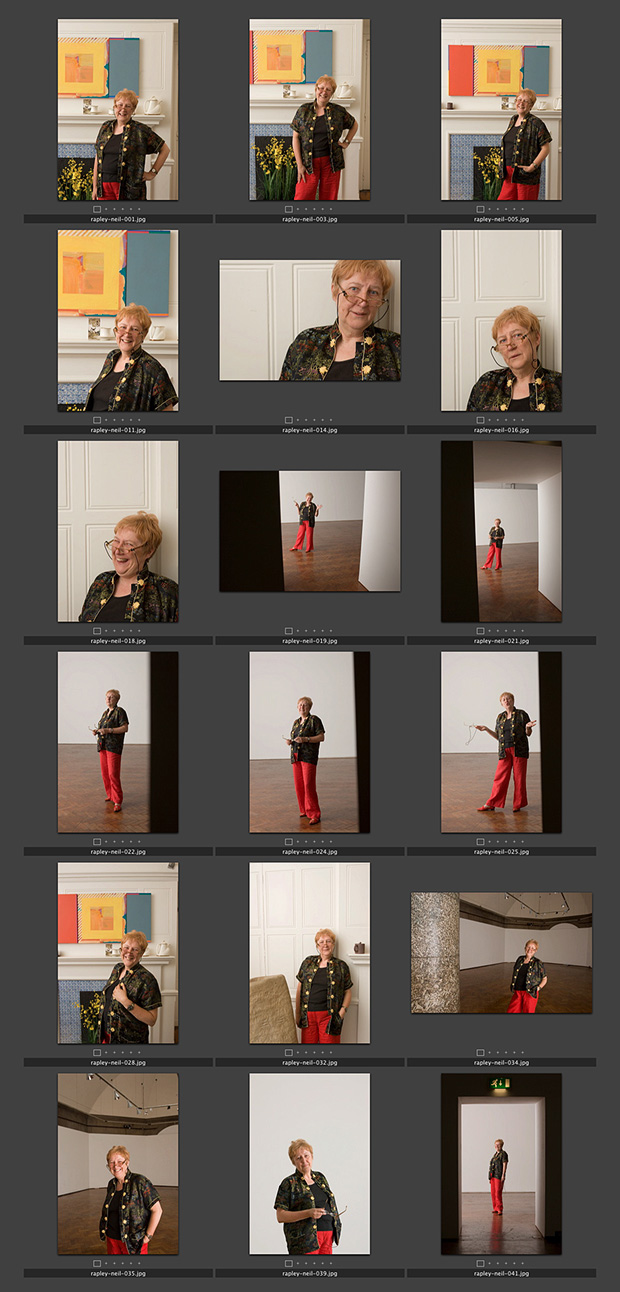
Within two hours of posting a portrait of College Principal Jane Rapley at Central St Martins on this blog, I’d had four emails asking to see the rest of the shoot. I can’t do that but I can share the rest of the edit.

©Neil Turner/TSL. London, July 2006

I’m not going to repeat everything that I wrote on the original blog posting but you can see that the image I selected to feature was very much the “odd one out”. I have always thought that this set represented a good selection of portraits from a single session but looking back five and a half years on I have realised how many uprights there are and how few horizontal compositions. I’d like to think that was because I knew that the newspaper wanted uprights but I’m not sure that’s the case. Anyway, to those of you who wanted to see this selection… I hope that you like them!

Fifteen minutes of low level fame

To be entirely honest it was actually thirty-four minutes rather than fifteen but Andy Warhol’s observation that everyone will be famous for fifteen minutes is a gift of an opening and it’s so much punchier than thirty-four!

The half an hour plus four minutes in question was the time that I spent giving evidence to The Leveson Inquiry into the culture ethics and practice of the British press on behalf of The British Press Photographers’ Association. If you didn’t already know, I am very proud to be one of the two Vice-Chairmen of The BPPA – an organisation that supports and promotes news photography in the United Kingdom.

I have written a short blog about my experiences and there is a link to actually watch a Flash (boo!) video of me in action. This isn’t about self-promotion, its about the important message that I was given the honour of presenting to this important inquiry. Did it go well? Go to The BPPA’s blog site and find out…