public

UK National Symposium on Photography 2012

The fourth National Symposium on Photography takes place this Friday, Saturday and Sunday in London. Timed to coincide with the World Photography Organisation Festival in London, the symposium will feature a very interesting range of debates and events.

I am going to be there, taking part in a panel debate about the future of news photography. The narrative for the debate on the UKNSP website says this:

The ethics of press and public photography, with particular reference to the implications of the Leveson Inquiry. At what stage does photography become harassment? Should there be controls? More broadly, where is the press heading in its use of photography? Should the press, citizen journalists, and members of the public all be treated the same or differently, whether in general or at newsworthy events? This panel discussion features a range of points of view – that of a photographer who gave evidence at the Leveson Enquiry, a leading picture editor and a champion of citizen photography.

It’s going to be a very interesting and maybe even passionate debate. This will be the third time in four years that I’ve taken part in the symposium and I firmly believe that it is developing into and very important event in the UK photography calendar. My fellow panellists are Alan Sparrow, Chairman of the Picture Editors Guild and Executive Picture Editor of Metro UK and Pauline Hadaway, Director of Belfast Exposed Photography and the debate will be chaired by Photographer Andrew Wiard.

The debate starts at 5pm on Friday 27th April at Somerset House in London. Tickets are available from Redeye or from the WPO.

Posed by model – my revenge…

Jez Coulson is a great photographer and he is one of my oldest friends in the industry. We went to college together, shared a house and even started a business together – you get the picture, we are friends. A few days ago he was obviously looking through some old pictures and stumbled across one of me that he shot for a brochure. I was “posed by model” playing the part of a young, upwardly mobile, business type talking loudly on his old Motorola mobile phone on a train back in either 1987 or 1988. You can read his blog post here.

The thing is that we often acted as models for each other’s commercial shoots – which was a good way to put a few pounds in each other’s pockets when we were starting out. It happened all of the time and we used a lot of other friends and colleagues for the same purpose. We didn’t really do it on editorial shoots (unless the pictures were captions “POSED BY MODEL”) and definitely not on news jobs.

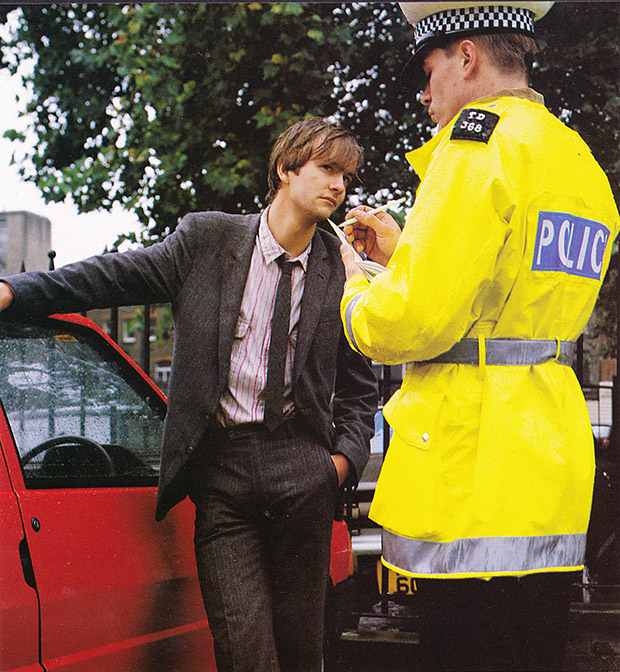
Anyway, Jez posted a picture of a twenty-something me in a suit so I thought that I’d do the same. This was a brochure for an insurance company who covered employees against legal issues and this picture shows Jez leaning on a car that happened to be parked outside our office (no idea whose it was) being given a good talking to by another friend, Peter Anderson, wearing a rented traffic police uniform. Enjoy…

©Neil Turner. London, March 1988

©Neil Turner. London, March 1988

Geek stuff: Shot on 5″x4″ colour transparency Fuji RDP film on an Arca Swiss View camera with a 150mm Rodenstock lens, available light.

Observational, interactional and ‘dictational’ photojournalism

If you believe the old saying, “there is more than one way to skin a cat” and if you want to carry that thought over into photographic journalism there is definitely more than one way to shoot a story. If you listen to some debates about photojournalism you would find that hard to believe but regular readers of my opinion pieces about photography will know that I am a big fan of the ‘black to white, left to right theory of just about everything’.

©Neil Turner. Bournemouth, Dorset. 11 minutes past 11 on the 11th of the 11th 2011

The idea goes like this: imagine a line from one side of a page to the other and that one extreme of something is placed at the left hand end of that line. Now imagine that the opposite extreme is placed at the right hand end of that line. For illustrative purposes, let’s make those two extremes black on the left and whit on the right. What have you got in between? Every tone of grey that you could imagine. You can have one smooth gradient or you can have it in steps – it really doesn’t matter but what you will have is a smooth transition from one extreme to the other. Salt to sweet. Short to tall. Narrow to wide. It really doesn’t matter.

So how does this translate to different ways of shooting photographs? We are talking about photojournalism here and so I’d like to place “observational” at the left hand end of our imaginary line and “interactional” in the middle with dictational at the other end. That’s the easy bit. What exactly are these three approaches and what else sits along our line?

Observational photography can be defined as a ‘fly-on-the-wall’ approach where the photographer is an almost ghost like figure who tries to have little or no impact on the situation and their subject matter. Some types of street photography where the photographer tries their best to remain unseen and unnoticed are classic examples of observational photography. Some would argue that a lot of sports photography fits these criteria too – after all, the cameras are there but nobody is changing their behaviour for them for 90% of the event. By definition observational photojournalists don’t seek any meaningful contact with their subjects whilst they are shooting and most would eschew contact once they have finished taking the pictures either.

Good photojournalism is nearly always accompanied by good and accurate captioning – which is easy if you are photographing a Manchester United game or the Olympic 100 metres final because the participants have names and/or numbers on their kit and they are all famous athletes. If you are taking pictures of people running from an approaching storm then you would like to know who they are and where they are heading but the only way to find that out is to ask. I can remember a number of occasions where I’ve shot lovely street photos whose value as works of curiosity is pretty high but whose value as a piece of photojournalism is a lot lower because I didn’t have the details of the people in the pictures. When I was young and keen I regularly followed people and plucked up the courage to get their name. These days I tend not to shoot the picture if having no details for the caption devalues the image.

So that’s observational photojournalism dealt with. What about it’s interactional cousin? This is where I’m happiest. Shooting pictures with the full knowledge and either permission or acquiesence of my subjects in ways that allow me to interact with them whilst maintaining the integrity of the pictures is, for me, the gold standard. You can tell stories, relay passions and miseries and generally get under the skin of people. Interesting people. By interacting with your subject the nature of your pictures changes and they will have a lot more of you and a lot more of your subjects soul in them.

Back to that pesky scale… you have observation at one end and interaction in the middle and dozens of shades of whatever you would call it in between. Then there’s the final form of getting the pictures: dictational – where you tell your subjects what you want them to do and then shoot it but I’d find it hard to label that as photojournalism at all. I’ve put it there on our scale miles away from observation and a fair distance from interaction too.

Let’s say that observation is the black on our scale and ‘dictatorial’ is white. What colour is interaction? 18% grey of course! (photographer joke – if you don’t get it, I apologise)
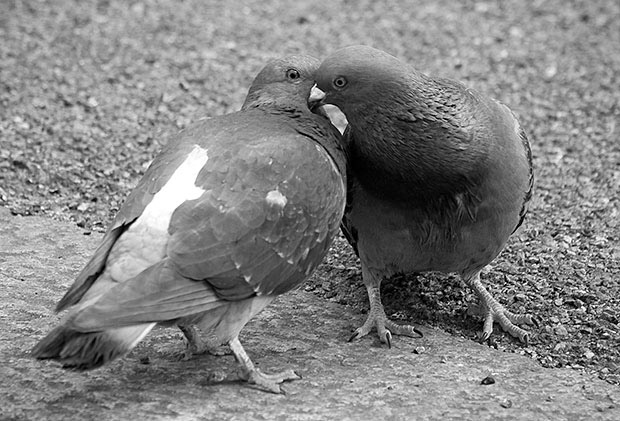
Fun picture – pigeons checking each other out, Bournemouth

©Neil Turner. February 2012. Bournemouth

I don’t know if spring is in the air but these two pigeons outside a supermarket in Dorset this morning look as if they were rehearsing for Valentines Day next week.

Folio photo #10: Eton College Choir, March 2004

©Neil Turner/TSL, March 2004

©Neil Turner/TSL, March 2004

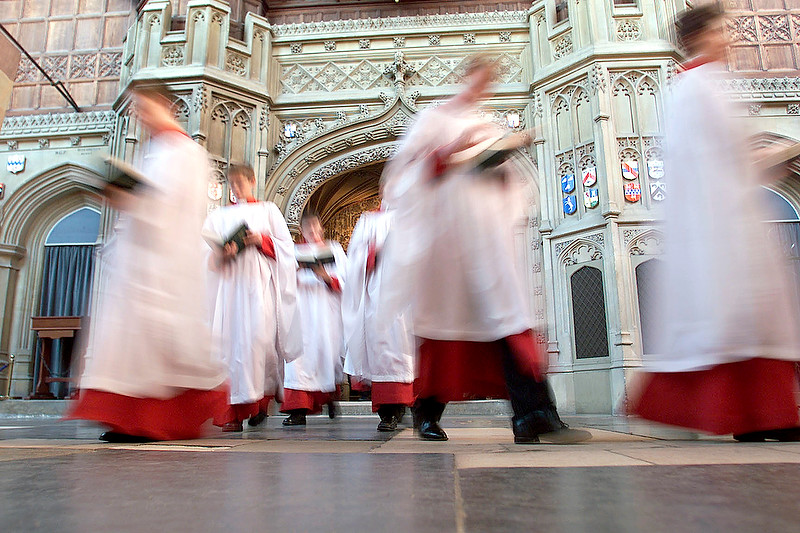
Choristers leaving the College Chapel after early morning prayers at Eton College, Berkshire. The famous public school is offering junior music scholarships in an attempt to attract bright and musically gifted boys to the school. The blur was used in this case to anonymise the pupils. The camera was sat on the ground, propped up with a the lens hood because I didn’t have a tripod and wanted the motion blur. The lens was a Canon 16-35 f2.8L and the camera was an EOS1D.

Fun pictures – Brain & Hart…

Like most working photographers I sometimes take pictures for the sheer joy of it. Sometimes I even get my iPhone out and do fun pictures. From time to time on this blog I hope to ad a few of the silly, odd and downright comical pictures that I sometimes see.

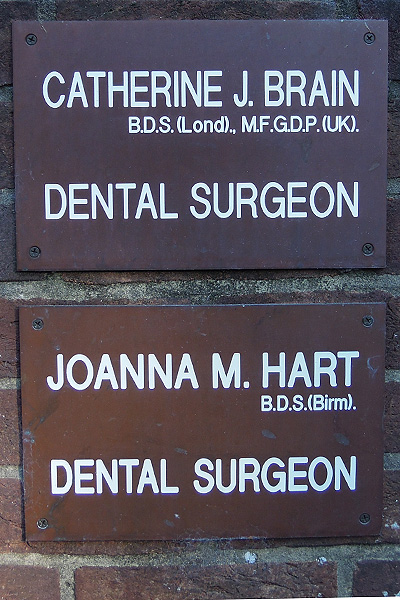
A lot of my favourites are actually not that good as pictures; I am often amused by wordplay in pictures – like this one…

©Neil Turner, October 2011

Waiting for the light, June 2011

There’s good light, there’s bad light and there is the right light. Sometimes the right light isn’t the good light and so on and so on…

Beautiful pool of light in the Jubilee Place shopping mall

Beautiful pool of light in the Jubilee Place shopping mall at Canary Wharf. © Neil Turner

One day earlier this year I was waiting for the right light to shoot a picture of crowded shopping mall when the ‘good light’ turned up. I took a picture that the client had no use for but it amused me and kept me interested. Pools of ambient light in just the right place happen on the right day, in the right place at the right time – if the weather is right. The rest of the time, if your patience isn’t good enough or the parking meter is running out you have to shoot with whatever is there or provide your own light.

I have enough patience to get the shot that the client asked for and I had enough spare time to wait for someone to walk through this shot. I have twenty variations on it with sixteen different people walking through but I like the way that this man looks.

Photographic policy

Just in case you haven’t noticed, I’m a photographer. I also teach a bit of photography and write about the subject too. The latest addition to my ‘portfolio career’ is what I can only describe as photographic consultancy. I have done a few corporate training sessions aimed at people who aren’t necessarily shooting pictures but who are handling them on behalf of their employer. It started off with some PR managers from a range of Universities a few years ago and has been a very small part of what I do ever since then.

This week, I did a bespoke session for an NGO talking about copyright, licensing, permissions, model release, photographing children and how to get PR pictures used in the media. All of that in less than one day meant that we didn’t get right down into the finer details. For some organisations the knowledge that they need to do more will be enough to get them going. A company wide photographic policy has to be a ‘must-have’ with the amount of images, websites, pamphlets, brochures, publications and social media in circulation (officially and otherwise).

We are in the Christmas party season and a good, well publicised policy telling staff what is and is not acceptable would be very useful. Twitter, Facebook, Flickr and the rest are public platforms and un-wisely placed images or video are bad news. It isn’t only about stopping bad stuff happening though; good pictures need to be licensed, captioned and stored properly. The quantity of pictures held on company systems seems to have expanded exponentially and it makes sense to have policies that make use of the good stuff whilst making that the bad, the off-message and the out of date images are never seen.

As a professional photographer it is really hard to see photographs sourced from keen amateurs, micro stock sites and crowd-sourcing as anything other than lost income but that is the way the world has gone and we need to learn to work with it. People like me, with a lot of experience in the industry, can help to form policies for small, medium and even large businesses based on our knowledge of the law, ethics and technical matters. It isn’t going to cost a fortune and any company who ignores the concept of a photography policy could end up regretting it.