wisdom

Space makes you think

In general I am a fan of tighter compositions, but there are some subject matters that are just crying out for space. A large area of foreground or background can lend an enormous amount of emphasis to an image. Placing a small subject in a large space helps you to tell a story. If you place a person in one of the bottom corners you might suggest loneliness or vulnerability, whereas placing them at the top may well imply the opposite.

©Neil Turner | Bournemouth | January 2005

This photograph of a child playing on the beach in the winter suggests that he is really enjoying his freedom. The photograph was taken from quite a height (maybe 25 feet) to isolate the sand from the confusing background and the fact that he is nearer the right of the frame suggests that he has a lot more room to head into. The oldest rule about composition – the rule of thirds – is being observed.

If the space around the child in the photograph was full of details then the impact of the composition would be lost. You would inevitably give the image more than one subject and spoil the simplicity which is the real secret of the picture. Of course if the child’s mother was in another area of the otherwise empty frame then that would give another message altogether, the space would still be making you think – but differently.

Cluttered photographs are much harder to pull off, simple images are often more effective and this image proves that simple doesn’t necessarily mean tight.

Objects of desire

One of the great joys of being a photographer is the wonderful array of gear, technology and toys we get to use on a daily basis. It is also one of the curses of being in business. If I went out and bought every new camera, every new lens, every new application and every new computer that I fancied I would have no home, no car and no life.

That doesn’t stop me looking. The CES show in the USA has thrown up lots of new “I want one of those” moments and a quick calculation says that I would make a £20,000 hole in my finances if I went and bought it all. The serious point here is that for many photography is a hobby and buying new gear is a matter of “I want it, I’m going to have it”. For professional photographers there is a simpler test which asks “will that piece of kit pay for itself, pay my bills and work how it’s supposed to work?”

I’ve said many times that a lot of my clearest thinking comes from teaching and I’m currently updating my notes for teaching some business studies to my NCTJ Photojournalism group at Up To Speed Media in Bournemouth. In many ways the formula is simple: A. you need to take the cost of purchasing the item, insuring and servicing it and divide that by B. the number of days you work in an average year. Dividing A by B gives you C. To get the final figure D. You decide how many years the item might remain useful (longer for lenses, less time for camera bodies, computers and software).  Finally, you divide C by D and that figure is the cost of that piece of kit per working day.

An example: Telephoto zoom lens

  • A. price paid is £1,400 and it adds £20 a year to your insurance and a further £30 a year to service. That’s a total of £1,450
  • B . working 3 days a week on average over a 52 week year. That’s a total of 156 days
  • C. that’s 1,450 ÷ 156 = £9.29
  • D. lenses last on average 3 years

The final figure for owning that particular lens is £3.09 per working day IF you shoot for 468 days over three years. The cost goes down if you work more and it goes up if you work less. Of course one lens isn’t much use without the rest of the kit and so you can go through your whole stash of gear and do the same calculation for each. I tend to go for 2 years for camera bodies and computers, 3 years for heavy use lenses, 5 years for light use lenses and only 1 year for software including upgrades.

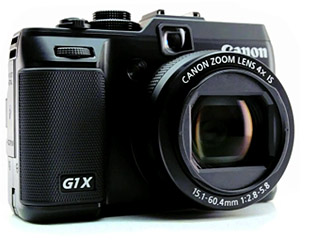
How depressing was that? Let’s end on a lighter note: objects of desire… well… the Canon G1X looks very, very cool, as does the limited edition all black Fujifilm X100. Of course the Canon EOS1DX has to go on the list and I’d love to give the Nikon D4 (and a kit of lenses) a spin. The list is actually a lot longer but nobody reads this far down… do they?

Advice for UK freelancers

Yesterday and today have been largely spent doing accounts. Three months worth of VAT return and my tax return for 2010/2011 (year 3 as a freelance this time around). I feel pretty confident that I have got the numbers right thanks to a combination of decent invoicing software (Billings), some easy to use spreadsheets (Numbers) and a very nice calculator that was a free gift from Canon a few years ago (thanks Canon UK). All of this software and hardware is great but the one piece of advice that I would give to anyone starting out as a freelancer here in the United Kingdom is to book yourself onto as many of the free workshops and seminars that Her Majesty’s Revenue and Customs lay on as you can.

When I was having a month off between leaving my staff job and starting out as a freelancer I managed to get myself onto three of these very handy courses. The first was led by a former Tax Inspector and the theme of the seminar could have been subtitled “how to avoid getting a visit from one of my former colleagues”. The other people on the course were a couple of cab drivers, eBay traders, a golf teacher, a musician and a freelance administrator. Put simply, it was a half day course on the basics of being self-employed:

  • What records to keep
  • How to invoice people legally
  • What you could set against tax
  • What you couldn’t set against tax
  • The pros and cons of using a bookkeeper
  • What an accountant can do for you

A very useful day and at the end of it we were given the business card of the HMRC seminar leader so that we could ask him follow-up questions.

The second course was all about VAT and VAT registration. If you aren’t from the EU and you are wondering what VAT is, well it is Value Added Tax – similar to US sales tax I guess. The seminar leader on this one went through the advantages and disadvantages of registering voluntarily for people whose business turnover is below the limit at which you have to become registered as well as the various different schemes for calculating how much you have to pay the Government four times a year. There were people on the course who had no intention of registering unless that were forced to but the course is still useful because we all pay VAT on everything we buy and knowing how the system works is a big advantage.

The final course that I did was about how to fill in your annual tax return. These forms are legendarily complex and half a day spent with an expert gives you a fair amount of confidence that you can do it. Of course the other angle is that knowing about the form makes it easier to deal with an accountant if you use one. Again, the various options are covered and I left that course wanting to use the on-line systems for everything I do with HMRC.

You can get a couple of the course handouts here and you can book courses at your local tax centre on the telephone. Three half-days doesn’t make you a bookkeeper or an accountant but what they do provide is a sound basic grounding from which it is a lot easier to move forward. The vast majority of photographers that I know are, or have been, self-employed and almost all of them would have benefited from doing these seminars.

The day after a bad day at the pool

When we first went digital back in 1998 there were a lot of lessons that we had to learn for ourselves. There hadn’t been much work done by others and there were a lot of mistakes that we made and learned from. One of the worst things to happen to me wasn’t until June of 2006 – long after we all arrogantly thought that we had learned what there was to learn.

I went to shoot some pictures at a swimming event and the atmosphere was loaded with what smelled like chlorine. My cameras had got steamed up quickly and took a while to de-mist and I thought nothing of it, shot the event on a pair of Canon EOS1D MkII cameras and edited my pictures as normal. Nothing wrong… so far. The next day I went to shoot portraits of a young student who had been shortlisted for a writing award – totally run-of-the-mill. The job went well, the pictures looked great on the back of the cameras but when I imported the files from the first camera into the computer I went as white as a sheet.

Dirt on the chip was a common problem, the odd bit of dust that showed up when you stopped the lens down but nothing had prepared me for the amount of spots that were on these pictures.

A small part of the frame before spotting. ©Neil Turner/TSL, June 2006

Thousands of small, circular bright spots in the same place on every single frame. I was swearing, sweating and worrying in equal measure as I put the memory card from the second camera into the card reader. If they were as bad, this job was going to take weeks to edit and retouch. Massive relief… the second camera hadn’t suffered from the same fate. The tighter pictures shot on the longer lens all had the spots whilst the wider pictures shot with a wider lens had none of them. The bonus was that some frames on the spot-free camera were also shot on a longer lens so I had a few spot-free tight portraits too. The panic was almost over but it was clear that at least two or three of the heavily spotted pictures should be in the edit so I spent most of that evening and night painstakingly getting rid of the spots. One-by-one.

The same image after a lot of work getting rid of the spots. ©Neil Turner/TSL, June 2006

After a thorough clean by FIXATION UK the camera was as good as new. The spots were crystallised chlorine and quite why they were only on one of my two cameras used on the bad day at the pool I will never know. People have theorised about having taken the lens off of one and not the other, damaged weather seals, some sort of coating on the chip of one camera that either attracted or repelled the crystals – who knows?

The morals of this story are these:

  • Shooting with two cameras is always a good idea
  • Using a professional to clean problem dirt off of the chip is a great idea
  • Shooting with some wide and some long lens images on both cameras is a good idea too
  • Be careful when taking lenses on and off in unclean environments
  • Retouching spots is a right royal P.I.T.A

That camera went on to give great service for two more years and was sold on having been cleaned and serviced. These days I use a pair of 5D MkII bodies which don’t have the same environmental seals as the 1D series. If I were a rich man, I’d want to own the new 1DX when it comes out!

Education… over on EPUK…

I write a lot for other websites and towards the end of last year the Editor of the Editorial Photographers UK site asked me to write something about photography education. It started like this:

What price your dream?

In Britain a staggering 1600 photography courses will be touting for students in 2012. Neil Turner, professional photographer and tutor on a new photojournalism course that starts in Bournemouth this month, asks whether enough of these courses actually prepare students for the harsh realities of professional photography today.

If you get a dozen professional photographers together and ask them about the state, standard and suitability of photographic education in this country you’ll get two dozen anecdotes about graduates who don’t know their arse from their f-stop, and a consensus that higher education is failing the students and the industry. Is this true? Are we missing something, or is the system getting it wrong big-time?

If you’d like to read the rest, you can go to THE EPUK WEBSITE

Mindset – small word, big concept for news photographers

©Neil Turner/TSL, March 2004

Written in 2002, this opinion piece still holds very true nearly ten years later…

What’s the difference between a photographer who takes pictures for fun, another who struggles as a professional and one who is on top of their game? The answer, well there are many but the top of my list is….mindset

It’s a pretty innocuous word, but it makes a massive difference. As I sit here writing this I’m trying to formulate some thoughts ahead of a talk to a group of postgraduate news photographers. Snappy titles are always a good start – according to the “Lecturing for Dummies” handbook so “Mindset” it is.

Next step – arresting opening sentence. That will have to wait until I have better formulated my ideas, but my handbook tells me that if you get people’s attention at the beginning you have won fifty percent of the battle and if you don’t you will waste a lot of time getting it back. Well, that’s a bit like writing and (spot the cheasy link) an awful lot like being a news photographer.

The narrative that runs through a well shot photo story or a well written essay is remarkably similar. I have been trying to find a way of telling eager “news photographers in the making” that the message is more important than the way it is delivered and I have decided that it’s worth keeping the writing analogy going.   Nobody denies that poetry is literature and everyone has respect for well written short stories. Good authors are comfortable with their medium, they structure their work and use words economically. Good photographers mirror this. The common thread is mindset; shaping what you have into what you want it to be. I’m not saying that you pre-judge an issue, but rather that you should edit before you shoot, as you shoot and after you shoot to tailor your pictures to a particular format.

If you are working towards an exhibition you work one way – adopting the right mindset, and if you are shooting a single image story you work a completely different way.  And then there are the differences between making and taking photographs, between being a welcome guest wherever you are or an unwanted intruder. News photography is a very broad church, with room for many ways of working and a lot of photographers find it very difficult to switch between the various sub-genres. It can be done.  The temptation for photographers new to journalism to assume that only great long complicated narratives qualify as news photography is understandable. It is also one hundred and eighty degrees out. The thought that it takes real skill to tell a story in a single picture is a difficult concept to master but the greatest story-tellers know that less can often be a whole lot more.

It’s all in the mind.  If you have a month to shoot a spread you can afford a few days (let’s say three to make the comparison easy) to acclimatise. If you have an hour to shoot a single image story and you take the same percentage of the job time to settle in, you’ve only got six minutes. You know what the score is, so you adopt the right approach before you start.  News photography, when it’s stripped down, is a really simple idea. You take pictures and you make pictures that tell stories. You can use photographs to spell out what you want to say, you can use them to intrigue the viewer or you can use them to infer things.

Good journalism often uses words, but it uses photographs just as often. If the photographer is thinking straight and can concentrate on the end product, good photography becomes great news photography.

Final step – the clever conclusion. I would advise anyone coming into the profession to read some good poetry and a few good novels, to work out how they were structured and to try adapting the simplicity of poetry to their photography. Why? The answer is all too simple, photography is all about creativity and it’s all about mastering the technical aspects but most of all it’s about a state of mind – a mental process – mindset.
Wordsworth fun picture, December 2011

Lake District, December 2011. ©Neil Turner

The motto of Christmas 2011… and post No.50!

Angry teacher portrait

©Neil Turner/TSL, April 2005

Back in April 2005 The TES had a great article written by a newly qualified teacher about how to avoid getting angry with pupils at an inner-city secondary school. It was clearly written from personal experience by a dedicated and keen young teacher working at a relatively tough school. He wanted to teach, he wanted to be good at it and he was working hard to achieve his goals.

When I arrived at the school it was the end of the day and both of us were a bit tired. We talked about how to illustrate the story and we decided that it would be great fun and have the desired amount of impact if he just stood there and yelled at me: full-on screaming. It was loud and, as it turned out, great therapy for him. All of the pent up emotion from the day came out is one long, loud and hilarious stream.

On my way home there was, coincidentally, a radio programme about anger management. None of the experts mentioned standing in an almost empty room screaming at a photographer while you had your picture taken. I couldn’t help thinking that they had missed out of an important therapy!

There’s nothing especially clever about the picture – a slightly desaturated image, lit simply an composed carefully but it had enormous impact on the page thanks to some brave and clever design.