equipment

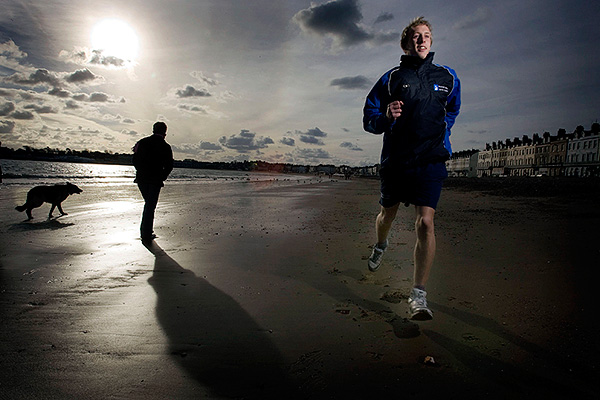
Training on Weymouth beach – an unusual portrait

Sometimes pictures come together without much effort and sometimes you almost kill yourself trying to get something just that little bit special. This portrait of a young athlete who was competing in the sport of Biathle for Great Britain at a junior level whilst studying at a college in Weymouth, Dorset definitely came along after a not insignificant struggle. Nothing to do with the subject – he was cooperative, willing and full of energy – I just tried to get pictures that didn’t seem to want to come off.

©Neil Turner/TSL. Weymouth Dorset, December 2007.

This frame was shot on a 16-35 f2.8L lens at its widest focal length on a Canon EOS1D MkII at 1/250th of a second at f22 and 200 ISO. I was using every joule of power from a Lumedyne Signature Series flash kit with no umbrella or soft box and I just had the power to get this. I have always liked the photo and I was always sad that the paper didn’t use this frame.

I guess that this picture is further proof that I love shooting beaches – especially Dorset beaches!

Canon announces a new 24-70 f2.8L lens

New objects of desire on the equipment front will probably start to appear with monotonous regularity between now and The London 2012 Olympic games. Overnight Canon have announced a new version of the 24-70 f2.8L lens – the mark II.

The older version has been my workhorse for so many years now that I would find it hard to do my job without one and the appearance of a new (and improved?) version makes get my abacus out and start to apply the cost/benefit calculations that professionals need to make every time we consider a new piece of kit.

If I decide that I cannot justify buying it, then it still remains an object of desire! Apparently another major camera manufacturer has also been busy on the launch pad overnight. Nikon have announced the D800 with more megapixels in a 35mm style DSLR body than anyone thought possible/desirable/necessary. Given Nikon’s recent track record of getting things right I would not bet against this being a great piece of kit and a runaway success. For my part, I hope that the next full-frame Canon doesn’t follow suit and re-ignite the megapixel race. A 5D MkIII with decent AF and a chip at around 24-25 megapixels with decent options to shoot smaller (and maybe custom sized?) RAW files would suit my needs rather well.

The early days of digital

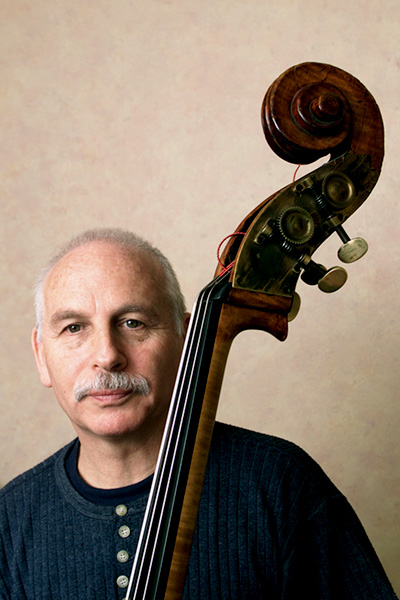
I took delivery of my first Kodak DCS520 digital camera in late November 1998. It was a revelation. I had used a previous model (DCS3) which was pretty poor and I wasn’t really that convinced about the whole process. After three days, I was a convert – the kind of convert who then sees it as their role to evangelise about their new-found wisdom/insight/faith. Based on the Canon EOS1n camera, the Kodak conversion replaced the whole of the back of the camera and quite a big chunk of the electronics too. It was expensive, relatively slow and it only had 1.9 megapixels. It had a tiny low resolution LCD screen on the back and it used enormous and expensive batteries that rarely lasted a whole day but I absolutely loved it from that first week!

©Neil Turner/TSL. 10th December 1998

This was one of the first proper portraits that I shot with my first DCS520 (known as the Canon D2000 in some countries) and it was of a double bassist and jazz teacher in his own home. My conversion was so dramatic and so complete that I even remember sulking a little when I had to shoot on film for the glossy sections of the newspaper. We worked with these early cameras for nearly four years until the Canon EOS1D came out. Nikon had introduced the D1 in that period and the see-saw battle for supremacy between the two big manufacturers with input from Kodak and Sony began in ernest.

I quite often get asked what the big trigger was for digital in the newspaper industry. There are a few factors;

  • The arrival of cameras capable of shooting quality images
  • The money saved by newspapers getting rid of darkroom staff
  • The arrival of new health and safety laws that meant waste chemicals became very expensive to dispose of
  • The speed of turnaround of digital pictures
  • The ease of archiving digital images

Talking with others who used the Kodak DCS series camera from that era we all agree about one thing – how good Kodak’s software was. What a shame that they threw away their lead in professional digital photography. If they had even kept their software development going, they could possibly have avoided needing to file for bankruptcy protection in the US courts last week. I look back at the early days of digital with a real fondness – they really were the most exciting of times. There’s something very cool and very rewarding about being in the second row of pioneers!

Folio photo #14: Children on a bug hunt, south London, May 1999

©Neil Turner/TSL. May 1999, south London

This picture from a story about children from a local primary school going on a “bug hunt” in Nunhead Cemetery was shot for a special supplement to the TES about the environment. The outdoor lesson was led by Richard ‘Bugman’ Jones, a professional entomologist who undertook a residency at the school. Like a lot of my favourite pictures it doesn’t tell the whole story but it is a ‘moment’ that hopefully makes you want to know more.

I had switched to shooting most of my work digitally the previous year but the Picture Editor working on this section was still keen that we shoot pictures for these glossy extra sections on transparency film. I think that this was the last commission that I ever shot using a Leica M6. The wider shots were definitely on the Leica but I also shot some longer lens pictures using a Canon EOS5 and a fixed 85mm f.18 lens

Geek moment: Leica M6 with 35mm f2 Summicron and Fuji RDP100 transparency film.

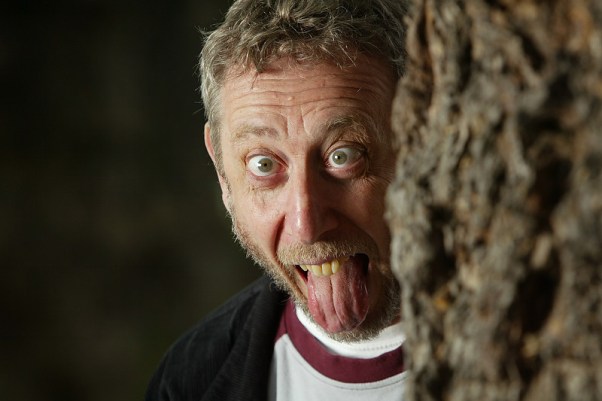
Folio photo #13: Michael Rosen, London, 2004

©Neil Turner/TSL. May 2004, London

Michael Rosen is a poet, author, broadcaster and all round brilliant bloke. I spent a good hour shooting a whole range of pictures of him at a park near his home in East London. I have photographed him about five times in total and it is always a joy to spend time with him. I have also been interviewed by him for his BBC Radio 4 programme about words and etymology. We did a special about photographer slang. This set of pictures is ripe for a future “contact sheet” too.

Geek moment: Canon EOS1D with Canon 70-200 f2.8L IS lens.

Having an eye for detail

The choice between taking the same photograph as everyone else and standing back and getting something different becomes a matter of survival when you work on a weekly newspaper and the other five photographers around you will be publishing the next morning. Even if that weren’t the dilemma of every photo-call I go to, I like to think that as a photographer I am an individual. It’s a pretty useful mindset to sign up to, no matter how much or little photography you do.

Photo: NEIL TURNER. ©TSL. 04/09/2000. TES news.

This photograph of an elephant’s eye is a classic example of taking a mental step back from the herd and shooting something different. It is also an advertisement for having more than one camera with different lenses on. There were five other photographers at the job. The story was about this young Indian elephant who paints pictures, and about how he was being used to launch an environmental art competition for schoolchildren. We were all trying to make the same picture of the elephant, three kids, some paint and an easel. The composition was looking messy, and there were just too many elements in it. We all had 16-35 lenses on and were getting nowhere. I was getting nowhere faster than the other five who would all go to press that night leaving me with two more days during which the story could easily get scrapped without a strong image. My second camera had my 70-200 on it and I grabbed it, zoomed in and the picture almost took itself. Strong, arresting, different and wide open for headline writers to do their thing. Just about every base covered. I shot some of a paint brush in the elephant’s trunk too, but this was the picture chosen.

When an image is competing for space on a newspaper page it has to stand out. The enlightened editors at our papers allow images to arouse the reader’s interest and don’t insist that photographs tell the whole story all of the time. This approach works on every level, from the family album through e-mailed postcards to published images. Getting in close works.

See also: MINDSET FOR NEWS PHOTOGRAPHERS

Possibly the oddest picture I ever took…

©Neil Turner/TSL | London | January 2006

The story was simple: we were doing an anonymous interview with a man who needed to remain unidentifiable for legal reasons and we had to shoot a picture of him at a time and a place that wouldn’t give his identity away. It seemed to be important that it was actually him in the picture and that became obvious when I had to shoot a proper portrait at the same time just in case the court case was decided and we needed a proper picture of him to go with a future follow-up article. Still with me?

The reporter arranged that I meet the subject at a London tube station and to get around the problems of finding someone whose name you don’t know and who you don’t have a picture of I always describe myself and what I’m likely to be carrying and wearing because a) I’m probably going to be there first and b) I’m probably going to be easier to spot (being big and carrying a lot of kit).

The venue turned out to be quite close to where he works and we decided that if any of his colleagues happened to spot us the cover story was that we were doing a fashion vox-pop on what the well-dressed office worker was wearing that season. The cloak and dagger details just kept multiplying.

I decided to go with a silhouette (you can read my thoughts on them here) and just for good measure I added an extra twist with a bit of motion blur too. The result was quite striking if bafflingly anonymous!

The technique is pretty simple. It was a dull winter’s morning in the city and we found a under cover area. I used a Lumedyne flash kit to light the brick pillar and silhouetted the subject against it. Without the flash, he would still have been a shadowy outline but so would the pillar and the picture would have been pointless.

The light that was coming from either side of the pillar was OK but it wasn’t plentiful and so I decided to give it a bit of movement blur by zooming the lens whilst the shutter was open. I ended up with an exposure of 1/8th of a second at f13 on 200 ISO using a Canon EOS1D MkII with a Canon 16-35 f2.8L lens triggering the flash with a pair of Pocket Wizards. Zooming during an exposure as relatively short as 1/8th of a second means that you have to have quite a few attempts to get it right and it also pays to tell the subject what you are doing if you don’t want them to think that you are a lunatic!

In the end I was very happy with this genuinely odd picture. I had arrived at the assignment with almost no idea what I was going to do and pretty much made it up as I went along. That’s why I love my job…