photographer

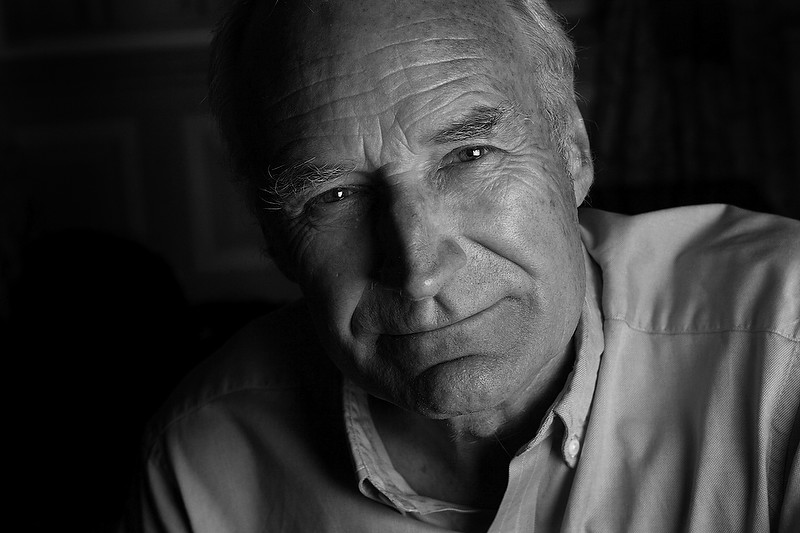
Folio photo #08: Peter Snow, London, May 2004

©Neil Turner/TSL, May 2004

Peter Snow, BBC sephologist, journalist and newsreader photographed after an interview at a central London hotel for a “My Best Teacher” feature for the TES Magazine.

He had a book and a TV series with his historian son at the time and the interview was one of a long series that he had already done that day. The room was cramped and poorly lit and so I used a medium sized soft box very close to him to keep as much light off of the background as possible. One picture editor that I worked with used to call this very tight crop the “egg cup” because it was as if someone had flattened the top just like one.

Mindset – small word, big concept for news photographers

©Neil Turner/TSL, March 2004

Written in 2002, this opinion piece still holds very true nearly ten years later…

What’s the difference between a photographer who takes pictures for fun, another who struggles as a professional and one who is on top of their game? The answer, well there are many but the top of my list is….mindset

It’s a pretty innocuous word, but it makes a massive difference. As I sit here writing this I’m trying to formulate some thoughts ahead of a talk to a group of postgraduate news photographers. Snappy titles are always a good start – according to the “Lecturing for Dummies” handbook so “Mindset” it is.

Next step – arresting opening sentence. That will have to wait until I have better formulated my ideas, but my handbook tells me that if you get people’s attention at the beginning you have won fifty percent of the battle and if you don’t you will waste a lot of time getting it back. Well, that’s a bit like writing and (spot the cheasy link) an awful lot like being a news photographer.

The narrative that runs through a well shot photo story or a well written essay is remarkably similar. I have been trying to find a way of telling eager “news photographers in the making” that the message is more important than the way it is delivered and I have decided that it’s worth keeping the writing analogy going.   Nobody denies that poetry is literature and everyone has respect for well written short stories. Good authors are comfortable with their medium, they structure their work and use words economically. Good photographers mirror this. The common thread is mindset; shaping what you have into what you want it to be. I’m not saying that you pre-judge an issue, but rather that you should edit before you shoot, as you shoot and after you shoot to tailor your pictures to a particular format.

If you are working towards an exhibition you work one way – adopting the right mindset, and if you are shooting a single image story you work a completely different way.  And then there are the differences between making and taking photographs, between being a welcome guest wherever you are or an unwanted intruder. News photography is a very broad church, with room for many ways of working and a lot of photographers find it very difficult to switch between the various sub-genres. It can be done.  The temptation for photographers new to journalism to assume that only great long complicated narratives qualify as news photography is understandable. It is also one hundred and eighty degrees out. The thought that it takes real skill to tell a story in a single picture is a difficult concept to master but the greatest story-tellers know that less can often be a whole lot more.

It’s all in the mind.  If you have a month to shoot a spread you can afford a few days (let’s say three to make the comparison easy) to acclimatise. If you have an hour to shoot a single image story and you take the same percentage of the job time to settle in, you’ve only got six minutes. You know what the score is, so you adopt the right approach before you start.  News photography, when it’s stripped down, is a really simple idea. You take pictures and you make pictures that tell stories. You can use photographs to spell out what you want to say, you can use them to intrigue the viewer or you can use them to infer things.

Good journalism often uses words, but it uses photographs just as often. If the photographer is thinking straight and can concentrate on the end product, good photography becomes great news photography.

Final step – the clever conclusion. I would advise anyone coming into the profession to read some good poetry and a few good novels, to work out how they were structured and to try adapting the simplicity of poetry to their photography. Why? The answer is all too simple, photography is all about creativity and it’s all about mastering the technical aspects but most of all it’s about a state of mind – a mental process – mindset.
Wordsworth fun picture, December 2011

Lake District, December 2011. ©Neil Turner

The motto of Christmas 2011… and post No.50!

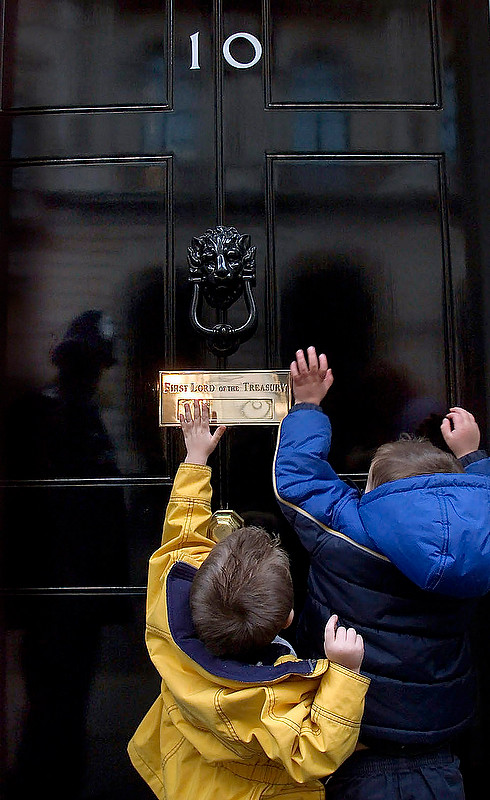
Folio photo #06: 10 Downing Street, November 2001.

©Neil Turner/TSL November 2001

Children from a Leicestershire nursery school try to hand in their petition against closure to No.10 Downing Street.

This was a very ordinary story about yet another petition being handed in at No.10 which became extraordinary when the Police Officer on duty allowed the two children to try to knock on the door and then stood back and laughed as they kept trying.

It was a very cute moment on a day where the world’s media were not watching and the reflection of the officer in the shiny black door makes this a favourite picture of mine. They never reached the door knocker and so the officer eventually helped them out by knocking it for them.

…and we’re off

20120101-200818.jpg

©Neil Turner, March 2010

The sub heading of this blog is “me writing about photography because I want to” and that’s the truth. Post number 47 and it’s the start of month two.

2012 is underway and I’m planning to do quite a lot of blogging as the year goes by. I’m going to talk about education, press photography, photojournalism, light, technology, workflow, software, cameras and just about anything else that I come across in the day job.

If you read the blog and come up with any questions for me please let me have them. In the mean time, let’s hope that 2012 serves us all well.

Folio photo #05: CEO portrait with tungsten light, August 2006

©Neil Turner/TSL, August 2006

In 2006 Ian Smith was the Chief Executive Officer (CEO) of Oracle the software company based in the City of London. This business portrait was actually taken for the Times higher Education Supplement who were running a piece about Oracle’s connections with the education industry. The portrait itself was shot in under two minutes but I had set up with a ‘stand-in’ who posed for some test pictures for fifteen minutes before Mr Smith was available.

The really interesting thing about this portrait is that it was shot with deliberately mixed lighting: tungsten gelled flash on the subject and daylight behind with the camera on a custom white balance which was only concerned with the flash. I use this set of pictures a lot when I am teaching my location lighting seminars.

Waiting for the light, June 2011

There’s good light, there’s bad light and there is the right light. Sometimes the right light isn’t the good light and so on and so on…

Beautiful pool of light in the Jubilee Place shopping mall

Beautiful pool of light in the Jubilee Place shopping mall at Canary Wharf. © Neil Turner

One day earlier this year I was waiting for the right light to shoot a picture of crowded shopping mall when the ‘good light’ turned up. I took a picture that the client had no use for but it amused me and kept me interested. Pools of ambient light in just the right place happen on the right day, in the right place at the right time – if the weather is right. The rest of the time, if your patience isn’t good enough or the parking meter is running out you have to shoot with whatever is there or provide your own light.

I have enough patience to get the shot that the client asked for and I had enough spare time to wait for someone to walk through this shot. I have twenty variations on it with sixteen different people walking through but I like the way that this man looks.

Some 11 year old thoughts on lens selection…

Choosing the right lens for the job – written in 2000 for http://www.DPReview.com and it still pretty much stands up today – which cannot be said for everything that I thought that I knew when I’d only been in the profession for 14 years!

There are two ways that you can choose which of your lenses to stick on the camera:

  • You can say “there’s my subject and here I am, let’s see which focal length on my zoom works best”.  Sometimes at sports matches and political events you have your position and that is that, or…
  • You could say “I want the effect that my experience tells me a 28mm lens will give me so I’ll select that focal length and move to the right position to make that happen”.

Either of these could be a valid option and, in many cases, the first is decided for you by circumstance. Most news photographers use zoom lenses because it makes sense to have fewer lenses when you are never quite sure what kind of work you will be doing on any given day.

Personally, I use a combination of both approaches. If a position forces me to choose a certain lens then I’m with option 1. Given complete freedom to shoot what I want I’d go with 2. More often than not I’ll go with, say a 24-70mm lens intending to shoot at the 24mm end and get in a position to shoot that way. I will shoot several frames and then start to move around, zoom in and out and shoot a variety of similar images, each with subtle differences. I try to make a point of shooting with just about every focal length available to me on every job. Sometimes I am right about lenses first time but often I’m not. What had seemed like an obvious task for the 28mm ends up being a spectacular 200mm shot and vice-versa but the result is that you often end up with images that are just that bit better.

I nearly always shoot on location so I cannot preplan every detail. Going equipped with a range of lenses is vital. Your choice of lens will depend on so many questions running through your mind. How is this image going to be used? Big, small, upright, horizontal, front page? Double page, back page, website, magazine or newspaper? Is it going to have copy running over it? Will it have more than one usage?

If I cannot answer any or all of those questions, then I’ll shoot every variation I can. Shall I start with a long lens, if it’s a portrait then being further away may relax the subject and I’ll get in with the wide when they are more comfortable. Background, what’s behind them? Can I use a change of lens get rid of a poor background?

Answering self-set questions and making compromises is the key to news photography. Choosing the right lenses helps to reduce the number of technical compromises that you are forced to take, giving you more time to make the creative compromises that you want to make.