UK

Bad weather and batteries

OK, so I forgot to post and say “happy new year”. I’m trying to make my blog posts count and my new year’s blog resolution is to be “relevant, regular and interesting”. The first thing that I want to do is to heap praise on the batteries used in the Elinchrom Ranger Quadra system. The weather in the UK over Christmas was pretty cold and in Perthshire, where we spent Christmas, it was very cold indeed. I had my Ranger Quadra kit in the car boot for well over a week of sub-zero temperatures and the batteries still worked perfectly.

The same cannot be said for the Quantum turbo that was also there. I know that this might seem a small point to most of you but the ability of batteries to keep their charge in cold weather is a big selling point for professional gear. Obviously this wasn’t a scientifically controlled experiment but I am really pleased to know that the gear seems to have this very welcome durability.

Metropolitan Police guidelines for dealing with the media

Guidelines for MPS staff on dealing with media reporters, press photographers and television crews.

Members of the media are not only members of the public; they can influence the way the Metropolitan Police Service is portrayed. It is important that we build good relationships with them, even when the circumstances are difficult. They have a duty to report many of those things that we have to deal with – crime, demonstrations, accidents, major events and incidents. This guide is designed to help you take the appropriate action when you have to deal with members of the media.

Members of the media have a duty to report from the scene of many of the incidents we have to deal with. We should actively help them carry out their responsibilities provided they do not interfere with ours.

Where it is necessary to put cordons in place, it is much better to provide the media with a good vantage point from which they can operate rather than to exclude them, otherwise they may try to get around the cordons and interfere with police operations. Providing an area for members of the media does not exclude them from operating from other areas to which the general public have access.

Members of the media have a duty to take photographs and film incidents and we have no legal power or moral responsibility t prevent or restrict what they record. It is a matter for their editors to control what is published or broadcast, not the police. Once images are recorded, we have no power to delete or confiscate them without a court order, even if we think they contain damaging or useful evidence.

If someone who is distressed or bereaved asks for police to intervene to prevent members of the media filming or photographing them, we may pass on their request but we have no power to prevent or restrict media activity. If they are trespassing on private property, the person who owns or controls the premises may eject them and may ask for your help in preventing a breach of the peace while they do so. The media have their own rules of conduct an complaints procedure if members of the public object.

To help you identify genuine members of the media, they carry identification, which they will produce to you on request.

Members of the media do not need a permit to photograph or film in public places.

To enter private property while companying police, the media must obtain permission, which must be recorded, from the person who owns or is in control of the premises. We cannot give or deny permission to members of the media to enter private premises whether the premises are directly involved in the police operation or not. This is a matter between the person who owns or is in control of the premises and the members of the media.

Giving members of the media accident to incident scenes is a matter for the Senior Investigating Officer. The gathering of evidence and forensic retrieval make access unlikely in the early stages and this should be explained to members of the media. Requests for access should be passed to the Senior Investigating Officer who should allow access in appropriate cases as soon as practicable.

Advice and assistance in dealing with members of the media is available 24 hours a day via the Press Bureau at New Scotland Yard.

Teamwork

Great news photography doesn’t just stem from a good photographer. There is are a whole number of people that come together in the planning, execution and reproduction of top class images and the real downside of being a freelancer is that I miss being part of a really great team.

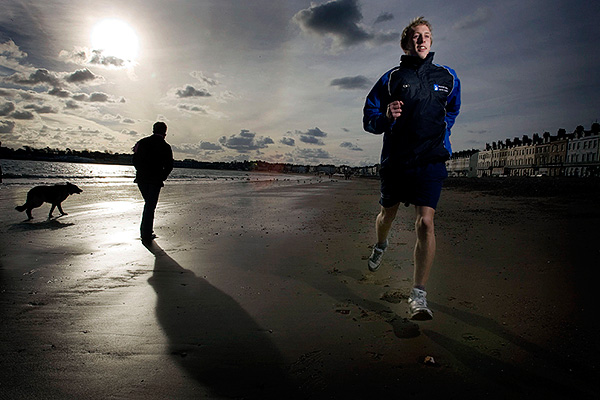
©Neil Turner/TSL | Weymouth, Dorset | December 2007

Being a photographer is usually part of a process. Images are commissioned, stories are bought and sold, edits are done and newspapers are printed. It’s a big and complicated jigsaw and being the person who operates the camera has to be the best part. There is no such thing as a run of the mill commission, but the process often goes like this;

  • The story is commissioned
  • The arrangements are made
  • The photographer is briefed
  • The photographs are taken
  • The edit is done
  • The pages are laid out
  • The newspaper/magazine is printed

There can be upwards of thirty people involved in the whole process and it’s important that the communication is good and that it goes in all directions. Some photographers aren’t as lucky as I am – this piece from the Sports Shooter site is a tongue in cheek rant against bad communications and poor commissioning. Unfortunately lot’s of photographers fail to live up to their obligations, indeed many don’t even recognise that they even have those obligations. It is up to us to talk to the picture editor, the journalist and ask the right questions. Getting the correct information from everyone else in the chain gives the photographer the best possible opportunity to shoot the right photographs and to tell the story in the best way possible. A failure to communicate ties the creative hands of the photographer and drastically reduces their chance of making a great set of pictures.

Sometimes the commissioning editor will forget an important detail, and at other times spelling mistakes and wrong addresses will get in the way of the pictures. Checking details, double checking spellings and discussing the story with the editorial staff will always prove to be time well spent:

  • It helps with the story under discussion
  • It improves your own relationship with the editorial team
  • It goes a little way to improving photographer editorial relations on a world scale!

Of course the picture desk need to do their bit in this vital piece of symbiosis because photographers really appreciate being given accurate information, input into the story and feedback after publication. Two way conversations work, and the industry needs more of them.

A rant against dull and predictable photography

Originally posted in November 2002, this was a classic rant against dull and predictable photography…

I’m afraid that I get quite excited by a good argument. The cut and thrust of intellectual discourse is both stimulating and fulfilling, but I have decided that there really is no point in arguing with a disciple!

Discussion forums are great places to spend five minutes, pick up a few tips and dispense some of one’s own “wisdom”. I visit a few photography forums from time to time, and I hope that advice that I have given has helped a few people get more from their photography. The thing that upsets me, however, is the prevalence of self appointed experts who follow the teachings of photographic gurus.

A couple of months ago I wrote about various bits of advice that I have been given in my time wielding a camera. I came to the unremarkable conclusion that the best bit of advice had been to ignore advice from somebody who claims that there is only one way to achieve something in photography. The world of High Street photography seems to be fertile territory for gurus and their disciples. One or two high profile photographers have established ways of doing family portraiture that have barely moved on since the 1980s. Whole industries have grown up manufacturing the cliche’d accessories that keep the cult of posing guide and lighting ratios going. No matter which High Street around the world you go to, there they are… the blotchy canvas backdrops and fake bookcases, posing cushions and fake rugs that are featured in the “How You Must Do Portraiture” videos.

As a production line and money making business model these methods of portraiture are singularly successful. Every home in the world seems to have some images produced by the “factory photographers”, but just like factory farming you get bland and often tasteless products churned out by people who either don’t care, have lost sight of why they did the job in the first place or just see it as a way to make money. Whilst this all saddens me a great deal, it is a good business model and you have to make a living and pay your bills somehow.

What really upsets me about this kind of work is that there is a massive number of people out there who are exposed to this kind of work and follow the gurus. They go out and buy the video because that’s what they believe portraiture is all about, they buy the blotchy canvases because they feature heavily in the videos and they finally get sucked into thinking that this is what photography is all about. I want to kick and shout and make people realise that you don’t have to have battery hens to get eggs. If you want battery eggs, go to the supermarket and buy them – but if you want something better, something tastier then you have got to start keeping your own chickens. Photography at all levels of ability allows you to produce what you want to. Creative and interesting portraiture is just around the corner as long as you don’t get suckered into believing that there is anything remotely original about canvas backdrops and set lighting ratios.

I was working in a school the other day and a parent had come to collect their child’s “portrait” taken at school. She picked it up and went to leave when the receptionist called after her to say that she had picked up the wrong child. The parent replied “…does it matter, all the kids look the b****y same in these snaps anyway!” I wanted to applaud her, she was so right. The “individually created” portrait is no better unless the photographer is going to create a new canvas back cloth for each client and then dispose of them straight afterwards.

I hope that the people pedaling the lie that this kind of work is somehow “classic portraiture” all over the internet will throw off their robes and admit that there just might be another way of achieving wonderful and desirable images.

My call goes out – Amateur photographers, wannabes and bored professionals everywhere… rise up, burn those backdrops, dump those videos and escape the cult now. There is a world of interesting, unique and occasionally truly original work to be done out there. Before you know where you are, that chant (ommmm-mainlight,fill light,hair light,backlight-ommmm) will just be a distant and mildly embarrassing memory.

©Neil “don’t copy me, just learn from my mistakes” Turner.

Dusk… my favourite time of day for shooting pictures

Bournemouth beach. ©Neil Turner, July 2009

Anyone who knows me or who has ever looked at my folio will know just how much I like being by the sea and that the beach is my single favourite location. I’m a lucky guy and I live on the south coast of England – in the same town in which I was born, Unimaginative, I know – but it’s a great place to live and take pictures. Shooting portraits against the background of a mean and moody sky at dusk is one of my favourite things to do and shooting those skies without people is almost as much of a joy.

Going on the beach as the sun goes away is also a great time to capture very saturated colours. The picture to the left of the breakwater (we call them groynes here in Dorset by the way) with the low angle sunshine is a great example of the clarity and beauty of the evening light when the sun actually shines in the UK. I have no other reason to post this picture than to show that every once in a while you get light so pure, so perfect that no amount of lighting can improve upon it.

Bournemouth beach. ©Neil Turner, July 2009

This picture of the sun going down over the cliff tops is another story. I was walking on my own and took an EOS50D along for the fun of it. I didn’t have anyone to photograph and my lights were back in the car anyway so I had to shoot the sky whilst wishing I had someone interesting in front of the camera!

This kind of sky seems to be most common at the end of the summer and into early autumn. I’m looking forward to a few more and, with luck, I’ll get to shoot some portraits with them too.

From journalism to design and all spaces in between

No matter what you talk about in life there seems to be a scale: left to right, top to bottom, right to wrong. I can now add a new one….journalism to design. These are the two ends of the scale that I exist in as a photographer. At one extreme my work is pure journalism and at the other it’s little more than eye candy.

©Neil Turner. London, June 2009

The pressures that I feel when I’m out working come from both directions, and both sets of pressures come from the newspaper. My instincts are clearly those of a news photographer, but more and more I find that my work is required, judged and edited by designers. This makes me nervous because they wouldn’t ever consider meddling with the written journalism and I sometimes find my pictures being selected on the basis of how well they add to the graphical feel of the page.

I’m not saying that there isn’t a place for this attitude to pictures in lifestyle magazines, but the success of those magazines has meant that attitude spilling over into newspapers. Daily and weekly papers have always been dominated by the written word and photographs have always had to struggle for their place as an integral part of the journalism. I am fairly convinced that no significant newspaper has ever had a photographer as it’s editor, so it isn’t surprising that words dominate.

The constant changes in “who does what” inside newspapers has lead to the appointment of more and more designers who seem to have become very influential, not only in a design sense but in a more general editorial way too. Photographers are being sidelined by yet another group of workers.

Going back to my left to right argument, there are pages within a newspaper that are predominantly news and there are pages that are rightly about lifestyle. I have no problem with this except where the emphasis becomes blurred and decisions about photographs are made because they make the page look good on pages where the journalistic content should be king. Editorial photography is a far wider field than news photography and I want to be able to shoot in a wide range of styles to suit the whole spectrum, but more and more of my colleagues here in London are feeling the pressure to shoot in a softer, more feature based style all of the time. Don’t get me wrong, I think that great photography is great photography no matter why the pictures were taken and no matter where they are intended to go…but…the hijacking of news pages by people with anything other than journalism in their thoughts has to be resisted.

I strongly believe in giving designers and layout artists greater flexibility so I hope that everyone will realise that I want to meet “the enemy” halfway and not just sit sniping on the sidelines. I just get very depressed when I hear designers and layout people talking about photographs, good photographs as so much “window dressing”. The answer? Appoint more picture literate people to senior positions on newspapers, treat news photography with due respect and never allow photography to become just another element of design

Brutal architecture and portraits

I have an admission to make… I love shooting portraits on cloudy days around concrete buildings with urban skylines. There, I’ve said it. As a photographer I find brutal architecture and grey winter days both challenging and creatively stimulating. Combine the two and you have a blank canvas for interesting images – as long as you have a cooperative subject.

©Neil Turner, February 2009

This portrait is of an academic working at a central London research and teaching institute. The building is a classic modern brutal concrete one and I have shot pictures there dozens of times over the years. I have never managed to get access to the roof before and I have always imagined that it would be a great place to shoot, with decent views of the surrounding skyline.

It was a windy and dark February day and so I wanted to find a spot out of the wind. The roof features a couple of large concrete towers which contain lift machinery and other services and the southerly one has a short walkway running through it. On a sunny day this would be perfect shade in which to place your subject. On this day it was equally perfect shelter from the wind and probable rain. There are also railings which are perfect for attaching lighting stands to so that they don’t blow away.

The picture above wasn’t the first that I shot. I had tried quite a few angles to get the London skyline in but the wind forced a retreat into the covered walkway. I decided that being out of the wind gave me the chance to shoot with a 24″ x 36″ (60cm x 90cm) Chimera soft box on my Lumedyne flash head. The softbox is old and has both the inner and outer diffusers permanently sewn in and I wanted to make use of it’s softness so I placed it as close to the subject as possible. In this frame it is about three feet (90cm) from his face off at about a 45 degree angle to the left of the camera with the bottom of the softbox about level with his chin.

I always try to start with an available light reading for the sky which came out at about 1/250th of a second at f5.6 on 200 ISO. I wanted the sky to be darker and so I decided to shoot at f8 instead. This meant that I had to adjust the power output on the flash to give me the aperture that I wanted and that meant 1/4 power (50 watt/seconds). The first test shot told me that I needed some separation between his hair and the dirty grey concrete and so I set a second flash (Vivitar 285 HV) on a stand directly behind him on 1/16th power to give him a fairly aggressive hair/rim light. This isn’t a technique that I use very often but in this case it made the difference between a muddy image and one with some real edge. The combination of the big soft light and the hard hair light gives the portrait a particular mood which compliments the sky and the architecture.

Like many of the techniques that I use, this one needs to be used sparingly so that it has maximum effect when it does get used.

Owning up to some bad habits

“It’s all about light”. That’s a message that I hope everyone who visited the technique pages on my web site will take away. When you are the one who controls that light, you have a large number of options open to you. This month I have been trying a new toy and I thought that I’d use that as an excuse to write about how and why I choose the quality of the light.

©Neil Turner/TSL | London | December 2004

The first thing I have to do is own up to some fairly bad habits:

The first is that I go through personal fashions in the way I light and in the kit that I carry with me. One month I’ll use softboxes and then the next month I’ll use umbrellas. One week I will keep the flash as only one element of the scene and the next the flash will overwhelm the ambient light.

My second bad habit is that I will light women in a different way to men. 99% of the time I will use a much softer set up for female subjects than I would for males.

Thirdly, I’m aware that I tend to use a harder light on older skin (especially men). Older people seem to have a lot less moisture in their skin and so their faces have a lot less shine.

I’m much more likely to direct a spectacles wearer about the angle of their head, simply to avoid getting bad reflections in their glasses. I also try to find out if people wear contact lenses and get them to look more squarely at me to avoid getting any strange shapes in their eyes.

So far I’m painting myself as a bit of a lazy photographer. I like to think that it’s not laziness – more a realistic attitude towards getting the shot right. When you are shooting people, you often end up shooting a very different picture than the one that you first envisaged so my bad habits are there to simply give me an easy starting point. Getting on with the shoot is part of my style. I rarely spend very much time wandering around formulating ideas, largely because I am regularly expected to set up, shoot and break down in a matter of minutes. Having the “safe shot” in the bag is something of a religion to me and I find that giving in to my “bad habits” makes my practice a lot easier.

Many photographers use the same technique day in and day out. I cannot claim to do everything differently every day, and sometimes I feel like a chef who has a limited range of ingredients that I can select, mix and adapt to create new and interesting combinations. Every once in a while a new ingredient becomes available, a new toy to play with. Does that make me gadget boy? Or does it simply help to keep my work fresh?