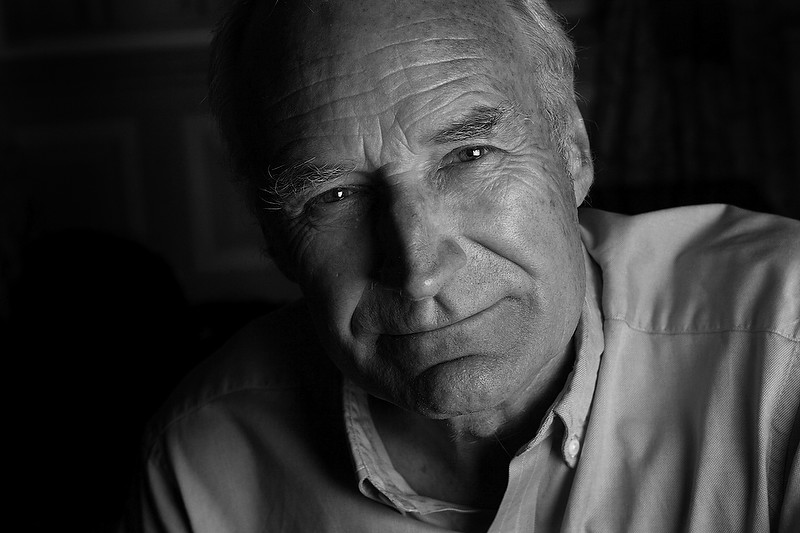
Choristers leaving the College Chapel after early morning prayers at Eton College, Berkshire. The famous public school is offering junior music scholarships in an attempt to attract bright and musically gifted boys to the school. The blur was used in this case to anonymise the pupils. The camera was sat on the ground, propped up with a the lens hood because I didn’t have a tripod and wanted the motion blur. The lens was a Canon 16-35 f2.8L and the camera was an EOS1D.
press
The BPPA and The Leveson Inquiry
I have been involved in writing, amending and publishing a second submission on behalf of The British Press Photographers’ Association to the Leveson Inquiry into the culture, practice & ethics of the press in the United Kingdom. It has been a huge task and the work of propagating it using social media has now begun.
Lord Justice Leveson’s inquiry was founded to look into the phone hacking scandal that brought about the closure of The News of The World and other unsavoury practices in play within the UK news media. In the first week of evidence it turned into a “photographer bashing” event and The BPPA had to respond on behalf of the thousands of perfectly well behaved and law abiding news photographers out there. Lots of countries have a problem with rogue paparazzi or “stalkerazzi” as they have been memorably named by one UK academic.
If you are a lover of great news photography, please follow @TheBPPA on Twitter like The BPPA on Facebook and read The BPPA blog here on WordPress. The industry is at a crossroads and we need our friends and colleagues to help us get where we need to go.
When Time Out did real news…
Right back in the early days of Insight Photographers, the small agency that we ran from an office in the rather un-trendy (how times change) Hoxton area of London, we used to shoot a lot of stories for Time Out magazine. Some weeks they would have five or six pages of real news and they used to commission some nice work too. One of my favourites from that era was this picture of a man who was part of a group of residents and squatters trying to stop the Department of Transport from bulldozing their houses to build a new piece of road in the Archway/Highgate area intended to speed up the journey up the A1 from Holloway (bear with me if the geography of north London bores you). When I arrived on a hot day from the a brisk walk up from the underground station the bailiffs had gone.
I found this chap looking rather pleased with himself and asked what had gone on. He just smiled and said “we’ve seen them off”. I asked him if it was OK if I shot his portrait and he agreed. After that, I got my notebook out and asked him his name. He thought about it for a few seconds and then said “call me Jack… Archway Jack”. Of course I asked if that was his real name but he smiled and walked off trying to whistle a tune.
The News Editor somehow tracked him down, got some good quotes from him and the story probably got more space than a simple eviction piece would have. A definite case of “just because the story you were expecting didn’t work out, it doesn’t mean you haven’t got a good story anyway”. All of the Time Out news reporters and editors that I recall went on to do great things. I guess that it was a mix of choosing the right people and being a great place to hone those journalism skills. Quite a few of the freelance photographers that they used did OK too.
This was shot on Kodak Tri-X film using a Nikon FM2 camera and a 24mm f2 Nikkor lens
Folio photo #09: Bournemouth grave digger, October 2008
Dave Miller has been working for the cemetries service in Bournemouth since leaving school. These days he even lives in a house inside one of the local graveyards. Photographed at dusk in Bournemouth’s North Cemetry for The Guardian. They were running a whole series of pictures of people who do slightly unusual jobs and they times this particular feature to run at halloween.
This frame features four separate flash units – one of which is down inside the grave (which was otherwise empty). Dusk is my favourite time of year for shooting pictures and this particular sunset was very colourful. If you’d like to know even more about this picture, go to this technique page
Resolution, and not just for the new year…
When a member of my family asked me earlier this week what my ‘new year resolution’ was, I was tempted to answer “300 dpi”. I would have laughed but I’m afraid that the rest of the family would have just given me that old-fashioned look that says “Neil is laughing at his stupid jokes again”. For the record I want to get fitter, lose some weight, shoot better pictures and love everyone.
To photographers, designers and anyone else who handles photographs resolution is an important concept. Get a few photographers together and someone will complain about a client whose comprehension of the concept of resolution is so poor that they have rejected huge files just because they hadn’t been saved at 300 dpi. What is 300 dpi anyway? Does it have any relevance in todays’ digital world?
Put simply, DPI is an output term. It describes the number of dots per inch that the printing system will place onto the paper and, generally speaking, the more dots you have the better the quality. Of course if you have cheap paper that soaks up ink too many dots just produces a mulchy mess. Newspaper quality is a case in point: try to stick more than the right amount of ink down and the paper will get soggy and rip whilst going through the presses. Your inkjet printer at home might be capable of 2,880 dots per inch but that doesn’t mean that you have to save your pictures at that size. So much software these days has the ability to re-size and re-interpret images to make them work.
Don’t get me wrong, it is always best to send pictures to commercial printers or reproduction houses at the right size at the correct resolution and properly sharpened but some of the nonsense talked by people who don’t understand is very frustrating.
Photographs are actually measured in pixels per inch or pixels per centimetre but even that misses the point. What actually matters is the number of pixels that make up the image. You can have a picture that measures 3,000 pixels along one side and 2,000 pixels along the other (6 million pixels in all) and that is really the important fact. At 72 pixels per inch (the normal internet resolution) that would appear as a huge picture. If the same 3k x 2k pixel image was saved at 150 pixels per inch (about normal for newsprint) it would still be 50cm wide whereas at 300 ppi it would be 25cm wide. Actually switching between resolutions is easy and it makes no difference to the image quality (unless you repeatedly re-save in a lossy format such as Jpeg). All that really matters is the number of pixels.
Even going back to the days of scanning negatives on the venerable Kodak RFS machines into Photoshop version 2.5 where an original 35mm image measured 24mm x 36mm (that’s 864 sq mm) meant that every picture was still 24mm x 36mm but had a resolution measuring up 2500 ppi it was a few clicks of the mouse to change the picture to the required resolution at the required size with no damage done – with the possible exception that the low power of the computers meant that it took more than a few seconds.
Exactly who trained these people who don’t get this concept is beyond me. It is as simple as it is logical. My new year resolution is, therefore NOT 300dpi. I’m going for 254 ppi or 100 ppcm along with a bookmarked link to this blog piece so that I can refer people to it as, and when, required.
Folio photo #08: Peter Snow, London, May 2004
Peter Snow, BBC sephologist, journalist and newsreader photographed after an interview at a central London hotel for a “My Best Teacher” feature for the TES Magazine.
He had a book and a TV series with his historian son at the time and the interview was one of a long series that he had already done that day. The room was cramped and poorly lit and so I used a medium sized soft box very close to him to keep as much light off of the background as possible. One picture editor that I worked with used to call this very tight crop the “egg cup” because it was as if someone had flattened the top just like one.
Mindset – small word, big concept for news photographers
Written in 2002, this opinion piece still holds very true nearly ten years later…
What’s the difference between a photographer who takes pictures for fun, another who struggles as a professional and one who is on top of their game? The answer, well there are many but the top of my list is….mindset
It’s a pretty innocuous word, but it makes a massive difference. As I sit here writing this I’m trying to formulate some thoughts ahead of a talk to a group of postgraduate news photographers. Snappy titles are always a good start – according to the “Lecturing for Dummies” handbook so “Mindset” it is.
Next step – arresting opening sentence. That will have to wait until I have better formulated my ideas, but my handbook tells me that if you get people’s attention at the beginning you have won fifty percent of the battle and if you don’t you will waste a lot of time getting it back. Well, that’s a bit like writing and (spot the cheasy link) an awful lot like being a news photographer.
The narrative that runs through a well shot photo story or a well written essay is remarkably similar. I have been trying to find a way of telling eager “news photographers in the making” that the message is more important than the way it is delivered and I have decided that it’s worth keeping the writing analogy going. Nobody denies that poetry is literature and everyone has respect for well written short stories. Good authors are comfortable with their medium, they structure their work and use words economically. Good photographers mirror this. The common thread is mindset; shaping what you have into what you want it to be. I’m not saying that you pre-judge an issue, but rather that you should edit before you shoot, as you shoot and after you shoot to tailor your pictures to a particular format.
If you are working towards an exhibition you work one way – adopting the right mindset, and if you are shooting a single image story you work a completely different way. And then there are the differences between making and taking photographs, between being a welcome guest wherever you are or an unwanted intruder. News photography is a very broad church, with room for many ways of working and a lot of photographers find it very difficult to switch between the various sub-genres. It can be done. The temptation for photographers new to journalism to assume that only great long complicated narratives qualify as news photography is understandable. It is also one hundred and eighty degrees out. The thought that it takes real skill to tell a story in a single picture is a difficult concept to master but the greatest story-tellers know that less can often be a whole lot more.
It’s all in the mind. If you have a month to shoot a spread you can afford a few days (let’s say three to make the comparison easy) to acclimatise. If you have an hour to shoot a single image story and you take the same percentage of the job time to settle in, you’ve only got six minutes. You know what the score is, so you adopt the right approach before you start. News photography, when it’s stripped down, is a really simple idea. You take pictures and you make pictures that tell stories. You can use photographs to spell out what you want to say, you can use them to intrigue the viewer or you can use them to infer things.
Good journalism often uses words, but it uses photographs just as often. If the photographer is thinking straight and can concentrate on the end product, good photography becomes great news photography.
Final step – the clever conclusion. I would advise anyone coming into the profession to read some good poetry and a few good novels, to work out how they were structured and to try adapting the simplicity of poetry to their photography. Why? The answer is all too simple, photography is all about creativity and it’s all about mastering the technical aspects but most of all it’s about a state of mind – a mental process – mindset.
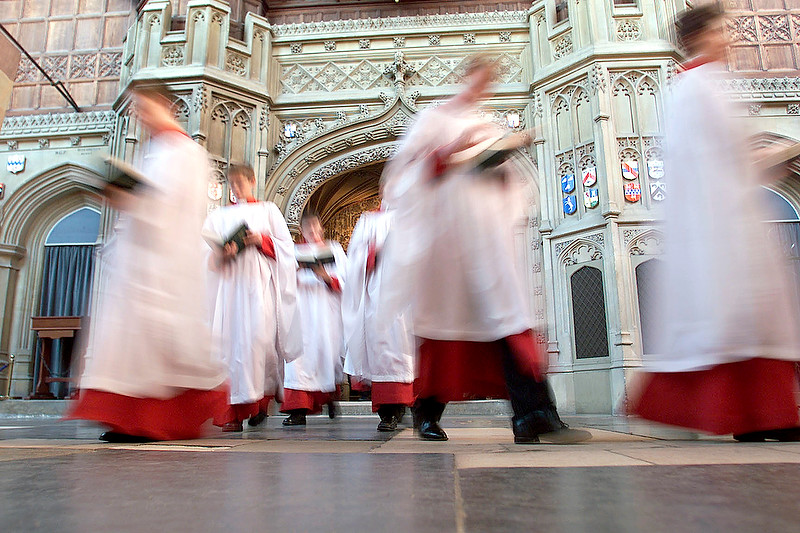
Folio photo #07: Ugandan primary school, April 2005
Asaba Primary School, Masindi, Uganda. This private primary school has 1000 pupils aged from 3 to 12. Parents in this remote and poor area go to great lengths to give their children the best education that they can afford. Class sizes at Asaba are as small as thirty or forty which compares very favourably to the free schools where eighty or even a hundred children in one class is common.
I was in Uganda to shoot a feature to coincide with a television series about rural African education and Masindi is a very interesting place with the huge contrasts between the locals and the aid agencies, many of whom have regional offices in the town, and their brand new four-wheel drive vehicles which are parked outside their offices.