photography

Training on Weymouth beach – an unusual portrait

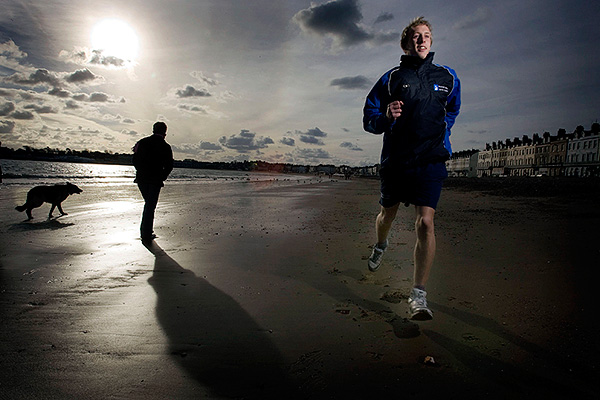
Sometimes pictures come together without much effort and sometimes you almost kill yourself trying to get something just that little bit special. This portrait of a young athlete who was competing in the sport of Biathle for Great Britain at a junior level whilst studying at a college in Weymouth, Dorset definitely came along after a not insignificant struggle. Nothing to do with the subject – he was cooperative, willing and full of energy – I just tried to get pictures that didn’t seem to want to come off.

©Neil Turner/TSL. Weymouth Dorset, December 2007.

This frame was shot on a 16-35 f2.8L lens at its widest focal length on a Canon EOS1D MkII at 1/250th of a second at f22 and 200 ISO. I was using every joule of power from a Lumedyne Signature Series flash kit with no umbrella or soft box and I just had the power to get this. I have always liked the photo and I was always sad that the paper didn’t use this frame.

I guess that this picture is further proof that I love shooting beaches – especially Dorset beaches!

Fifteen minutes of low level fame

To be entirely honest it was actually thirty-four minutes rather than fifteen but Andy Warhol’s observation that everyone will be famous for fifteen minutes is a gift of an opening and it’s so much punchier than thirty-four!

The half an hour plus four minutes in question was the time that I spent giving evidence to The Leveson Inquiry into the culture ethics and practice of the British press on behalf of The British Press Photographers’ Association. If you didn’t already know, I am very proud to be one of the two Vice-Chairmen of The BPPA – an organisation that supports and promotes news photography in the United Kingdom.

I have written a short blog about my experiences and there is a link to actually watch a Flash (boo!) video of me in action. This isn’t about self-promotion, its about the important message that I was given the honour of presenting to this important inquiry. Did it go well? Go to The BPPA’s blog site and find out…

Archive photo: Carl Djerassi, London, June 1999

©Neil Turner/TSL. London, June 1999

I shot this portrait of Carl Djerassi, co-inventor of the contraceptive pill, scientist and playwright in his London flat. He was mainly resident in San Francisco but kept a home in the UK as well. He was a very quiet and considered man who was used to, but not particularly keen on, publicity. I was attracted to the shape of his dining chairs and the almost egg-like shape of the top. I don’t recall whether we discussed the shape at the time!

Darts legend teaches mathematics… using a dartboard

©Neil Turner/TSL. June 2008, Kent.

Bobby George is a showman. He drives a flash car, he wears more rings than I could lift and he has made a nice life for himself playing professional darts. He went to Langley Park School for Boys in Beckenham , Kent in June 2008 to talk to GCSE maths students about how much he has gained from good mental arithmetic. He kept an audience of teenaged boys, most of whom weren’t even born when his career was at its height, engaged and even managed to get most of them to realise that maths, probability and mental agility were actually ‘quite cool’.

Archive photo: Private investigator. December1990

©Neil Turner/Insight. December 1990. London

Back at the end of 1990 I was sent to accompany a reporter to do an interview with a private investigator. He was an ex-Metropolitan Policeman who had a very good reputation and track record in finding runaway children. He was possibly the severest looking person I had ever met and his penchant for big fat cigars did wonders for his image. The truth is that he was actually a very caring man and both the reporter and I liked him a lot.

When I did a quick “Google” for the man I found that he had given another interview to the newspaper ten years later and that he was still as forthright as he had been. I would imagine that he has since retired but I still look very fondly at this picture and remember it’s place in one of my old portfolios.

This was shot using ambient light at his office in Southwark. I was probably using a Nikon FM2 with a 180mm f2.8 Nikkor which I had at the time and the film is Kodak Tri-X. This was scanned from a fibre-based print which was printed full frame with the rebate showing.

The early days of digital

I took delivery of my first Kodak DCS520 digital camera in late November 1998. It was a revelation. I had used a previous model (DCS3) which was pretty poor and I wasn’t really that convinced about the whole process. After three days, I was a convert – the kind of convert who then sees it as their role to evangelise about their new-found wisdom/insight/faith. Based on the Canon EOS1n camera, the Kodak conversion replaced the whole of the back of the camera and quite a big chunk of the electronics too. It was expensive, relatively slow and it only had 1.9 megapixels. It had a tiny low resolution LCD screen on the back and it used enormous and expensive batteries that rarely lasted a whole day but I absolutely loved it from that first week!
©Neil Turner/TSL. 10th December 1998

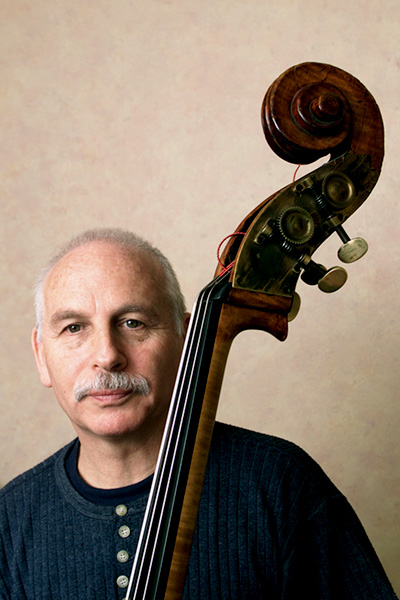
This was one of the first proper portraits that I shot with my first DCS520 (known as the Canon D2000 in some countries) and it was of a double bassist and jazz teacher in his own home. My conversion was so dramatic and so complete that I even remember sulking a little when I had to shoot on film for the glossy sections of the newspaper. We worked with these early cameras for nearly four years until the Canon EOS1D came out. Nikon had introduced the D1 in that period and the see-saw battle for supremacy between the two big manufacturers with input from Kodak and Sony began in ernest.

I quite often get asked what the big trigger was for digital in the newspaper industry. There are a few factors;

  • The arrival of cameras capable of shooting quality images
  • The money saved by newspapers getting rid of darkroom staff
  • The arrival of new health and safety laws that meant waste chemicals became very expensive to dispose of
  • The speed of turnaround of digital pictures
  • The ease of archiving digital images

Talking with others who used the Kodak DCS series camera from that era we all agree about one thing – how good Kodak’s software was. What a shame that they threw away their lead in professional digital photography. If they had even kept their software development going, they could possibly have avoided needing to file for bankruptcy protection in the US courts last week. I look back at the early days of digital with a real fondness – they really were the most exciting of times. There’s something very cool and very rewarding about being in the second row of pioneers!

Folio photo #14: Children on a bug hunt, south London, May 1999

©Neil Turner/TSL. May 1999, south London

This picture from a story about children from a local primary school going on a “bug hunt” in Nunhead Cemetery was shot for a special supplement to the TES about the environment. The outdoor lesson was led by Richard ‘Bugman’ Jones, a professional entomologist who undertook a residency at the school. Like a lot of my favourite pictures it doesn’t tell the whole story but it is a ‘moment’ that hopefully makes you want to know more.

I had switched to shooting most of my work digitally the previous year but the Picture Editor working on this section was still keen that we shoot pictures for these glossy extra sections on transparency film. I think that this was the last commission that I ever shot using a Leica M6. The wider shots were definitely on the Leica but I also shot some longer lens pictures using a Canon EOS5 and a fixed 85mm f.18 lens

Geek moment: Leica M6 with 35mm f2 Summicron and Fuji RDP100 transparency film.

Case studies on my website

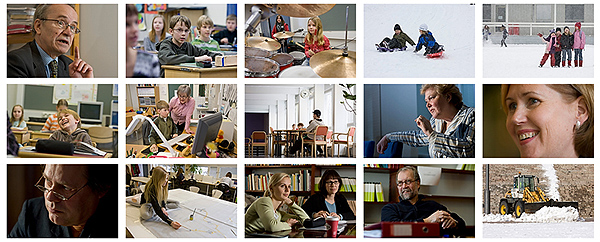
When I went freelance again I decided to add a few case studies on my website so that prospective clients could see the kind of work that I do in greeter detail than they could on my folio pages. It’s going to be time to post some new ones soon and the first to be retired will be the oldest one: a case study about a mews feature shot for the TES in Finland.

The Brief:

Go go to Helsinki for two days with a reporter and try to establish why the Finnish education system consistently comes top of the European leagues for pupil achievement by interviewing various politicians, educators and educationalists and by visiting as many schools and institutions as we could.

Delivery:

This assignment was shot whilst I was a staff photographer working for the TES and my brief was to shoot some pictures to accompany this major feature but also to gather as much stock imagery for future stories relating to Finland and Scandinavia as possible. The final edit was over 200 images and was delivered in stages during and immediately after the trip.

See the rest here