why

Define the word “PHOTOGRAPHER”

When does a person with a camera, even a person with an expensive camera, become a photographer?

Apologies if this seems to be getting a bit philosophical but it’s a question that someone casually threw at me a week or so ago and I’ve been struggling with it ever since. Let’s get the dictionary stuff out of the way…

Right now we can really get on with the real business of working out what a photographer is. I’ve always been a fan of simple definitions and I like the idea of making a comparison between things, so how about this:

Someone with a camera tries hard to get everything into the picture whilst a photographer does their level best to keep as much out of the picture as they can.

All that means is that there comes a point in your photographic journey where you realise that most pictures are much stronger when you leave absolutely everything out that doesn’t need to be in. In a paraphrase of the old saying “what doesn’t kill you makes you stronger” (which isn’t necessarily true by the way) we can come up with “what doesn’t add to the composition detracts from it”.

The dictionary definition above, which comes from the English dictionary built into the Apple OSX operating system, steers away from the word professional and I’m really glad that it does because there are an awful lot of superb photographers out there that take pictures for fun and not for a living. Being a good photographer is not the same as being a professional photographer. On balance, MOST professionals are good but there isn’t a direct relationship between earning a living and being proficient.

These days there is a belief that ‘everyone is a photographer’. I wouldn’t argue that almost everyone takes pictures and that almost all of them take two, three, four and even twenty times as many pictures as they would have done when we had to buy film. Someone who I once discussed photography with reminded of another old adage – the one about if you give enough monkeys enough paper, enough typewriters and enough time sooner or later one of them will create the complete works of Shakespeare. It doesn’t hold up here and I told him as much.

People with cameras are largely rational, intelligent and reasoning beings and so most will work out what they do and don’t like and then take better and better pictures over time. Their image making isn’t the random act of monkeys with no comprehension what they are doing – the point here is that when it comes to learning that less (content) is more (better pictures) some will figure it out for themselves , some will need to have it pointed out to them and the rest will remain blissfully ignorant of it.

For some lucky people the knowledge is instinctive. The rest of us have learned through trial and error and/or formal education to know a good picture when we see one. Those that take the next step by learning what makes it a good picture can call themselves “visually aware”. The final (and never ending) stage is to develop the skill to see the picture and make the best of it before and during the pressing of the shutter. Those people can call themselves photographers.

See also COMPOSITION

The personal frames you shoot…

I have shot thousands of editorial portraits over the last 26 years and every once in a while I shoot a few “personal frames” at the end of a job. What I mean is that there are pictures that I shoot if I have time that I know the client would not publish in a million years and so I am doing them for my own amusement/sanity/experience/curiosity. When you start shooting pictures, everything you do is an adventure. Slowly you learn how to achieve the results that you (and your client) want and it becomes very easy to just take the pictures that you need to take without pushing any boundaries or trying anything new.

Professor Lewis Wolpert. London, March 2004. ©Neil Turner/TSL

I wrote an essay in 2004 about why black and white is so effective and why so many people profess to preferring it to colour for a lot of ‘serious’ pictures. The reason that I have always believed is that good photography is about giving people a view of your subject that they recognise but that, at the same time, is not how they themselves would have see the same scene. There are plenty of ways of achieving this but the one that non-photographers seem to respond to most positively is to show black and white pictures. For about two weeks after writing that for the first time I consciously shot pictures that I could convert to black and white to prove or disprove my theory. I even submitted a few black and white images with my edits to the newspaper I was working for.

The experiment developed a little and I started to try to actually mimic the feel of black and white film and prints. Lots of filters and plug-ins were appearing on the market at the time and I played with as many as I could get my hands on. The experiment ended when I shot this portrait of Professor Lewis Wolpert at the Department of Anatomy, University College London in March 2004. I had spent quite a while using Photoshop’s darkroom style tools to dodge, burn, correct contrast and generally make an otherwise ordinary picture look rather nice. I really liked the picture but I decided that the personal frames idea needed to head off in a different direction and so I stopped shooting with mono in mind for quite a while.

In common with almost all of the work that I was doing at that time, this was shot on a Canon EOS1D with a 70-200 f2.8L lens. It was shot at 640ISO (which for me was the highest you could go on the original EOS1D without getting a lot of noise) at 1/125th of a second at f2.8.

Vocabulary of photography

Language is an ever-evolving thing and a quick search for a famous quote on the nature of language brought up two very interesting thoughts. The first is accredited to Karl Albrecht – a German latter day renaissance thinker (I wish it were the co-founder of Aldi who had the same name)

“Change your language and you change your thoughts.”

This is an important idea when, as press photographers, we are trying to get the world, the rest of the media and the Leveson Inquiry to think about photographers differently. Words like paparazzi have been liberally used during the inquiry and by commentators about the inquiry. Fellow journalists and even some of our peers regularly use the words snap, snapper and snapped to talk about our work. As long as this kind of unhelpful vocabulary carries on being used we are almost bound to carry on having a problem. We are photographers, we take photographs and what we do is photography. Get a thesaurus out and there are plenty of other words that can be used (with increasing degrees of pompousness). It seems likely that it is up to us to start the ball rolling. It is one thing to use slang terms within the tight confines of our profession but an entirely different thing to propagate them elsewhere.

As professionals we owe it to ourselves and our colleagues to change our own vocabulary and to correct everyone else who falls into the lazy trap of using short snappy terms that are just not accurate. Take last Saturday’s Times for example. On the front page of one of their sections they had a line about “What really happened when Beaton snapped the Queen”. Did Sir Cecil Beaton really “snap” anything? The Victoria and Albert Museum, a cultural institution that would claim to respect photography has on their shop website a line about the same photographer saying that after her 1953 Coronation

“(he) snapped the Queen in all her coronation finery.”

As long as what we do is trivialised in this way we are going to have an uphill struggle. A couple of other searches on the web brought up equally depressing quotes – this one comes from a careers website www.allaboutcareers.com and their description of the job “Press Photographer”:

“Press photographers are employed by newspapers, magazines and other print and web publications. These snap-happy professionals are tasked with recording images of current events to support news stories or taking interesting photos to emphasise the point of featured articles.”

We could go on but that would only serve to labour the point. It is hard to think of another profession whose work is so universally undervalued, whose work is widely misunderstood and about whom the vocabulary used is to pejorative.

One final note: whilst looking for quotes about language I found this one attributed to Federico Fellini – the man credited so widely with the origins of the term “paparazzi”;

“A different language is a different vision of life.”

Our language is a very visual one but occasionally even we need to resort to words to make our point. If we aren’t careful, the rapid evolution of the English language will leave us behind and the regular and repeated use of poor and inaccurate phrases will become “correct”.

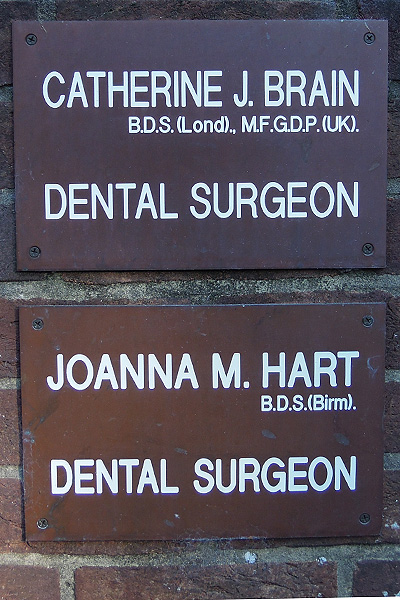
Fun pictures – Brain & Hart…

Like most working photographers I sometimes take pictures for the sheer joy of it. Sometimes I even get my iPhone out and do fun pictures. From time to time on this blog I hope to ad a few of the silly, odd and downright comical pictures that I sometimes see.

A lot of my favourites are actually not that good as pictures; I am often amused by wordplay in pictures – like this one…

©Neil Turner, October 2011

Angry teacher portrait

©Neil Turner/TSL, April 2005

Back in April 2005 The TES had a great article written by a newly qualified teacher about how to avoid getting angry with pupils at an inner-city secondary school. It was clearly written from personal experience by a dedicated and keen young teacher working at a relatively tough school. He wanted to teach, he wanted to be good at it and he was working hard to achieve his goals.

When I arrived at the school it was the end of the day and both of us were a bit tired. We talked about how to illustrate the story and we decided that it would be great fun and have the desired amount of impact if he just stood there and yelled at me: full-on screaming. It was loud and, as it turned out, great therapy for him. All of the pent up emotion from the day came out is one long, loud and hilarious stream.

On my way home there was, coincidentally, a radio programme about anger management. None of the experts mentioned standing in an almost empty room screaming at a photographer while you had your picture taken. I couldn’t help thinking that they had missed out of an important therapy!

There’s nothing especially clever about the picture – a slightly desaturated image, lit simply an composed carefully but it had enormous impact on the page thanks to some brave and clever design.

Why dg28?

Originally posted on my pre-blog in 2009 but I still get so many people asking why that I thought I’d post it again…

Why would a photographer whose initials are NT call his website dg28? It’s a question that I get asked with amazing regularity and, for the eight years I have had the site, I have always enjoyed the mystique. I did a seminar last week for some London Strobists and the first question that I was asked was “why dg28?” Every time I tell the story it gets less exciting – unlike most anecdotes which seem to get longer, more interesting, more adventurous and even more heroic. I have finally decided to tell all. Right here, right now..

It all started back in 2000. I had a site hosted by AOL which had a domain name longer than anything you could properly remember and content which was attracting quite a bit of attention. I had written a couple of short pieces for Phil Askey at DPReview and sitting in a London bar he advised me to get some proper hosting and a snappy domain name. Good advice from someone who knows a thing or two about photography websites I thought.

A couple of days later I was doing one of my visiting lecturer appearances with some highly motivated post-graduate photojournalists telling them all about the digital process – something that I was already used to but few of them could get their heads around. It was a successful lecture and we ended up in another bar for a couple of drinks. We talked about photography, photographers and photojournalism for quite a while before the topic turned to the old chestnut of “what was the first record that you ever bought?”

I always like this one because I have a very good answer. One member of my family who has otherwise excellent taste started his collection with “Ernie and the fastest milk cart in the west” by Benny Hill – something which still embarrasses him. Being proud of my record I spoke first and told the students that I had bought Metal Guru by Marc Bolan and T-Rex at which point one of them (a young Canadian guy) said “that’s great. You bought Metal Guru and now you are our Digital Guru…” Cue light bulb moment… digitalguru would be a brilliant domain name.

The next day I got onto a registration website only to find that it was gone. As were several variations. Then I remembered Phil Askey saying that short is good so I tried variations on DG and finally settled on dg28.com because the dg bit is for digital guru and the 28 is for the day each month (the 28th) when I used to post updates.

You see what I mean, it’s not actually that interesting but it makes for a decent story – one which I hope to be telling less often in future.

What they don’t teach you in college

This post was originally written in 2003. Things, sadly, haven’t really changed and so I thought that it deserved yet another airing.

For better or for worse, the vast majority of people entering the photographic profession are coming from college courses. I have no problem with that, I came from one myself and so did a lot of my favourite photographers. But…

I’ve been a working photographer since 1986 and based on a few things I have picked up since then I have come up with a list of things that they should have taught us that were not on the syllabus. A whole range of vital skills that go a long way to marking out the complete professional from the aspiring “not there yet”.

Obviously when it comes to choosing which lens to use, or selecting backgrounds and props – only experience and familiarity with your kit and brief will do, and colleges are good at telling their students that. There are, however, some skills that are never even mentioned that are vital.

  • People skills: The ability to handle anyone that you are either photographing, who have influence over those being photographed or who are just getting in the way.
  • More people skills: You need to be able to charm the ‘jobsworth’ security man and persuade the reluctant PR and to do it all without breaking into a fit of temper until such times as all else has failed and you have no other option
  • Even more people skills: As a news photographer you need to be able to communicate with anyone from a starving refugee to a pampered celebrity in a meaningful and constructive way – often on the same day! You have to get them to trust you, to do what you want them to do and achieve all of this with dignity and respect.
  • Advanced people skills: As a portraitist you have to have the ability to talk to absolutely anyone and to keep the conversation going at a light but interesting level whilst setting up equipment, making vital technical decisions and shooting the job.
  • Extended people skills: You need to have a sense of your own place in the scheme of things. It’s no use throwing a prima donna tantrum if you are not getting what you want and are never going to get it. It gets even worse when the person you are arguing with is a close personal friend of the editor. Know when to give in, to make another plan and get your shot anyway.

You are probably getting my drift by now. Once you have acquired all of the technical skills and bought all of the kit that you need all that’s required is to learn how to conduct yourself. I often refer to the photographer as the “Social Chameleon”, changing colours and attitude to suit their surroundings. This should be both physical – dressing appropriately so as not antagonize the people that you are dealing with, and mental – adopting the right attitude – be it meek or aggressive, as friendly or confrontational as the situation requires.

Maybe photographers should all adopt some of the techniques used by the best sales people and mix them with skills more common in the diplomatic service. I have watched charity workers running soup kitchens and marvelled at their ability to be both understanding and firm, and I have watched police officers and been stunned by the way that they get the information that they want whilst conducting an otherwise friendly conversation.

My biggest tip on this subject is to find some common ground with whoever you are talking to and work it. It might be sport, it might be the weather or the journey that you both had to get where you have met. If I’m in someone’s home I will often talk about a piece of art or furniture on display or their pet cat or dog. It doesn’t matter what you chat about, you are chatting and barriers are coming down. Avoid contentious subjects unless you are really sure of yourself.

So there you are, what they don’t teach you in college is how to handle people. It’s not just a skill needed by photographers – it’s a life skill. I think that’s why a lot of the greatest photographers have come from other careers where they have learned about people and use those skills in their new profession.

The copyright symbol and Windows

I’m a Mac user and I have been for the last sixteen years. They make some great tools and some amazing gadgets but the best thing about Macs is that they seem to be made for people like me. I was having this conversation with a student on one of the excellent photographic courses at the Arts University College at Bournemouth and I realised that my preference for Apple computers can be summed up by the fact that the copyright symbol is just there – alt+g – whereas on a Windows machine you have to hunt for it. I have just Googled “how to find the copyright symbol on a Windows computer” and had to laugh out loud at the first website that came up:

“Hold down the Alt key and type 0169 if you have separate numeric keys on your keyboard. Alternatively you can go to programmes, accessories and select “character map” which allows you to assign a short cut to any symbol that you choose. Unfortunately not every copy of Windows has this loaded and you may need to reload it from your system discs”.

Does this seem long-winded to you? Shouldn’t a symbol as important as the copyright one just be there? I know that the option of using (c) is there and almost everyone recognises it but the correct symbol should be much easier to find than it is on most Windows machines.

The serious point here is that copyright is important. Actually, copyright is vital and we all need to mark our work at every opportunity to make sure that everyone knows that all intellectual property has an owner and stop copyright abuse.