work

Adobe Photoshop CS6 Beta

Like half of the photo geeks around the world, I have downloaded and started to play with the public beta version of Adobe’s latest version of Photoshop: CS6. This is a major revision of the software in terms of the interface which looks a lot more like Lightroom than ever before and is also a lot less “freestyle” than those used to versions such as CS3 and earlier would be familiar with. We now have a fixed window rather than the floating elements of previous versions and this will take quite a bit of time for me to get used to. It isn’t that I don’t like it, it’s just that it is a change.
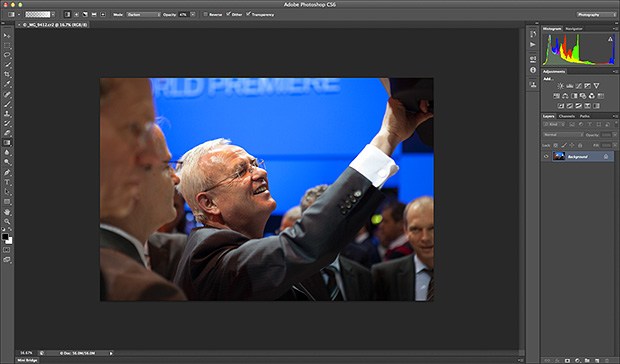
Screen shot of the main window


To be honest, my main use of Photoshop is Adobe Camera RAW. I use it to convert the RAW files that I shoot into whatever file format the job requires, fine tuning the colours, composition and various other elements as I go. At first sight Camera RAW 7 is very little changed from Camera RAW 6xx that I use every day in Photoshop CS5. At least that’s what I thought until I used it in anger on a proper edit.

Screen shot of Adobe Camera RAW 7


If you look closely at the main adjustments palette to the right of the window, you suddenly see what the changes are and what they will mean for every day workflow. Gone are the labels such as Recovery, Fill-light and Brightness to be replaced with a set including Highlights, Shadows and Whites. So far, they seem to perform very similar functions when used on every day files but I have only edited two sets of pictures (neither of which have been “live” jobs) and so it may well be that I have missed something. Here are the two palettes side by side:

Adobe Camera RAW adjustments palettes from CS5 (ACR6) on the left and CS6 beta (ACR7) on the right.


I will continue to play with CS6 and ACR7 as long as the beta phase continues and I’m sure that I will come up with plenty more observations. I only use Photoshop as an optimisation tool and I don’t do any serious retouching or image manipulation with it so don’t expect an in-depth assessment of layers, filters and content aware fill from me – there are plenty of other photo geeks out there who will be able to blog about that kind of stuff!

BMX Rider: Contact Sheet

©Neil Turner. Ringwood, Hampshire. 2011

©Neil Turner. Ringwood, Hampshire. 2011

This was a set of pictures shot on location as part of a “how to do it” technique piece for Photography Monthly magazine. The idea was simple – use flash to make something very cool from some sort of active sport. I was put in contact with the tier, Keegan Walker, through a young photographer that assists me from time to time on commercial shoots and we arranged to shoot at the skatepark near where they both live which is about ten miles from my own home.

I used a couple of Canon EOS5D MkII cameras with 16-35 f2.8L, 24-70 f2.8L and 70-200 f2.8L IS lenses as well as the excellent Elinchrom Ranger Quadra flash system supplemented by a couple of Canon 580exII Speedlights with Elinchrom Skyport receivers triggering them. There were plenty of clamps, gels and light modifiers in use too – including my rather lovely modified beauty dish and the equally great Chimera 24″ x 32″ soft box.

The sky at dusk is my favourite backdrop for all kinds of shoots and the May evening sky provided us with something special to work with. Keegan is pretty good at what he does and I had to ask him several times to actually get less height from the ramps so that my pictures looked better! Two hours on a nice evening messing around and shooting pictures is a pretty good way to make a living. The unfortunate part of this particular commission was that I had to write the words that described exactly what I had done and how I had done it. One day I will get around to reproducing the whole piece for you.

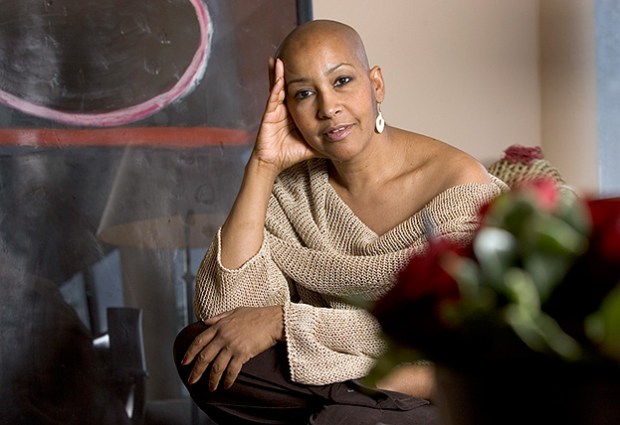
Portrait: Marsha Hunt, London, 2005

©Neil Turner/TSL, October 2005. London

Marsha Hunt is an actress, writer and model who shot to fame in 1969 when she was appearing in the musical “Hair”. She has a child with Mick Jagger and was famously photographed naked by Lord Lichfield. In the early part of the new century she had breast cancer and had a mastectomy. Her treatment became a documentary and she was photographed once more by Lord Lichfield. This set of pictures were taken for a feature in the TES Friday Magazine about her life and her memories of her own education at the London home of a close friend of hers.

This portrait was a lesson in letting the subject run the show. Marsha was lovely, as was our host. They were very old friends and chatted most of the way through the session. The wonderful thing was that she knew exactly when and how to look at me and at the camera. Models are good at this and actors, for my money, are better. It would seem that when someone has been successful as both an actor and a model they are better still. Some people are ultimately very comfortable in front of the camera and Marsha Hunt is in the top few percent of them. The shoot lasted a lot longer than it needed to – we chatted about all sorts of things and drank some rather good coffee too. It was a good day.

Geek stuff: In common with just about every other picture shot by me at the time, I was using a pair of Canon EOS1D MkII cameras with 16-35 f2.8L, 24-70 f2.8L and 70-200 f2.8L IS lenses. The lighting was Lumedyne Signature series packs and heads mixed with a fair amount of ambient light.

College Principal, July 2006, London

©Neil Turner/TSL. July 2006, London.

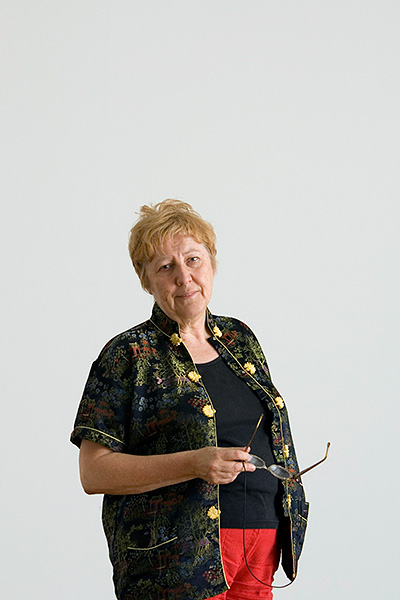
Jane Rapley was about to take over as the new head of Central St Martins College in London when I shot her portrait in July 2006. After 17 years at the famous arts college in a variety of posts she became the Principal in August 2007. I photographed her in her office and then in one of the galleries that they use for student shows at Central St Martins on Southampton Row in central London.

This particular frame was shot in case the designer wanted to use the portrait full page and run a headline and some text over the image itself. The rest of the shoot was more varied and included some very wide portraits, which seem to have been what I was interested in at that time. It is fascinating that when you look back at your own work on a chronological basis you can definitely see trends and fashions in the way you compose, light and post-produce pictures. This was one of my softer lighting periods!

Archive photo: Brixton, July 1990

©Neil Turner. July 1990, Angell Town Estate, Brixton

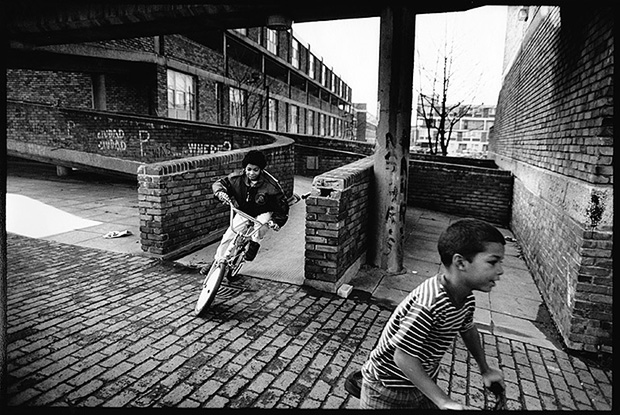
I was shooting a piece about the work being done by some amazing community volunteers in conjunction with outreach workers employed by the Local Education Authority around one of Brixton’s many estates and we were being ‘buzzed’ by some boys on bicycles just out enjoying themselves. Neither of the boys in this picture were the subjects of the work involved so the picture didn’t really add to the story but I have always liked it and I thought that it would make a good picture to post here.

I had posted this image on Twitter a while ago and I think that I mis-captioned the date. Checking the negatives today, it should have said July 1990.

The camera would have probably been a Nikon F3P with a 24mm f2 Nikkor and Kodak Tri-X film but I am not entirely sure because at the same time I had FM2 bodies and a Leica M6 as well.

Michael Rosen portrait – the “contact sheet”

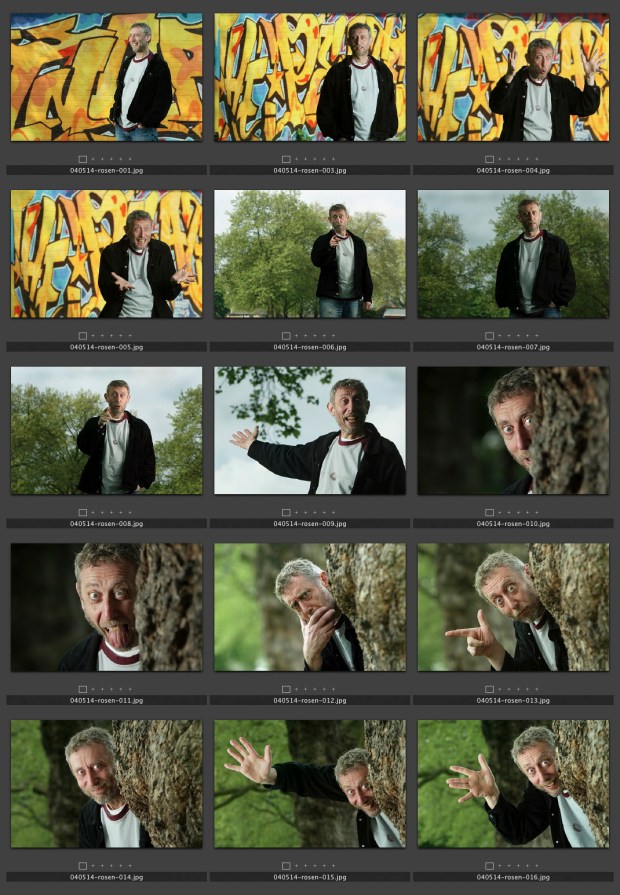
This set of portraits was shot in a London park and the graffiti covered walls were the exterior of a closed outdoor swimming pool.

©Neil Turner/TSL. May 2004, London

Several of the portraits in my portfolio were shot for the same “My Best Teacher” feature in the TES “Friday Magazine” when I was working at the newspaper. For quite a while the format was fixed and so every single frame was shot as a landscape and every photographed used was selected because it coped with the gutter or split across a double page spread.

I submitted a selection of fifteen to the Picture Editor but, quite frankly, there were about sixty pictures that could have made the cut because Michael was such a brilliant subject and such an easy person to work with. This job was featured a few days ago as one of my Folio Photos and you can read a little more there. The whole job was shot on two lenses and two cameras. The bodies were both 4.7 Mp Canon EOS1Ds and the three lenses were 24-70 f2.8L and 70-200 f2.8L IS. I also used a Canon 1.4x Extender on some frames and they were either available light or used a Lumedyne Signature series flash kit with a Chimera soft box.

Case studies on my website

When I went freelance again I decided to add a few case studies on my website so that prospective clients could see the kind of work that I do in greeter detail than they could on my folio pages. It’s going to be time to post some new ones soon and the first to be retired will be the oldest one: a case study about a mews feature shot for the TES in Finland.

The Brief:

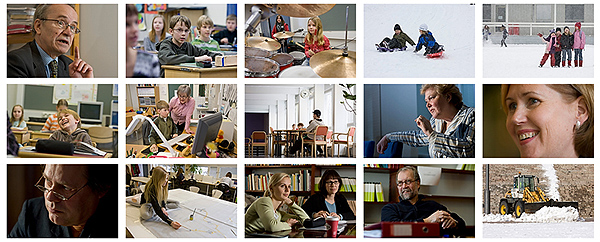
Go go to Helsinki for two days with a reporter and try to establish why the Finnish education system consistently comes top of the European leagues for pupil achievement by interviewing various politicians, educators and educationalists and by visiting as many schools and institutions as we could.

Delivery:

This assignment was shot whilst I was a staff photographer working for the TES and my brief was to shoot some pictures to accompany this major feature but also to gather as much stock imagery for future stories relating to Finland and Scandinavia as possible. The final edit was over 200 images and was delivered in stages during and immediately after the trip.

See the rest here

Possibly the oddest picture I ever took…

©Neil Turner/TSL | London | January 2006

The story was simple: we were doing an anonymous interview with a man who needed to remain unidentifiable for legal reasons and we had to shoot a picture of him at a time and a place that wouldn’t give his identity away. It seemed to be important that it was actually him in the picture and that became obvious when I had to shoot a proper portrait at the same time just in case the court case was decided and we needed a proper picture of him to go with a future follow-up article. Still with me?

The reporter arranged that I meet the subject at a London tube station and to get around the problems of finding someone whose name you don’t know and who you don’t have a picture of I always describe myself and what I’m likely to be carrying and wearing because a) I’m probably going to be there first and b) I’m probably going to be easier to spot (being big and carrying a lot of kit).

The venue turned out to be quite close to where he works and we decided that if any of his colleagues happened to spot us the cover story was that we were doing a fashion vox-pop on what the well-dressed office worker was wearing that season. The cloak and dagger details just kept multiplying.

I decided to go with a silhouette (you can read my thoughts on them here) and just for good measure I added an extra twist with a bit of motion blur too. The result was quite striking if bafflingly anonymous!

The technique is pretty simple. It was a dull winter’s morning in the city and we found a under cover area. I used a Lumedyne flash kit to light the brick pillar and silhouetted the subject against it. Without the flash, he would still have been a shadowy outline but so would the pillar and the picture would have been pointless.

The light that was coming from either side of the pillar was OK but it wasn’t plentiful and so I decided to give it a bit of movement blur by zooming the lens whilst the shutter was open. I ended up with an exposure of 1/8th of a second at f13 on 200 ISO using a Canon EOS1D MkII with a Canon 16-35 f2.8L lens triggering the flash with a pair of Pocket Wizards. Zooming during an exposure as relatively short as 1/8th of a second means that you have to have quite a few attempts to get it right and it also pays to tell the subject what you are doing if you don’t want them to think that you are a lunatic!

In the end I was very happy with this genuinely odd picture. I had arrived at the assignment with almost no idea what I was going to do and pretty much made it up as I went along. That’s why I love my job…