press

A quick update…

Here I am on another morning train to London Waterloo from Bournemouth and tomorrow marks my fourth Monday morning working at London 2012. Training, preparations, more training and extra preparations would sum up what we have been up to so far. The Main Press Centre on the Olympic Park was the first area to open officially and we have had a few photographers passing through already.

The scale of the operation is impressive and the amount of planning that has gone into getting to this stage is staggering. I’m already excited about the next two and a half months and the nearer we get to the action starting, I can only imagine that the excitement will keep growing.

I’m glad that I decided to get involved…

Three months off from the day job.

It’s Monday morning and I’m sitting on the 06:25 train from Bournemouth to Waterloo for the first of many such trips over the next three months. I have decided to put the ‘day job’ aside and I’ve accepted a contract working in the Main Press Centre at the 2012 London Olympic Games.

When I’ve told people, the mixture of reactions has been very amusing. Ranging from the most common “how exciting!” via a liberal sprinkling of “are you mad?” to the rather predictable “can you get me some tickets?” The answers are, in turn: “I hope so”, “ask me in September” and “NO!”

Like most press photographers, I greeted the news that London was going to host the 2012 Olympics with a mixture of anticipation, horror and fascination. What would it mean for non-sports specialists like me? Would it mean anything beyond endless building works and some even-heavier-than-normal traffic? Until March of this year my only contact with the Games was to photograph a group of children whose school is right next to the Stratford campus in the Spring of 2008. Beyond that, I was expecting to have next to nothing to do with the biggest event to come to the capital in many years.

So what exactly will I be doing for the next 13 weeks? My job title says “Team Leader, Photographers Workroom, Main Press Centre” which is a posh way of saying that I will be there setting up and helping to run the vast work area at the main Olympic site set aside for visiting sports and press photographers. Customer service with a smile and a lot of empathy for the needs and deadlines of the 1800 or so accredited photographers that will be passing through the Olympic and Paralympic Games between now and the middle of September.

I’m excited – albeit in a slightly sluggish way having had to get up at 05:15. I am apprehensive too: this is a new departure for me in a career in photography that started way back in the mid 1980s. I’m genuinely looking forward to the experience and I hope, where possible, to say a few words every now and then about how things are going. If you are working at London 2012 yourself – please come and say “hello”. I expect that you’ll recognize me – I’ll be the one wearing the uniform, spinning plates, juggling press-packs and looking as if they know what they are doing.

My train is approaching London Waterloo and I’ve got to stick the laptop back into the bag for now.

Grumpy old photographers’ charter

I do a lot of seminar and teaching work these days and one of my most popular presentations is about professionalism. The talk is aimed at new entrants to the profession but it seems to go down well with photographers who have been around a while as well. I have even delivered the same talk to a group of lawyers because actually replacing the word ‘photographer’ with ‘lawyer’ brings a lot of the meaning around to the central idea that, in many ways, professionalism is the same no matter what you do for a living.
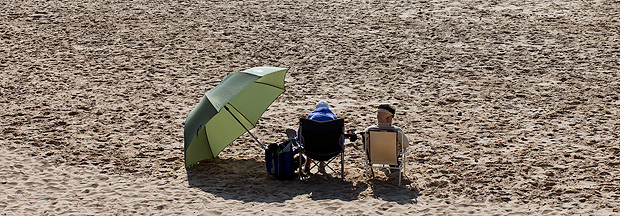
©Neil Turner. March 2009, Bournemouth Beach

The final part of the talk is a bit of a dig at myself and my peers. Those of us who have been in the job for a long time and who might just be getting a little complacent about things. I call this part of the talk “The five worst habits of those of us who should know better”:

1. Harking back to a golden age that may, or may not, have existed

It’s a simple idea really – we all look back with slightly misty eyes at the time a few years ago when things were good and before something new came along to spoil everything. Take your pick from the use of colour in newspapers, the whole move to digital, the adoption of multimedia by newspaper websites and several other developments in the industry. The truth is that when I was just starting out there were a few photographers who complained about the arrival of 35mm film and the loss of their beloved Rolleiflex cameras and even one or two who bemoaned the passing of half plate cameras and dark slides with sheet film. I reckon that every photographer has a ‘golden age’ that they look back at and that you can calculate when that was for each of us using a simple formula which compares how long the photographer has been working with when they got their first big front page and divide it all by the first major change in the industry that they went through. There never was a true golden age was there?

2. Forgetting why we came into the job in the first place

Easy to do this… most of us had a desire to tell stories, create arresting and beautiful pictures and to make the world a better place with our photography. Very few of us did it for the money, not many of us did it so that we could play with ever more expensive toys and only a tiny number came into it so that they could work unsocial hours and have to chase clients for money the whole time. If you take a step back and think about your original motivation and it isn’t there any more you really need to make your mind up about whether this is still the business that you want to be in. The older I get, the more I feel the need to shoot pictures that I want to shoot just to keep myself sane and sharp.

3. Failing to keep up with new business practices

“I’ve always done it that way, why should I change now?” is a common lament from photographers who are in trouble of getting it wrong. From the way you buy and use equipment to the way you store your archive and from the way you word your invoices to the way you put your portfolio together should be the subjects of constant review and possible change. Technology affects every single aspect of who we are and what we do and anyone who decides to stop keeping themselves up-to-date with what is happening is consigning themselves to a parallel dimension where they may get some work but where that might  be a temporary state on the road to going out of business.

4. Throwing money and effort into the latest thing

Exactly the opposite of the last problem really. Keeping abreast of developments and knowing where the market is a good idea whereas automatically jumping on every new idea, fad or fashion is not. So many new developments turn out to be ideas that don’t stand the test of time and too many of us have invested too much time and money chasing them. The worst way to do this is to assume that somebody younger and hipper than you automatically knows what to do – that, in my experience, is rarely the case. There’s always a middle-aged geek who you can ask…

5. Letting professionalism slip

Another thing that is far too easy to do. I know that I’ve done it – mainly through over-confidence. You have to remember the maxim that “professionalism is everything we do, everything we say and everything we produce” in our working lives. You can get too close to clients, you can cut corners in your workflow and you can rely too much on automated systems. This is far from a full list but it illustrates the potential pitfalls when it comes to losing our professional edge.

Being a professional photographer is a fulfilling and interesting way to make a living but we all need to remember that it is a profession and not a lucrative hobby. I’ve been wracking my brains to come up with a clever and punchy pay-off line for this blog post but I’ve struggled. I’ll just content myself with some advice: when things are feeling tough and not all all like the ‘old days’ just remember the five worst habits of those of us who should know better and if that doesn’t help… get some help!

Student work on show.

I’m very pleased to say that two of the students that I have been working with over the last year or so are showing some of their work in London over from tomorrow (Friday 27th April) until Tuesday 8th May. The work will be on the walls at Calumet Photographic’s Drummond Street showroom. The students have both now left the NCTJ Photojournalism course at Up To Speed in Bournemouth and are making their way into the industry.

©Deborah Yawetz

Deborah Yawetz – My interests are wide ranging; there is so much world to see, and people to walk in the shoes of! I enjoy news and wildlife photography: though seemingly different, both have a sense of immediacy, both are challenging and require patience, then finally responding to the moment. I have travelled a lot, most recently to Rwanda and the Serengeti.

I have published work in DV8 magazine in Bournemouth, Shed light events in London and a photo in the Daily ” Echo, Bournemouth. Work experience includes with Redactive publishing and The Times.

©Elizabeth Wainwright

Elizabeth Wainwright – I’ve worked on programmes for NGOs in the UK and in various African countries, and I saw a lot that never seemed to be documented by the media, or to donors. Combining this insight with recent editorial experience on the UK’s longest running environmental magazine, and of course the Photojournalism training, means I am well-placed to bridge the gap between theory and practice; truth and cliché; and do so in an informed, thoughtful way.

I am equally interested in finding homegrown stories: urban beekeeping and UK homelessness are two local stories I am working on. ” The power of storytelling to inspire and trigger change at whatever level – is ultimately what motivates my work.

You are invited to an exhibition featuring work by two new photographers from Friday 27th April until Tuesday 8th May inclusive.

  • Calumet Photographic, 93-103 Drummond Street, London, NW1 2HJ
  • ‘Meet the photographers’ evening on Thursday 3rd May, until 9pm, with drinks and nibbles.
  • The exhibition will be a chance to see a varied mix of work by two recently accredited NCTJ Photojournalists, and during the open evening, to chat more about their work and future projects.
  • More information: ejwainwright@gmail.com / 07841 529773

UK National Symposium on Photography 2012

The fourth National Symposium on Photography takes place this Friday, Saturday and Sunday in London. Timed to coincide with the World Photography Organisation Festival in London, the symposium will feature a very interesting range of debates and events.

I am going to be there, taking part in a panel debate about the future of news photography. The narrative for the debate on the UKNSP website says this:

The ethics of press and public photography, with particular reference to the implications of the Leveson Inquiry. At what stage does photography become harassment? Should there be controls? More broadly, where is the press heading in its use of photography? Should the press, citizen journalists, and members of the public all be treated the same or differently, whether in general or at newsworthy events? This panel discussion features a range of points of view – that of a photographer who gave evidence at the Leveson Enquiry, a leading picture editor and a champion of citizen photography.

It’s going to be a very interesting and maybe even passionate debate. This will be the third time in four years that I’ve taken part in the symposium and I firmly believe that it is developing into and very important event in the UK photography calendar. My fellow panellists are Alan Sparrow, Chairman of the Picture Editors Guild and Executive Picture Editor of Metro UK and Pauline Hadaway, Director of Belfast Exposed Photography and the debate will be chaired by Photographer Andrew Wiard.

The debate starts at 5pm on Friday 27th April at Somerset House in London. Tickets are available from Redeye or from the WPO.

A nice request for a picture

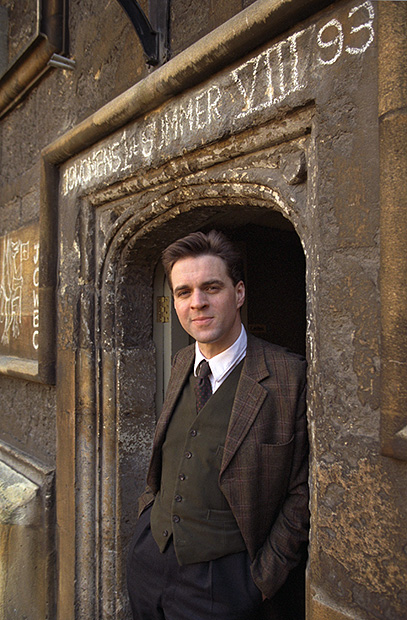
A few weeks ago I received a lovely email from the widow of a philosopher that I had photographed back in 1996. She had been looking through some of his papers and found a cutting from the Times Higher Education Supplement that had an interview with him along with my portrait of him. She saw the tiny 8 point byline and knowing that search engines are wonderful things she tracked me down. Emails went back and forth and today I got a photocopy of the cutting in the post.

I don’t have much of the work that I did between 1994 and 1998 but her luck was in and I had a Kodak Photo CD with some half decent scans from the job in my loft. It was an easy enough task to find the CD, grab the relevant image from it and get it ready to send to her. The old Kodak Photo CDs used an unusual and proprietary format that Photoshop doesn’t recognise so if anyone else comes across this issue I can confirm that the old Graphics Converter application will happily handle the format and convert your files into useful formats such as PSD, TIF or JPG.

Like most photographers I get regular requests for ‘free’ pictures and I am always wary but somehow a hand-written note from the widow of a very nice man where the words “please” and “thank you” chased away my cynicism rather easily. The portrait is of philosopher and Oxford Professor Bernard Williams (he became Sir Bernard a while after I shot the picture) and here it is…

©Neil Turner/TSL. Oxford, October 1996

Geek footnote: I was using a pair of Canon EOS1n bodies with Canon 28-70 f2.8L and 70-200 f2.8L lenses at the time and this was almost certainly shot on the 70-200. The film was Fuji 200 ISO colour negative scanned on a Kodak RFS scanner.

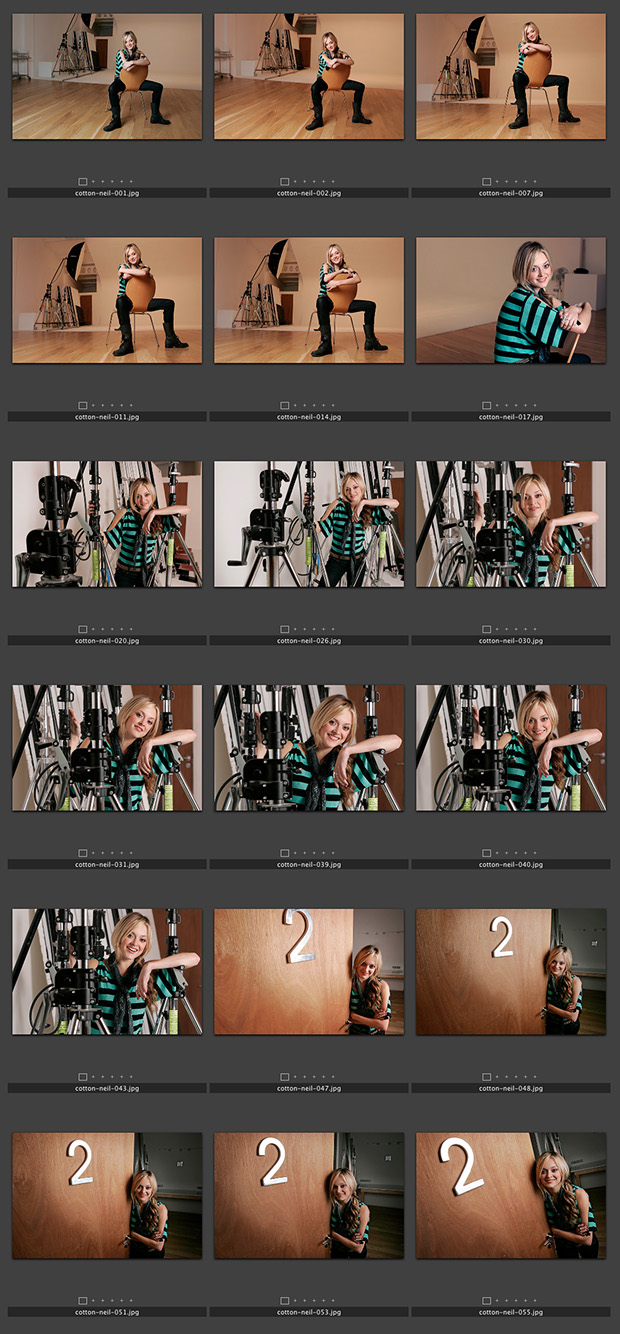
Fearne Cotton – The contact sheet, October 2004.

Back in 2004 Fearne Cotton was enjoying a very rapid rise in her profile and her career was really taking off. The TES Magazine had done an interview with her for their “My Best Teacher” feature and I was sent to a studio in west London to shoot a portrait to go with it.

©Neil Turner/TSL. October 2004, London.

It turned out that it was a hire studio where she had been shot for a BBC magazine earlier in the day and they were (rightly) less than happy about another photographer coming in and piggy-backing onto another shoot. In the end we reached a deal where I shot using all of my own lights in the main studio and in the dressing room as long as I was in and out in twenty-five minutes. I think that the shoot in the studio was over in less than ten minutes and the whole job was completed in fifteen. Fearne had had a long day and the weather outside was dreadful. Neither of us wanted to prolong the job and, even at an early age, she was such a good professional that it was a very successful shoot.

These portraits were shot using a Canon EOS1D camera with 16-35 f2.8L, 24-70 f2.8L and 70-200 f2.8L lenses and lit using a single Lumedyne Signature series flash kit with a 24×32 inch Chimera soft box. The job was shot in the days when I was happy to shoot JPEGs straight out of the camera.

Niall Ferguson, 1997 portrait.

When an email from Channel 4 television landed in my in box with an advertisement for an upcoming and very interesting looking) new programme “China: Triumph and Turmoil” presented by a gentleman called Niall Ferguson. I knew that I’d photographed him before. A quick trawl through my catalogue confirmed that I had indeed shot a portrait of him in 1997 when he was an up and coming star of academia – a professor of History at Oxford University at the age of 32. He was actually born in the same year as me and I was amused at the time by the way he was dressed in the academic uniform of tweeds.

©Neil Turner/TSL. Oxford, January 1997.

I can very clearly remember shooting this portrait. I had driven to Oxford to do another story and the picture desk had rung me and asked me to drop what I was doing, dash across Oxford to do the portrait and then go back to the feature shoot in a primary school. That was the one and only time that they ever asked me to do this and I remember thinking that this must be one important guy if I was being asked to do that.

Since then, he has written yet more books, starred in yet more TV programmes and been seen as a talking head on dozens of television shows. He is clearly still a star of the academic world and obviously a clever chap. His website came up on a quick Google search saying “Niall Ferguson endorses Mitt Romney for President”. Hmmm?

Geek stuff: Portraits shot using two Canon EOS1Dn cameras with 28-70 f2.8L and 70-200 f2.8L lenses on Fuji 200 ISO colour negative film scanned using a Kodak scanner onto a Kodak Photo CD. The software for extracting the PCD format images doesn’t seem to be available any more but Graphics Converter does a wonderful job of extracting a TIFF or a JPEG from the old files.

Note: I need to start wearing my glasses more. The web page for the Channel 4 programme says ” … apparatus” referring to the Chinese state but I read it as “… vast asparagus” – I am getting old!