workflow

RGB and me

I get involved in a lot of discussions about the finer points of photography both online and in person. One of the most common this year has been the about choosing which RGB colour space we should all be working in. The truth is that there are a number of variables which, between them, should point you in one direction or another. There are plenty of RGB colour spaces but the main two are Adobe RGB and sRGB – mainly because these are the options you have when shooting with most DSLR cameras. There are a couple of others (Colormatch and ProPhoto) that offer wide gamuts and some real technical advantages but, as I hope to explain, this isn’t necessarily helpful. More isn’t just a waste, it’s a potential problem.

Ideal Worlds

In an ideal world we would have cameras, viewing and reproduction systems that gave us every tiny subtle variation in colour that the human eye can see on a good day in great light. We don’t. Yet. (more…)

Seven things to agree on before taking a commission

© Neil Turner, October 2014. Production of John Foster's Shot At Dawn in the Council Chamber at Bournemouth Town Hall.

© Neil Turner, October 2014. Production of John Foster’s Shot At Dawn in the Council Chamber at Bournemouth Town Hall.

Quite a lot the posts that I’ve uploaded to this blog in the last few months have been related to the business side of photography. For those who want more of the old dg28 – your time is coming soon. In the meantime I wanted to post my thoughts on what you should agree with your client before undertaking a commission. This is taken directly from my own outline terms and conditions which are posted on my website. I have absolutely no objection to any photographer copying and/or adapting these seven points for use in their own terms and conditions because, in my opinion, the more of us who do this the more likely it is that potential clients will be used to the concepts and it will require less pushing to get them to negotiate. (more…)

How many hours in a day?

freelance_definition
Is there anybody out there who would argue against a ‘working day’ being eight hours? Maybe eight hours spread over a nine hour period with an hour for breaks? However you think about it and whatever your opinion actually engaging in work of some sort for eight hours is a good starting point to talk about ‘a day’s work’.

Like a lot of photographers I tend to base my charges based on full or half days combined with the end use of the pictures. A half day with a fully loaded PR license costs more than a whole day for a single use in a newspaper. Half a day that makes it impossible to do any work through the rest of the day isn’t a proper half day and should be charged at a higher rate. It isn’t always easy to explain to inexperienced potential clients but, compared to other charging methods, it is as easy as I can make it. (more…)

EOS5D Mark IV Update

screen-shot-2016-11-11-at-12-12-49

A few weeks ago I wrote on this blog about the wifi potential of the Canon EOS 5D Mark IV and I have been using three of its functions pretty heavily on jobs over the intervening period. It wasn’t hard to learn all about the system having used a number of different wireless systems over the last three or four years and my first impressions were very favourable. There are definitely one or two changes that I’d like to see Canon make (preferably in a firmware update) but the system has been remarkably stable and reliable. It’s wireless which means that there will be glitches but I’d stick my neck out here and say that this is the best wifi that I’ve used given that 1) it is built-in and 2) doesn’t require any extra gadgets or adapters.

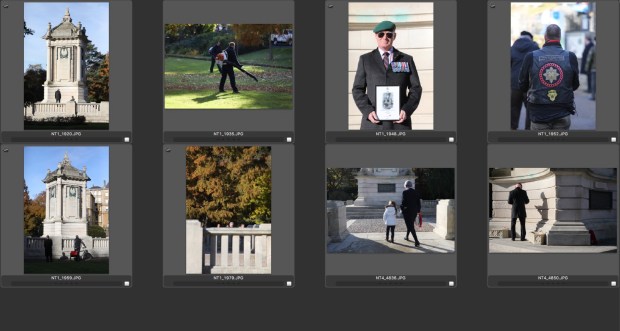
Today is Armistice Day – the anniversary of the eleventh hour of the eleventh day of the eleventh month when the guns finally fell silent at the end of the Great War in 1918. I had no jobs on and so I took myself down to the War Memorial in the centre of the town where I was born to pay my respects and to give the wireless on the Mark IV a real world test that I could actually share with you. (more…)

First impressions of the EOS5D Mark IV wifi

5d4_close_up

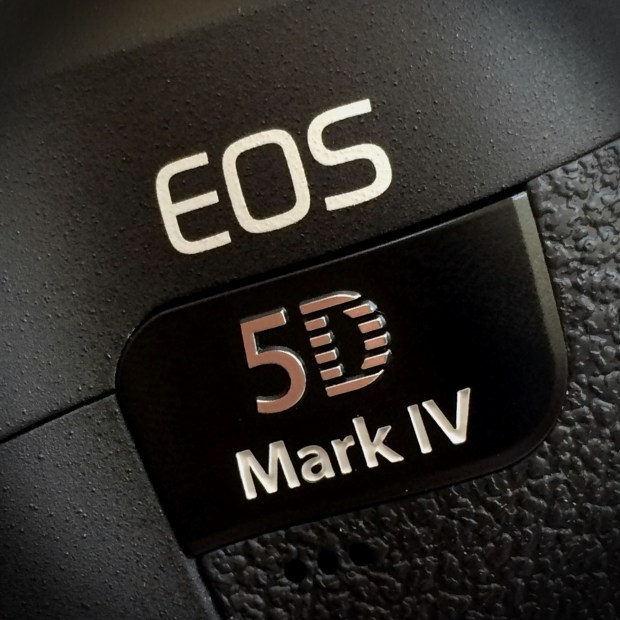
The Canon EOS5D Mark IV – the first professional DSLR from Canon with a fully functioning wifi capacity built-in.

When Canon announced that they had added a wifi capability to the new EOS5D Mark IV I was simultaneously surprised, delighted and apprehensive – emotions which have in turn given way to a sense of relief. Wifi was a feature that many photographers had asked manufacturers to implement over a number of years and we had always been told that there were technical reasons why it couldn’t be done and that most buyers simply didn’t want it. The rise in popularity of limited wifi in consumer and ‘prosumer’ models told a different story and Canon did the right thing by including it in this latest release.

The surprise element came because very few of the rumours that preceded the announcement of the Mark IV mentioned wifi at all. A lot of those people awaiting the new camera had resigned themselves to another generation of cameras with bolt-on accessories to handle rapid image transmission. (more…)

Editing, editing and more editing

olympic_park_pano

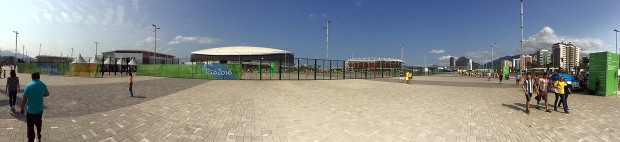
The day that the taxi dumped us in the wrong place and we had a yomp across the Rio Olympic Park to the Main Press Centre. ©Neil Turner, September 2016

By the time I leave here tomorrow I will have been in Rio de Janeiro for three weeks. In that time I have managed to take less than a dozen photographs – none of which are of any note whatsoever. I’ve been here as part of the OIS Photos team as one of two editors with my colleague Julia Vynokurova grabbing RAW files from a seemingly endless stream of FTP transfers from the four amazing sports specialists that have been here shooting the Paralympic Games for the Olympic Information Service.

Editing and captioning other people’s work is something that I do from time-to-time and it is a whole different skill set from shooting and editing your own pictures. It may sound obvious but I wasn’t there when the pictures were taken and so I have to judge them against criteria set down by the client and by each individual photographer on the team. (more…)

Thinking on your feet

My shadow using a monopod to get a high angle picture. March 2016 ©Neil Turner

My shadow using a monopod to get a high angle picture. March 2016 ©Neil Turner

I was out shooting a job yesterday and needed to get quite a bit of extra height. The best place to shoot the picture from was on the side of a grassy hill which was very wet and the client’s health and safety policies meant that it wasn’t going to be easy to use a step ladder – whilst building a tower was outside the budget. In an ideal world a proper pole-cam or even a drone would have been the best option but the light was right and I needed to improvise.

Having used the Canon EOS6D as a remote via their iPhone app once before I was reasonably confident that my idea would work but the app has been replaced/updated and it meant learning the new one on the job. I had a basic monopod, a tripod head and a Manfrotto Super Clamp in the car but no proper way to attach the phone to the monopod to use as a viewfinder and remote release. With a proper pole-cam you rest the base of the pole on the ground and it is pretty stable. You also have a cradle for the phone or even a tablet if you want to go bigger. I had to tuck the foot of the monopod into my belt to get enough height but I had about an hour so I went into full “1970s Blue Peter” improvisation mode.

The cradle that holds my iPhone in my car was pressed into service and that attached very easily to the Manfrotto Super Clamp. Having extended the monopod to its full height I then attached the clamp to the second stage of the monopod (about eye-level when the whole thing was in use I guessed). Then I stuck the tripod head onto the monopod tilting down a little and put the EOS6D with a Canon 16-35 f4L IS lens on it. Whilst all of this was being done I was downloading the latest Canon Camera Connect app from the Apple App Store.

After a few minutes messing with settings I had the system working. I could use the phone as a viewfinder and a remote release for the Canon DSLR and I set about shooting the pictures without leaving the ground myself. After a minute or two I decided that I needed more height to look down on the subject a bit more and so I tilted the tripod head down a little and when I put the camera back into the air the foot of the monopod was resting on my chest. Even with a camera as light as the 6D I couldn’t hold it up for more than a minute at a time but we got the shot and I only got pointed at (and laughed at) by a small handful of passers-by. I wouldn’t want to have to work this way very often but, having just edited and uploaded the pictures, I know that I have a “Blue Peter”** solution that works.

** Blue Peter was required viewing as a child growing up in the 1970s. They always showed you how to make useful things from odds and ends lying around the house.