anecdote

Another photo worthy of an obituary

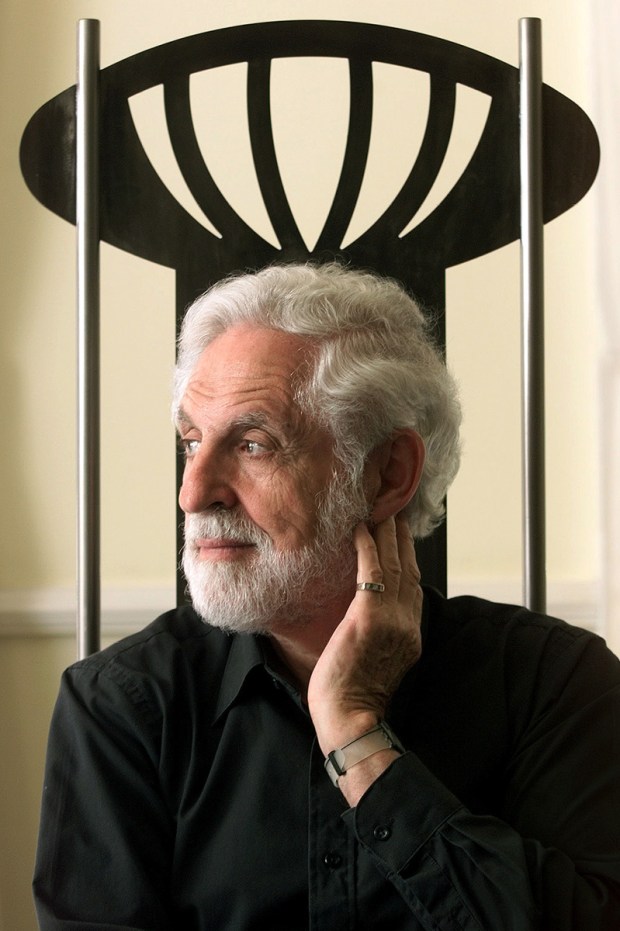
©Neil Turner/TSL. Carl Djerassi, June 1999, London.

©Neil Turner/TSL. Carl Djerassi, June 1999, London.

Carl Djerassi, the chemist widely considered the father of the birth control pill, has died aged 91. I photographed him back in 1999 sitting in what I thought was a very ‘egg-shaped’ chair in his London apartment. If you want to know more about him, The Guardian’s obituary is worth reading but my very clear memory of being there was that he was one of the calmest people that I had ever met. He was confident without being arrogant and his understanding of my job and the job of the reporter who went with me was absolute. He had, obviously, been interviewed and photographed hundreds of times before but I still believe it to be true that most people who have had that kind of media exposure still don’t ‘get it’ in the same way that he did.

It seems that almost every week now I see an obituary in the press of someone that I photographed earlier in my career and it has two distinct effects on me. The first is quite predictable – I feel that bit older each time it happens. The second effect is to make me realise how amazingly lucky I have been in meeting the people that I have met and having been able to make what I hope are portrait and feature images that will stand the test of time.

This particular photograph lived in my folio for many years. It was unusual for me to have shot quite such a reflective portrait at that time. I was busy trying to make a reputation for myself as ‘the guy’ who used strong lighting and strong compositions to compliment that lighting. Like most phases of a career, it passed. I can still shoot the strong pictures when the situation calls for it but this portrait is far closer to my current favoured style than almost anything that I shot in those early days of digital. When I look back at the more memorable images that I shot through the late 1990s – the period of transition from scanned negative film to 1.9 megapixel digital cameras – a lot of them have this kind of feel and that surprises me because my memory is of lighting everything in slightly over-the-top ways.

Technical stuff: Kodak DCS520 camera with a Canon 28-70 f2.8L lens. Ambient light, 1/160th of a second at f4 on 400 ISO.
A fourteen year old technique post

Between May 1999 and June 2008 I posted a large number of technique examples on the original http://www.dg28.com taken from my daily work to show how I used light in an era where digital cameras were pretty poor at ISOs over 800 or even 400 in the case of the venerable Kodak DCS520. These days flash is a creative choice rather than a technical necessity but the techniques still stand up. From time to time I re-post one of these old examples just to remind myself how life used to be. This one was first posted fourteen years ago and for a very long time it was amongst my favourite pictures that I had posted.

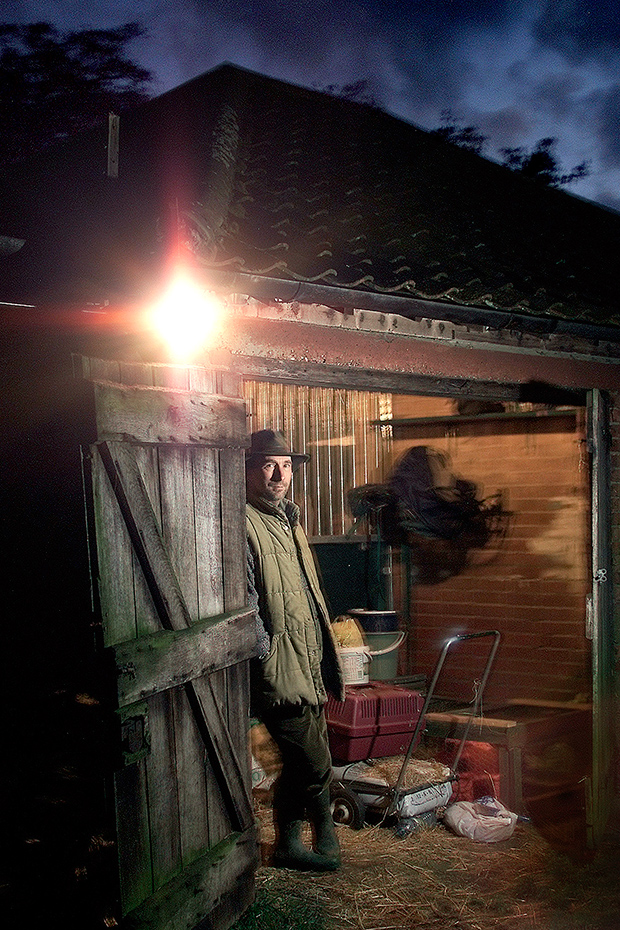
©Neil Turner/ TSL, November 2000.

©Neil Turner/ TSL, November 2000.

At the time it felt as if I spent every evening answering follow-up questions about the pictures and techniques that I’d described. These days there are thousands, if not tens of thousands, of people publishing ‘how-to-do-it’ photography blogs but back then there were only a small number of us. It was such an exciting time in our profession. Anyway, here’s the post as it appeared back in November 2000:

Arriving at the job is usually the best times to start having ideas about locations for a portrait. Buildings often have features that lend themselves to use in a photograph, and the grounds can be just as inspirational.

When I arrived at the Suffolk farmhouse of journalist and author Simon Barnes, he and his wife were busy chasing one of their horses around the yard. By the time the mare was back in one of the stables it was all but dark, but I had seen just how wonderful the other stable looked lit by the 60 watt bulb inside it. 

This image called for the mixing of available light and fifty joules of Lumedyne flash. The flash head had it’s diffuser cap over the standard reflector at an angle of 60° from the lens axis and at a height of about six inches above Simon’s eye level. I had to use the flash a lot lower than I would have done because I wanted him to keep his hat on and the if the flash had been higher his face would have been in shadow from it’s wide rim.

Cut down to it’s minumum 50 joules at a distance of seven feet the flash reading on 200 ISO was still f6.7, which was a lot more than I would have liked. At f6.7 the inside of the stable needed an exposure of about 1/3rd of a second, and the sky needed 1/2 of a second to get some detail in the lighter areas. The discrepency between the two exposure requirements was only half a stop, so I went with the longer exposure because a little over exposure inside the stable would be fine. 

With a 28-70 f2.8L series lens on a DCS520 I started shooting pictures of the upper half of his body and a little of the stable roof and sky. Without changing the exposure I changed lenses to the 17-35 f2.8 and moved back. As I moved back the sensor floodlight came on and the light shining into the lens gave some strange pink flare (bottom right) and the floodlight made an excellent element in the composition. By this time I was hand holding the camera at 1/2 second, which meant that there would be some camera shake so I shot about twenty frames at the same exposure in the hope that a few of them would be still enough to work. 

I shot some safer images as well with the inside of the stable lit by another Lumedyne head complete with a warm up filter to simulate the tungsten glow. The image worked really well, and I am more than happy with it. It shows that light and location are the most important factors when planning a location portrait.

Footnote: Immediately after this job I started to carry a sheet of -2 stop neutral density gel in my bag. I have learned lots of lessons the hard way since the beginning of my career in 1986 and, whilst they are fewer and farther between, I still learn plenty of things that way.

Mint in box

©Neil Turner, November 2014

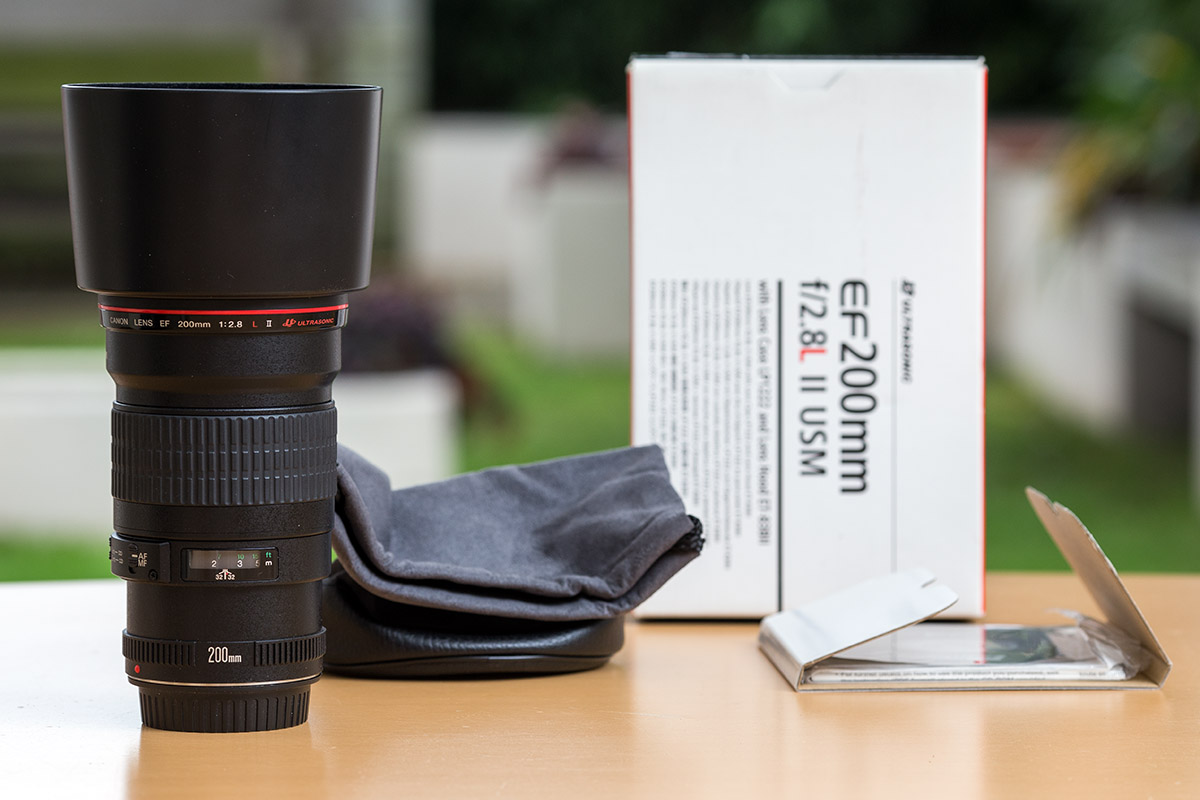
©Neil Turner, November 2014. Canon EF 200mm f2.8L II USM lens.

There are lots of things about the world that I don’t understand. Some of them I ignore, some I oppose and there are others that I just go along with.

One of those that sits squarely in the latter category is the obsession with keeping the boxes for items of photographic and computer equipment that you are intending to use. I go along with it because people are actually prepared to pay more for a used item if you have the original packaging. Basically, it appears, you are prepared to pay me a premium for a secondhand piece of kit if I keep cardboard, plastic and polystyrene in my loft so that you can do the same during your ownership of that item.

It makes sense for collectables where the market loves “mint in box”. We have a few Star Wars items safely tucked away still sealed in their original packaging and I have a couple of Corgi model cars in their boxes too (the box for one on my desk is actually more attractive than the die cast metal contents anyway). But the logic of hoarding packaging for something that is in use is beyond me. Again, I get the concept of saving the instructions and any accessories (I have a massive box full of both of those) but not the packaging. It’s no big deal which is why I am now going with option 3 and just accepting that it is just the way it is. No sense fighting against it and ignoring it isn’t much of a principled stand!

I wasn’t always of that opinion. Somewhere there’s probably a whole load of boxes being safely squirrelled away that look exactly like the original boxes for the items they were bought with but they are just substitutes. When I bought my first two Canon EOS5D MkII bodies a dealer bought the boxes and instructions from me. I thought it a bit weird at the time but £20.00 is £20.00 and I sold them. He presumably “re-united” those boxes with cameras that were missing theirs and sold them on to some unsuspecting soul who thought they were getting the original packaging.

I’m not even sure why this is taking up an hour of my time thinking about why I find it so absurd – other than the fact that I am getting rid of some superfluous gear and one of the lenses really is “mint in box”.

“What gear is that?” I hear you ask – it is a Canon EF200mm f2.8L II USM prime lens that I bought a few months ago when I was going through a phase of using prime lenses for as much as I could while my 70-200 f2.8L IS (ditched the box for that one in 2003) was away having major surgery. The repairs cost less than I had expected and in the end I only used the 200mm lens twice – both times indoors for large groups of head shots. I had bought the lens as secondhand myself although Castle Cameras did (which I trust) say that it had barely been used and had been originally purchased through them a few months before that. So here we have it; a fabulously sharp current model lens with all of the correct bits and pieces – including cardboard, plastic and polystyrene – which retails for £569.00 new going for the bargain sum of £449.00 + delivery.

I am loath to stick it on eBay given the massive commissions that they now charge but the average selling price for one of these (and it would be impossible to be in better condition) is £473.91 on the auction site. The lens is registered with Lenstag and so I would obviously transfer that over. By clicking on the link you can check that it is verified – such a good system!

I will be clearing some more gear out soon. None of it will be ‘mint in box’ because 99% of my equipment gets used for many years before I sell it on but it will be well looked after, properly serviced and verified by Lenstag.

Five day black & white challenge

©Neil Turner, November 2014. A young woman jogs along the promenade near Portman Ravine in Bournemouth with a child in a pushchair.

©Neil Turner, November 2014. A young woman jogs along the promenade near Portman Ravine in Bournemouth with a child in a pushchair.

A couple of weeks ago I was nominated by another photographer to take part in a Facebook Five Day Black & White Challenge. The idea was simple: to post a new black and white photo every day for five days. I have to admit that I was a bit reticent at first and posted pictures that I’d already taken in the previous few weeks. Then someone mentioned that they found the discipline of having to go out every day and shoot something new invigorating and so I started the challenge over again and shot specifically for it every day. My second challenge ended yesterday but it wasn’t until I was out shooting again today that I remembered that the challenge was over. What to do with the pictures from day six? The answer was to post the chosen frame to Facebook anyway and then to post it here too – as another “just because I like it” frame.

Technical stuff: Canon EOS6D with a 28mm f1.8 EF lens (cropped slightly). 160 ISO and 1/1250th of a second at f11 RAW file converted and desaturated using Adobe Camera RAW CC 2014 with a 5% bronze tint added.

Scavenging starlings

©Neil Turner, October 2014.

©Neil Turner, October 2014. Hengistbury Head, Dorset.

Anybody who knows me or my work would put wildlife and nature photography somewhere near the bottom of my interests. We were out as a family at the weekend having a drink and a snack at a cafe when a table of people enjoying an all-day breakfast behind us got up and left without clearing their plates. A mass of starlings descended and grabbed anything edible off of the plates. All I had to do was turn around and grab a few frames!

Canon EOS6D with Canon EF 50mm f1.4 lens.

You learn something new every day

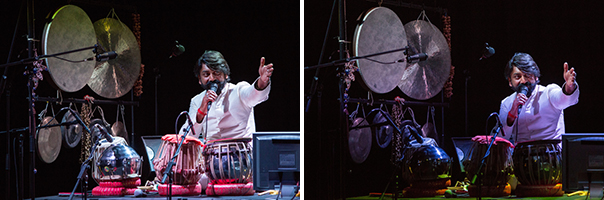
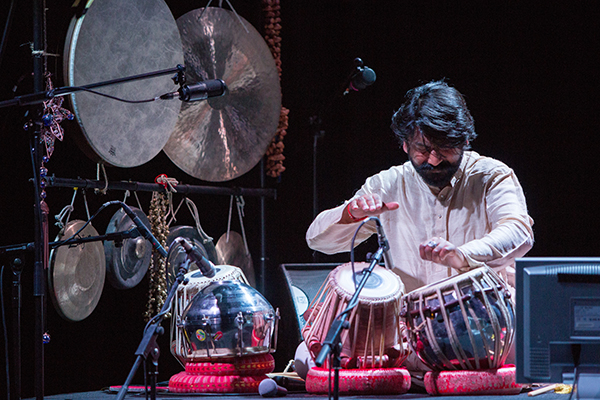
It is one of the universal truths of photography that you never stop learning. Almost every time you pick a camera up something happens that you squirrel away in your memory banks that will make a difference to how you shoot something else at some time in the future. Normally these are small things but this week I was shooting the wonderful Talvin Singh performing at an arts festival and something happened that made me scratch my head because I’d never experienced anything quite like it.

©Neil Turner, October 2104

©Neil Turner, October 2014

The two pictures above were taken within a fraction of a second of one another under ‘exactly’ the same lighting without flash and with identical settings (manual everything apart from focus) on the same camera with the same lens and have been processed through Adobe Camera RAW identically. So why are they different? The answer seems to be LED stage lighting. You might conclude that both pictures are ‘quite nice’ and move on but that’s not really an answer when you are shooting something that has a moment that you absolutely have to capture. I’ve had issues with un-balasted HMI lighting and of course strip lights but this was in another ‘issues league’ entirely.

It appears that these brand new lights installed in a state-of-the-art theatre are an absolute nightmare for stills photography. Now that I’ve experienced this, I have been reading up on it and it seems to be a known phenomenon where the lights cycle between the red, green and blue LEDs in the light at a speed that the human eye chooses not to detect but that a camera shooting at shutter speeds of 1/125th of a second or higher has a real problem with. The higher you go, the worse it gets. Of course you could shoot at 1/60th of a second and all would be reasonably well – apart from any movement being a little/lot blurred.

Being a complete anorak I decided to shoot a series of tests at an even higher shutter speed (having first racked the ISO up a way) to see what happened:

©Neil Turner, October 2014

©Neil Turner, October 2014

That makes shooting under these lights at the kind of shutter seeds you need to freeze action nigh on impossible. Once I had realised that there was an issue I dropped down to 1/100th of a second and then to 1/80th and shot lots of frames. The first five frames above were shot at 1/400th and the last one was at 1/100th – what a difference.

Most of what I have read about LED stage lights concerns white balancing – well that was the least of my worries here. It was almost as if shooting with shutter speeds in excess of the cameras maximum flash synch speed (the highest speed at which the entire chip is exposed at the same moment) was part of the problem. The LED stage lights in this theatre were effectively pulsing or flashing and the only way to get a consistent image was to work with that pulsing and use shutter speeds below the maximum flash synch. I have read something on what appeared to be a well-infomed website which implies that this only happens when the lights are dimmed – which makes some sense. I haven’t got enough experience with this to work out whether the speed thing is a coincidence or whether it is directly related but I now know how to shoot in this one venue with these lights.

Shooting with shutter speeds that are a long way below “ideal” some of my pictures were sharp and many weren’t – but the job got done. Constant reference to the screen on the back of the camera is frowned on by a lot of people but this case proves that there are times when it is exactly the right thing to do. Imagine having had to shoot this on film with no LCD…

Presumably more and more theatres and venues will use these lights and the problem will grow. Maybe there’s a solution out there already?

©Neil Turner, October 2014.

©Neil Turner, October 2014.

Techie stuff: Canon EOS5D MkIII with a 70-200 f2.8L IS Canon lens. 1/100th of a second at f3.2 on 2000 ISO. WB set to daylight but adjusted in Adobe Camera RAW removing quite a bit of magenta and adding a small amount of yellow.

Performing the ritual of “The Selfie”

For as long as I can remember I have shot pictures of my wife and I on holiday with a compact camera at arm’s length. I have examples in the family album dating back to 1984 and, whilst I’m not claiming to have invented “The Selfie”, it really isn’t anything new in our house. We started doing those pictures just because there was never anyone else around to take the picture for us and so it was very much a second best picture. Slowly and over the many holidays that we have enjoyed together it became something of a tradition to do at least one of those arm’s length couple pictures but we always liked to get a passer-by to do the picture if we could. It is a phenomenon that I am fascinated by and I often shoot pictures of people as they perform the Ritual of the Selfie.

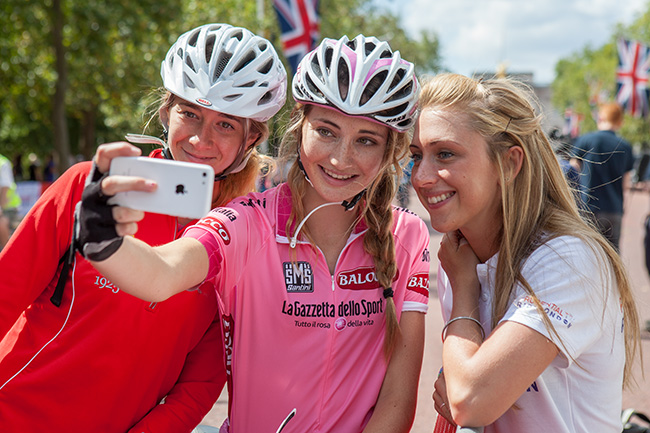
Olympic and Commonwealth Gold medallist Laura Trott posing with riders on The Mall in a break between media interviews during the Freecycle event - part of Prudential RideLondon. 9th August 2014.

Olympic and Commonwealth Gold medallist Laura Trott posing with riders on The Mall in a break between media interviews during the Prudential RideLondon Freecycle event. ©Neil Turner, 9th August 2014.

I was prompted to compose this blog post because I suddenly realised why it works so well. One of the media team working with Prudential RideLondon had offered to take the picture and the three young women dutifully posed but their faces didn’t come alive until they rescued the phone and performed the ritual of the selfie. There seems to be a confidence and a joy in taking your own picture of yourself and your friends or, in this case, you, your friend and an Olympic and Commonwealth champion. Is it because these days that can see themselves in the screen and only shoot when they are happy with what they see? I believe that there’s an element of that in it but the sense of self-reliance is just as important as far as I can see. There is a joy in The Selfie that is missing from a perfectly well taken group photo. Time after time we all saw people enjoying taking self portraits during the event and that’s the case almost everywhere almost every day.

Where I depart from the celebration of The Selfie is where media outlets and PR companies encourage people to do it and post them as part of marketing campaigns. For me the innocence and joy of the ritual gets lost when it is prompted like that. Where I also have an worries about it is when people do it dozens or even hundreds of times a day. I had a link request on EyeEm the other day from a guy who have over 6,000 images on his account and, from what I could see, they were all of himself.

I don’t object to The Selfie at all. In fact I indulge in the ritual myself from time to time. All I’d ask is that marketing people without another great idea stop trying to make something from them that isn’t really there. Photography is about a lot of things and fun is right up there as one of the most important.

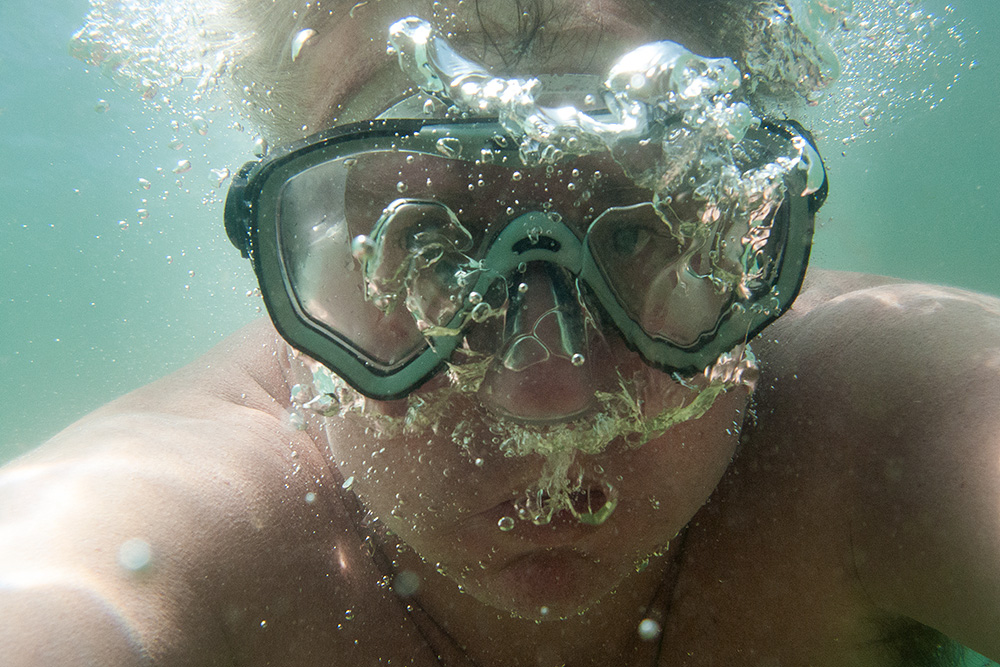
The one "selfie" that I do like of mine - under water at the beach in Bournemouth in the summer of 2013. ©Neil Turner.

The one “selfie” that I do like of mine – under water at the beach in Bournemouth in the summer of 2013. ©Neil Turner.

Where does the work come from?

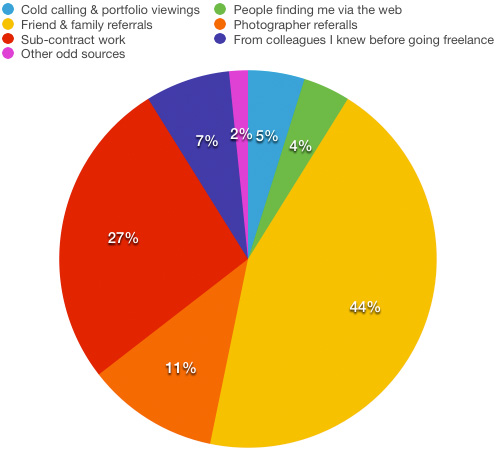
It has been a little while since I last posted on this blog; apologies for this but sometimes life gets in the way of blogging! Anyway, I thought that those who are interested in the business side of photography might be interested in something that came into my thinking on a long drive back from a job listening to a business programme on BBC radio. When I got home I produced a couple of reports from my invoices using the wonderful Billings Pro application on my Mac. The one that caught my eye was one that gave me the raw data to work out how the bulk of my work (based on turnover) in the last six years as a freelance has come in.

Conventional wisdom says that a photographer gets out there with their folio after making cold calls and arranging appointments with potential clients. When I say ‘conventional wisdom’ I mean ‘what they taught me in college’. It is the classic sales tactic: research potential customers, show them what you have to offer and then (hopefully) close the deal at a mutually acceptable price. 99% of photographers and probably 88% or all businesses will probably tell you that it is neither that simple or that straightforward.

I started by working out some categories for the way I have initially got the work:

  • Cold calling and portfolio viewings
  • People finding me via the web
  • Referrals from family and friends outside the photography business
  • Referrals from other photographers
  • From colleagues I knew before going freelance
  • Sub-contracted work via other photographers
  • Other odd sources

I then quickly added up how much work (monetary value) each of those six sections accounted for and got the following results:

monetary_value


The monetary value for each client is based on that initial method of contact. Some high value clients have been very loyal to me and I hope that I have, in turn, given them the photographs that they need to keep those excellent two-way relationships going. On the flip side, most of the work that has come via the web has been one-off jobs for clients who don’t have a lot of work to commission.

Now I don’t know about you, but I found that to be quite a shocking set of results. Only 5% of my income has been generated by getting out there and trying to make sales in what you would call a ‘traditional’ way yet more than twice that figure came from referrals from other photographers. The sub-contract figure at 27% is also a lot higher than I thought that it would be but the biggest surprise is how low the figure for income generated via work from pre-freelancing colleagues. In my first year as a freelance that figure was considerably higher but it has been eclipsed by the friends and family percentage which, at 44%, is somewhat higher than I would have thought. People finding me through the web includes not only those who have found my website through searches but also the various social media platforms that we all spend so much time working on – 4% isn’t a great return on all of that effort either.

If I had the time, I’d like to work out how different the chart would be if I based the figures on the amount of time spent on the jobs rather than the money invoiced. My strong suspicion is that the cold calling and portfolio section would be a fair bit bigger as would the one for pre-freelancing colleagues because those are both news and editorial biased sections whereas the friends and family one is far more corporate and commercial.

So what conclusion should I draw from this? Maybe I should spend less time trying to generate work from cold-calling and spend a lot more time with family and friends? I suspect that the true answer is that I need to change my targets for the cold calling to more corporate and commercial ones simply because they have a higher value per job.