camera

Zooms Vs Primes

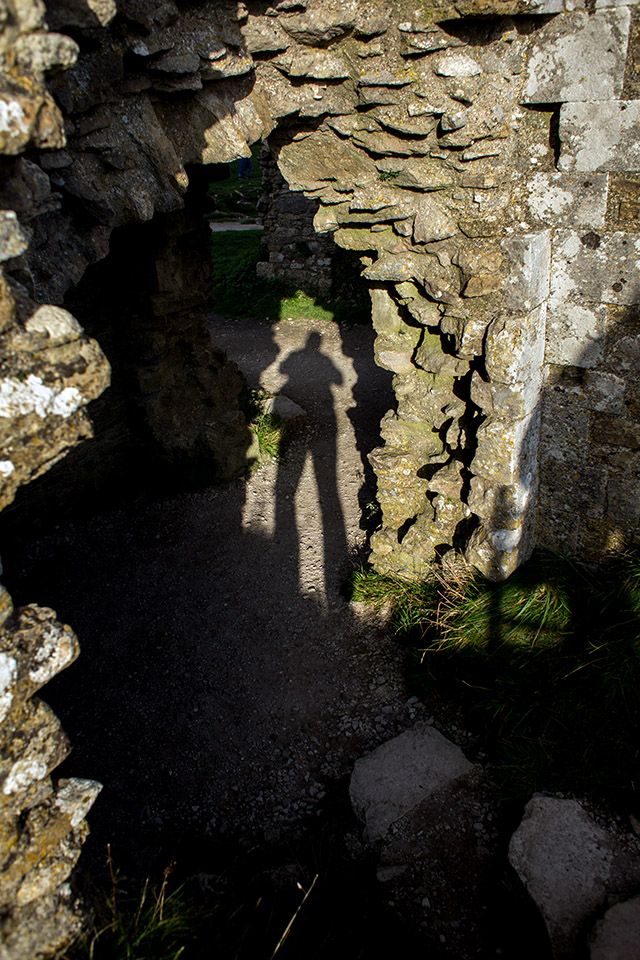
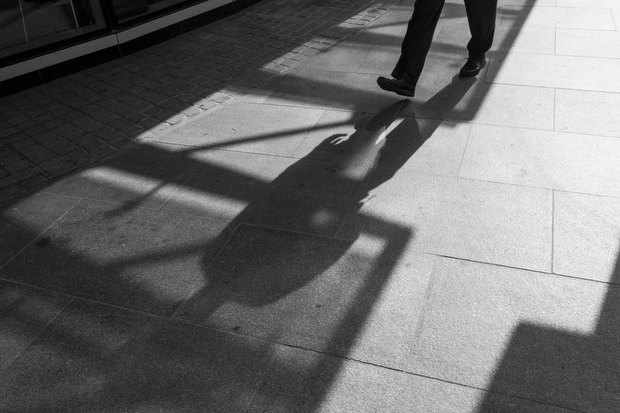
©Neil Turner, October 2014. Shooting my own shadow with a 28mm f1.8 lens.

©Neil Turner, October 2014. Shooting my own shadow with a 28mm f1.8 lens.

Talking and writing about photography on the web seems to have become a whole series of two sided contests. Sometimes it is interesting and a genuine dichotomy (Nikon Vs Canon, Mac Vs PC) where there are absolute direct comparisons to be made and a range of technical and personal preferences to be considered. At other times they are silly (film Vs digital, DSLR Vs mirrorless) where it is comparing bananas with pineapples. Somewhere in the middle of these two extremes sits the Zoom Vs Primes debate. Everyone has their own views and everyone’s work is different.

An amazing 14 years ago (and 14 years into my professional career) I wrote a short piece about choosing lenses and why you might like zooms for some jobs and then have the ability to choose a focal length for others. It wasn’t all that long before then that I’d had to use primes all of the time because zoom lenses weren’t up to the job in terms of quality. For me it all changed in 1995 when I switched to Canon EOS for the first time and the original 70-200 f2.8L and 28-70 f2.8L lenses which, along with the auto focus on the EOS1N, changed everything for me. For ages the only Canon primes I had were the 20mm f2.8 and 300mm f2.8L and the vast majority of my work was shot between 28mm and 200mm.

I’ve spent a lot of my career in press pens and fixed positions where I cannot move and where it made sense to use zooms lenses to compose but weighed against that I’ve also done a lot of work where I have a lot of freedom to move around and can position myself so that I don’t need to use a zoom to fill the frame – I’ve been able to “zoom with my feet”. Here’s what I said in 2000:

There are two ways that you can choose which of your lenses to stick on the camera:

  1. You can say “there’s my subject and here I am, let’s see which focal length on my zoom works best”.  Sometimes at sports matches and political events you have your position and that is that, or…
  2. You could say “I want the effect that my experience tells me a 28mm lens will give me so I’ll select that focal length and move to the right position to make that happen”.

Either of these could be a valid option and, in many cases, the first is decided for you by circumstance. Most news photographers use zoom lenses because it makes sense to have fewer lenses when you are never quite sure what kind of work you will be doing on any given day.

Personally, I use a combination of both approaches. If a position forces me to choose a certain lens then I’m with option 1. Given complete freedom to shoot what I want I’d go with 2. More often than not I’ll go with, say a 24-70mm lens intending to shoot at the 24mm end and get in a position to shoot that way. I will shoot several frames and then start to move around, zoom in and out and shoot a variety of similar images, each with subtle differences. I try to make a point of shooting with just about every focal length available to me on every job. Sometimes I am right about lenses first time but often I’m not. What had seemed like an obvious task for the 28mm ends up being a spectacular 200mm shot and vice-versa but the result is that you often end up with images that are just that bit better.

I nearly always shoot on location so I cannot preplan every detail. Going equipped with a range of lenses is vital. Your choice of lens will depend on so many questions running through your mind. How is this image going to be used? Big, small, upright, horizontal, front page? Double page, back page, website, magazine or newspaper? Is it going to have copy running over it? Will it have more than one usage?

If I cannot answer any or all of those questions, then I’ll shoot every variation I can. Shall I start with a long lens, if it’s a portrait then being further away may relax the subject and I’ll get in with the wide when they are more comfortable. Background, what’s behind them? Can I use a change of lens get rid of a poor background?

Answering self-set questions and making compromises is the key to news photography. Choosing the right lenses helps to reduce the number of technical compromises that you are forced to take, giving you more time to make the creative compromises that you want to make.

So has anything changed in the intervening years to make me come back and have another look at this debate? Yes – several things:

  • The resolving power of the camera chip is now so great that lenses need to be sharp to get the most out of that resolution
  • The amount of pixels crammed onto a chip means that you can “zoom by cropping” in a far more aggressive way that you could ever do before and still end up with a file easily large enough for a wide range of uses
  • Zoom lens quality has improved
  • The choice of super-high quality prime lenses has become far wider
  • The quality of digital images means that how a specific lens renders out of focus parts of the frame has become an issue for a lot of people
  • Photographers are constantly seeking ‘an edge’ and to challenge themselves to see their work differently in an era where we all have much the same gear

This debate has raged and it has ebbed and flowed. I’m not necessarily talking about how the worldwide photographic communities have seen it here, I’m talking about my own psyche and what happens every time I pack a bag to go and shoot some pictures. I love the discipline and the way that having three or four prime lenses in a bag makes me think but I have the it when I have primes and cannot move around as much as I’d like to. Short of taking three zooms and four primes on every job (I don’t have an assistant and my fifty year old spine would buckle under the weight) it is always going to be a compromise. Today I’m shooting an editorial portrait where I have plenty of time and it will be just me and the woman that I’m photographing so I’ve packed the primes. Yesterday I was at a job where moving around wasn’t an option and I went with just two zooms.

My internal debate doesn’t end there though. I am always looking back through my work and being self-critical and, if I’m being entirely honest with myself, I am probably a better photographs with zoom lenses. There, I’ve said it. Much though I love using a 135mm f2 I shoot better pictures eight times out of ten with a 70-200 f2.8. The same goes for the 28 and 50 against the 24-70. How can I ever hold my head up in the company of some of my favourite photographers who never use zooms now? Luckily they are all people who don’t care what you use as long as you get the pictures and the rest of my favourite photographers are shooting 99% of the time with zooms anyway.

It turns out that this is a silly debate after all because we are photographers whose goal is to produce the best and most interesting, creative, exciting work that we can within the bounds of what is possible and what is required. I’m going to persevere with my little bag of primes because I want to. When in doubt it will always be the zooms for me – aren’t I the fortunate one to have the choice?

Scavenging starlings

©Neil Turner, October 2014.

©Neil Turner, October 2014. Hengistbury Head, Dorset.

Anybody who knows me or my work would put wildlife and nature photography somewhere near the bottom of my interests. We were out as a family at the weekend having a drink and a snack at a cafe when a table of people enjoying an all-day breakfast behind us got up and left without clearing their plates. A mass of starlings descended and grabbed anything edible off of the plates. All I had to do was turn around and grab a few frames!

Canon EOS6D with Canon EF 50mm f1.4 lens.

Canon’s EOS 6D – pressed into service

With Photokina drawing the crowds in Germany and with both Canon and Nikon announcing important new DSLRs I have (typically) been having a good look at a camera that has been on the market for ages. I bought my EOS 6D for a very specific reason; the ability to use it as a remote and control it from my smart phone. It performed that task rather well and I will definitely be making use of that function again but I also wanted to blog about what it’s like as a daily working camera.

Canon's small, light full frame DSLR. ©Neil Turner, September 2014.

Canon’s small, light full frame DSLR. ©Neil Turner, September 2014.

I was at another major show last week – The Southampton International Boat Show to be precise and I wanted to carry as little gear around with me as I could. Most of the work was going to be shot using EOS 5D MkIII cameras which have become my favourites (although they are far from perfect) for day-to-day jobs but I had a problem with one of them and decided to use the 6D as my second body once it had performed it’s (not able to post the pictures here) remote task. I had quite a bit of confidence in the camera having used a borrowed one when it was first launched and so I stuck a 16-35mm f2.8L lens on it and away I went.

Press day at the Boat Show is a mixture of dull press events, glitzy celebrity appearances and the search for different and interesting pictures that nobody else has. I found myself drawn to the official opening despite there being over a dozen other photographers there. To get something different I managed to get on board the tall ship Phoenix to see if I could shoot a different angle to everyone else. It wasn’t much of a gamble as the value of having the same picture as everyone else was pretty low on this job for me and I managed to get this nice frame of a couple of the invited children at the helm of the moored ship.

The sons of the late Olympian Andrew

The sons of the late Olympian Andrew “Bart” Simpson at the helm of the tall ship PHOENIX alongside Europe’s largest temporary marina. ©Neil Turner, September 2014.

Anyway, back to the EOS 6D. It is a tiny bit smaller than the 5D MkIII and it is a tiny bit lighter. It has fewer buttons and fewer megapixels (20 for the 6D and 22 for the 5D MkIII) and it only has a single SD card slot compared to the CF + SD combination on the 5D MkIII. It doesn’t have the same amazing auto focus and it isn’t as well built as the 5D MkIII either but, and it is a big but, it is really nice to use. It fits in your hands well and the controls are easy to use even with the camera to your eye – ergonomically speaking it ticks a lot of the boxes for me. I haven’t used it with a big lens attached yet and I suspect that with something like a 70-200 f2.8L IS it might feel a little unbalanced without a battery grip but with the 16-35 and with a range of primes including the 135mm f2L it feels great without a grip (I’m not a grip fan). The shutter sound is OK and the ‘quiet’ option is also pretty good.

I have written a lot about processing RAW files from various cameras recently and I found the 6D files to be remarkably similar to the 5D MkIII ones and that is a big plus for me.

As always there are a few things that I’d like to see changed on. Canon have this amazing knack of producing “almost perfect” cameras and the 6D is no different here. In no particular order:

  • I’d like them to add the ability to add custom file names in camera in the same way that you can in the 5D MkIII and the 1DX – surely this could be done as part of a firmware update?
  • All Canon cameras need to have the ability to lock the diopter adjustment on the eyepiece. Having to put bits of gaffer tape on every camera is getting boring.
  • I know that the camera already has built-in wifi but better Eye-Fi integration and the option to assign a button (the Q button?) to “protect” an image for transmission would be great.
  • Twin card slots on a MkII would be far better than the single slot that this version has. 2x SD would be fine.
  • Similarly, USB2 on a camera of this generation is poor.

I don’t shoot a lot of on-camera flash and I was caught out on this job where I only had a single 580exII with me. With not much time to work I found that the flash exposure with an older lens wasn’t great. It works well with the newer lenses and flash but the technology has left a couple of my older (but still great) L series lenses behind.

There was photocall with a couple of celebrities (Eddie Jordan and Claudia Winkleman) on the Sunseeker luxury yacht stand and I managed to steal the former Formula 1 team boss onto the bridge of a £3.8 million boat for a quick shot. I had to flash it and the head linings of the boat made a low but useable place to bounce from. Sadly my “exclusive” was ruined when a local agency photographer jumped in and did much the same shot. You win some and you lose some!

Former F1 boss Eddie Jordan on the bridge of a £3.8 million Sunseeker. ©Neil Turner, September 2014.

Former F1 team boss Eddie Jordan on the bridge of a £3.8 million Sunseeker. ©Neil Turner, September 2014.

So what about the 6D’s performance as a working camera then? It is good without being brilliant. Lovely to use but not perfect. I could have written the same summary of just about any camera I have ever used but for anyone needing a full-frame Canon body on a tight budget it really does represent a great buy. It will get used again soon and I will add anything that crops up. Anyone want to lend me a 7D MkII for a day?

Performing the ritual of “The Selfie”

For as long as I can remember I have shot pictures of my wife and I on holiday with a compact camera at arm’s length. I have examples in the family album dating back to 1984 and, whilst I’m not claiming to have invented “The Selfie”, it really isn’t anything new in our house. We started doing those pictures just because there was never anyone else around to take the picture for us and so it was very much a second best picture. Slowly and over the many holidays that we have enjoyed together it became something of a tradition to do at least one of those arm’s length couple pictures but we always liked to get a passer-by to do the picture if we could. It is a phenomenon that I am fascinated by and I often shoot pictures of people as they perform the Ritual of the Selfie.

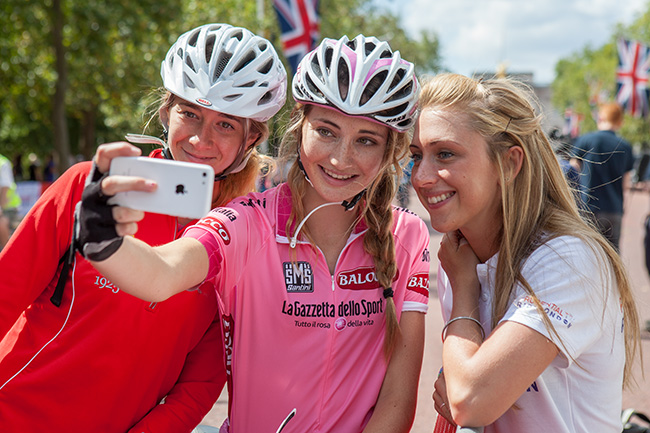
Olympic and Commonwealth Gold medallist Laura Trott posing with riders on The Mall in a break between media interviews during the Freecycle event - part of Prudential RideLondon. 9th August 2014.

Olympic and Commonwealth Gold medallist Laura Trott posing with riders on The Mall in a break between media interviews during the Prudential RideLondon Freecycle event. ©Neil Turner, 9th August 2014.

I was prompted to compose this blog post because I suddenly realised why it works so well. One of the media team working with Prudential RideLondon had offered to take the picture and the three young women dutifully posed but their faces didn’t come alive until they rescued the phone and performed the ritual of the selfie. There seems to be a confidence and a joy in taking your own picture of yourself and your friends or, in this case, you, your friend and an Olympic and Commonwealth champion. Is it because these days that can see themselves in the screen and only shoot when they are happy with what they see? I believe that there’s an element of that in it but the sense of self-reliance is just as important as far as I can see. There is a joy in The Selfie that is missing from a perfectly well taken group photo. Time after time we all saw people enjoying taking self portraits during the event and that’s the case almost everywhere almost every day.

Where I depart from the celebration of The Selfie is where media outlets and PR companies encourage people to do it and post them as part of marketing campaigns. For me the innocence and joy of the ritual gets lost when it is prompted like that. Where I also have an worries about it is when people do it dozens or even hundreds of times a day. I had a link request on EyeEm the other day from a guy who have over 6,000 images on his account and, from what I could see, they were all of himself.

I don’t object to The Selfie at all. In fact I indulge in the ritual myself from time to time. All I’d ask is that marketing people without another great idea stop trying to make something from them that isn’t really there. Photography is about a lot of things and fun is right up there as one of the most important.

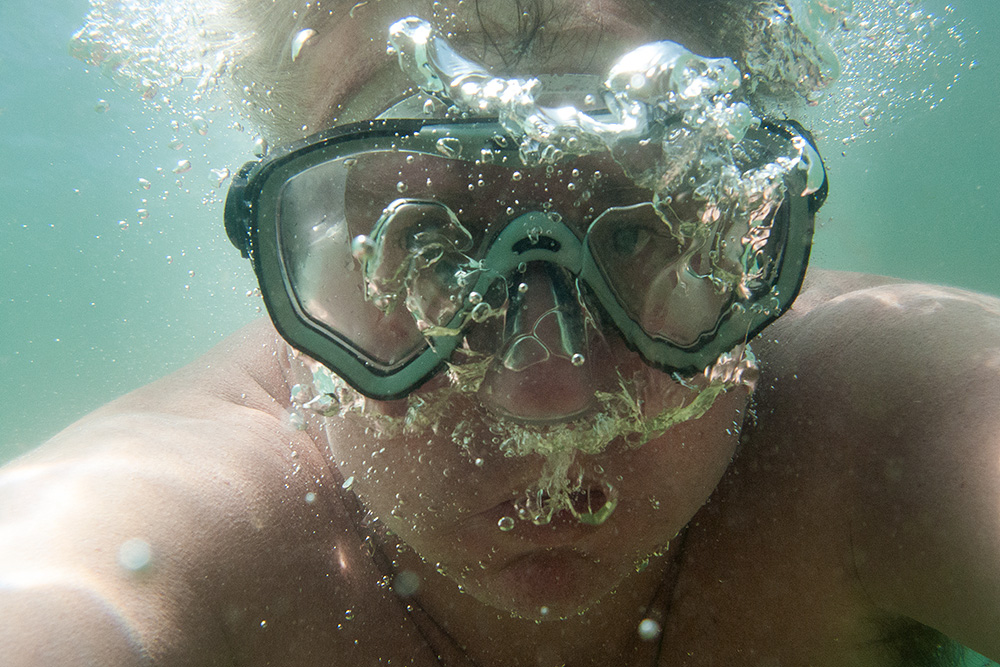
The one "selfie" that I do like of mine - under water at the beach in Bournemouth in the summer of 2013. ©Neil Turner.

The one “selfie” that I do like of mine – under water at the beach in Bournemouth in the summer of 2013. ©Neil Turner.

Working other people’s files

From time to time I work with teams of photographers as an editor. It’s part of the ‘rich portfolio’ of roles that I have these days. 80% or more of my work is still shooting pictures and that’s great but for the other 20% of my working life I enjoy doing some other photo-related stuff. I’ve written before about teaching and running workshops and one of the workshops that I do is about sharpening up your workflow. For me the best way to help others improve their workflow is to sit down with them and go through how they work and then refine what they already do rather than to throw everything out and start again.

Editing other people’s work is a whole other matter. Imagine being in a deadline driven environment where you have several photographers all shooting RAW and where you have to occasionally grab their memory cards and do some of their edits for them. On one recent job I handled CR2 files from Canon EOS1DX, EOS5D MkIII and EOS5D MkII cameras as well as NEF files from Nikon D4S, D4, D3S, D3, D800 and D610 cameras over a two week period. Some of the cameras were left on factory settings and others had been set up by their owners to the point where none of the settings were left unchanged. RAW files obviously allow you to return the completely unchanged state but I am a believer in the idea that you trust the photographer to have made changes on purpose and to respect those changes wherever possible as you come to edit their files.

The old, old Nikon Vs Canon debate morphs into a NEF Vs CR2 debate. As a long-time Canon user myself I thought that I’d find the CR2 files far easier to work with and I was ready to spend far more time getting NEFs right. The biggest shock was that it was entirely the other way around. Files from the latest Nikon cameras can be easy to work with. Really easy. I realised after only a few hours that, as long as the in-camera settings weren’t eccentric, NEFs from the D4, D4S and the D800 were not only easy to work with (requiring relatively few adjustments) but that the quality was uniformly high. In contrast the imported CR2 files from all of the Canons looked a lot less impressive as they landed in Photo Mechanic and then in Adobe Camera RAW. On average, it took more clicks of the mouse (maybe 50% more) to get the CR2s looking as good as they should.

Needless to say, this was quite a revelation. It isn’t as if I hadn’t worked with other people’s files before but this was the first time that I had seen the results of so many different people’s work from so many different cameras in such a compressed space in time. The pictures were all coming from top class photographers and the end results were largely indistinguishable from one another but the route to get there was certainly different. There are way too many variables to draw any definitive conclusions from this but I can say the following;

  • Any reservations that I might have once had about the NEF file format are long gone
  • The results achievable from both NEF and CR2 full-frame cameras are on a par with one another
  • The idea that the colours rendered by Nikons and Canons are inherently different has a small toehold in fact
  • The RAW files from all of these cameras are incredibly versatile and you can get the desired results from either
  • Given the choice I’d go with the NEF from a well set up D4S as the file from other people I’d prefer to work with

Since that event where I worked all of these files side-by-side I have also had a long play with NEFs from a D810 and a D800E. They both require careful handling because of the absence of a low-pass filter over the chip. This gives greater apparent sharpness and a degree of “pop” that is hard to describe but on the flip side it is much easier to mis-handle the files and introduce noise and chromatic problems when using a RAW converter or Photoshop itself. To get around this you find yourself constantly switching between degrees of magnification on the screen to check the effects of any changes to contract, highlight, shadow, saturation or sharpening that you apply. I found this to have a significant slowing effect on my workflow but I also loved the quality of the images produced. The D810 is a camera that I’d happily add to my list of those producing desirable files to work with.

So, NEF Vs CR2? Out of the blocks the NEF files that I’ve worked with over the last few months streak into an early lead but the CR2s catch up along the back straight and they are neck and neck at the line. For now…

My Fujifilm X20 – the final word?

It’s amazing how often a casual conversation or a quick exchange on a Facebook group can spark a train of thought. Earlier today a comment by a friend and fellow photographer about how a photo sharing site had made him look around him and start taking pictures for the love of it again. I agreed whole-heartedly and began to think about uploading a few more pictures here. That moved my train of thought onto the various reviews and updates that I’ve written on this blog and elsewhere about the Fujifilm X20 that has been my almost constant companion for the last 11 months. So what I decided to do was to say a few words to summarise my experiences with this camera and add some pictures shot in the last couple of weeks.

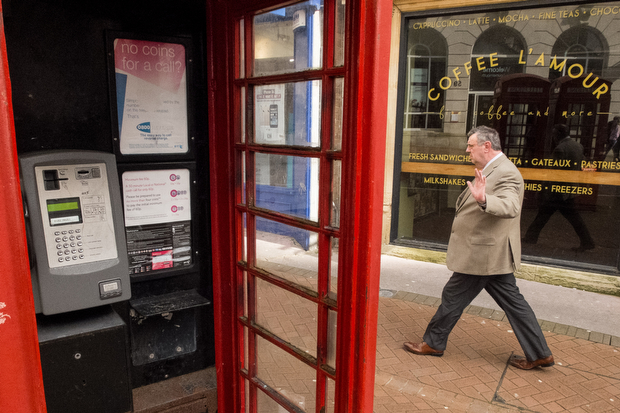
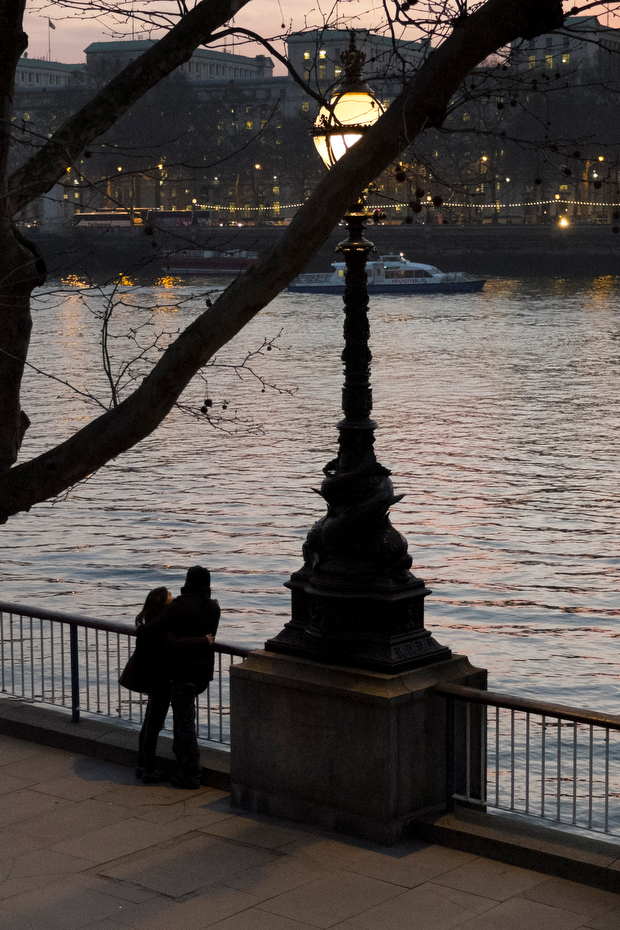
©Neil Turner, March 2014. The photographer's shadow forms part of the scene as an elderly couple walk along South Bank of the River Thames in London.

©Neil Turner, March 2014. The photographer’s shadow forms part of the scene as an elderly couple walk along South Bank of the River Thames in London.

In general, my opinions about this camera have barely changed since I posted the first update back in mid April 2013. Given the product cycle that Fujifilm seems to gallop through the X20 is probably about to be superseded anyway but I thought that I’d offer some advice to make this camera (that I still like very much) better if they want to bring out an X30.

  • The battery life has to improve. Despite doing everything possible to limit power drain I get through two batteries a day when shooting with ordinary SD cards and up to four batteries a day when I’m using one of my Eye-Fi cards. This makes a cool and convenient camera a lot less convenient and pushes up the cost of ownership – even if you go for third party spare batteries.
  • Start-up delay. About once in every third time I switch the camera on it takes three or four seconds to adjust and get the exposure correct. The first picture is often three or more stops over-exposed.
  • Autofocus at the telephoto end of the range. My camera sometimes refuses to auto focus when the lens is zoomed all the way to the 112mm equivalent end of its range.
  • The review time options for looking at images you have just shot are too restrictive. There are no options between 1.5 seconds and zoom (unlimited).
  • The built-in flash isn’t compatible with the lens hood – you get shadows and so to use that function you need to remove the hood.
  • The video isn’t great – but I didn’t buy this camera to shoot video.

On top of all of that it would be great if the focal range went from 24-120, the camera had two SD slots and if there were lens correction options for Adobe Camera RAW because at the 28mm end there is the slightest barrel distortion.

This is a great camera and I love using it. I am seriously tempted by the X100S too. Having borrowed one for an extended period, I would very much like to own one. Fujifilm have done a great job with their X-series cameras and they should be very proud of the effect that their cameras have had on a lot of very old and very picky professionals (like me) who all grin like idiots when using the kit. So now, without further ado, here are a few more recent X20 images for you…

So there you go Fujifilm… bring on the X30…

The light on the train

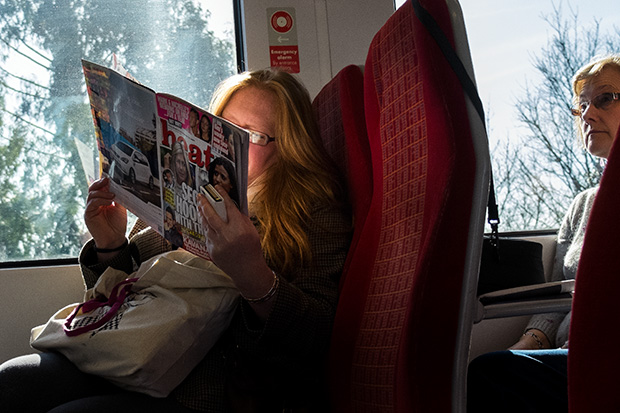
March 2014. Passenger on the train between Bournemouth and London Waterloo reading HEAT magazine as the train passes through Woking. ©Neil Turner

© Neil Turner, March 2014. Passenger on the train between Bournemouth & London Waterloo reading HEAT magazine.


Every once in a while I take the train to London for meetings and the occasional job where I don’t have to carry half a ton of cameras, lights and computers. One of my favourite ways to pass the time is to do a bit of train photography and yesterday’s journey gave me a few nice frames where the light was good. Normally I just bung them from the camera (in this case my adorable Fujifilm X20) via an Eye-Fi card onto my iPhone or iPad and then straight to Twitter or EyeEm. I rarely give them a second glance when I get home but I wanted to post this picture because of the light. The sun was coming at just the right angle to reflect a lot of light back into the woman’s face from the pages of Heat Magazine at exactly the same time as the woman sitting behind her appeared to be getting interested in the page through the small gap between the seats. I have no idea if she was actually looking at the page or whether it was a happy coincidence – either way, the light made me do it!

This frame was taken about five minutes after I’d posted a similar but inferior one on EyeEm so I kept it and decided that it would make a nice “just because” picture on this blog. I’m sure that I’ll get around to writing something more serious soon…

A very different kind of photography

©Neil Turner February 2014. Low level Aurora activity over a frozen lake, Inari County, Finland

©Neil Turner February 2014. Low level Aurora activity over a frozen lake, Inari County, Finland

Just a week ago I was standing on a frozen lake in northern Finland with my Wife and a dozen other people watching and waiting for the Aurora Borealis to charm us with its dancing and colours. We were in Finland because it was my fiftieth birthday and my Wife had spoiled me with a trip to see if we could see the Northern Lights. Being an obsessive photographer I wanted to shoot some nice pictures of some amazing skies but it was this frame which shows some light pollution and very low levels of activity that I love the most.

This kind of photography is a million miles away from what I do best and this is the first time that I’ve ever seriously tried to photograph a night sky in this way. It was dark (three hours after sunset) and it was cold and it was magical. As you can see from the image below, we went on to shoot some much prettier Auroras but there’s something about this frame that makes me want to go back and try again.

©Neil Turner February 2014. Medium level Aurora activity near Ivalo, Finland

©Neil Turner February 2014. Medium level Aurora activity near Ivalo, Finland

Techie stuff:  Exposures varying from 10 to 30 seconds at between f2.8 and f4 on 2000 ISO. Canon EOS5D MkIII with a 16-35 f2.8L lens on a Manfrotto 055 tripod