Editorial

RGB and me

I get involved in a lot of discussions about the finer points of photography both online and in person. One of the most common this year has been the about choosing which RGB colour space we should all be working in. The truth is that there are a number of variables which, between them, should point you in one direction or another. There are plenty of RGB colour spaces but the main two are Adobe RGB and sRGB – mainly because these are the options you have when shooting with most DSLR cameras. There are a couple of others (Colormatch and ProPhoto) that offer wide gamuts and some real technical advantages but, as I hope to explain, this isn’t necessarily helpful. More isn’t just a waste, it’s a potential problem.

Ideal Worlds

In an ideal world we would have cameras, viewing and reproduction systems that gave us every tiny subtle variation in colour that the human eye can see on a good day in great light. We don’t. Yet. (more…)

Moody technique post from the old website

I have been cleaning up some of the behind the scenes stuff on my original dg28.com website and got side-tracked looking at some of the old technique posts (again). I really liked this one from July 2003 which was originally entitled “Choosing a Mood”. Anyway, here is the original post cut and pasted:

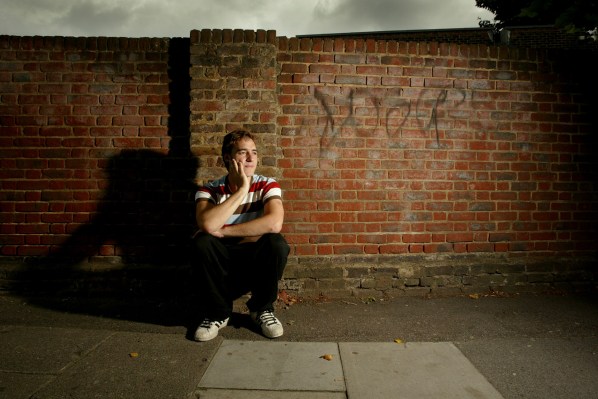
©Neil Turner/TSL. July 2003. English, Media Studies and Philosophy teacher in a north London comprehensive school.

©Neil Turner/TSL. July 2003. English, Media Studies and Philosophy teacher in a north London comprehensive school.

Every time you take a photograph you are saying something about what is in the image. It’s impossible to avoid a frozen frame being anything other than an interpretation of that moment so it becomes a mark of a good photographer to make sure that every element of the image (composition, subject matter and light) helps to paint a consistent story. 

The mood required for every image – especially with portraits – is something that you have to consider very carefully.Some lighting guides will tell you that there is a lighting set up for each mood and that it is a simple matter of placing light A in position B and light C in position D to achieve this. I have to agree that there are some obvious starting points for many of the moods that I use, but there are many other factors that have to be taken into account when setting the scene. (more…)

Seven things to agree on before taking a commission

© Neil Turner, October 2014. Production of John Foster's Shot At Dawn in the Council Chamber at Bournemouth Town Hall.

© Neil Turner, October 2014. Production of John Foster’s Shot At Dawn in the Council Chamber at Bournemouth Town Hall.

Quite a lot the posts that I’ve uploaded to this blog in the last few months have been related to the business side of photography. For those who want more of the old dg28 – your time is coming soon. In the meantime I wanted to post my thoughts on what you should agree with your client before undertaking a commission. This is taken directly from my own outline terms and conditions which are posted on my website. I have absolutely no objection to any photographer copying and/or adapting these seven points for use in their own terms and conditions because, in my opinion, the more of us who do this the more likely it is that potential clients will be used to the concepts and it will require less pushing to get them to negotiate. (more…)

Hands and portraits

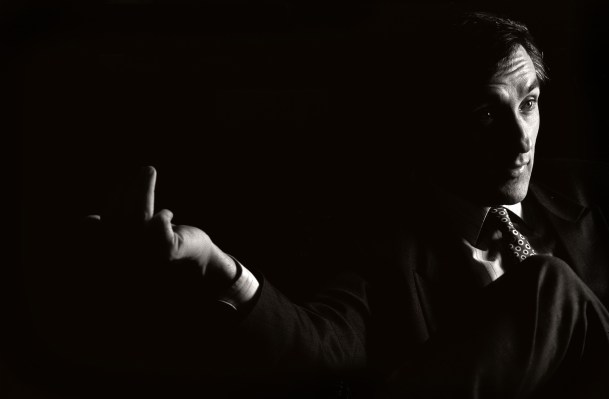
John Redwood MP, photographed during an interview in January 1994. © Neil Turner/Insight.

John Redwood MP, photographed during an interview in January 1994. © Neil Turner/Insight.

It’s January 2017 and like most photographers I am looking forward to the year with a mix of excitement and trepidation. What kinds of challenging and interesting projects are going to come my way in the next eleven and a half months? How is my work going to develop? Am I going to get enough work to pay the bills? Big questions that add to the roller-coaster of emotions that being freelance brings out.

One of the things that I always try to do is look back at some of last year’s work and compare it to older stuff and try to come up with some thoughts that help me to understand my own style better and to make sure that I don’t get tripped up by the same old mistakes. There’s a question that pops into my head about this time every year and it is one that I think that I am finally happy to answer: (more…)

32 Months with the MkIII

SHM: The Vitality London 10,000

Lily Partridge of Aldershot Farnham and District crosses the line to win the women’s race. The Vitality London 10,000, Monday 30th May 2016. Photo: Neil Turner/Silverhub for Vitality London 10,000

Whenever you read about a camera the reviewer has usually had it in their hands for a few days and taken a few hundred frames with it. I’ve done it myself with all sorts of kit and I find it interesting that one of my most popular blogs  (a review of the original Elinchrom Ranger Quadra) was written when I had been using the kit for 32 months. As luck would have it I have been using Canon’s EOS5D MkIIIs for 32 months now and as the announcement of it’s widely leaked successor is only a week away I thought that now would be an excellent time to blog about my long-term opinion of these interesting cameras.

By the time my first MkIII arrived I had been shooting for almost five years with its predecessor – the Canon EOS5D MkIIs. I had grown to love the MkII despite its many quirks and faults and I knew them inside out and backwards. I had owned three of them at various times (never fewer than two) and had shot somewhere near half a million frames with them. In some professional circles that would qualify as barely worn in (more…)

Photography compared to…

160408-fairground-074

BOURNEMOUTH, DORSET. 08 April 2016. A fairground on Redhill Common. © Photo Neil Turner – Freelance photographer.

When you try to explain concepts in photography to someone who isn’t deeply embedded in the art/craft/science/passion it makes sense to find something else top compare it to. My favourite comparisons are driving, cooking and sport.

Driving is something most of us do and, on the whole, we do it without having to think too much about the basics. I’ve talked about it before so I’ll quickly recap my thoughts:

Changing gear, using the indicators, knowing when to use windscreen wipers and headlights are all pretty much done on auto-pilot whilst we think more consciously about road awareness, speeds, traffic, navigation and much else besides. The comparison to photography is an easy one to make because there are basic controls that we like to think are second nature; exposure, focusing, making sure we have memory cards and batteries whilst composition and anticipating things happening in front of your camera (and often off to the side and behind you) are things that require more conscious thought.

Tempting though it is to continue stretching the analogy I want to move onto cooking. (more…)

So I bought a Canon 7D MkII

I wrote a long blog post about this time last year talking about the choice between three of Canon’s full-frame DSLR cameras. At that stage in my work I couldn’t imagine buying another crop frame camera after selling my original EOS7D and giving my opinion of it as “loving everything about the camera apart from the image quality above 800 ISO”. Well, hold the front page – the EOS7D Mk II can handle ISOs a fair bit higher than 800.

Cropped area of approximately a frame shot at 3200 ISO blown up to 100%

Cropped area of approximately a frame shot at 3200 ISO blown up to 100%

In the frame above shot at 3200 ISO you can see some noise in the out of focus areas but it isn’t nasty and it isn’t overwhelming. In the sample shot under ‘press conference’ conditions at 1600 ISO I think that the camera performed brilliantly. I would say that the MkII is at least two stops better in low light than the original 7D and maybe a bit more under certain lighting conditions and those two stops are the difference between a camera that is very usable as an every day available light camera and one that isn’t.

So far I have been delighted with it. I’ve used it on ten assignments already and it is rapidly becoming one of those things that goes into the bag first. (more…)