light

Three important things

Many, many years ago I started to post technique examples and opinions on my website. By 2002 I had about fifty articles on the site and over the last couple of years I have been recycling many of them because I still thank that they are worth reading. None of it is unique wisdom and much of it can be found in the form of YouTube videos by other people. I like to think that I was marginally ahead of the curve back then at least. Here is one of my favourites…

There are many things that help make a great photograph – a good photographer, the right equipment and luck can all play a part but there are three things that, in different proportions, are absolutely essential.

  1. Light: Possibly the most important element to making an ordinary photograph into a good one.
  2. Composition: Getting all the right elements in the right places.
  3. Subject Matter: It’s true that what you are photographing can very easily make the difference between good, very good and great pictures.

Light: You not only need the right quantity of light, but the right quality and direction of the light are vital too.

  • Too much light can be just as much of a problem as too little. A picture that relies on shallow a depth of field for it’s impact will be hard to achieve if there is too much light to work with wide open lens. Of course if there is too little light to freeze the action when that’s vital to the picture, that’s also a problem.
  • Many pictures rely on hard shadows and extreme contrast for their effect and others need even and soft light to make the photograph work.
  • What direction the light is coming from in relation to the subject matter is important. Strong backlight will be perfect for some subjects and ninety degree side light will do it for others.

Composition. Whatever else is going on in the picture, this is the element of the total package over which you have the most control.

  • What lens you use is an absolutely critical decision to take in terms of the composition. What you can see through the viewfinder is utterly controlled by this decision.
  • Where you position yourself in relation to the subject is another crucial decision.
  • Confusion is the greatest enemy of clarity! How successful you are in keeping extraneous details out of the photograph has an enormous bearing on the final result.

Subject Matter: All great photographs tell their own story, and that’s just as true for a product shot of ball bearings as it is for Pulitzer prize winning documentary images.

  • If what you are photographing tells it’s own story, then you need to strip the content down so that the story isn’t confused.
  • Some things aren’t that interesting, so you need to add content. Telling the story sometimes requires the photographer to set the context.
  • Photographs don’t always need to be great art. Sometimes subject matter is all, and nothing else matters. If there is only one picture of a vital news event and it’s out of focus and taken from video it may well qualify as a great picture.

Three elements that go together to make great pictures. Sometimes light takes the lead and other times the composition is the most important. It doesn’t matter if one element is dominant, but photographs where all three are well balanced and well done then the image is guaranteed to be a winner.

There is, however, one extra element that you can’t legislate for. Magic. Like many things in photography, you know it when you see it but you cannot measure it or define it. Well composed and lit pictures that have great subject matter are (relatively) easy to come by, but once in a while they have magic too.

Shadows

© Neil Turner, July 2014. Shadows on the south bank of the River Thames in London.

© Neil Turner, July 2014. Shadows on the south bank of the River Thames in London.

On my way to a meeting today walking along the south bank of the River Thames I was taken by the quality of the light as it formed shadows through the trees. A pair of office workers out for a stroll stopped and had a chat and we passed a very pleasant few minutes talking about light and London. The conversation was interrupted a few times as people strolled through my composition and I grabbed a frame or two. This was my favourite of maybe a dozen very similar frames.

Another picture shot on my Fujifilm X20 and added to the blog just because I liked it…

Portfolio features now updated

©Neil Turner/TSL. April 2005. Kabalega, Uganda.

©Neil Turner/TSL. April 2005. Kabalega, Uganda.

The funny thing about updating the features section on my portfolio website is that I have a section called “portraits” and another section that should be called “not portraits”. That isn’t a  particularly elegant way to categorise the thirty plus images featured in that particular gallery but I have yet to find a work that sums it up. Features is as close as I seem to be able to get.

Anyway, it’s a big relief to have finished the refresh and the last of the design updates for now. When I was looking through the huge folder of images that were under consideration I was struck by the picture above of a teenaged Ugandan boy who was part of a group helped to think about issues that were affecting their lives by an art teacher who had visited the United Kingdom where he had picked up this technique. They were an interesting set of images of a fascinating project and I’m really glad to have been able to include this picture in the new folio – even if the picture was shot nearly nine years ago.

The new “features gallery” is now on show at www.dg28.com/folio/features/ and I hope that you have some time to have a look.

Space makes you think – part 2

©Neil Turner, March 2013. Family enjoying an early spring afternoon near Fisherman's Walk in Bournemouth, Dorset.

©Neil Turner, March 2013. Family enjoying an early spring afternoon near Fisherman’s Walk in Bournemouth, Dorset.

A very long time ago when I was studying photography at the Medway College of Design I was surrounded by like-minded and equally obsessive photography students who all wanted to unlock the many ‘secrets’ of great photography so that we could all some-day be someone. We were only a very short distance along the journey (it was the first term of the first year) when we were set a project to shoot an object against a background where the object would be very small and still have great composition and make sense. It was a lesson that I will always remember for two reasons:

  • The first is that I loved it and actually shot four or five entirely different pictures – ranging from a damp and golden autumnal leaf on a grey path to a red balloon against a bright blue sky.
  • The second reason is that during a group critique someone (and I have no memory who) said “space makes you think”.

Space makes you think has stuck with me to this day and as a short and snappy phrase it appears in my thinking and in my discussions on a very regular basis. From the day I learned that lesson and then learned to leave space in my compositions for mastheads, strap line, type and headlines I have always looked for pictures with space. Cropping images really tightly is a great way to shoot some subjects and I remember another phrase from my student days which sums that up too “if an element doesn’t add to the composition then it detracts from it”. That’s also true and that, ladies and gentlemen, is why photography is so enthralling, confusing, infuriating and rewarding. Two ‘rules’ that appear to directly contradict one another that form the basis of one of those secrets that we as students of the art/science/profession spend our lives trying to grasp and the interpret in our own ways.

Rules are there to be obeyed most of the time and broken often enough to make sure that we remain creative in our thinking. That was true back at Medway College, it still is and I hope it always will be.

* Those other “obsessives” included Jez Coulson, David Chancellor, Bill Green, Richard Gosler, Mike Cooper, John Baxter, Richard Ansett and Andy Eaves who, I am delighted to tell you, are all still as obsessed as they were! There were 28 photographers in our year and I’m sure more than those listed above are still plying the trade.

How long does gear last?

When I teach new photographers the business studies element of what it is to be a working photographer I go through a whole exercise which adds up the cost of the gear and then divides that cost by the number of working days that it might be expected to last before you need to replace it. My formula was mentioned in a previous post and I try to be realistic about the life span of the principle kit that we need. Camera bodies, for example, last somewhere between two and three years on average whereas lenses last four, five or even six years. It’s a simple idea and when you add it all up you come out with a figure that represents the amount of money it costs to be a photographer based on working a fixed number of days per year. For most photographers that’s around the £45 – £60 mark.

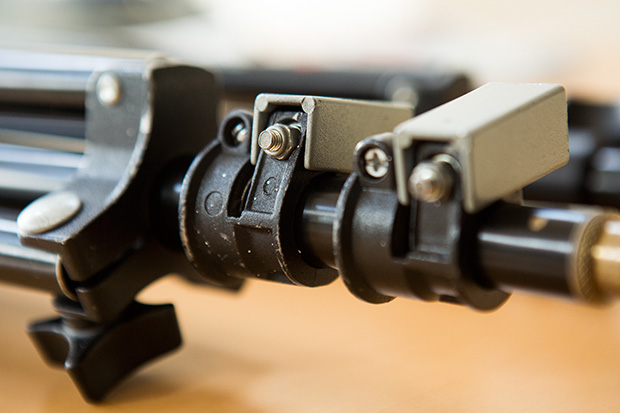
©Neil Turner. March 2014. My Elinca branded lighting stand that is at least 21 years old

©Neil Turner. March 2014. My Elinca branded lighting stand that is at least 21 years old

Some gear, such as tripods and equipment bags last a lot longer and there’s good evidence to say that a Pelican case is for life as long as it doesn’t get stolen. I was looking at some kit this morning and making sure that I had everything that I needed for a two-day job over the weekend when one of my lighting stands came apart. That got me thinking about how much this stand had cost me on a ‘per day’ basis since I bought it somewhere between 1990 and 1993. I won’t go into how I can narrow the dates down but let us say that it is at least 21 years old. At today’s prices this stand would probably cost about £70.00 (but probably cost me a lot less) and by dividing that by 21 you can see that it has cost me £3.33 a year. That’s a meagre £0.26 a month or, if I work 150 days a year that’s £0.02 per working day.

I have used lighting stands every single working day since then and, whilst it hasn’t always been this one, my preference for a specific brand seems to be justified by the way that they take a battering. That brand is Manfrotto – even though this one is labelled “Elinca SA” it is clearly a version of an older Manfrotto 052 model (not the same as the current 052 or 1052) because it is almost identical to another stand that I have which is labelled “Manfrotto 052”. I also have a pair of identical lighter-weight stands where one is branded Manfrotto and the other is branded Lastolite and a pair of tiny stands where one is Manfrotto and the other is Bogen. It doesn’t take a genius to work out that one manufacturer was/is making them and that they were/are being sold under many labels.

Going back to the stand itself, when I say “fell apart” what I mean is that this stand came apart at one of the connections. When I had a good look it was obvious that it had lost a bolt and nut that tightened around the metal tubing keeping it in place. Three minutes later, I’d found a suitable replacement amongst the bits and pieces in my garage and the stand was fixed and ready for a lot of action over the next weekend. So that’s a lighting stand of extreme professional quality that costs me two pennies a day – what a bargain! Of course I have forgotten to add the maintenance costs – £0.12 for the bolt that I fitted today plus my labour at a maximum of ten minutes.

For the record, I have three Manfrotto tripods (all with Manfrotto heads), three Manfrotto monopods and a case full of their accessories (Super-clamps, suction clamp, low-level stand, quick release adapters, a boom and so on). I reckon that I have about £1,000.00 worth of Manfrotto gear in total – most of which is over ten years old and some of which is over twenty years old.

Manfrotto haven’t paid me for this blog post, nor have I spoken to anyone from the company or any of their distributors or retailers. I just think that their kit is pretty good value for money. Of course, if they want to offer me a retrospective bribe…

A very different kind of photography

©Neil Turner February 2014. Low level Aurora activity over a frozen lake, Inari County, Finland

©Neil Turner February 2014. Low level Aurora activity over a frozen lake, Inari County, Finland

Just a week ago I was standing on a frozen lake in northern Finland with my Wife and a dozen other people watching and waiting for the Aurora Borealis to charm us with its dancing and colours. We were in Finland because it was my fiftieth birthday and my Wife had spoiled me with a trip to see if we could see the Northern Lights. Being an obsessive photographer I wanted to shoot some nice pictures of some amazing skies but it was this frame which shows some light pollution and very low levels of activity that I love the most.

This kind of photography is a million miles away from what I do best and this is the first time that I’ve ever seriously tried to photograph a night sky in this way. It was dark (three hours after sunset) and it was cold and it was magical. As you can see from the image below, we went on to shoot some much prettier Auroras but there’s something about this frame that makes me want to go back and try again.

©Neil Turner February 2014. Medium level Aurora activity near Ivalo, Finland

©Neil Turner February 2014. Medium level Aurora activity near Ivalo, Finland

Techie stuff:  Exposures varying from 10 to 30 seconds at between f2.8 and f4 on 2000 ISO. Canon EOS5D MkIII with a 16-35 f2.8L lens on a Manfrotto 055 tripod

Dogs on the beach and the Fujifilm X20

My addiction to taking pictures of dogs walking on the beach with or without their owners shows no signs of abating and neither does my joy at shooting pictures with my Fujifilm X20. When I get to shoot bon the beach with the X20 my photographic life is almost complete (laughs ironically there). So, once again, for no other reason that I loved taking and editing the picture here is a photograph taken last Saturday at Boscombe Manor during a break in the foul weather that the whole of the country has been getting.

© Neil Turner, February 2014. A couple walk their dog on the beach between storms.

© Neil Turner, February 2014. A couple walk their dog on the beach between storms.

To the north of us was the wreckage of broken beach huts, to the east was an area closed off to the public and to the west was the only stretch of the beach where you could walk with reasonable safety. Happy days.

New year’s resolution

We all do it… make promises to ourselves about what we are going to do and how we are going to do it as another year begins. Take more pictures, get more exercise, make more money, be nicer etc etc. You can take it as read that I’m attempting all of those but I thought that I’d talk about the first one – taking more pictures.

©Neil Turner January 2014

©Neil Turner January 2014. Shot using a Fujifilm X20

Time after time in my career I have realised that the more I shoot, the better my reactions are and the more instinctive the operation of the camera becomes. I’m pretty sure that someone could even devise a mathematical formula for it where x is the number of pictures you shoot over a given period of time, y is the number of days over a given period where you don’t take pictures and z is the probability that when you are shooting an assignment you absolutely nail the job. Unfortunately I’m not an imaginative and innovative mathematician so I’m not going to be able to define that formula – if you have the ability, please feel free to finish the task for me but not until you have read the rest of the puzzle:

All of this seems to be rational, don’t you think? There are a couple of flies in the ointment though: If you do too much of the same kind of thing, you can get into a rut and just keep producing cookie-cutter images.

So does that mean that there is an optimal amount of pictures to be taken? Well yes… and no… If you are shooting very different images on each occasion then you can take a lot more pictures and get a lot sharper without becoming stuck in the rut that I mentioned just now. There is a further variable that we need to include in our increasingly complex formula – having the time between shoots to properly edit our own work and to reflect on why and how certain pictures did and didn’t work and this requires a degree of knowledge and of technical and analytical skill.

Now we need to clarify what the formula needs to say:

  • Take lots of different pictures using different techniques and different equipment.
  • Don’t take so many pictures that you get stuck in your ways.
  • Have the time to edit and analyse your work.
  • Learn from your successes and mistakes.
  • Make sure that you know why and why the pictures that you like worked and why the rest didn’t.

All of this makes me re-assess my new year’s resolution. It isn’t just to take more pictures – it’s to take more different pictures and to learn as much as I can in the process. If I get time I might even learn a bit more about mathematical formulae too.