opinion

Observational, interactional and ‘dictational’ photojournalism

If you believe the old saying, “there is more than one way to skin a cat” and if you want to carry that thought over into photographic journalism there is definitely more than one way to shoot a story. If you listen to some debates about photojournalism you would find that hard to believe but regular readers of my opinion pieces about photography will know that I am a big fan of the ‘black to white, left to right theory of just about everything’.

©Neil Turner. Bournemouth, Dorset. 11 minutes past 11 on the 11th of the 11th 2011

The idea goes like this: imagine a line from one side of a page to the other and that one extreme of something is placed at the left hand end of that line. Now imagine that the opposite extreme is placed at the right hand end of that line. For illustrative purposes, let’s make those two extremes black on the left and whit on the right. What have you got in between? Every tone of grey that you could imagine. You can have one smooth gradient or you can have it in steps – it really doesn’t matter but what you will have is a smooth transition from one extreme to the other. Salt to sweet. Short to tall. Narrow to wide. It really doesn’t matter.

So how does this translate to different ways of shooting photographs? We are talking about photojournalism here and so I’d like to place “observational” at the left hand end of our imaginary line and “interactional” in the middle with dictational at the other end. That’s the easy bit. What exactly are these three approaches and what else sits along our line?

Observational photography can be defined as a ‘fly-on-the-wall’ approach where the photographer is an almost ghost like figure who tries to have little or no impact on the situation and their subject matter. Some types of street photography where the photographer tries their best to remain unseen and unnoticed are classic examples of observational photography. Some would argue that a lot of sports photography fits these criteria too – after all, the cameras are there but nobody is changing their behaviour for them for 90% of the event. By definition observational photojournalists don’t seek any meaningful contact with their subjects whilst they are shooting and most would eschew contact once they have finished taking the pictures either.

Good photojournalism is nearly always accompanied by good and accurate captioning – which is easy if you are photographing a Manchester United game or the Olympic 100 metres final because the participants have names and/or numbers on their kit and they are all famous athletes. If you are taking pictures of people running from an approaching storm then you would like to know who they are and where they are heading but the only way to find that out is to ask. I can remember a number of occasions where I’ve shot lovely street photos whose value as works of curiosity is pretty high but whose value as a piece of photojournalism is a lot lower because I didn’t have the details of the people in the pictures. When I was young and keen I regularly followed people and plucked up the courage to get their name. These days I tend not to shoot the picture if having no details for the caption devalues the image.

So that’s observational photojournalism dealt with. What about it’s interactional cousin? This is where I’m happiest. Shooting pictures with the full knowledge and either permission or acquiesence of my subjects in ways that allow me to interact with them whilst maintaining the integrity of the pictures is, for me, the gold standard. You can tell stories, relay passions and miseries and generally get under the skin of people. Interesting people. By interacting with your subject the nature of your pictures changes and they will have a lot more of you and a lot more of your subjects soul in them.

Back to that pesky scale… you have observation at one end and interaction in the middle and dozens of shades of whatever you would call it in between. Then there’s the final form of getting the pictures: dictational – where you tell your subjects what you want them to do and then shoot it but I’d find it hard to label that as photojournalism at all. I’ve put it there on our scale miles away from observation and a fair distance from interaction too.

Let’s say that observation is the black on our scale and ‘dictatorial’ is white. What colour is interaction? 18% grey of course! (photographer joke – if you don’t get it, I apologise)
The anguish of editing your own pictures

©Neil Turner. London, January 2011

I’ve written about this kind of thing many times but it seems to come to the forefront of my photographic consciousness over and over again so I hope that you will forgive me if none of this is new.

There are a lot of great reasons why photographers have to edit their own work. They are the only ones who truly know what was shot, why it was shot that way and how well the pictures reflect the situation. For news photographers the idea of someone else doing their edits is, largely, a far-fetched and even unwelcome notion. It is happening more and more though.

Some of the big wire agencies and more progressive newspapers are using direct wireless transmission from cameras to editors on big sports and news jobs where the time between shooting the pictures and getting them to market is absolutely critical.

If, however, time is not quite so much of an issue photographers like to sit down and go through their own pictures, make their own selections, add their own captions and prepare the files for delivery. That’s how I’ve worked for the last fifteen years or so and even before then I was often in charge of my own edits because that was how things were done.

Every once in a while (mostly on commercial shoots) someone else edits my pictures. I find it both liberating and scary in equal measure. The liberation is that I get to concentrate on shooting pictures and the scary bit is that someone else gets to see everything – the good, the bad and the downright indifferent. What if they miss the subtlety of that amazingly constructed picture on the second memory card? What if they don’t appreciate the ultra-shallow depth of field that I grafted so long and hard to realise?

There’s a good counter-argument to that of course: If a professional editor doesn’t get what I was trying to do, neither will the client, neither will the designer and neither will the viewer. There are some pictures that you take on almost every shoot that are there for you and for you alone. That is true but every once-in-a-while those pictures do get used. Every once-in-a-while somebody else gets your vision and loves the ‘weird one’ as much as you hoped that they would.

Editing your own work is a tough thing to do. Try editing a full set of someone else’s pictures and you will realise just how easy it is to be dispassionate and just how readily you are able to discard pictures that don’t work. Editing your own work can be a minefield. Every step can bring a very tricky decision. What about the pictures that you have a personal emotional connection with? What about the pictures that you have overcome huge technical challenges to secure? What about the pictures that don’t actually add to the edit or make sense as part of a set?

Taking a shoot and making sense of the pictures from that shoot is a skill that very few photographers ever truly get right. Those that do are blessed and really lucky because they avoid the regular pain and anguish of having to ignore their own ‘babies’.

I have four things that come into my mind every time I am struggling to decide about a single frame: light, composition, subject matter and technical quality. If all four are right the picture goes in. If three out of four are right it will probably make it too. Less than three and that’s where the anguish begins…

Canon announces a new 24-70 f2.8L lens

New objects of desire on the equipment front will probably start to appear with monotonous regularity between now and The London 2012 Olympic games. Overnight Canon have announced a new version of the 24-70 f2.8L lens – the mark II.

The older version has been my workhorse for so many years now that I would find it hard to do my job without one and the appearance of a new (and improved?) version makes get my abacus out and start to apply the cost/benefit calculations that professionals need to make every time we consider a new piece of kit.

If I decide that I cannot justify buying it, then it still remains an object of desire! Apparently another major camera manufacturer has also been busy on the launch pad overnight. Nikon have announced the D800 with more megapixels in a 35mm style DSLR body than anyone thought possible/desirable/necessary. Given Nikon’s recent track record of getting things right I would not bet against this being a great piece of kit and a runaway success. For my part, I hope that the next full-frame Canon doesn’t follow suit and re-ignite the megapixel race. A 5D MkIII with decent AF and a chip at around 24-25 megapixels with decent options to shoot smaller (and maybe custom sized?) RAW files would suit my needs rather well.

Define the word “PHOTOGRAPHER”

When does a person with a camera, even a person with an expensive camera, become a photographer?

Apologies if this seems to be getting a bit philosophical but it’s a question that someone casually threw at me a week or so ago and I’ve been struggling with it ever since. Let’s get the dictionary stuff out of the way…

Right now we can really get on with the real business of working out what a photographer is. I’ve always been a fan of simple definitions and I like the idea of making a comparison between things, so how about this:

Someone with a camera tries hard to get everything into the picture whilst a photographer does their level best to keep as much out of the picture as they can.

All that means is that there comes a point in your photographic journey where you realise that most pictures are much stronger when you leave absolutely everything out that doesn’t need to be in. In a paraphrase of the old saying “what doesn’t kill you makes you stronger” (which isn’t necessarily true by the way) we can come up with “what doesn’t add to the composition detracts from it”.

The dictionary definition above, which comes from the English dictionary built into the Apple OSX operating system, steers away from the word professional and I’m really glad that it does because there are an awful lot of superb photographers out there that take pictures for fun and not for a living. Being a good photographer is not the same as being a professional photographer. On balance, MOST professionals are good but there isn’t a direct relationship between earning a living and being proficient.

These days there is a belief that ‘everyone is a photographer’. I wouldn’t argue that almost everyone takes pictures and that almost all of them take two, three, four and even twenty times as many pictures as they would have done when we had to buy film. Someone who I once discussed photography with reminded of another old adage – the one about if you give enough monkeys enough paper, enough typewriters and enough time sooner or later one of them will create the complete works of Shakespeare. It doesn’t hold up here and I told him as much.

People with cameras are largely rational, intelligent and reasoning beings and so most will work out what they do and don’t like and then take better and better pictures over time. Their image making isn’t the random act of monkeys with no comprehension what they are doing – the point here is that when it comes to learning that less (content) is more (better pictures) some will figure it out for themselves , some will need to have it pointed out to them and the rest will remain blissfully ignorant of it.

For some lucky people the knowledge is instinctive. The rest of us have learned through trial and error and/or formal education to know a good picture when we see one. Those that take the next step by learning what makes it a good picture can call themselves “visually aware”. The final (and never ending) stage is to develop the skill to see the picture and make the best of it before and during the pressing of the shutter. Those people can call themselves photographers.

See also COMPOSITION

Some posts are “a bit Marmite”…

When I started to migrate my old blog over to WordPress I also began to watch the site statistics that are there to help you understand what kind of content on your blog is popular. Obviously announcing new posts on Twitter, Facebook and LinkedIn helps but the figures for days when you don’t do any plugging probably tell you more about what people search for and find.

Having shifted so many old postings (anything listed before December 8th 2011) I have been watching to see whether the ‘old’ stuff gets many viewings. The answer, sadly, is no. More interestingly, blog posts that aren’t about specific photographs don’t get a lot of viewings either.

British readers of this blog will be familiar with the concept of something being “a bit like Marmite” (or Vegimite if your are from the Antipodes). It means something you either love or hate, nobody is indifferent to it.

Drawing comparisons between a savoury spread and blog posts is probably a bit tenuous but I still like the idea! I think that there is some interesting material back there so I’ve decided to go through the viewing figures and publish links to some of my favourite and your least favourite oldies.

That’s half a dozen to be getting along with. I goes that they share a certain ‘wordiness’ but they are the kind of things that I want to to talk about and so I hope you give one or two of them a go.

Case studies on my website

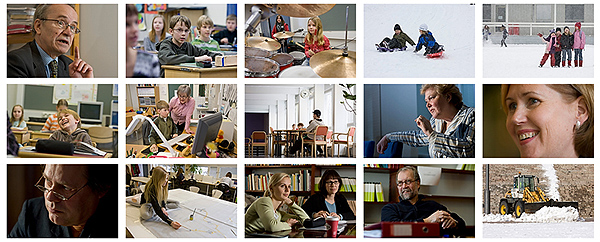
When I went freelance again I decided to add a few case studies on my website so that prospective clients could see the kind of work that I do in greeter detail than they could on my folio pages. It’s going to be time to post some new ones soon and the first to be retired will be the oldest one: a case study about a mews feature shot for the TES in Finland.

The Brief:

Go go to Helsinki for two days with a reporter and try to establish why the Finnish education system consistently comes top of the European leagues for pupil achievement by interviewing various politicians, educators and educationalists and by visiting as many schools and institutions as we could.

Delivery:

This assignment was shot whilst I was a staff photographer working for the TES and my brief was to shoot some pictures to accompany this major feature but also to gather as much stock imagery for future stories relating to Finland and Scandinavia as possible. The final edit was over 200 images and was delivered in stages during and immediately after the trip.

See the rest here

Vocabulary of photography

Language is an ever-evolving thing and a quick search for a famous quote on the nature of language brought up two very interesting thoughts. The first is accredited to Karl Albrecht – a German latter day renaissance thinker (I wish it were the co-founder of Aldi who had the same name)

“Change your language and you change your thoughts.”

This is an important idea when, as press photographers, we are trying to get the world, the rest of the media and the Leveson Inquiry to think about photographers differently. Words like paparazzi have been liberally used during the inquiry and by commentators about the inquiry. Fellow journalists and even some of our peers regularly use the words snap, snapper and snapped to talk about our work. As long as this kind of unhelpful vocabulary carries on being used we are almost bound to carry on having a problem. We are photographers, we take photographs and what we do is photography. Get a thesaurus out and there are plenty of other words that can be used (with increasing degrees of pompousness). It seems likely that it is up to us to start the ball rolling. It is one thing to use slang terms within the tight confines of our profession but an entirely different thing to propagate them elsewhere.

As professionals we owe it to ourselves and our colleagues to change our own vocabulary and to correct everyone else who falls into the lazy trap of using short snappy terms that are just not accurate. Take last Saturday’s Times for example. On the front page of one of their sections they had a line about “What really happened when Beaton snapped the Queen”. Did Sir Cecil Beaton really “snap” anything? The Victoria and Albert Museum, a cultural institution that would claim to respect photography has on their shop website a line about the same photographer saying that after her 1953 Coronation

“(he) snapped the Queen in all her coronation finery.”

As long as what we do is trivialised in this way we are going to have an uphill struggle. A couple of other searches on the web brought up equally depressing quotes – this one comes from a careers website www.allaboutcareers.com and their description of the job “Press Photographer”:

“Press photographers are employed by newspapers, magazines and other print and web publications. These snap-happy professionals are tasked with recording images of current events to support news stories or taking interesting photos to emphasise the point of featured articles.”

We could go on but that would only serve to labour the point. It is hard to think of another profession whose work is so universally undervalued, whose work is widely misunderstood and about whom the vocabulary used is to pejorative.

One final note: whilst looking for quotes about language I found this one attributed to Federico Fellini – the man credited so widely with the origins of the term “paparazzi”;

“A different language is a different vision of life.”

Our language is a very visual one but occasionally even we need to resort to words to make our point. If we aren’t careful, the rapid evolution of the English language will leave us behind and the regular and repeated use of poor and inaccurate phrases will become “correct”.

Nikon Vs Canon (no, really, honest…)

A Wise man said to me recently that the best way of getting a shed load of traffic to your blog was to make the title something like “Canon versus Nikon” of something along those lines. Well, as it happens, I actually do want to write about Canon versus Nikon – or at least to make the point that with the imminent arrival of both the Nikon D4 and the Canon EOS1DX (at least on specification and raison d’être) the two camera giants will have a broadly competitive and similar offering for the first time since the Nikon F3 and the Canon F1n did battle back in the early to mid 1980s. Both of those cameras were built like tanks, had optional and fast motor drives and were principally designed for heavy duty professional use.

The new offerings have remarkably similar specifications – knock for knock, these are the most similar cameras on the pro market for thirty years. There are a few differences of course: Nikon have stuck their necks out and gone for a dual memory card slot with one of them being for a new and largely untried format. Both cameras have the odd quirk here and there but it will all be about personal preference when purchasing decisions need to be made.

Of course one manufacturer might have exactly the lens range you want or the other might just feel better in your hands but, the bottom line is that for the first time in the digital era and maybe even for the first time since the original EOS1 film camera hit the shelves we don’t have a clear leader. Can’t wait to try them out…