opinion

Canon feature request?

I had an email from someone who has followed my blogs for many years this week. He’s a working news photographer who I bumped into on a job a few weeks ago. He had noticed some tape on the top of my Canon EOS5D MkIII and my EOS 7D MkII and simply pointed to his cameras and said “snap”. He had tape on his cameras too – doing precisely the same job that the tape on mine does and went on to ask what the chances of Canon making a change to future cameras that would eliminate the need for us to tape that particular feature on our cameras. The email was to remind me that I had promised to do a quick blog post about the issue.

Taped diopter adjustment on a Canon EOS 5d MkIII

Taped diopter adjustment on a Canon EOS 5d MkIII

The tape on our cameras holds the built-in diopter adjustment dial and stops it from being moved in the bag or over your shoulder – something that happens to me a lot if I remove the tape. I have no idea if anyone from Canon’s design department reads this blog (I doubt that they do) but it seems to me that if enough of us sufferers from this problem mention it to them when we talk to them then they just might do something about it. Nikon have a lock on the diopter adjustment on some of their professional cameras so it has to be relatively easy to do.

The EOS5D MkIV will be appearing later this year if all of the rumours are to be believed so this may be a little late but you have to give these things a try.

Canon employees and dealers reading this… please help to reduce my gaffer tape bill. Soon. Please.

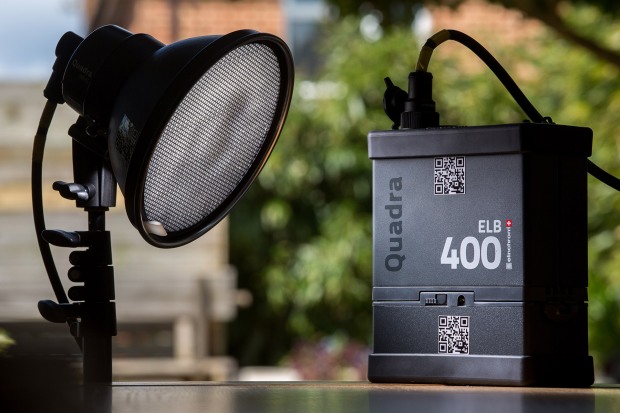
Elinchrom Quadra ELB

27 April 2016. Bournemouth, Dorset. Elinchrom Quadra ELB. Hillcrest Road Neil Turner

When I get a new piece of kit worthy of mention, I usually write a first hand account of how it is working out and go into details based on using it on a few jobs. I bought an Elinchrom Quadra ELB HS kit a couple of weeks ago and I thought that it was about time I gave some first impressions on this blog. Sadly, I haven’t used it for anything particularly interesting and I certainly haven’t stretched it beyond what I would normally do with my old Quadras (some executive portraits and a quick location shoot) but I can already see a lot of small but amazingly significant changes from the original system.

Those of you who read this blog regularly will know that I was very impressed with the Quadra when I wrote about it in my “32 Months On” and was further impressed when the Lithium Ion batteries came out. The differences between the ELB and the Quadra for most jobs aren’t huge but everything about the new kit tells me that the designers have listened and that the manufacturers have allowed their engineers to implement some great changes. For me, the positive changes with the pack are:

  • Far better display
  • Vastly improved menu system
  • Ability to recondition flattened lithium batteries
  • Better cable port covers
  • All of my old Quadra bits and cables are compatible with the new pack

I have the new High Synch head too which brings one key improvement which is the ability to synch with my cameras at shutter speeds right up to 1/8000th of a second using the EL Skyport Plus HS Transmitter and I’ll talk about these a bit further down the page.

Let’s talk about the menus: (more…)

Don’t panic…

I use Apple products. In fact, I use a lot of Apple products and some of my less generous colleagues might even label me a “fanboy”. I’d call that unfair because I’m not blind to their faults and I know that, like all technology, it will fail at some point.

I have tried my best to develop ways of avoiding failures, making sure that they cause as little damage or disruption as possible and generally covering my back wherever and whenever possible. The other day, whilst doing routine updates to one of the Macs in my office, I experienced something that would probably have completely freaked most computer users out and necessitated a lot of aggravation or even a visit to a service centre or Genius Bar.

dock_error

Simply put, all of the applications went AWOL. The dock, of which you can see a screenshot above just showed a whole row of question marks indicating that the applications were missing and a quick visit to the applications folder showed that the Mac clearly thought so too. The error message said that I didn’t have permissions to use the folder which made me believe and/or hope that nothing was actually missing. The “missing” applications included Time Machine and all of the repair and diagnostic tools that I would normally go straight to. I looked in the bin and I tried to search for items that I know should have in my applications folder but found nothing.

This has never happened to me before and I have never heard it described so I tried solution number one – to use a different device, get onto the internet and search the collected knowledge of the world’s computer users. The general consensus appeared to be that I had a major issue and that I needed to reinstall the Mac operating system. Easier said than done given that, despite trying every kind of reboot and diagnostic test I could, the App Store, all web browsers and Time Machine were amongst the locked/blocked/missing applications.

I could have done it all from one of the other Macs but I have, for many years, had a back-up drive from which I can boot my computers. These days it is a USB3 SSD drive with OSX Yosemite loaded on it and I used that to reboot my computer and install a fresh copy of OSX. Twenty-five minutes later with a mildly raised heart rate and some cramp in my fingers from keeping them crossed my computer was back as if nothing had happened. No screwdrivers were involved and nobody had to drive anywhere. No data was lost and I could get on with work.

Just in case you are wondering, panicking wasn’t even in the top ten ways to sort this out – about five places below a stiff drink or three!

A case that proves the old military phrase that I was taught at school in the 1970s and 1980s – “precise and proper planning prevents poor performance”.

Electronic viewfinders and me

©Neil Turner, February 2015. The cliff tops at Boscombe on a dull winter's day.

©Neil Turner, February 2015. The cliff tops at Boscombe on a dull winter’s day.

A few months ago a colleague whose work I know and love said that it took him a little while to get used to electronic viewfinders and now that he has been using them for a while he cannot remember why he had been so resistant to them in the first place. Resistant to electronic viewfinders? That summed up my attitude until a couple of weeks ago too. After carrying my beloved Fujifilm X20 around with me I decided that it was time to give an X100S a run out. The lack of a zoom lens and the small jump in size and weight is compensated for by a big increase in the higher ISO quality (which isn’t to be sniffed at during the winter time) and a few more megapixels (allowing a bit of judicious cropping here and there) and so for the last few weeks I have been shooting my personal work with the X100S. The idea hit me that now I had the option of using the electronic viewfinder (to be known as the EVF from here on in) instead of the optical viewfinder (known from here as the OVF) and that’s what I started to do.

For the first few days I was getting annoyed by the EVF to the extent that I had to have a few days off from it. During that time I shot some photographs that I really liked and I had to force myself back to using the EVF with something of a heavy heart. That was just over a week ago and I am now really pleased to announce that I have got the hang of shooting using an EVF. Welcome to the twenty-teens, welcome to the world of the EVF enthusiast and welcome to a wide world of possibilities I hear some of you saying. Not quite.

The current situation is that I am perfectly capable of shooting with an EVF and that I can see why some photographers have made the switch but not me. I still prefer the OVF to the extent that I don’t want to use the electronic version and to the extent that the kind of work that I have been doing with my Fujifilm cameras isn’t as fulfilling without the old-school optical set up. If I were tempted to buy a Fujifilm XE-2 or an XT-1 I’d have to forego one of the main pleasures that I derive from using kit that, despite some huge flaws, makes me want to go and just shoot pictures.

I’m not going to tell all of the EVF enthusiasts I know that they are wrong but I am now in a position where my choice to carry on using OVFs and DSLRs is made from knowledge and not from ignorance. There, I’ve said it.

Not the DSLR, I’m having fun

© Neil Turner, March 2014. Shadows on the pavement as a pedestrian passes along Tottenham Court Road.

© Neil Turner, March 2014. Shadows on the pavement as a pedestrian passes along Tottenham Court Road.

Question: Why are so many professional photographers using mirrorless cameras, micro 4/3rds format cameras and experimenting with pretty much anything that isn’t a DSLR?

It’s a tough question and without conducting some sort of major survey I can only give an answer based on my own experiences and those of close friends and colleagues. DSLRs have been my main cameras for over sixteen years now and they have become an extension of me when I’m working. They do what I need them to do with no real fuss, the quality has moved from “acceptable” back in 1998 to “extremely good” and they allow me to do the day job without having to worry about my gear very much. But, and there’s always a ‘but’ – they have become a little bit boring and little bit ‘too good’.

When I’m shooting pictures for the joy of it (and despite doing this for a living since 1986 I still do that) I want to feel something different. Elegant competence isn’t enough any more. (more…)

Card readers are the new camera bags…

©Neil Turner, December 2014. A small selection of the CF card readers that I own

©Neil Turner, December 2014. A small selection of the CF card readers that I own

As I sit here about to hit “buy” on yet another new reader for compact flash cards I am feeling more than a little bit of deja vu. And when I say “deja vu” I mean multiple layers of it. Sure I’ve bought plenty of CF, SD and even PCMCIA card readers in my time and of course none of them has been perfect but that feeling is an identical replica of the feeling I get when I buy a new camera bag – it’s a complex emotion; optimism meets resignation as I want to think that “the one” that I am buying is as perfect as I long for it to be whilst knowing full-well that it is going to be just as disappointing and just as deeply flawed as the last one, the one before that and the twenty or more before that.

It appears to be part of the psyche of professional photographers that we have to seek perfection in the equipment that we buy and use without acknowledging that such a thing doesn’t exist and that it probably never will. In just the same way that there is a colossal amount of choice in the camera bag market, there are lots of different CF card readers out there. Where the two markets diverge is in the quality of the construction and the longevity of the products. I have camera bags that have lapped the world and lived in more car boots than I can remember and that are still perfectly serviceable whereas CF card readers are cheap, poorly made and don’t appear to be of professional quality at all.

It isn’t completely the fault of the manufacturers: the pin design on compact flash cards isn’t as tough as you’d like and the way that the current crop of USB3 readers with separate cables  experience problems with the cable to reader connection would imply that it may be the USB3 standard that is at fault rather than the manufacturers quality control or design. This is backed up by the number of portable USB3 hard drives that are being reported as failing due to that same connection. It wasn’t always this way. I still have a couple of Sandisk Firewire 800 card readers that are as good as new despite having a hard life and being pretty much obsolete and the ancient PCMCIA reader that lives in a box in the loft was a proper professional bit of kit.

The accepted wisdom was that readers with removable cables were a good idea because the cables were the part of the kit that was prone to damage but that’s no longer the case. In an almost heretical move I am leaning towards the idea that built-in cables, avoiding the car crash that is the USB3 standard, are once again a good idea – and that is why my finger is hovering over the “buy” button because Delkin Devices have produced a reasonably solid looking USB3 reader with a built-in, chunky cable. Of course I’m resigned to the idea that there will be issues – this is one of those moments where optimism is high and the deja vu is strong.

Here goes…

Photography word of the day

For the past couple of months I have been posting a ‘word of the day’ using the hashtag #PWOTD on Twitter. Some of the words are merely triggers to allow myself to say something about photography and others pretty much sum up what I want to say in a single word. A few have links to other websites and quite a few link to old blog posts on here in the hope that some of the 250+ postings on here reach a few extra people.

After two months it is getting harder and harder to come up with a word every day (OK so I schedule the tweets up to three or four days in advance using Tweetdeck) and I was wondering whether anyone else had any suggestions?

Up until Tuesday 16th December 2014 the words so far:

advice   ambient   backup   bad habits   balance   bounce flash   byline   chimping   clients   colour management   compromise   confidence   consistency   contrast   criticism   default   destination   dusk   editing   empathy   experimentation   family   focus   genre   gutter   inspiration   interaction   juxtaposition   limits   manipulation   metadata   middle ground   mindset   monochrome   obsession   patience   people skills   personal   perspiration   photocalls   portfolio   preparedness   prime lenses   prioritise   professionalism  reaction   research   rules   self criticism   sensitivity   shadows   silhouette   simplicity   social media   teamwork   tripod   uniform   viewpoint   vision   workflow
If you’d like to see them then search the hashtag #PWOTD or have a look through my Twitter feed @dg28com . I’m probably going to take a break from doing the word of the day over Christmas – partly because I hope that everyone is going to be having a break from social media but mainly because I really hope that I am!