photojournalism

Getting pictures away quickly

Getting photographs to the client has always been one of the less glamorous aspects of being a professional photographer. From sticking a pile of prints into an envelope and handing them to a courier to scanning negatives before using clunky slow modems to deliver them right up until today’s relatively painless methods nobody in their right mind would list this part of the process as either satisfying or easy.

The arrival of social media and the realisation amongst better clients that using our work rather than their own smartphone snaps has meant that we have had to speed things up a lot. I’ve always liked Eye-Fi cards but more recently I have been working with clients and with projects where something even more reliable and configurable is required. The worst part of it is that there isn’t actually one simple solution or workflow that will satisfy all of them in all circumstances. For a lot of jobs transferring the pictures from the camera to a smartphone or tablet before captioning and shifting them to the client is quick enough and I’ve written about that workflow before. New software appears all of the time and I am always looking at ways to make things smarter and quicker by introducing some automation and cutting steps out.

Live Ingest window from Photo Mechanic 5.

Live Ingest window from Photo Mechanic 5.

(more…)

F4 and be there…

06 August 2015. Bournemouth, Dorset. Close up of part of a Canon 70-200 F4L IS lens. Hillcrest Road

06 August 2015. Bournemouth, Dorset. Close up of part of a Canon 70-200 F4L IS lens.

I’ve discussed zooms versus primes far too many times in far too many blog posts to rehearse the old arguments again and at the end of my recent post about zooming with your feet I mentioned investing in some new gear with a promise to follow it up with a blog post – so here it is.

The great New York press photographer Weegee is supposed to have said “F8 and be there” when asked how he got such great pictures. I’m not remotely interested in the debate about whether or not he actually said it but I am interested in the idea of apertures and, more importantly, maximum apertures.

For as many years as I’ve been shooting with zooms I’ve owned and used lenses pretty much exclusively with f2.8 maximum apertures. (more…)

Zooming with your…

©Neil Turner/Bupa 10,000. May 2015. A Police rider accompanies a detachments of Guards as they march back their barracks.

©Neil Turner/Bupa 10,000. May 2015.
A Police rider accompanies a detachments of Guards as they march back their barracks.

I was on a job the other day, standing next to a very young photographer in a ‘press pen’. He glanced over at the gear I was using and mentioned how much he would love to own the 135mm f2L lens that I had on one of my cameras. He said that he had never really got the hang of “zooming with his feet” in the way that so many of the photographers he admired had advised. He had also had it drummed into him by one of his tutors at college and it had left him wondering if he was doing something wrong.

Zooming with your feet is a great concept and it is one of the catchphrases in contemporary photography that appears to be beyond question. But is it? Is it actually as much a cliche as a universal truth?

There we were on a job where we couldn’t have zoomed with our feet even if either of us had the skills to do so. We couldn’t go forward – there was a metal barrier in the way. We couldn’t go backwards because there were other photographers and a couple of TV crews behind us – and behind them was another barrier. We had a tiny amount of sideways movement if we could change places with each other but, apart from that, we were in a very fixed position. (more…)

Twenty-five years ago today

©Neil Turner, 13th February 1990. Whitecross Street Market, London EC1.

©Neil Turner, 13th February 1990. Whitecross Street Market, London EC1.

Over the last few years I’ve posted a few pictures from my own filing cabinet when they have had some relevance or when there is a specific anniversary. This picture was taken twenty-five years ago today as I went for one of my regular wanders around bits of London that were near Metro – the 24 hour laboratory where we all got our E6 transparency film processed. It was about a mile and a half from our Hoxton office (before it was trendy) and it took about twenty minutes to walk there or five minutes to drive. Sometimes there would be other photographers around and we would adjourn to a local cafe for a cup of something and a sandwich and at other times I’d take myself off for a walk around one of the many fascinating side roads and markets that made up the Clerkenwell/Farringdon/Smithfield area and take a few personal and/or stock pictures whilst the film made its hour and three quarter journey through the system and the ‘soup’ at Metro.

On this particular day I went to Whitecross Street with a couple of cameras and a couple of rolls of Kodak Tri-X film. It is amazing what you remember when you start to think about a day and a place and my memory of this day is that I was half an hour into the walk when I bumped into another photographer (there were three or four agencies close by) and we had a coffee anyway!

The man in the photograph (who said his name was Frank but I’m not sure he was being 100% honest judging by the cheeky look in his eye) had been a stall holder at the market selling books and a few magazines for many years. Trade was brisk as the workers from the many offices on the edge of the City of London were having their lunch hours and I didn’t really finish my conversation with him.

Anyway, another ‘archive’ picture that brings back happy memories and brings a smile to my face. This was, quite literally, half of my lifetime ago and I still love the photograph.

Techie stuff: Nikon FM2 camera with a 135mm f2 Nikkor, Kodak Tri-x film.

Another photo worthy of an obituary

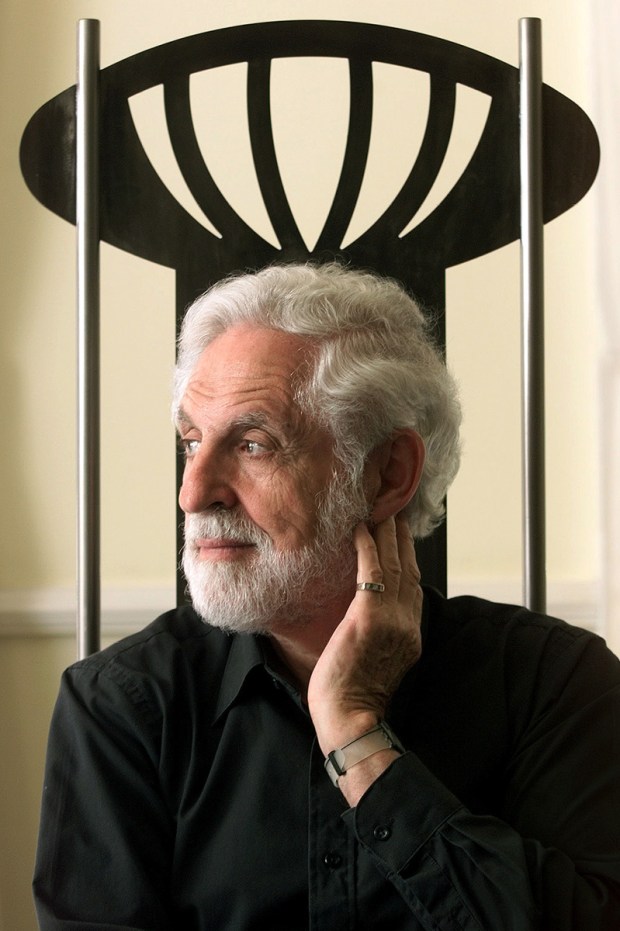
©Neil Turner/TSL. Carl Djerassi, June 1999, London.

©Neil Turner/TSL. Carl Djerassi, June 1999, London.

Carl Djerassi, the chemist widely considered the father of the birth control pill, has died aged 91. I photographed him back in 1999 sitting in what I thought was a very ‘egg-shaped’ chair in his London apartment. If you want to know more about him, The Guardian’s obituary is worth reading but my very clear memory of being there was that he was one of the calmest people that I had ever met. He was confident without being arrogant and his understanding of my job and the job of the reporter who went with me was absolute. He had, obviously, been interviewed and photographed hundreds of times before but I still believe it to be true that most people who have had that kind of media exposure still don’t ‘get it’ in the same way that he did.

It seems that almost every week now I see an obituary in the press of someone that I photographed earlier in my career and it has two distinct effects on me. The first is quite predictable – I feel that bit older each time it happens. The second effect is to make me realise how amazingly lucky I have been in meeting the people that I have met and having been able to make what I hope are portrait and feature images that will stand the test of time.

This particular photograph lived in my folio for many years. It was unusual for me to have shot quite such a reflective portrait at that time. I was busy trying to make a reputation for myself as ‘the guy’ who used strong lighting and strong compositions to compliment that lighting. Like most phases of a career, it passed. I can still shoot the strong pictures when the situation calls for it but this portrait is far closer to my current favoured style than almost anything that I shot in those early days of digital. When I look back at the more memorable images that I shot through the late 1990s – the period of transition from scanned negative film to 1.9 megapixel digital cameras – a lot of them have this kind of feel and that surprises me because my memory is of lighting everything in slightly over-the-top ways.

Technical stuff: Kodak DCS520 camera with a Canon 28-70 f2.8L lens. Ambient light, 1/160th of a second at f4 on 400 ISO.

Quiet documentary image

©Neil Turner, January 2015. Flowers and a memorial plaque to four local surfers on Boscombe Pier.

©Neil Turner, January 2015. Flowers and a memorial plaque to four local surfers on Boscombe Pier.

The light on the beach is almost always interesting and whilst out walking this morning I shot a few frames of a small bunch of flowers tucked behind a memorial plaque to four young local surfers on Boscombe Pier. I guess that I would call this a documentary image and it is yet another different way for me to shoot a beach picture. For me the photograph is a great deal stronger for having the back of the gentleman in the frame.

Tech stuff: Fujifilm X100S, 1/170th of a second at f11 on 320 ISO. RAW file processed through Adobe Camera RAW in Photoshop CC2014.

Early morning winter sun

©Neil Turner, January 2015. Early morning wintery sunshine on the beach at Bournemouth.

©Neil Turner, January 2015. Early morning wintery sunshine on the beach at Bournemouth.

It’s almost always about the light. Watery winter sunshine on the beach at Bournemouth this morning. I shot a frame and edged closer, then shot another before moving closer still. It was my sixth move that caused a few seagulls to finally move off and then I shot this just as the water came through my right boot.
Fujifilm X100S, 1/600th @ f9, 640 ISO.

©Neil Turner, January 2015. Early morning watery sunshine on the beach at Bournemouth.

©Neil Turner, January 2015. Early morning watery sunshine on the beach at Bournemouth.

The Pier has seen better days and I’m not sure that the potted palm trees do much for the area but they make good pictures.
Fujifilm X100S, 1/1200th @ f8, 640 ISO.

I was born less than three miles from where these pictures were taken and the beaches along this part of the coast still hold an almost endless fascination for me.

Not the DSLR, I’m having fun

© Neil Turner, March 2014. Shadows on the pavement as a pedestrian passes along Tottenham Court Road.

© Neil Turner, March 2014. Shadows on the pavement as a pedestrian passes along Tottenham Court Road.

Question: Why are so many professional photographers using mirrorless cameras, micro 4/3rds format cameras and experimenting with pretty much anything that isn’t a DSLR?

It’s a tough question and without conducting some sort of major survey I can only give an answer based on my own experiences and those of close friends and colleagues. DSLRs have been my main cameras for over sixteen years now and they have become an extension of me when I’m working. They do what I need them to do with no real fuss, the quality has moved from “acceptable” back in 1998 to “extremely good” and they allow me to do the day job without having to worry about my gear very much. But, and there’s always a ‘but’ – they have become a little bit boring and little bit ‘too good’.

When I’m shooting pictures for the joy of it (and despite doing this for a living since 1986 I still do that) I want to feel something different. Elegant competence isn’t enough any more. (more…)