photojournalist

Photography compared to…

160408-fairground-074

BOURNEMOUTH, DORSET. 08 April 2016. A fairground on Redhill Common. © Photo Neil Turner – Freelance photographer.

When you try to explain concepts in photography to someone who isn’t deeply embedded in the art/craft/science/passion it makes sense to find something else top compare it to. My favourite comparisons are driving, cooking and sport.

Driving is something most of us do and, on the whole, we do it without having to think too much about the basics. I’ve talked about it before so I’ll quickly recap my thoughts:

Changing gear, using the indicators, knowing when to use windscreen wipers and headlights are all pretty much done on auto-pilot whilst we think more consciously about road awareness, speeds, traffic, navigation and much else besides. The comparison to photography is an easy one to make because there are basic controls that we like to think are second nature; exposure, focusing, making sure we have memory cards and batteries whilst composition and anticipating things happening in front of your camera (and often off to the side and behind you) are things that require more conscious thought.

Tempting though it is to continue stretching the analogy I want to move onto cooking. (more…)

Another photo worthy of an obituary

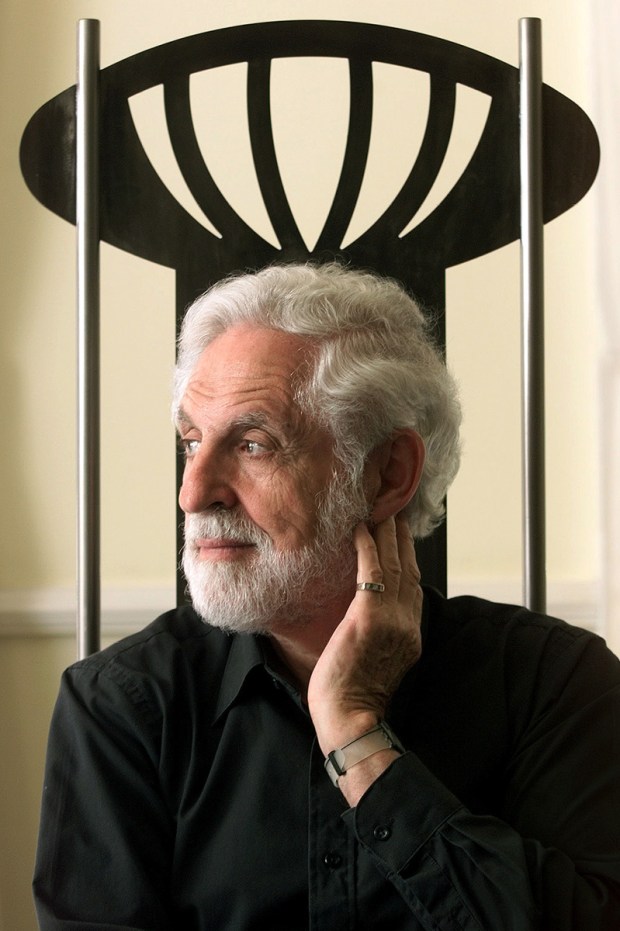
©Neil Turner/TSL. Carl Djerassi, June 1999, London.

©Neil Turner/TSL. Carl Djerassi, June 1999, London.

Carl Djerassi, the chemist widely considered the father of the birth control pill, has died aged 91. I photographed him back in 1999 sitting in what I thought was a very ‘egg-shaped’ chair in his London apartment. If you want to know more about him, The Guardian’s obituary is worth reading but my very clear memory of being there was that he was one of the calmest people that I had ever met. He was confident without being arrogant and his understanding of my job and the job of the reporter who went with me was absolute. He had, obviously, been interviewed and photographed hundreds of times before but I still believe it to be true that most people who have had that kind of media exposure still don’t ‘get it’ in the same way that he did.

It seems that almost every week now I see an obituary in the press of someone that I photographed earlier in my career and it has two distinct effects on me. The first is quite predictable – I feel that bit older each time it happens. The second effect is to make me realise how amazingly lucky I have been in meeting the people that I have met and having been able to make what I hope are portrait and feature images that will stand the test of time.

This particular photograph lived in my folio for many years. It was unusual for me to have shot quite such a reflective portrait at that time. I was busy trying to make a reputation for myself as ‘the guy’ who used strong lighting and strong compositions to compliment that lighting. Like most phases of a career, it passed. I can still shoot the strong pictures when the situation calls for it but this portrait is far closer to my current favoured style than almost anything that I shot in those early days of digital. When I look back at the more memorable images that I shot through the late 1990s – the period of transition from scanned negative film to 1.9 megapixel digital cameras – a lot of them have this kind of feel and that surprises me because my memory is of lighting everything in slightly over-the-top ways.

Technical stuff: Kodak DCS520 camera with a Canon 28-70 f2.8L lens. Ambient light, 1/160th of a second at f4 on 400 ISO.

Quiet documentary image

©Neil Turner, January 2015. Flowers and a memorial plaque to four local surfers on Boscombe Pier.

©Neil Turner, January 2015. Flowers and a memorial plaque to four local surfers on Boscombe Pier.

The light on the beach is almost always interesting and whilst out walking this morning I shot a few frames of a small bunch of flowers tucked behind a memorial plaque to four young local surfers on Boscombe Pier. I guess that I would call this a documentary image and it is yet another different way for me to shoot a beach picture. For me the photograph is a great deal stronger for having the back of the gentleman in the frame.

Tech stuff: Fujifilm X100S, 1/170th of a second at f11 on 320 ISO. RAW file processed through Adobe Camera RAW in Photoshop CC2014.

Early morning winter sun

©Neil Turner, January 2015. Early morning wintery sunshine on the beach at Bournemouth.

©Neil Turner, January 2015. Early morning wintery sunshine on the beach at Bournemouth.

It’s almost always about the light. Watery winter sunshine on the beach at Bournemouth this morning. I shot a frame and edged closer, then shot another before moving closer still. It was my sixth move that caused a few seagulls to finally move off and then I shot this just as the water came through my right boot.
Fujifilm X100S, 1/600th @ f9, 640 ISO.

©Neil Turner, January 2015. Early morning watery sunshine on the beach at Bournemouth.

©Neil Turner, January 2015. Early morning watery sunshine on the beach at Bournemouth.

The Pier has seen better days and I’m not sure that the potted palm trees do much for the area but they make good pictures.
Fujifilm X100S, 1/1200th @ f8, 640 ISO.

I was born less than three miles from where these pictures were taken and the beaches along this part of the coast still hold an almost endless fascination for me.

Card readers are the new camera bags…

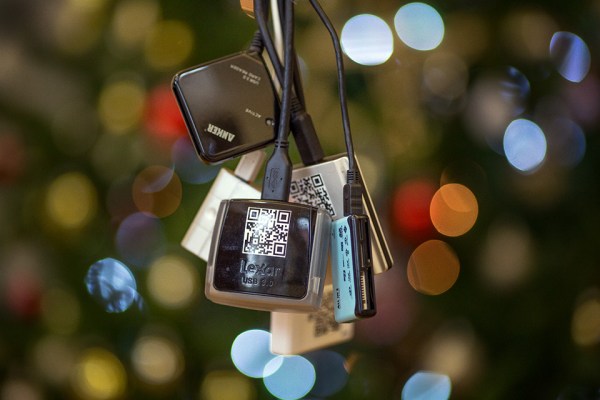
©Neil Turner, December 2014. A small selection of the CF card readers that I own

©Neil Turner, December 2014. A small selection of the CF card readers that I own

As I sit here about to hit “buy” on yet another new reader for compact flash cards I am feeling more than a little bit of deja vu. And when I say “deja vu” I mean multiple layers of it. Sure I’ve bought plenty of CF, SD and even PCMCIA card readers in my time and of course none of them has been perfect but that feeling is an identical replica of the feeling I get when I buy a new camera bag – it’s a complex emotion; optimism meets resignation as I want to think that “the one” that I am buying is as perfect as I long for it to be whilst knowing full-well that it is going to be just as disappointing and just as deeply flawed as the last one, the one before that and the twenty or more before that.

It appears to be part of the psyche of professional photographers that we have to seek perfection in the equipment that we buy and use without acknowledging that such a thing doesn’t exist and that it probably never will. In just the same way that there is a colossal amount of choice in the camera bag market, there are lots of different CF card readers out there. Where the two markets diverge is in the quality of the construction and the longevity of the products. I have camera bags that have lapped the world and lived in more car boots than I can remember and that are still perfectly serviceable whereas CF card readers are cheap, poorly made and don’t appear to be of professional quality at all.

It isn’t completely the fault of the manufacturers: the pin design on compact flash cards isn’t as tough as you’d like and the way that the current crop of USB3 readers with separate cables  experience problems with the cable to reader connection would imply that it may be the USB3 standard that is at fault rather than the manufacturers quality control or design. This is backed up by the number of portable USB3 hard drives that are being reported as failing due to that same connection. It wasn’t always this way. I still have a couple of Sandisk Firewire 800 card readers that are as good as new despite having a hard life and being pretty much obsolete and the ancient PCMCIA reader that lives in a box in the loft was a proper professional bit of kit.

The accepted wisdom was that readers with removable cables were a good idea because the cables were the part of the kit that was prone to damage but that’s no longer the case. In an almost heretical move I am leaning towards the idea that built-in cables, avoiding the car crash that is the USB3 standard, are once again a good idea – and that is why my finger is hovering over the “buy” button because Delkin Devices have produced a reasonably solid looking USB3 reader with a built-in, chunky cable. Of course I’m resigned to the idea that there will be issues – this is one of those moments where optimism is high and the deja vu is strong.

Here goes…

Photography word of the day

For the past couple of months I have been posting a ‘word of the day’ using the hashtag #PWOTD on Twitter. Some of the words are merely triggers to allow myself to say something about photography and others pretty much sum up what I want to say in a single word. A few have links to other websites and quite a few link to old blog posts on here in the hope that some of the 250+ postings on here reach a few extra people.

After two months it is getting harder and harder to come up with a word every day (OK so I schedule the tweets up to three or four days in advance using Tweetdeck) and I was wondering whether anyone else had any suggestions?

Up until Tuesday 16th December 2014 the words so far:

advice   ambient   backup   bad habits   balance   bounce flash   byline   chimping   clients   colour management   compromise   confidence   consistency   contrast   criticism   default   destination   dusk   editing   empathy   experimentation   family   focus   genre   gutter   inspiration   interaction   juxtaposition   limits   manipulation   metadata   middle ground   mindset   monochrome   obsession   patience   people skills   personal   perspiration   photocalls   portfolio   preparedness   prime lenses   prioritise   professionalism  reaction   research   rules   self criticism   sensitivity   shadows   silhouette   simplicity   social media   teamwork   tripod   uniform   viewpoint   vision   workflow
If you’d like to see them then search the hashtag #PWOTD or have a look through my Twitter feed @dg28com . I’m probably going to take a break from doing the word of the day over Christmas – partly because I hope that everyone is going to be having a break from social media but mainly because I really hope that I am!

After the storm

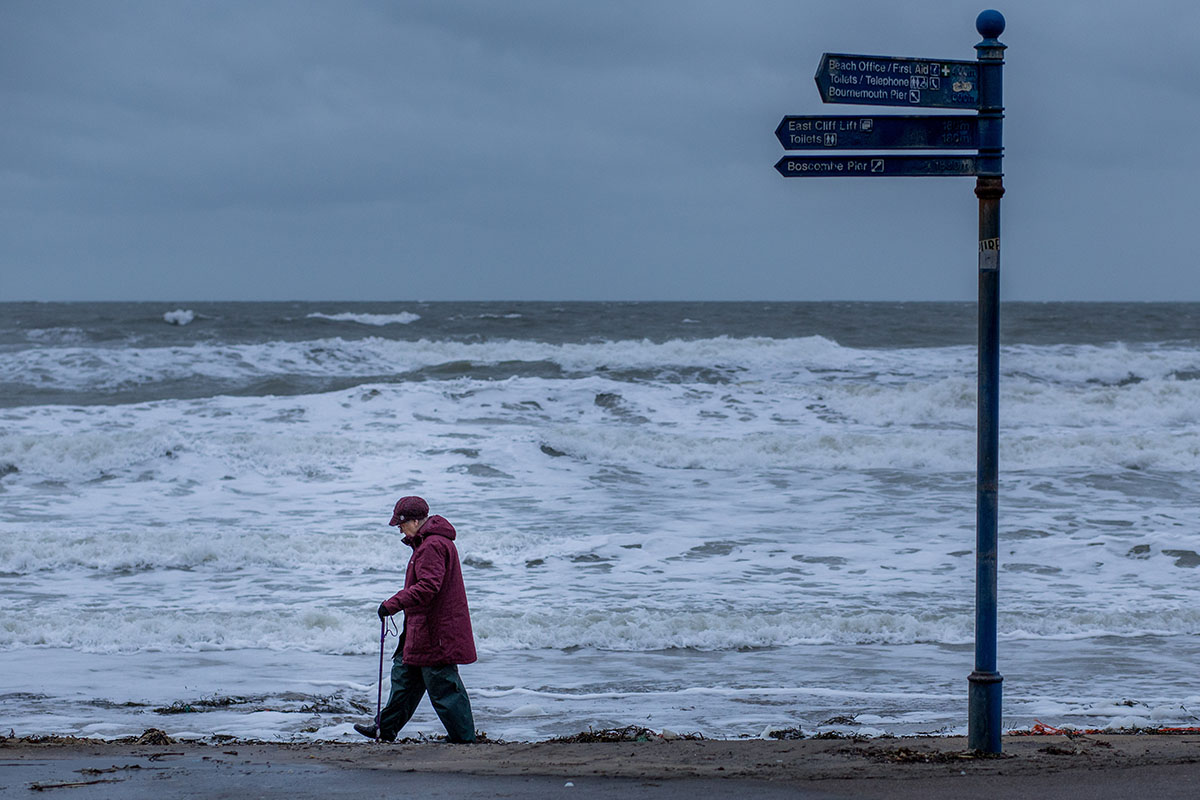
©Neil Turner, November 2014. A pensioner walks along the beach near Bournemouth Pier.

©Neil Turner, November 2014. A pensioner walks along the beach near Bournemouth Pier.

Following on from my post about zoom and prime lenses I was out with just the primes yesterday – walking along one of my favourite bits of beach in wild winds and failing light. I was just out having some photographic time before getting into the car for yet another drive up the M3 for work. This one was shot at 640 ISO at 1/1000th of a second at f4 with an 85mm f1.8 Canon EF lens on my rather lovely little Canon EOS6D – a camera that I am becoming increasingly fond of. When I’m doing personal work like this I tend to set the white balance to daylight and accept whatever colour cast I get and in this case it wasn’t far off of what the naked eye saw.

Empathy

empathy

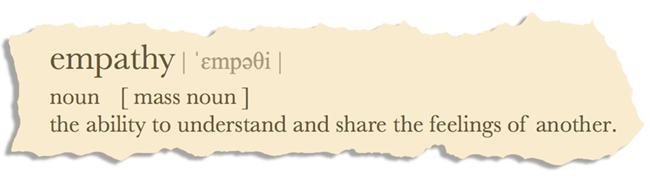
As photographers we have a vision. We know how we want our photographs to look and we know what kind of response we are trying to encourage from our viewers and from our clients. When we don’t get the reaction that we were looking for or we don’t get any reaction at all then we have either got it wrong or we have a vision so unique that nobody else gets it.

One of the qualities shared by pretty much all of my favourite photographers is the ability to empathise. The best of the best can do it on just about every level too. They understand the feelings and motivations of those that they are photographing every bit as well as they understand those of the target audience. It doesn’t matter if that’s the doting parents of a newborn baby in a studio in the northern hemisphere or the parents of a critically ill child in the southern hemisphere – having the ability to imagine yourself into the position of those whose lives will be effected by your photography is a key skill. I find it hard to think of a genre of photography where empathy wouldn’t be right up there with an understanding of composition or light as a piece of the jigsaw that comes together to make us ‘photographers’.

Somebody reading this is gesticulating at their screen and shouting about being single-minded and determined and not letting emotion get in the way of doing a good job and they have a valid point. Having empathy doesn’t always mean that you have to act on it. There will always be situations where you have to put your ability to understand everyone else’s needs and desires to one side and shoot the pictures that you need to shoot in the way that you need to shoot them but the great photographers – even the single-minded great photographers – have empathy.

If your are finding it hard to agree with this idea then I’d ask you to look at some pictures and try to work out whose feelings, needs and desires the photographer concerned might have been taking into account and/or ignoring when they shot them. I would hazard a guess that the pictures that have the most impact will be those where empathy is a factor and those that are just eye-candy are those where empathy isn’t a big part of the formula.