work

Canon’s flash evolution

When I switched to Canon cameras from Nikon in 1995 the one thing that I missed from my old F4S cameras and my old SB25 flash units was the accuracy and reliability of the Nikon TTL flash. Canon, with all of their promises for the EOS1N and Speedlite 540EZ combination just couldn’t quite match what I had left behind. I have no idea how Nikon managed to get their off-the-film-plane metering to be so good but it was very good indeed.

Coincidentally, it was about this time that I started to use high quality battery powered lights. The Lumedynes that I took delivery of in 1996 changed my professional life and TTL flash became something that I used when I absolutely had to.

Fast forward to 1998 and the arrival of the first decent digital cameras we had (the Kodak DCS520/Canon D2000) and flash took a big backward step. (more…)
Whilst I was out…

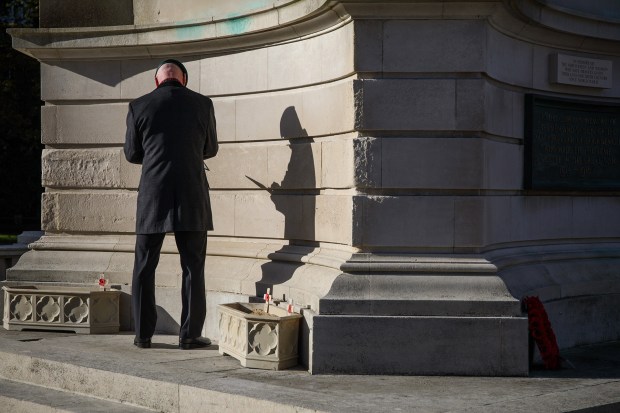
Whilst I was out shooting some pictures for the EOS5D Mark IV Update I shot a small set of pictures that reminded me that it is almost inevitable that you find interesting human stories whenever you are out shooting pictures. I met and chatted to a former Royal Marine who had donned his green beret and his medals to come along at the eleventh hour to honour one of his relatives –  a Royal Marine Musician – who died when the ship he was on, HMS Hood, was sunk in 1941.

A moving gesture from a man who had himself served for over 27 years for a relative and fellow Marine who he had never met.

Mark Tapping who served 27 years in the Royal Marines places a framed photograph of his relative Royal Marine Musician Albert Pike who died when HMS Hood was sunk on the 24th of May 1941. Armistice Day at the War Memorial in Bournemouth 11 November 2016. Bournemouth, United Kingdom. Photo: Neil Turner

Mark Tapping who served 27 years in the Royal Marines places a framed photograph of his relative Royal Marine Musician Albert Pike who died when HMS Hood was sunk on the 24th of May 1941 on the memorial. Armistice Day at the War Memorial in Bournemouth
11 November 2016. Bournemouth, United Kingdom.
Photo: Neil Turner


Lightweight lighting

portralite_both

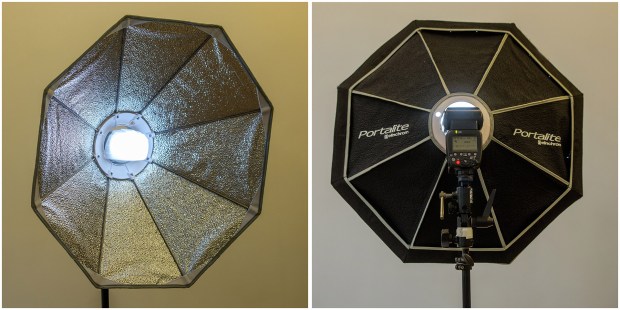
Front & rear views of the Elinchrom Portalite pressed into action.

Anyone who follows this blog knows how much I like using the Elinchrom Ranger Quadra system for a lot of my work. Next week I have a job coming up where I need to be able to pack light and rush around and I have been perfecting using the Canon radio slave system so that I can just use my Speedlights and a couple of tiny stands on the job. Whilst playing around I thought that I’d see how easily I could attach an old Elinchrom Portalite softbox to the Canon and the answer was “frightningly easily”. The Canon Speedlight 600EX II-RT comes with a diffuser cap and just popping that onto the flash after the flash tube section had been pushed through the plastic Quadra mount held the softbox rather well. I could easily add some foam tape or some velcro but this will stay in place unless I shake it around. It’s a bit smaller than I’d like a softbox to be but it is supremely light and so I’ll just have to get it that bit closer to the subject.

The Portalite folds up really small too and so I have another choice when I’m shooting. I will probably use a Westcott double folding umbrella most of the time but it really does pay to have options. Best of both modifiers work absolutely brilliantly with the Canon wireless remote set up with the ST-E3-RT transmitter and the RT flash. From testing today the recycle times on the 600EX II-RT are better than any Speedlight that I’ve ever used before and because of that I’m more than happy to work this way for this specific job.

First impressions of the EOS5D Mark IV wifi

5d4_close_up

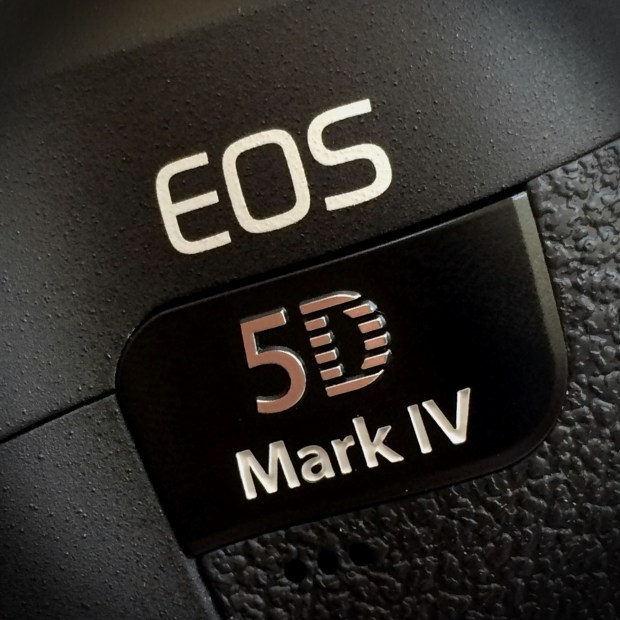
The Canon EOS5D Mark IV – the first professional DSLR from Canon with a fully functioning wifi capacity built-in.

When Canon announced that they had added a wifi capability to the new EOS5D Mark IV I was simultaneously surprised, delighted and apprehensive – emotions which have in turn given way to a sense of relief. Wifi was a feature that many photographers had asked manufacturers to implement over a number of years and we had always been told that there were technical reasons why it couldn’t be done and that most buyers simply didn’t want it. The rise in popularity of limited wifi in consumer and ‘prosumer’ models told a different story and Canon did the right thing by including it in this latest release.

The surprise element came because very few of the rumours that preceded the announcement of the Mark IV mentioned wifi at all. A lot of those people awaiting the new camera had resigned themselves to another generation of cameras with bolt-on accessories to handle rapid image transmission. (more…)

Talking about pictures

On the beach at Fisherman's Walk just before a rain storm.© Photo Neil Turner

May 2015.  On the beach at Fisherman’s Walk just before a rain storm. © Photo Neil Turner.

I spent some of my day yesterday adapting a 2013 Keynote presentation with lots of my work in it ready to go and give a talk to a local camera club. I removed two thirds of the pictures and added a lot of different and newer ones and the thing that I had in the back of my mind at all times was that I had to have something interesting and/or witty to say about each one. That rules out just showing your current portfolio – although a good percentage of the photographs are the same ones – and means that you spend a lot of time remembering and fact-checking those stories too. It is actually a really good feeling to go back through pictures and smile about them even though they were mostly taken for money and not for the love of taking them. What a great way to make a living!

The promise to do this talk came about after a chance meeting in a cafe last year. (more…)

Editing, editing and more editing

olympic_park_pano

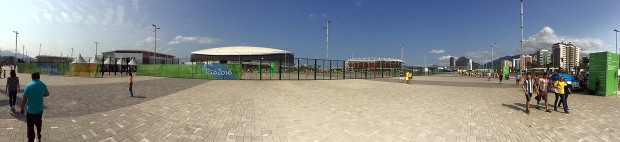
The day that the taxi dumped us in the wrong place and we had a yomp across the Rio Olympic Park to the Main Press Centre. ©Neil Turner, September 2016

By the time I leave here tomorrow I will have been in Rio de Janeiro for three weeks. In that time I have managed to take less than a dozen photographs – none of which are of any note whatsoever. I’ve been here as part of the OIS Photos team as one of two editors with my colleague Julia Vynokurova grabbing RAW files from a seemingly endless stream of FTP transfers from the four amazing sports specialists that have been here shooting the Paralympic Games for the Olympic Information Service.

Editing and captioning other people’s work is something that I do from time-to-time and it is a whole different skill set from shooting and editing your own pictures. It may sound obvious but I wasn’t there when the pictures were taken and so I have to judge them against criteria set down by the client and by each individual photographer on the team. (more…)

Photography compared to…

160408-fairground-074

BOURNEMOUTH, DORSET. 08 April 2016. A fairground on Redhill Common. © Photo Neil Turner – Freelance photographer.

When you try to explain concepts in photography to someone who isn’t deeply embedded in the art/craft/science/passion it makes sense to find something else top compare it to. My favourite comparisons are driving, cooking and sport.

Driving is something most of us do and, on the whole, we do it without having to think too much about the basics. I’ve talked about it before so I’ll quickly recap my thoughts:

Changing gear, using the indicators, knowing when to use windscreen wipers and headlights are all pretty much done on auto-pilot whilst we think more consciously about road awareness, speeds, traffic, navigation and much else besides. The comparison to photography is an easy one to make because there are basic controls that we like to think are second nature; exposure, focusing, making sure we have memory cards and batteries whilst composition and anticipating things happening in front of your camera (and often off to the side and behind you) are things that require more conscious thought.

Tempting though it is to continue stretching the analogy I want to move onto cooking. (more…)

So I bought a Canon 7D MkII

I wrote a long blog post about this time last year talking about the choice between three of Canon’s full-frame DSLR cameras. At that stage in my work I couldn’t imagine buying another crop frame camera after selling my original EOS7D and giving my opinion of it as “loving everything about the camera apart from the image quality above 800 ISO”. Well, hold the front page – the EOS7D Mk II can handle ISOs a fair bit higher than 800.

Cropped area of approximately a frame shot at 3200 ISO blown up to 100%

Cropped area of approximately a frame shot at 3200 ISO blown up to 100%

In the frame above shot at 3200 ISO you can see some noise in the out of focus areas but it isn’t nasty and it isn’t overwhelming. In the sample shot under ‘press conference’ conditions at 1600 ISO I think that the camera performed brilliantly. I would say that the MkII is at least two stops better in low light than the original 7D and maybe a bit more under certain lighting conditions and those two stops are the difference between a camera that is very usable as an every day available light camera and one that isn’t.

So far I have been delighted with it. I’ve used it on ten assignments already and it is rapidly becoming one of those things that goes into the bag first. (more…)