opinion

Card readers are the new camera bags…

©Neil Turner, December 2014. A small selection of the CF card readers that I own

©Neil Turner, December 2014. A small selection of the CF card readers that I own

As I sit here about to hit “buy” on yet another new reader for compact flash cards I am feeling more than a little bit of deja vu. And when I say “deja vu” I mean multiple layers of it. Sure I’ve bought plenty of CF, SD and even PCMCIA card readers in my time and of course none of them has been perfect but that feeling is an identical replica of the feeling I get when I buy a new camera bag – it’s a complex emotion; optimism meets resignation as I want to think that “the one” that I am buying is as perfect as I long for it to be whilst knowing full-well that it is going to be just as disappointing and just as deeply flawed as the last one, the one before that and the twenty or more before that.

It appears to be part of the psyche of professional photographers that we have to seek perfection in the equipment that we buy and use without acknowledging that such a thing doesn’t exist and that it probably never will. In just the same way that there is a colossal amount of choice in the camera bag market, there are lots of different CF card readers out there. Where the two markets diverge is in the quality of the construction and the longevity of the products. I have camera bags that have lapped the world and lived in more car boots than I can remember and that are still perfectly serviceable whereas CF card readers are cheap, poorly made and don’t appear to be of professional quality at all.

It isn’t completely the fault of the manufacturers: the pin design on compact flash cards isn’t as tough as you’d like and the way that the current crop of USB3 readers with separate cables  experience problems with the cable to reader connection would imply that it may be the USB3 standard that is at fault rather than the manufacturers quality control or design. This is backed up by the number of portable USB3 hard drives that are being reported as failing due to that same connection. It wasn’t always this way. I still have a couple of Sandisk Firewire 800 card readers that are as good as new despite having a hard life and being pretty much obsolete and the ancient PCMCIA reader that lives in a box in the loft was a proper professional bit of kit.

The accepted wisdom was that readers with removable cables were a good idea because the cables were the part of the kit that was prone to damage but that’s no longer the case. In an almost heretical move I am leaning towards the idea that built-in cables, avoiding the car crash that is the USB3 standard, are once again a good idea – and that is why my finger is hovering over the “buy” button because Delkin Devices have produced a reasonably solid looking USB3 reader with a built-in, chunky cable. Of course I’m resigned to the idea that there will be issues – this is one of those moments where optimism is high and the deja vu is strong.

Here goes…

Photography word of the day

For the past couple of months I have been posting a ‘word of the day’ using the hashtag #PWOTD on Twitter. Some of the words are merely triggers to allow myself to say something about photography and others pretty much sum up what I want to say in a single word. A few have links to other websites and quite a few link to old blog posts on here in the hope that some of the 250+ postings on here reach a few extra people.

After two months it is getting harder and harder to come up with a word every day (OK so I schedule the tweets up to three or four days in advance using Tweetdeck) and I was wondering whether anyone else had any suggestions?

Up until Tuesday 16th December 2014 the words so far:

advice   ambient   backup   bad habits   balance   bounce flash   byline   chimping   clients   colour management   compromise   confidence   consistency   contrast   criticism   default   destination   dusk   editing   empathy   experimentation   family   focus   genre   gutter   inspiration   interaction   juxtaposition   limits   manipulation   metadata   middle ground   mindset   monochrome   obsession   patience   people skills   personal   perspiration   photocalls   portfolio   preparedness   prime lenses   prioritise   professionalism  reaction   research   rules   self criticism   sensitivity   shadows   silhouette   simplicity   social media   teamwork   tripod   uniform   viewpoint   vision   workflow
If you’d like to see them then search the hashtag #PWOTD or have a look through my Twitter feed @dg28com . I’m probably going to take a break from doing the word of the day over Christmas – partly because I hope that everyone is going to be having a break from social media but mainly because I really hope that I am!

Mint in box

©Neil Turner, November 2014

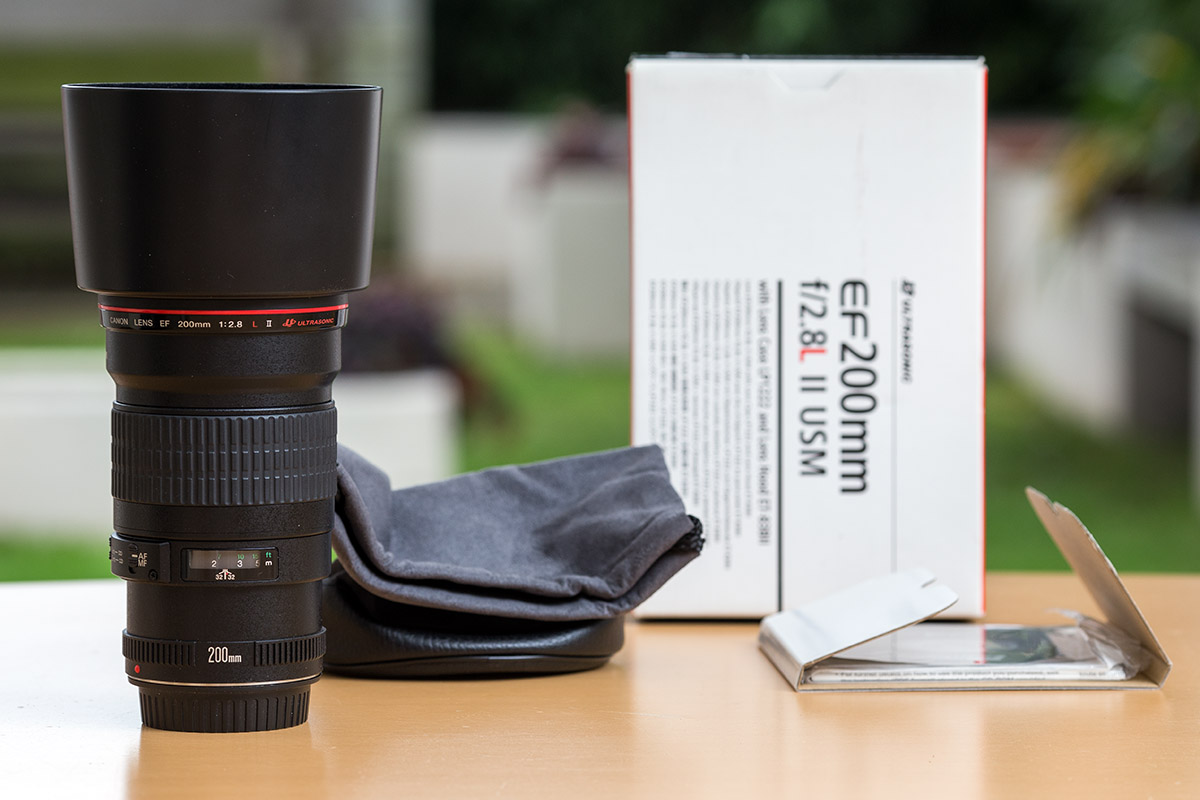
©Neil Turner, November 2014. Canon EF 200mm f2.8L II USM lens.

There are lots of things about the world that I don’t understand. Some of them I ignore, some I oppose and there are others that I just go along with.

One of those that sits squarely in the latter category is the obsession with keeping the boxes for items of photographic and computer equipment that you are intending to use. I go along with it because people are actually prepared to pay more for a used item if you have the original packaging. Basically, it appears, you are prepared to pay me a premium for a secondhand piece of kit if I keep cardboard, plastic and polystyrene in my loft so that you can do the same during your ownership of that item.

It makes sense for collectables where the market loves “mint in box”. We have a few Star Wars items safely tucked away still sealed in their original packaging and I have a couple of Corgi model cars in their boxes too (the box for one on my desk is actually more attractive than the die cast metal contents anyway). But the logic of hoarding packaging for something that is in use is beyond me. Again, I get the concept of saving the instructions and any accessories (I have a massive box full of both of those) but not the packaging. It’s no big deal which is why I am now going with option 3 and just accepting that it is just the way it is. No sense fighting against it and ignoring it isn’t much of a principled stand!

I wasn’t always of that opinion. Somewhere there’s probably a whole load of boxes being safely squirrelled away that look exactly like the original boxes for the items they were bought with but they are just substitutes. When I bought my first two Canon EOS5D MkII bodies a dealer bought the boxes and instructions from me. I thought it a bit weird at the time but £20.00 is £20.00 and I sold them. He presumably “re-united” those boxes with cameras that were missing theirs and sold them on to some unsuspecting soul who thought they were getting the original packaging.

I’m not even sure why this is taking up an hour of my time thinking about why I find it so absurd – other than the fact that I am getting rid of some superfluous gear and one of the lenses really is “mint in box”.

“What gear is that?” I hear you ask – it is a Canon EF200mm f2.8L II USM prime lens that I bought a few months ago when I was going through a phase of using prime lenses for as much as I could while my 70-200 f2.8L IS (ditched the box for that one in 2003) was away having major surgery. The repairs cost less than I had expected and in the end I only used the 200mm lens twice – both times indoors for large groups of head shots. I had bought the lens as secondhand myself although Castle Cameras did (which I trust) say that it had barely been used and had been originally purchased through them a few months before that. So here we have it; a fabulously sharp current model lens with all of the correct bits and pieces – including cardboard, plastic and polystyrene – which retails for £569.00 new going for the bargain sum of £449.00 + delivery.

I am loath to stick it on eBay given the massive commissions that they now charge but the average selling price for one of these (and it would be impossible to be in better condition) is £473.91 on the auction site. The lens is registered with Lenstag and so I would obviously transfer that over. By clicking on the link you can check that it is verified – such a good system!

I will be clearing some more gear out soon. None of it will be ‘mint in box’ because 99% of my equipment gets used for many years before I sell it on but it will be well looked after, properly serviced and verified by Lenstag.

Remembrance Day 2014

©Neil Turner, November 2014. An ex-serviceman take a few minutes to himself at The Cenotaph in Bournemouth in the November sunshine ahead of the Service of Remembrance.

©Neil Turner, November 2014. An ex-serviceman take a few minutes to himself at The Cenotaph in Bournemouth in the November sunshine ahead of the Service of Remembrance.

Sometimes I just take a picture because it is there. This year’s Remembrance Day service at The Cenotaph in Bournemouth was well attended and held on a beautiful crisp morning. There were lots of proud ex-servicemen and women there along with the families and friends of those who survived, those who were killed in action and those who have since died. It is always a moving occasion and on the 100th anniversary of the outbreak of World War One it was somehow more moving than ever.

Zooms Vs Primes

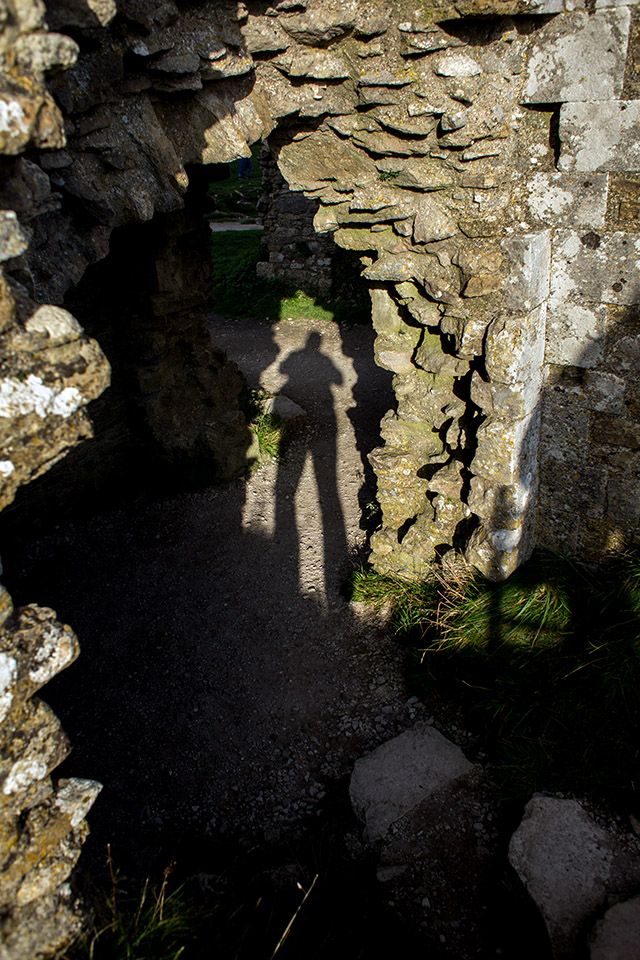
©Neil Turner, October 2014. Shooting my own shadow with a 28mm f1.8 lens.

©Neil Turner, October 2014. Shooting my own shadow with a 28mm f1.8 lens.

Talking and writing about photography on the web seems to have become a whole series of two sided contests. Sometimes it is interesting and a genuine dichotomy (Nikon Vs Canon, Mac Vs PC) where there are absolute direct comparisons to be made and a range of technical and personal preferences to be considered. At other times they are silly (film Vs digital, DSLR Vs mirrorless) where it is comparing bananas with pineapples. Somewhere in the middle of these two extremes sits the Zoom Vs Primes debate. Everyone has their own views and everyone’s work is different.

An amazing 14 years ago (and 14 years into my professional career) I wrote a short piece about choosing lenses and why you might like zooms for some jobs and then have the ability to choose a focal length for others. It wasn’t all that long before then that I’d had to use primes all of the time because zoom lenses weren’t up to the job in terms of quality. For me it all changed in 1995 when I switched to Canon EOS for the first time and the original 70-200 f2.8L and 28-70 f2.8L lenses which, along with the auto focus on the EOS1N, changed everything for me. For ages the only Canon primes I had were the 20mm f2.8 and 300mm f2.8L and the vast majority of my work was shot between 28mm and 200mm.

I’ve spent a lot of my career in press pens and fixed positions where I cannot move and where it made sense to use zooms lenses to compose but weighed against that I’ve also done a lot of work where I have a lot of freedom to move around and can position myself so that I don’t need to use a zoom to fill the frame – I’ve been able to “zoom with my feet”. Here’s what I said in 2000:

There are two ways that you can choose which of your lenses to stick on the camera:

  1. You can say “there’s my subject and here I am, let’s see which focal length on my zoom works best”.  Sometimes at sports matches and political events you have your position and that is that, or…
  2. You could say “I want the effect that my experience tells me a 28mm lens will give me so I’ll select that focal length and move to the right position to make that happen”.

Either of these could be a valid option and, in many cases, the first is decided for you by circumstance. Most news photographers use zoom lenses because it makes sense to have fewer lenses when you are never quite sure what kind of work you will be doing on any given day.

Personally, I use a combination of both approaches. If a position forces me to choose a certain lens then I’m with option 1. Given complete freedom to shoot what I want I’d go with 2. More often than not I’ll go with, say a 24-70mm lens intending to shoot at the 24mm end and get in a position to shoot that way. I will shoot several frames and then start to move around, zoom in and out and shoot a variety of similar images, each with subtle differences. I try to make a point of shooting with just about every focal length available to me on every job. Sometimes I am right about lenses first time but often I’m not. What had seemed like an obvious task for the 28mm ends up being a spectacular 200mm shot and vice-versa but the result is that you often end up with images that are just that bit better.

I nearly always shoot on location so I cannot preplan every detail. Going equipped with a range of lenses is vital. Your choice of lens will depend on so many questions running through your mind. How is this image going to be used? Big, small, upright, horizontal, front page? Double page, back page, website, magazine or newspaper? Is it going to have copy running over it? Will it have more than one usage?

If I cannot answer any or all of those questions, then I’ll shoot every variation I can. Shall I start with a long lens, if it’s a portrait then being further away may relax the subject and I’ll get in with the wide when they are more comfortable. Background, what’s behind them? Can I use a change of lens get rid of a poor background?

Answering self-set questions and making compromises is the key to news photography. Choosing the right lenses helps to reduce the number of technical compromises that you are forced to take, giving you more time to make the creative compromises that you want to make.

So has anything changed in the intervening years to make me come back and have another look at this debate? Yes – several things:

  • The resolving power of the camera chip is now so great that lenses need to be sharp to get the most out of that resolution
  • The amount of pixels crammed onto a chip means that you can “zoom by cropping” in a far more aggressive way that you could ever do before and still end up with a file easily large enough for a wide range of uses
  • Zoom lens quality has improved
  • The choice of super-high quality prime lenses has become far wider
  • The quality of digital images means that how a specific lens renders out of focus parts of the frame has become an issue for a lot of people
  • Photographers are constantly seeking ‘an edge’ and to challenge themselves to see their work differently in an era where we all have much the same gear

This debate has raged and it has ebbed and flowed. I’m not necessarily talking about how the worldwide photographic communities have seen it here, I’m talking about my own psyche and what happens every time I pack a bag to go and shoot some pictures. I love the discipline and the way that having three or four prime lenses in a bag makes me think but I have the it when I have primes and cannot move around as much as I’d like to. Short of taking three zooms and four primes on every job (I don’t have an assistant and my fifty year old spine would buckle under the weight) it is always going to be a compromise. Today I’m shooting an editorial portrait where I have plenty of time and it will be just me and the woman that I’m photographing so I’ve packed the primes. Yesterday I was at a job where moving around wasn’t an option and I went with just two zooms.

My internal debate doesn’t end there though. I am always looking back through my work and being self-critical and, if I’m being entirely honest with myself, I am probably a better photographs with zoom lenses. There, I’ve said it. Much though I love using a 135mm f2 I shoot better pictures eight times out of ten with a 70-200 f2.8. The same goes for the 28 and 50 against the 24-70. How can I ever hold my head up in the company of some of my favourite photographers who never use zooms now? Luckily they are all people who don’t care what you use as long as you get the pictures and the rest of my favourite photographers are shooting 99% of the time with zooms anyway.

It turns out that this is a silly debate after all because we are photographers whose goal is to produce the best and most interesting, creative, exciting work that we can within the bounds of what is possible and what is required. I’m going to persevere with my little bag of primes because I want to. When in doubt it will always be the zooms for me – aren’t I the fortunate one to have the choice?

Empathy

empathy

As photographers we have a vision. We know how we want our photographs to look and we know what kind of response we are trying to encourage from our viewers and from our clients. When we don’t get the reaction that we were looking for or we don’t get any reaction at all then we have either got it wrong or we have a vision so unique that nobody else gets it.

One of the qualities shared by pretty much all of my favourite photographers is the ability to empathise. The best of the best can do it on just about every level too. They understand the feelings and motivations of those that they are photographing every bit as well as they understand those of the target audience. It doesn’t matter if that’s the doting parents of a newborn baby in a studio in the northern hemisphere or the parents of a critically ill child in the southern hemisphere – having the ability to imagine yourself into the position of those whose lives will be effected by your photography is a key skill. I find it hard to think of a genre of photography where empathy wouldn’t be right up there with an understanding of composition or light as a piece of the jigsaw that comes together to make us ‘photographers’.

Somebody reading this is gesticulating at their screen and shouting about being single-minded and determined and not letting emotion get in the way of doing a good job and they have a valid point. Having empathy doesn’t always mean that you have to act on it. There will always be situations where you have to put your ability to understand everyone else’s needs and desires to one side and shoot the pictures that you need to shoot in the way that you need to shoot them but the great photographers – even the single-minded great photographers – have empathy.

If your are finding it hard to agree with this idea then I’d ask you to look at some pictures and try to work out whose feelings, needs and desires the photographer concerned might have been taking into account and/or ignoring when they shot them. I would hazard a guess that the pictures that have the most impact will be those where empathy is a factor and those that are just eye-candy are those where empathy isn’t a big part of the formula.

If you haven’t seen Pixelrights – check it out…

pixelrigts_ss
When friends of yours start up a new business it is natural to wish it well and then forget all about it until you see those friends again. That’s kind of what happened with me and Pixelrights. Shaun Curry, one of the founders is an old mate and when he rang me out of the blue a while ago to explain his new business venture I was happy for him and offered my support as I would with pretty much any of my friends.

A few months later Shaun got back to me and asked to ‘borrow’ a couple of pictures for their development website. Always happy to help I sent him a couple of JPEGs and signed up for email, Facebook and Twitter feeds to remain abreast of their progress. Once more, nothing much happened and then Pixelrights offered to develop the new website for The BPPA and suddenly there I was having an in depth explanation of their ideas complete with a demonstration of what their idea could offer.

Passive supporter becomes active advocate over the course of one afternoon. I love the idea and I really love the fact that these are people doing what they are doing for money AND for the love of what they might achieve. So what is Pixelrights? Here’s a cut and paste from their own concept page:

Working in photography and the visual arts ourselves, we wanted to create something that we would not only use, but also enjoy using. We saw the need for simple, functional yet sophisticated portfolios which would serve photographer’s interests and needs, in an honest manner with no marketing trickery.

Pixelrights provides a secure, simple, classically-presented choice of website designs, backed up with state-of-the-art technology, all for a single price. There are no hidden charges to remove branding, no divisive price plans and no subscription fee traps.

What it actually provides is a portfolio of the simplest form with good image protection and the option to allow carefully controlled and monitored sharing. There are quite a few design options and there will probably be more by the time the current “Beta” phase is completed. I have three folios on my pages and I have a range of hidden galleries which are invite only so that clients can go and look at images that I have uploaded for them to Dropbox making use of a cool and simple interface. The whole point of a beta phase is to gather opinions of users and make things even better and that’s exactly what is happening.

I’d strongly recommend that you go and check out Pixelrights for yourself and the best way to get there is via my members page. Make sure that you look at the features and the pricing because this is a good idea from good people with an awful lot of backing from working photographers.

You learn something new every day

It is one of the universal truths of photography that you never stop learning. Almost every time you pick a camera up something happens that you squirrel away in your memory banks that will make a difference to how you shoot something else at some time in the future. Normally these are small things but this week I was shooting the wonderful Talvin Singh performing at an arts festival and something happened that made me scratch my head because I’d never experienced anything quite like it.

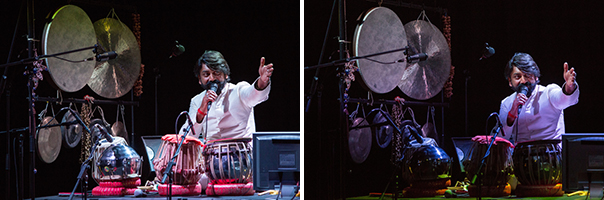
©Neil Turner, October 2104

©Neil Turner, October 2014

The two pictures above were taken within a fraction of a second of one another under ‘exactly’ the same lighting without flash and with identical settings (manual everything apart from focus) on the same camera with the same lens and have been processed through Adobe Camera RAW identically. So why are they different? The answer seems to be LED stage lighting. You might conclude that both pictures are ‘quite nice’ and move on but that’s not really an answer when you are shooting something that has a moment that you absolutely have to capture. I’ve had issues with un-balasted HMI lighting and of course strip lights but this was in another ‘issues league’ entirely.

It appears that these brand new lights installed in a state-of-the-art theatre are an absolute nightmare for stills photography. Now that I’ve experienced this, I have been reading up on it and it seems to be a known phenomenon where the lights cycle between the red, green and blue LEDs in the light at a speed that the human eye chooses not to detect but that a camera shooting at shutter speeds of 1/125th of a second or higher has a real problem with. The higher you go, the worse it gets. Of course you could shoot at 1/60th of a second and all would be reasonably well – apart from any movement being a little/lot blurred.

Being a complete anorak I decided to shoot a series of tests at an even higher shutter speed (having first racked the ISO up a way) to see what happened:

©Neil Turner, October 2014

©Neil Turner, October 2014

That makes shooting under these lights at the kind of shutter seeds you need to freeze action nigh on impossible. Once I had realised that there was an issue I dropped down to 1/100th of a second and then to 1/80th and shot lots of frames. The first five frames above were shot at 1/400th and the last one was at 1/100th – what a difference.

Most of what I have read about LED stage lights concerns white balancing – well that was the least of my worries here. It was almost as if shooting with shutter speeds in excess of the cameras maximum flash synch speed (the highest speed at which the entire chip is exposed at the same moment) was part of the problem. The LED stage lights in this theatre were effectively pulsing or flashing and the only way to get a consistent image was to work with that pulsing and use shutter speeds below the maximum flash synch. I have read something on what appeared to be a well-infomed website which implies that this only happens when the lights are dimmed – which makes some sense. I haven’t got enough experience with this to work out whether the speed thing is a coincidence or whether it is directly related but I now know how to shoot in this one venue with these lights.

Shooting with shutter speeds that are a long way below “ideal” some of my pictures were sharp and many weren’t – but the job got done. Constant reference to the screen on the back of the camera is frowned on by a lot of people but this case proves that there are times when it is exactly the right thing to do. Imagine having had to shoot this on film with no LCD…

Presumably more and more theatres and venues will use these lights and the problem will grow. Maybe there’s a solution out there already?

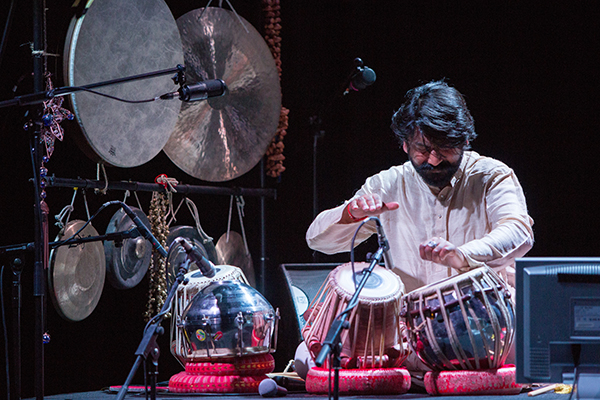
©Neil Turner, October 2014.

©Neil Turner, October 2014.

Techie stuff: Canon EOS5D MkIII with a 70-200 f2.8L IS Canon lens. 1/100th of a second at f3.2 on 2000 ISO. WB set to daylight but adjusted in Adobe Camera RAW removing quite a bit of magenta and adding a small amount of yellow.