opinion

Canon announces a new 24-70 f2.8L lens

New objects of desire on the equipment front will probably start to appear with monotonous regularity between now and The London 2012 Olympic games. Overnight Canon have announced a new version of the 24-70 f2.8L lens – the mark II.

The older version has been my workhorse for so many years now that I would find it hard to do my job without one and the appearance of a new (and improved?) version makes get my abacus out and start to apply the cost/benefit calculations that professionals need to make every time we consider a new piece of kit.

If I decide that I cannot justify buying it, then it still remains an object of desire! Apparently another major camera manufacturer has also been busy on the launch pad overnight. Nikon have announced the D800 with more megapixels in a 35mm style DSLR body than anyone thought possible/desirable/necessary. Given Nikon’s recent track record of getting things right I would not bet against this being a great piece of kit and a runaway success. For my part, I hope that the next full-frame Canon doesn’t follow suit and re-ignite the megapixel race. A 5D MkIII with decent AF and a chip at around 24-25 megapixels with decent options to shoot smaller (and maybe custom sized?) RAW files would suit my needs rather well.

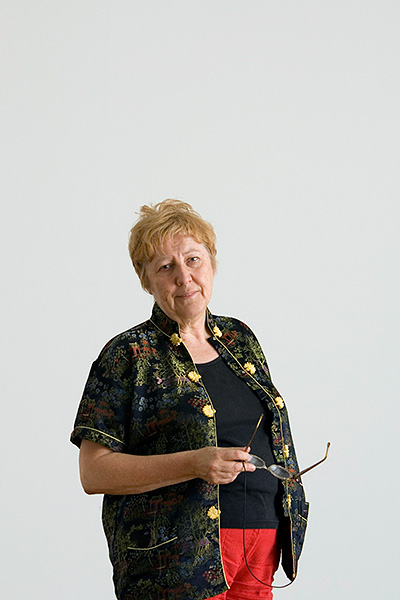
College Principal, July 2006, London

©Neil Turner/TSL. July 2006, London.

Jane Rapley was about to take over as the new head of Central St Martins College in London when I shot her portrait in July 2006. After 17 years at the famous arts college in a variety of posts she became the Principal in August 2007. I photographed her in her office and then in one of the galleries that they use for student shows at Central St Martins on Southampton Row in central London.

This particular frame was shot in case the designer wanted to use the portrait full page and run a headline and some text over the image itself. The rest of the shoot was more varied and included some very wide portraits, which seem to have been what I was interested in at that time. It is fascinating that when you look back at your own work on a chronological basis you can definitely see trends and fashions in the way you compose, light and post-produce pictures. This was one of my softer lighting periods!

Define the word “PHOTOGRAPHER”

When does a person with a camera, even a person with an expensive camera, become a photographer?

Apologies if this seems to be getting a bit philosophical but it’s a question that someone casually threw at me a week or so ago and I’ve been struggling with it ever since. Let’s get the dictionary stuff out of the way…

Right now we can really get on with the real business of working out what a photographer is. I’ve always been a fan of simple definitions and I like the idea of making a comparison between things, so how about this:

Someone with a camera tries hard to get everything into the picture whilst a photographer does their level best to keep as much out of the picture as they can.

All that means is that there comes a point in your photographic journey where you realise that most pictures are much stronger when you leave absolutely everything out that doesn’t need to be in. In a paraphrase of the old saying “what doesn’t kill you makes you stronger” (which isn’t necessarily true by the way) we can come up with “what doesn’t add to the composition detracts from it”.

The dictionary definition above, which comes from the English dictionary built into the Apple OSX operating system, steers away from the word professional and I’m really glad that it does because there are an awful lot of superb photographers out there that take pictures for fun and not for a living. Being a good photographer is not the same as being a professional photographer. On balance, MOST professionals are good but there isn’t a direct relationship between earning a living and being proficient.

These days there is a belief that ‘everyone is a photographer’. I wouldn’t argue that almost everyone takes pictures and that almost all of them take two, three, four and even twenty times as many pictures as they would have done when we had to buy film. Someone who I once discussed photography with reminded of another old adage – the one about if you give enough monkeys enough paper, enough typewriters and enough time sooner or later one of them will create the complete works of Shakespeare. It doesn’t hold up here and I told him as much.

People with cameras are largely rational, intelligent and reasoning beings and so most will work out what they do and don’t like and then take better and better pictures over time. Their image making isn’t the random act of monkeys with no comprehension what they are doing – the point here is that when it comes to learning that less (content) is more (better pictures) some will figure it out for themselves , some will need to have it pointed out to them and the rest will remain blissfully ignorant of it.

For some lucky people the knowledge is instinctive. The rest of us have learned through trial and error and/or formal education to know a good picture when we see one. Those that take the next step by learning what makes it a good picture can call themselves “visually aware”. The final (and never ending) stage is to develop the skill to see the picture and make the best of it before and during the pressing of the shutter. Those people can call themselves photographers.

See also COMPOSITION

Darts legend teaches mathematics… using a dartboard

©Neil Turner/TSL. June 2008, Kent.

Bobby George is a showman. He drives a flash car, he wears more rings than I could lift and he has made a nice life for himself playing professional darts. He went to Langley Park School for Boys in Beckenham , Kent in June 2008 to talk to GCSE maths students about how much he has gained from good mental arithmetic. He kept an audience of teenaged boys, most of whom weren’t even born when his career was at its height, engaged and even managed to get most of them to realise that maths, probability and mental agility were actually ‘quite cool’.

Seaside towns beginning with ‘B’…

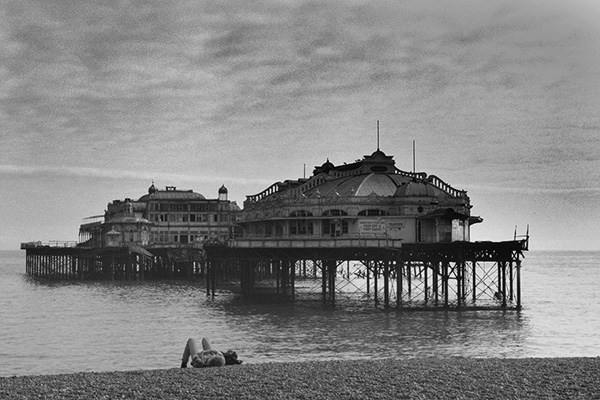
I was born in Bournemouth, went to school in Bournemouth and I live there most of the time. I am, as they say, a Bawmuff Boy. There are a couple of other major seaside towns that also begin with ‘B’. Brighton is 94 miles along the coast and I have shot at least twice as many commissions there than in my home town in the last 25 years. Blackpool, on the other hand, is a long way from either Bournemouth or London and somewhere that I have only ever been sent to for party political conferences. Because of the distance I’ve never seen the place as it should be seen – without an overload of grey men in grey suits.

©Neil Turner/TSL. Brighton, July 1995 - a view that no longer exists.

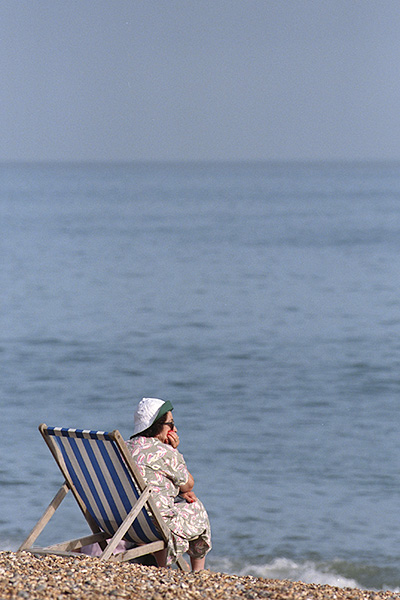
I really like Brighton – it is a photogenic place and it seems to be a really media-savvy sort of town too. On one occasion in the summer of 1995 I was even sent there to shoot stock images of the place to accompany general articles about the town (now a city I believe) and about the county of East Sussex. It was the first in a series of similar days when the diary was empty and I went to Cambridge, Oxford, Birmingham, Bristol and Norwich during that summer. It’s not very often you get quite such relaxed brief but it was actually quite a challenge – generic images in three hours and away again. Cambridge and Oxford were a lot easier but Brighton was the one I’d choose to do again. If I were given a free hand it would have to be Blackpool though. Every time I see it on TV I think to myself “so many pictures to be taken…”

©Neil Turner/TSL. Brighton, July 1995

©Neil Turner/TSL. Brighton, July 1995. Timeless...

The early days of digital

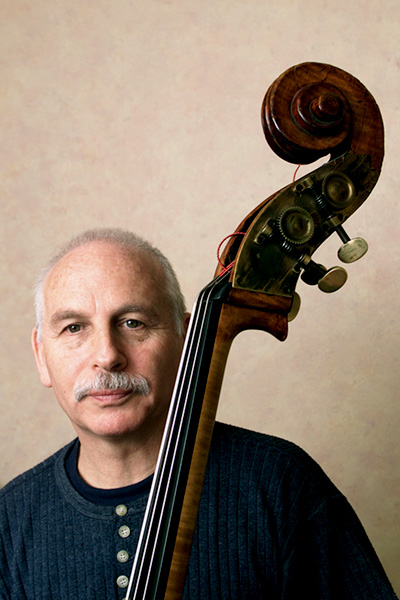
I took delivery of my first Kodak DCS520 digital camera in late November 1998. It was a revelation. I had used a previous model (DCS3) which was pretty poor and I wasn’t really that convinced about the whole process. After three days, I was a convert – the kind of convert who then sees it as their role to evangelise about their new-found wisdom/insight/faith. Based on the Canon EOS1n camera, the Kodak conversion replaced the whole of the back of the camera and quite a big chunk of the electronics too. It was expensive, relatively slow and it only had 1.9 megapixels. It had a tiny low resolution LCD screen on the back and it used enormous and expensive batteries that rarely lasted a whole day but I absolutely loved it from that first week!

©Neil Turner/TSL. 10th December 1998

This was one of the first proper portraits that I shot with my first DCS520 (known as the Canon D2000 in some countries) and it was of a double bassist and jazz teacher in his own home. My conversion was so dramatic and so complete that I even remember sulking a little when I had to shoot on film for the glossy sections of the newspaper. We worked with these early cameras for nearly four years until the Canon EOS1D came out. Nikon had introduced the D1 in that period and the see-saw battle for supremacy between the two big manufacturers with input from Kodak and Sony began in ernest.

I quite often get asked what the big trigger was for digital in the newspaper industry. There are a few factors;

  • The arrival of cameras capable of shooting quality images
  • The money saved by newspapers getting rid of darkroom staff
  • The arrival of new health and safety laws that meant waste chemicals became very expensive to dispose of
  • The speed of turnaround of digital pictures
  • The ease of archiving digital images

Talking with others who used the Kodak DCS series camera from that era we all agree about one thing – how good Kodak’s software was. What a shame that they threw away their lead in professional digital photography. If they had even kept their software development going, they could possibly have avoided needing to file for bankruptcy protection in the US courts last week. I look back at the early days of digital with a real fondness – they really were the most exciting of times. There’s something very cool and very rewarding about being in the second row of pioneers!

Some posts are “a bit Marmite”…

When I started to migrate my old blog over to WordPress I also began to watch the site statistics that are there to help you understand what kind of content on your blog is popular. Obviously announcing new posts on Twitter, Facebook and LinkedIn helps but the figures for days when you don’t do any plugging probably tell you more about what people search for and find.

Having shifted so many old postings (anything listed before December 8th 2011) I have been watching to see whether the ‘old’ stuff gets many viewings. The answer, sadly, is no. More interestingly, blog posts that aren’t about specific photographs don’t get a lot of viewings either.

British readers of this blog will be familiar with the concept of something being “a bit like Marmite” (or Vegimite if your are from the Antipodes). It means something you either love or hate, nobody is indifferent to it.

Drawing comparisons between a savoury spread and blog posts is probably a bit tenuous but I still like the idea! I think that there is some interesting material back there so I’ve decided to go through the viewing figures and publish links to some of my favourite and your least favourite oldies.

That’s half a dozen to be getting along with. I goes that they share a certain ‘wordiness’ but they are the kind of things that I want to to talk about and so I hope you give one or two of them a go.